ACI Conference in Switzerland

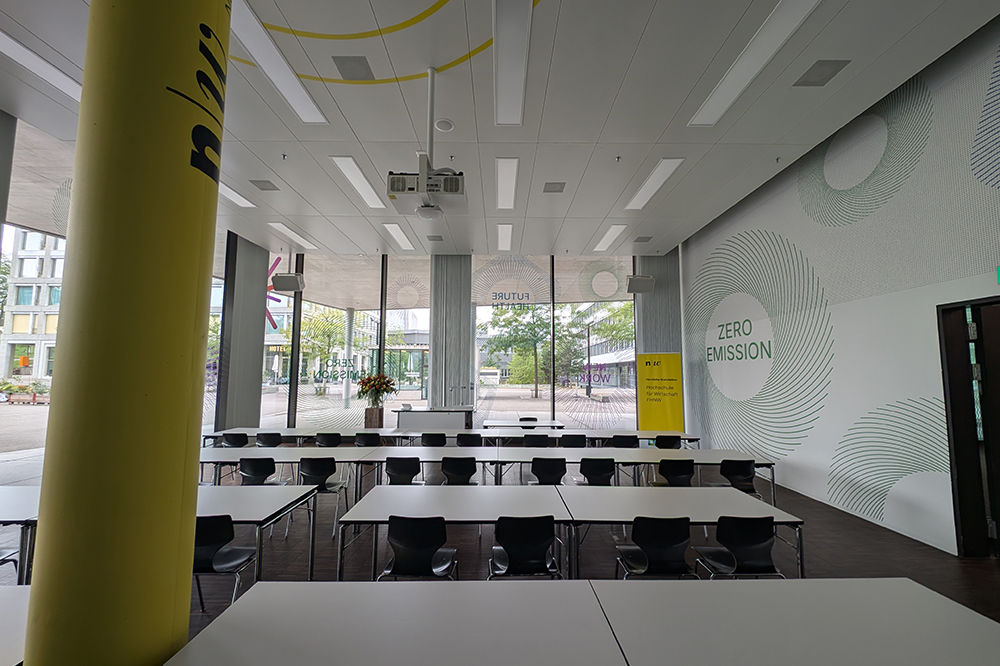
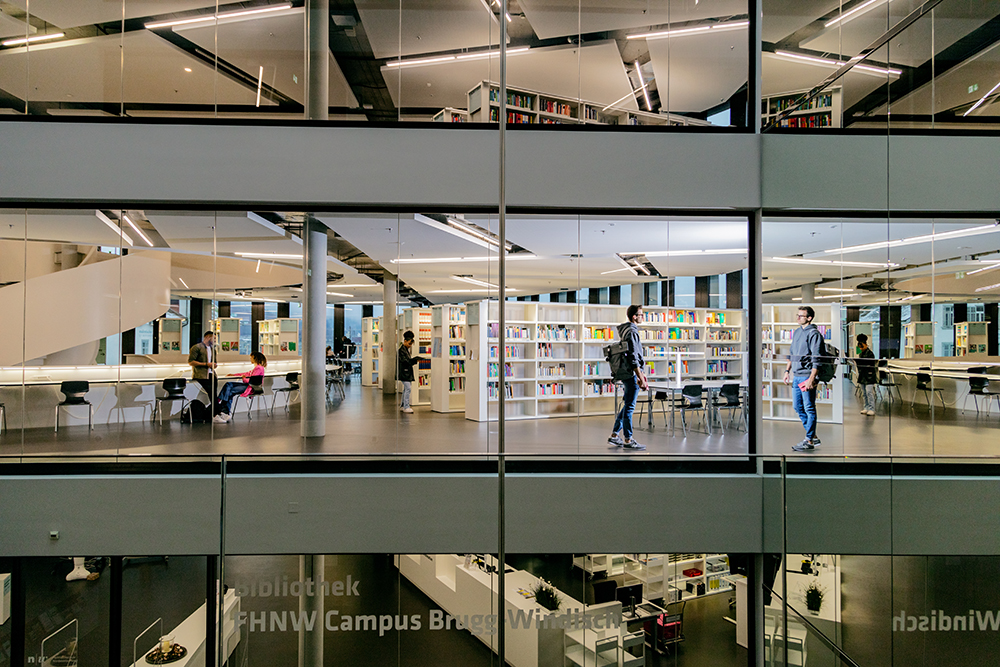
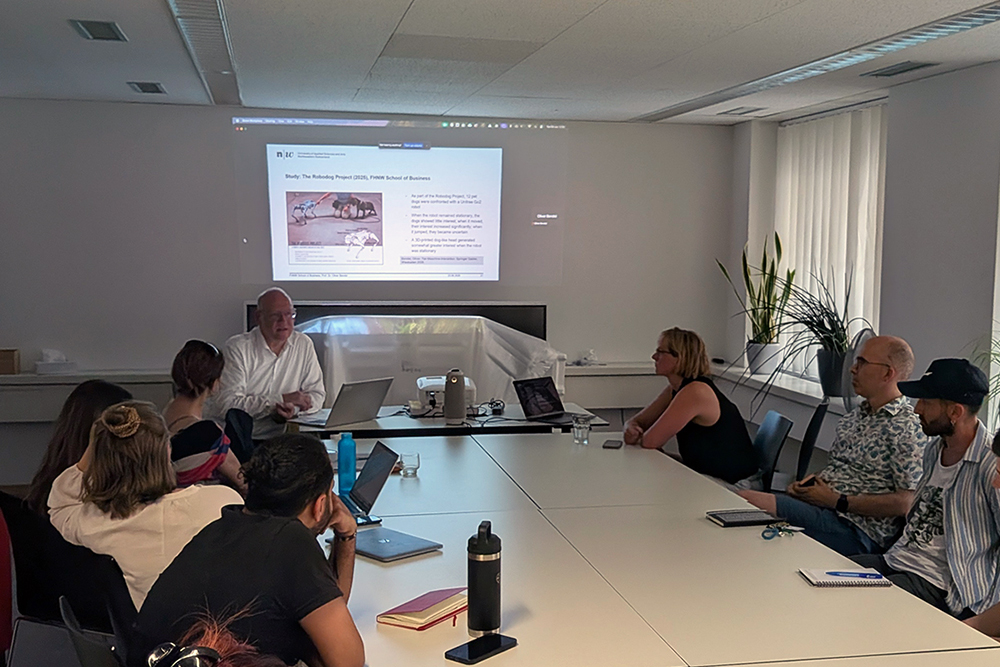
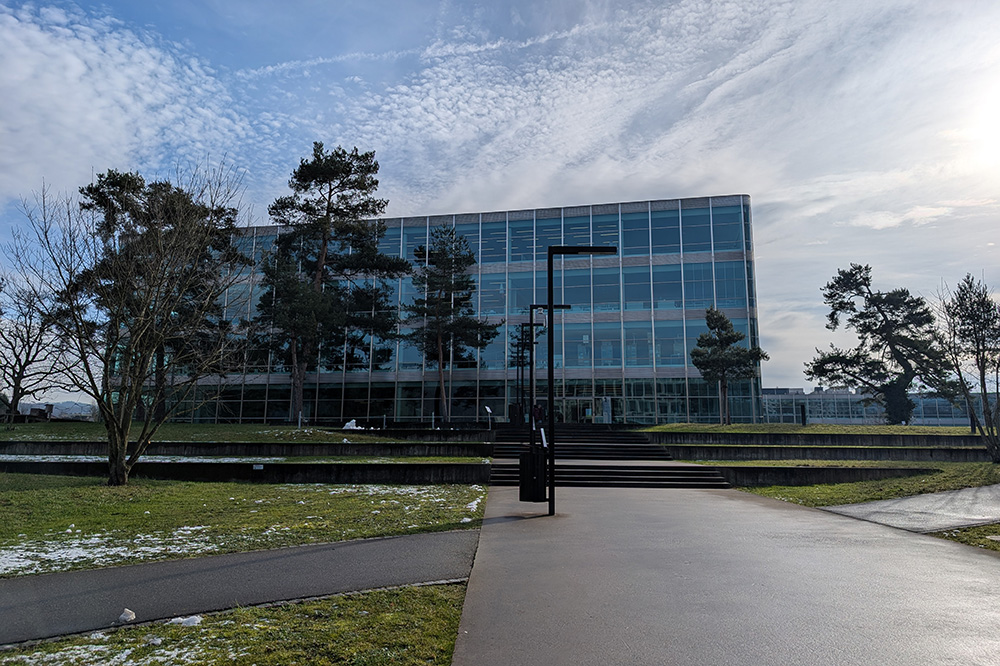
Prof. Dr. Oliver Bendel will host the next ACI Conference, marking the first time the event comes to continental Europe as it convenes on the FHNW campus in Brugg-Windisch, Switzerland, from 2-5 December 2026. Building on a tradition that has taken the community from Glasgow to North Carolina, Newcastle, Bloomington, Milton Keynes, Haifa and Atlanta, this edition continues the conference’s role as the premier venue for advancing Animal-Computer Interaction. As the field grows, researchers and practitioners explore how technology shapes animals’ lives, wellbeing, cognition and social dynamics while developing animal-centered systems and methods that embrace multispecies perspectives. The conference maintains its commitment to interdisciplinary collaboration across biology, technology and cultural studies, supporting work that seeks to design ethically grounded, welfare-enhancing and inclusive technological futures for all animals, humans included. Proceedings will be published in the ACM Digital Library, and the official conference website will go live in January 2026. Information on previous ACI conferences is available at www.aciconf.org.

Fundamentals of Animal-Machine Interaction

“Just.Us + Animal Welfare” is a lecture series organized by Department 10 Veterinary Medicine to promote animal welfare at Justus Liebig University Giessen. On November 12, 2025, Prof. Dr. Oliver Bendel gave a lecture on “Bao meets Pluto: Grundlagen und Beispiele der Tier-Maschine-Interaktion” (“Bao meets Pluto: Fundamentals and examples of animal-machine interaction”). Animal-machine interaction deals with the encounter and coexistence of animals and machines – from classic devices to vehicles, aircraft, and agricultural machinery to networked, autonomous robots and AI systems. The focus is on perception through sensors and senses, interaction and communication between animals and machines, and the question of how these encounters can be designed technically, organizationally, and ethically in such a way that risks for animals are reduced and potential for them and for humans is tapped. In his lecture, Oliver Bendel laid out the fundamentals of animal-machine interaction and described prototypes and projects. He also outlined what is possible and to be expected in this field of research in the coming years, for example in connection with robotic quadrupeds and bipeds. The online lecture was followed by 660 listeners. Further information is available at www.uni-giessen.de/de/fbz/zentren/icar3r/akademie/justus.

The Robodog Project is Done

“The Robodog Project: Bao Meets Pluto” examined how domestic dogs respond to the Unitree Go2 quadruped robot – nicknamed Bao by project initiator Prof. Dr. Oliver Bendel – and how their owners perceive such robots in shared public spaces. The project began in late March 2025 and was completed in early August 2025. The study addressed three questions: (1) How do dogs behaviorally respond to a quadruped robot across six conditions: stationary, walking, and jumping without an additional dog head, and stationary, walking, and jumping with an additional 3D-printed dog head? (2) What are owners’ expectations and concerns? (3) What regulatory frameworks could support safe integration? Twelve dogs were observed in six structured interaction phases; their behavior was video-coded using BORIS.Another dog participated in a preliminary test but not in the actual study. Pre-exposure interviews with eight owners, as well as an expert interview with a biologist and dog trainer, provided additional insights. Led by Selina Rohr, the study found most dogs were cautious but not aggressive. Curiosity increased during robot movement, while visual modifications had little impact. However, a 3D-printed dog head seemed to interest the dogs quite a bit when the robot was in standing mode. Dogs often sought guidance from their owners, underlining the role of human mediation. Owners were cautiously open but emphasized concerns around safety, unpredictability, and liability. The findings support drone-like regulation for robot use in public spaces.

When Animals and Robots Meet

The volume “Animals, Ethics, and Engineering: Intersections and Implications”, edited by Rosalyn W. Berne, was published on 7 August 2025. The authors include Clara Mancini, Fiona French, Abraham Gibson, Nic Carey, Kurt Reymers, and Oliver Bendel. The title of Oliver Bendel’s contribution is “An Investigation into the Encounter Between Social Robots and Animals”. The abstract reads: “Increasingly, social robots and certain service robots encounter, whether this is planned or not, domestic, farm, or wild animals. They react differently, some interested, some disinterested, some lethargic, some panicked. Research needs to turn more to animal-robot relationships, and to work with engineers to design these relationships in ways that promote animal welfare and reduce animal suffering. This chapter is about social robots that are designed for animals, but also those that – for different, rather unpredictable reasons – meet, interact, and communicate with animals. It also considers animal-friendly machines that have emerged in the context of machine ethics. In the discussion section, the author explores the question of which of the presented robots are to be understood as social robots and what their differences are in their purpose and in their relationship to animals. In addition, social and ethical aspects are addressed.” The book was produced by Jenny Publishing and can be ordered via online stores.

When the Robodog is Barked at

Animal-machine interaction (AMI) is a discipline or field of work that deals with the interaction between animals and machines. This is how Prof. Dr. Oliver Bendel explains it in the Gabler Wirtschaftslexikon. It is primarily concerned with the design, evaluation, and implementation of complex machines and computer systems with which animals interact and which in turn interact and communicate with animals. There are close links to animal-computer interaction (ACI). Increasingly, the machine is a robot that is either remote-controlled or (partially) autonomous. In “The Robodog Project” (also known as “Bao Meets Pluto“), the encounters between robotic quadrupeds and small to medium-sized dogs are explored. The project collaborator is Selinar Rohr, who is writing her bachelor’s thesis in this context. The walking, running, and jumping Unitree Go2 from Oliver Bendel’s private Social Robots Lab is in its original state or is wearing a head made with a 3D printer provided by Norman Eskera. The project is being carried out at the FHNW School of Business and will end on August 12, 2025, after which the results will be presented to the community and, if possible, to the general public.

Technology and Animal Well-being

The edited volume “Animals, Ethics, and Engineering: Intersections and Implications” will be published by Jenny Stanford in August 2025. It can already be pre-ordered via online stores. These provide the following information: “‘Animals, Ethics, and Engineering: Intersections and Implications’ is a seminal work that explores the intricate relationship between technology, ethics, and the welfare of nonhuman animals. Edited by Rosalyn W. Berne, this volume brings together leading scholars and practitioners to examine the ethical responsibilities inherent in technological progress and its impact on animal well-being.” (Information Publisher) The authors include Clara Mancini, Fiona French, Abraham Gibson, Nic Carey, Kurt Reymers, and Oliver Bendel. Rosalyn W. Berne is the Anne Shirley Carter Olsson Professor of Applied Ethics and Chair of the Department of Engineering and Society, School of Engineering and Applied Sciences, University of Virginia, where she has been a faculty member since 1999 and co-directs the Online Ethics Center for Engineering and Science (OEC).

The Robodog Project

Robotic quadrupeds – often referred to as robot dogs – are becoming more and more widespread. As a result, they will increasingly encounter real dogs. The question is how to design and construct the robot in such a way that the animals do not overreact and neither robots nor animals or bystanders are harmed in any way. As part of “The Robodog Project”, smaller dogs are to be confronted with the walking, running and jumping Unitree Go2 from Prof. Dr. Oliver Bendel’s private Social Robots Lab. The plan is to visit controllable environments such as dog training grounds and arrange meetings and discussions with dog owners. The results will lead to suggestions for design and control. Robot enhancement can also play a role. For example, robot enthusiasts have used a 3D printer to produce cartoonish heads for the Unitree Go2, giving it a completely different look. The project – also known as “Bao Meets Pluto” after the pet name of the robotic four-legged friend and the Disney character – was launched at the FHNW School of Business at the end of March 2025. It is part of Oliver Bendel’s research in the field of animal-machine interaction (AMI). Selina Rohr, who is writing her Bachelor’s thesis on the topic, has been recruited as a member of the team. She met Bao at a get-together at the end of April 2025 and let it run and jump around the room.

The Robodog Project Starts

Robotic four-legged friends – often referred to as robot dogs – are becoming more and more widespread. As a result, they will also encounter more and more real dogs. The question is how to design, control, and program the robot in such a way that the animals do not overreact and cause no harm to robots, animals, or bystanders. As part of “The Robodog Project”, smaller dogs are to be confronted with a walking, running, and jumping Unitree Go2. The plan is to visit controllable environments such as dog training grounds and arrange meetings with dog owners. The findings will lead to suggestions for design and control. Robot enhancement can also play a role here. For example, hobbyists have produced heads for Unitree Go2 using a 3D printer, giving the robot a completely different look. Suggestions for programming will also be made. The project is due to start at the FHNW School of Business in March 2024. It is part of Prof. Dr. Oliver Bendel’s research in the field of animal-machine interaction.

The Horse Whisperer and Other Apps

On May 28, 2024, the interim presentation for the project “The Animal Whisperer” took place at the FHNW School of Business. It was initiated by Prof. Dr. Oliver Bendel, who has been working on animal-computer interaction and animal-machine interaction for many years. Nick Zbinden, a future business information systems specialist, was recruited to work on the project. He developed three applications based on GPT-4o, the Cow Whisperer, the Horse Whisperer, and the Dog Whisperer. They can be used to analyze the body language and environment of cows, horses, and dogs. The aim is to avert danger to humans and animals. For example, a hiker can receive a recommendation on their smartphone not to cross a pasture if a mother cow and her calves are present. All they have to do is open the application and take photos of the area. The tests are already very promising. Nick Zbinden is currently talking to three human whisperers, i.e. experts in this field who are particularly good at assessing the body language and behavior of animals and are particularly good at dealing with them. Photos – showing different positions of the ears or heads, for example – are also being described by them and then fed by him into the applications. The final results will be available in August 2024.

“The Animal Whisperer” Project Starts

On March 18, 2024, the kick-off meeting for the project “The Animal Whisperer” took place at the FHNW School of Business. It was initiated by Prof. Dr. Oliver Bendel, who has been working on animal-computer interaction and animal-machine interaction for many years. Nick Zbinden, a student of business information systems, has been recruited to work on the project. As part of his final thesis, he will develop three GPT-4-based applications that can be used to analyze the body language and environment of cows, horses and dogs. The aim is to avert danger to humans and animals. For example, a hiker can receive a recommendation on their smartphone not to cross a pasture if a mother cow and her calves are present. All they have to do is call up the application and take a photo of the area. Nick Zbinden will evaluate literature and conduct several expert interviews to find out more about the situation of farm and domestic animals and their behavior. He will demonstrate the possibilities, but also the limitations of multimodal language models in this context. The results will be available in August 2024 (Image: DALL-E 3).