At CES 2026, some of the most compelling examples of Inclusive AI and Inclusive Robotics came not from consumer gadgets, but from European assistive technologies designed to expand human autonomy. This was reported by FAZ and other media outlets in January 2026. These innovations show how AI-driven perception and robotics can be centered on accessibility – and still scale beyond niche use cases. Romanian startup Dotlumen exemplifies Inclusive AI through its “.lumen Glasses for the Blind,” a wearable system that replaces a guide dog with real-time, on-device intelligence. Using multiple cameras, sensors, and GPU-based computer vision, the glasses interpret sidewalks, obstacles, and spatial structures and translate them into intuitive haptic signals. The company calls this approach “Pedestrian Autonomous Driving” – a concept that directly bridges human navigation and mobile robotics. Notably, the same algorithms are now being adapted for autonomous delivery robots, underscoring the overlap between assistive AI and broader robotic autonomy. A complementary approach comes from France-based Artha (Seehaptic), whose haptic belt uses AI-powered scene understanding to convert visual space into tactile feedback. By shifting navigation cues from sound to touch, the system reduces cognitive load and leverages sensory substitution – an inclusive design principle with implications for human-machine interfaces in robotics. Together, these technologies illustrate a European model of Inclusive AI: privacy-preserving, embodied, and focused on real-world autonomy. What begins as assistive tech increasingly becomes a foundation for the next generation of intelligent, human-centered robotics (Photo: ETH Zürich, CYBATHLON/Alessandro della Bella).
On Metamorphoses in the Factory
The Workshop “The Social Significance of Human Effort – What Are the Parameters For Positive Human-Robot Interaction In the Context of Industry 5.0?” took place on the third day of Robophilosophy 2024. Prof. Dr. Oliver Bendel gave the lecture “Metamorphoses in the Factory. From Classic Industrial Robots over Cobots and Classic Service Robots to Universal Robots”. From the abstract: “Robots play an important role in industry. In recent years, there have been interesting innovations in production and logistics. Large classic industrial robots are turning into small cobots. Cobots become service robots. Classic service robots are discovering the factory. Metamorphoses are taking place. This talk hypothesizes that recent developments will have a significant impact on workers and work. In particular, the precursors of universal robots could significantly change the factory of the future, just as they will change society as a whole. After all, with universal robots, the boundaries between industrial and service robots are becoming increasingly blurred.” (Website Robophilosophy 2024)
The Social Significance of Human Effort
The third day of Robophilosophy 2024 featured numerous presentations and several workshops. The workshop “The Social Significance of Human Effort – What Are the Parameters For Positive Human-Robot Interaction In the Context of Industry 5.0?” was organized by the renowned Sant’Anna School of Advanced Studies (Pisa, Italy). The moderators were Professors Alberto Pirni and Paolo Dario as well as Oliver Bendel from the FHNW School of Business. They also presented, as did other participants such as Nicola Vitiello, Leonardo Massantini, Danica Kragic Jensfelt, and Margherita Pugnaletto. From the workshop abstract: “This workshop aims to develop a roadmap for understanding the impact of robotics on human employment within the context of Industry 5.0. The workshop explores key factors in this transition, including the risks and benefits of digital automation, ethical considerations regarding worker skills and well-being, and protective measures for workers and consumers. Focusing on the theme of sociocultural risks: devaluation of human labor, the workshop aims to reflect on traditional notions of work, productivity, and the value of human labor in the era of advancing robotics and automation. It challenges the concept of labor devaluation, assesses its impact on worker recognition and efficiency, and questions meritocratic paradigms. To facilitate interdisciplinary dialogue, the workshop engages philosophers and engineers in addressing ethical dilemmas in technology development. It explores the social significance of human effort and movement when interacting with autonomous robots and occupational exoskeletons. By examining these technologies’ adaptability and role in human-machine interaction, especially in workplaces, the workshop intends to contribute to discussions on technological advances and their societal implications.” (Website Robophilosophy 2024)
Chess Robot Breaks Finger of Young Opponent at the Moscow Open
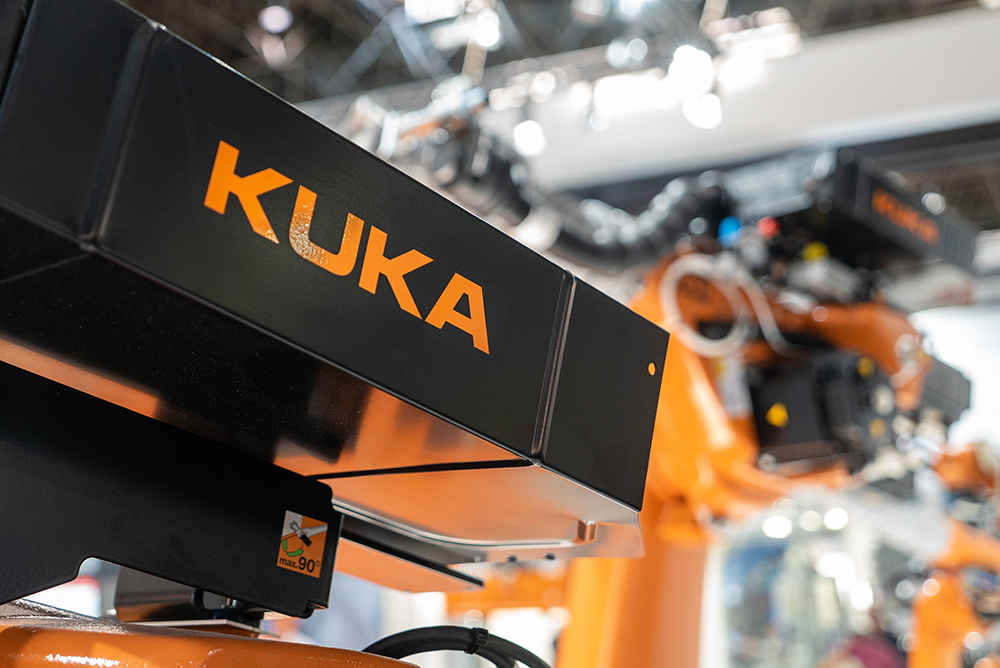
According to the Guardian, a chess-playing robot, “apparently unsettled by the quick responses of a seven-year-old boy, unceremoniously grabbed and broke his finger during a match at the Moscow Open” (Guardian, July 24, 2022). That’s a strange formulation, though, because the robot certainly wasn’t unsettled. It simply does not comply with current safety regulations and should never have been used in this form. Sergey Smagin, vice-president of the Russian Chess Federation, even twists things when he says: “There are certain safety rules and the child, apparently, violated them. When he made his move, he did not realise he first had to wait …” (Guardian, July 24, 2022) In such a setting, the robot should follow safety rules rather than the human. In chess, one is focused on the game and highly tense. One should not still have to adjust to the behavior of the cobot. Cobots are useful tools in production and logistics and also in the service area. The models from Kuka, Franka Emika, or F&P Robotics are very safe to operate. The chess robot that was used in Moscow is not at the current technical level.
Robots by the Hour
“Robots by the Hour” – this is the motto of Formic. The company, which is based in Chicago, buys standard robot arms that perform a simple, repetitive job (such as lifting a piece of metal into a press, which then bends the metal into a new shape) and leases them along with its own software. Wired magazine writes: “They’re among a small but growing number of robots finding their way into workplaces on a pay-as-you-go basis.” (Wired, 18 January 2022) Polar is one of the companies trying out the leasing offer. Jose Figueroa, who manages Polar’s production line, says the robot “costs the equivalent of $8 per hour, compared with a minimum wage of $15 per hour for a human employee. Deploying the robot allowed a human worker to do different work, increasing output …” (Wired, 18 January 2022) Formic writes on its website: “We didn’t invent automated systems, but we democratized them. Because technology doesn’t change the world until you make it accessible to those who need it most. Automation is a necessity, not a luxury. And our mission is to continue the American legacy of innovation by making it your reality.” The future will show whether there is a market for leasing robots.