Towards the KissMachine

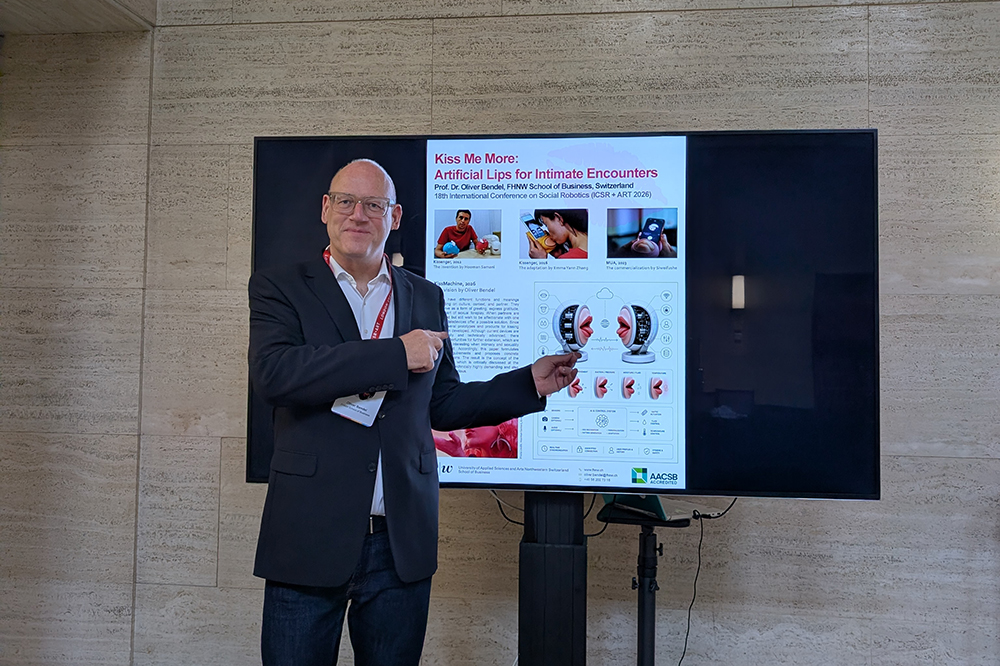
The 18th International Conference on Social Robotics (ICSR + Art 2026) is currently taking place in London from July 1–4, bringing together researchers, academics, and industry professionals from around the world to discuss the latest advances in social robotics. On the second day of the conference, researchers presented their latest work during the poster session, including Oliver Bendel’s paper “Kiss Me More: Artificial Lips for Intimate Encounters”. The title is a tribute to Doja Cat’s hit “Kiss Me More”, reflecting the paper’s focus on technology-mediated intimacy. The paper introduces the concept of the KissMachine, a next-generation telekissing device with artificial lips designed to enable more intimate remote interactions while addressing the technical, social, and ethical challenges of such technology. It also pays tribute to the Kissenger, invented by Hooman Samani in 2012, one of the pioneering telekissing systems that inspired subsequent research in this field. The exchange between Bendel and Samani highlighted both the evolution of telekissing technology over the past decade and the continuing interest in human-centered approaches to social robotics. Further information is available at icsr2026.uk.

Mirumi at ICSR + Art 2026

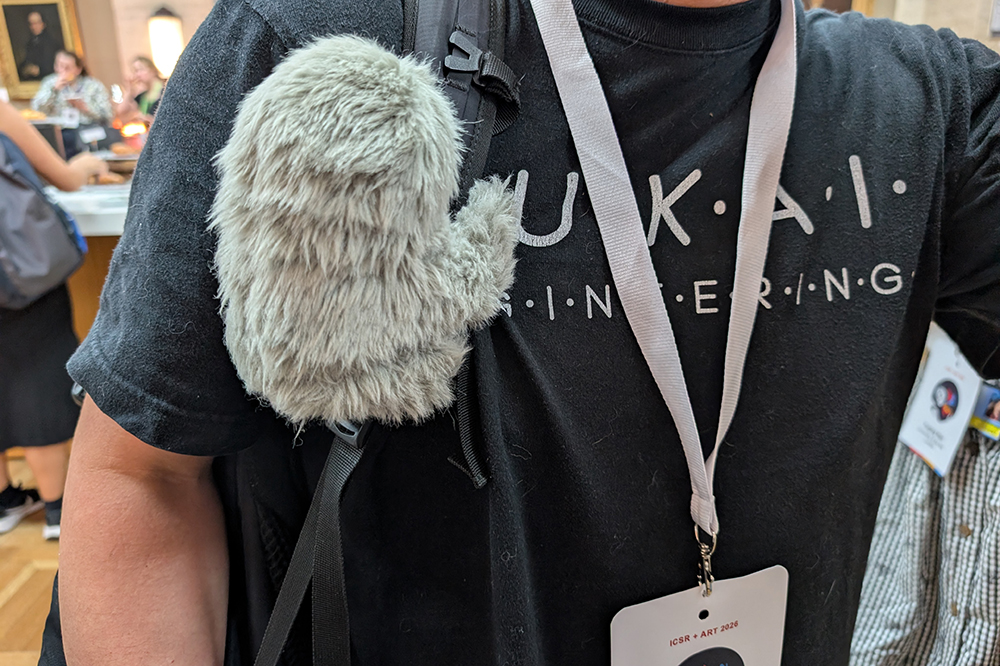
The 18th International Conference on Social Robotics (ICSR + Art 2026) is currently taking place in London from July 1–4, bringing together researchers, academics, and industry professionals from around the world to discuss the latest advances in social robotics. On the second day of the conference, the CEO of Yukai Engineering introduced Mirumi, a wearable social robot designed to create small moments of emotional connection in everyday life. Covered in soft artificial fur, Mirumi clings to a bag strap with its arms and accompanies its owner, turning its head with a shy, curious expression when it hears sounds, is touched, or sometimes simply on its own. Rather than offering practical functions, it encourages spontaneous social interactions and often brings smiles to people nearby. Unlike rigid-bodied robots, Mirumi belongs to a new generation of soft robots, similar to Cupboo AI Robotic Pet, combining plush-like materials with expressive behavior. It can respond to sounds but does not understand speech or recognize words, demonstrating how simple, nonverbal interactions can strengthen human relationships. The live demonstration attracted considerable interest and highlighted the growing role of soft robotics in social robotics research. Further information is available at icsr2026.uk.

Queering Sex Robots

An article titled “Queering Sex Robots Beyond Diversifying Design? Insights from Queer Lacanian Psychoanalysis and New Materialism” by Maaike van der Horst and Anna Puzio was published in the journal Philosophy & Technology in March 2026. Surprisingly, it does not reference several works that are highly relevant to the topic, including publications by Tanja Kubes and Oliver Bendel. As a result, some of the article’s claims to originality appear less convincing than they might otherwise have been. Following an exchange with one of the journal’s editors, Luciano Floridi, Oliver Bendel therefore submitted a commentary, which was published in Philosophy & Technology on June 10, 2026. From the abstract: “This commentary discusses Maaike van der Horst and Anna Puzio’s article ‘Queering Sex Robots Beyond Diversifying Design? Insights from Queer Lacanian Psychoanalysis and New Materialism’. While acknowledging the article’s valuable contribution, particularly its integration of Queer Lacanian Psychoanalysis and New Materialism, the commentary argues that its account of prior scholarship is incomplete. Several key themes and proposals presented as novel – including critiques of humanoid mimicry, new-materialist approaches to sexuality and technology, queer design concepts, relational ontology, and transformative sex robot forms – had already been developed in earlier work by Tanja Kubes and Oliver Bendel. The omission of these contributions affects assessments of originality, the reconstruction of the field’s intellectual development, and the allocation of scholarly credit. The commentary therefore calls for a more comprehensive scholarly genealogy of queer and new-materialist approaches to sex robots and argues that careful citation practices are essential to maintaining the integrity of academic discourse.” The article “Who Queered the Sex Robot? Notes on Attribution and Conceptual History” can be accessed at link.springer.com/article/10.1007/s13347-026-01123-3 (Photo: Cybrothel).

About Mythomorphic Design

The article “It Does Not Always Have to Be a Humanoid Robot: Mythomorphic Design as an Option and a Perspective” by Oliver Bendel was published in Wiley Industry News on May 13, 2026. The philosopher of technology proposes the term “mythomorph” to expand upon the categories of “humanoid” and “animalid” (“zoomorph”). This allows robots such as Mirokaï, Furby, and Cozmo to be better categorized than before. From the abstract: “Social robots are often designed in a humanoid or zoomorphic manner. In addition, there are object-like designs that attempt to avoid imitation of living beings. Nevertheless, humanoid or zoomorphic features may still appear, such as human-like eyes or an animal-like tail. Less common, but clearly present, is a design perspective that can be described as mythomorphic. In this case, humans or animals do not serve, or do not directly serve, as models; instead, extraterrestrials, fantasy figures, or mythological beings are used as inspiration. This contribution first addresses what can be understood by mythomorphic design. It then collects, describes, and classifies examples of social robots that follow this approach. Subsequently, an ontological, aesthetic, and ethical discussion is conducted, with opportunities and risks identified in each case. It becomes apparent that mythomorphic design can be understood as a distinct perspective within the broader design space of social robotics.” The article can be accessed here.

SAGA: Sexuality and Generative AI

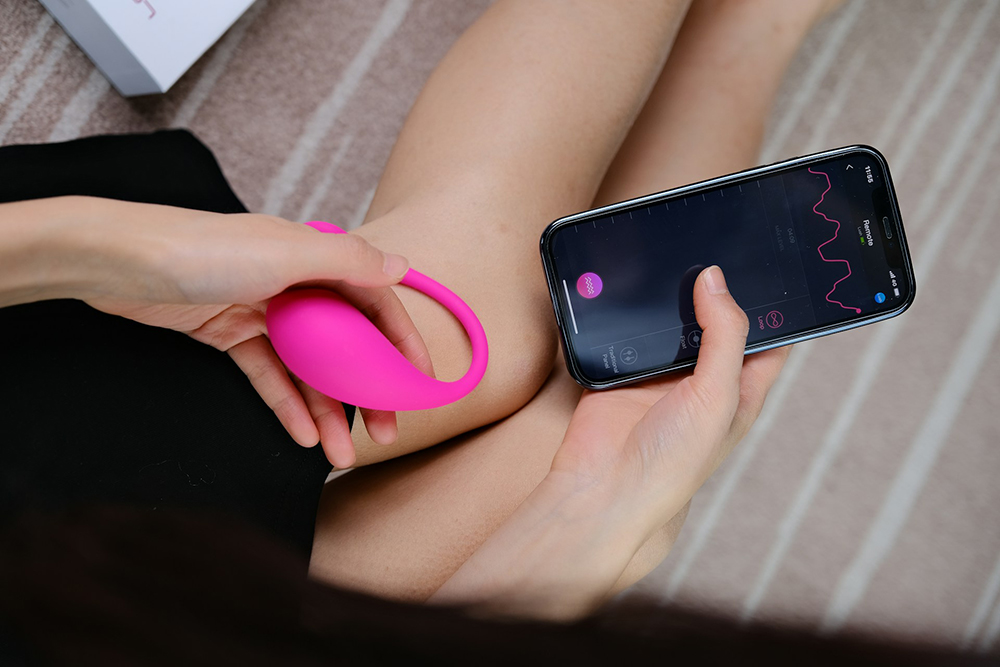
The upcoming “SAGA: Sexuality and Generative AI” symposium, taking place on April 30, 2026 at the Université du Québec à Montréal, explores how generative AI is reshaping intimacy, desire, relationships, and sexual expression. The presentation by Prof. Dr. Oliver Bendel begins with the Tamagotchi, the iconic digital pet that demonstrated how simple interactive systems can evoke emotional attachment. It then turns to social robots, wearable social robots, and AI-enhanced sex toys, love dolls, and sex robots. Today, large language models (LLMs) and multimodal language models (MLLMs) enable dialogue, perception, and evaluation in these systems. Such capabilities may also benefit people with disabilities, including blind users, by facilitating communication and interaction. At the same time, the physical dimension remains crucial. Embodied systems create presence and proximity: they can be touched, held, and stroked, and experienced through movement, vibration, or sound. The talk argues that future intimate technologies will emerge from the convergence of generative intelligence and physical embodiment, combining conversational AI with the sensory experience of a physically present companion. Full details and submissions are available at event.fourwaves.com/sexualiteia/pages.

The First Lunar Hotel

The U.S.-based company GRU Space describes on its website a project called GRU (Galactic Resource Utilization), which aims to establish a series of permanent structures on the Moon. The planned centerpiece of the initiative is a hotel, the “First Lunar Hotel”. The project does not present itself as conventional space tourism – likely also to avoid related criticism – but rather as an early phase of a long-term human presence beyond Earth. GRU targets a small group of participants who are willing to become involved in the construction process at an early stage. The process begins with an application procedure that requires a non-refundable fee. If accepted into the program, a substantial deposit is required, which will later be credited toward the total cost. Final pricing has not yet been set but is expected to exceed 10 million U.S. dollars. In addition, medical, personal, and financial screenings are planned. Applications are to be reviewed starting in 2026, with an initial lunar mission for technical preparation scheduled for 2029. From 2031 onward, habitats such as the Lunar Cave Base are to be installed and training activities are to begin. Subsequently, the first hotel on the Moon is expected to begin operations – according to the timeline on the website, as early as 2032. In illustrations, the structure oscillates between ancient temples, Palladian villas, and Swiss grand hotels as imagined by American politicians. Whether the project will materialize remains uncertain, not only because of the high upfront payment required, but also due to the technical challenges and environmental implications. Further information is available at www.gru.space/reserve (Image: Lunar Cave Base, based on an illustration by GRU Space, generated with GPT Image).

Start of the VISUAL Project

The kick-off meeting for the VISUAL project took place on March 20, 2025. It was initiated by Prof. Dr. Oliver Bendel from the FHNW School of Business. “VISUAL” stands for “Virtual Inclusive Safaris for Unique Adventures and Learning”. There are webcams all over the world that show wild animals. Sighted people can use them to go on a photo safari from the comfort of their sofa. Blind and visually impaired people are at a disadvantage. As part of Inclusive AI – an approach and a movement that also includes apps such as Be My Eyes with the Be My AI function – a solution is to be found for them. The aim of the project is to develop a prototype by August 2025 that enables blind and visually impaired people to have webcam images or videos of wild animals described to them. The system analyzes and evaluates them with the help of a multimodal LLM. It presents the results in spoken language via an integrated text-to-speech engine. As a by-product, poaching, bush and forest fires and other events can be detected. The project is likely to be one of the first to combine inclusive AI with new approaches to animal-computer interaction (ACI). Doris Jovic, who is completing her degree in BIT, has been recruited to work on the project.

Malicious Attacks Against Autonomous Vehicles

In their paper “Malicious Attacks against Multi-Sensor Fusion in Autonomous Driving”, the authors present the first study on the vulnerability of multi-sensor fusion systems using LiDAR, camera, and radar. “Specifically, we propose a novel attack method that can simultaneously attack all three types of sensing modalities using a single type of adversarial object. The adversarial object can be easily fabricated at low cost, and the proposed attack can be easily performed with high stealthiness and flexibility in practice. Extensive experiments based on a real-world AV testbed show that the proposed attack can continuously hide a target vehicle from the perception system of a victim AV using only two small adversarial objects.” (Abstract) In an article for ICTkommunikation on 6 March 2024, Oliver Bendel presented ten ways in which sensors can be attacked from the outside. On his behalf, M. Hashem Birahjakli investigated further possible attacks on self-driving cars as part of his final thesis in 2020. ‘The results of the work suggest that every 14-year-old girl could disable a self-driving car.’ Boys too, of course, if they have comparable equipment with them (Image: Ideogram).

AAAI Spring Symposia Return to their Roots

The AAAI Spring Symposium Series will be held at Stanford University on March 25-27, 2024. The symposium co-chairs are Christopher Geib (SIFT, USA) and Ron Petrick (Heriot-Watt University, UK). Since 2019, the Association for the Advancement of Artificial Intelligence has not published the proceedings itself, but left this to the organizers of the individual symposia. This had unfortunate consequences. For example, some organizers did not publish the proceedings at all, and the scientists did not know this in advance. This, in turn, had consequences for the funding of travel and fees, since many universities will only pay for their members to attend conferences if they are linked to a publication. This major flaw, which damaged the prestigious conference, was fixed in 2024. As of this year, AAAI once again offers centralized publication, along with an excellent quality assurance process. Over the past ten years, the AAAI Spring Symposia have been relevant not only to classical AI, but also to roboethics and machine ethics. Groundbreaking symposia were, for example, “Ethical and Moral Considerations in Non-Human Agents” in 2016, “AI for Social Good” in 2017, or “AI and Society: Ethics, Safety and Trustworthiness in Intelligent Agents” in 2018. In 2024, you can look forward to the “Impact of GenAI on Social and Individual Well-being” symposium, which will focus on an app for the blind and GPTs as virtual learning companions (VLCs), among other things. More information is available at aaai.org/conference/spring-symposia/sss24/ (Image: DALL-E 3).

Tenderness in Digitality

The book “Tender Digitality”, edited by Charlotte Axelsson from the Zurich University of the Arts, will be published in early February 2024. From the publisher’s website: “Tender Digitality introduces an aesthetically oriented concept that intricately intertwines binary systems in a complex manner, setting them in motion. The concept responds to the human desire for sensuality, interpersonal connection, intuition, and well-being in digital environments. It explores ways to (re)transmit these experiences into the analog world of a book, developing its own distinct vocabularies. Readers are guided through the various perspectives of this kaleidoscope, encouraging them to delve into different play-forms of ‘tender digitality’ and develop their own approach. Assuming the role of researchers, they discover phenomena of extraordinary beauty or bizarreness within the spectrum spanning analogue and digital, social, and technological domains. Through exploration, learning, and the cultivation of ‘tender digitality,’ readers can envision their own version of a community where individuals and artificial intelligences, avatars and cyborgs, humans and computers navigate digital landscapes with agency, intuition, and sensitivity.” (Website Slanted) Contributors include Charlotte Axelsson, Oliver Bendel, Dana Blume, Marisa Burn, Alexander Damianisch, Léa Ermuth, Hannah Eßler, Barbara Getto, Leoni Hof, Marcial Koch, Mela Kocher, Friederike Lampert, Gunter Lösel, Francis Müller, Marie-France Rafael, Oliver Ruf, Sascha Schneider, and Grit Wolany. More information at www.slanted.de/product/tender-digitality/ (Photo: © ZHdK).