Alter3 in Venice

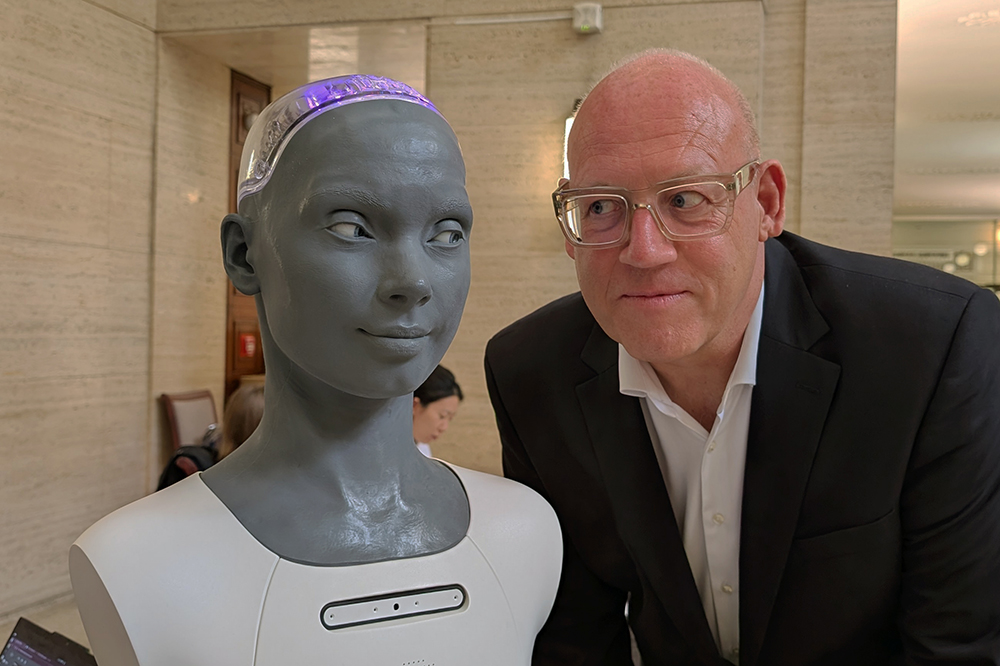
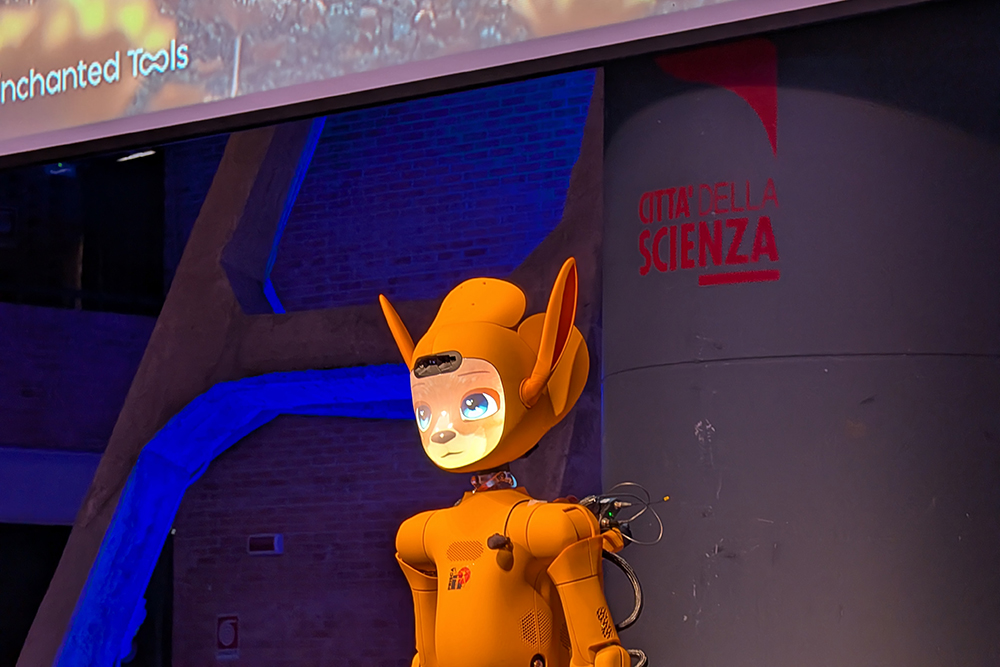
The installation entitled “Am I a Strange Loop?” will be on display at the 2025 Architecture Biennale in Venice. It raises the question of whether artificial intelligence can develop a form of self-awareness. The installation features the humanoid robot Alter3, which has mimic, gestural, and verbal abilities. It uses GPT-4 or GPT-5. Visitors can communicate with it in different languages via a microphone. The installation draws on ideas from physicist, computer scientist, and cognitive scientist Douglas Hofstadter, who assumed that consciousness arises when a system reflects on itself. Alter3 is an impressive robot with a silicone face and silicone hands, but otherwise has a machine-like presence. GPT-4, GPT-5, or other language models cannot create either world consciousness or self-awareness.

Initial Thoughts on Wearable Social Robots

Wearable social robots are very small yet extremely powerful systems that can be worn around the neck, on the body, or in a shoulder bag or handbag. They are not only companions to humans, but become part of them by expanding their senses and means of expression. The article entitled “This robot suits you well!” (subtitle: “On the phenomenon of wearable social robots”) by Oliver Bendel defines the term “wearable social robots”, presents areas of application, and discusses social and ethical challenges. Recommendations for developers and users are also provided. It becomes clear that wearable social robots represent novel tools and extensions or enhancements of humans, whose capabilities go beyond those of apps on smartphones. The article was published on September 25, 2025, in Wiley Industry News, not only in German but also in English. It can be accessed at www.wileyindustrynews.com/de/fachbeitraege/dieser-roboter-steht-ihnen-aber-gut or www.wileyindustrynews.com/en/contributions/that-robot-suits-you-well.

ICSR + Art 2026 in London

The 18th International Conference on Social Robotics (ICSR + Art 2026) will take place in London, UK, from July 1–4, 2026. ICSR is the leading international forum that brings together researchers, academics, and industry professionals from across disciplines to advance the field of social robotics. For its 18th edition, the conference will feature the special theme ICSR + Art, exploring how robots can transcend their traditional roles to become tools and collaborators in creative practices. At the same time, the conference remains fully open to the entire spectrum of social robotics research, including human–robot interaction, medical and assistive robotics, AI and machine learning, ethics, design, education, cultural applications, and beyond. Accepted papers will be published in Springer’s Lecture Notes in Artificial Intelligence (LNAI) series and indexed in major databases. In addition to regular and short papers, the program will include workshops and special sessions designed to foster exchange across disciplines and communities. Paper submissions are due by February 15, 2026, with notifications on April 15, 2026, and camera-ready papers due May 15, 2026. Proposals for workshops and special sessions are welcome until December 1, 2025. Further information is available at icsr2026.uk.

Oliver Bendel on Wearable Social Robots

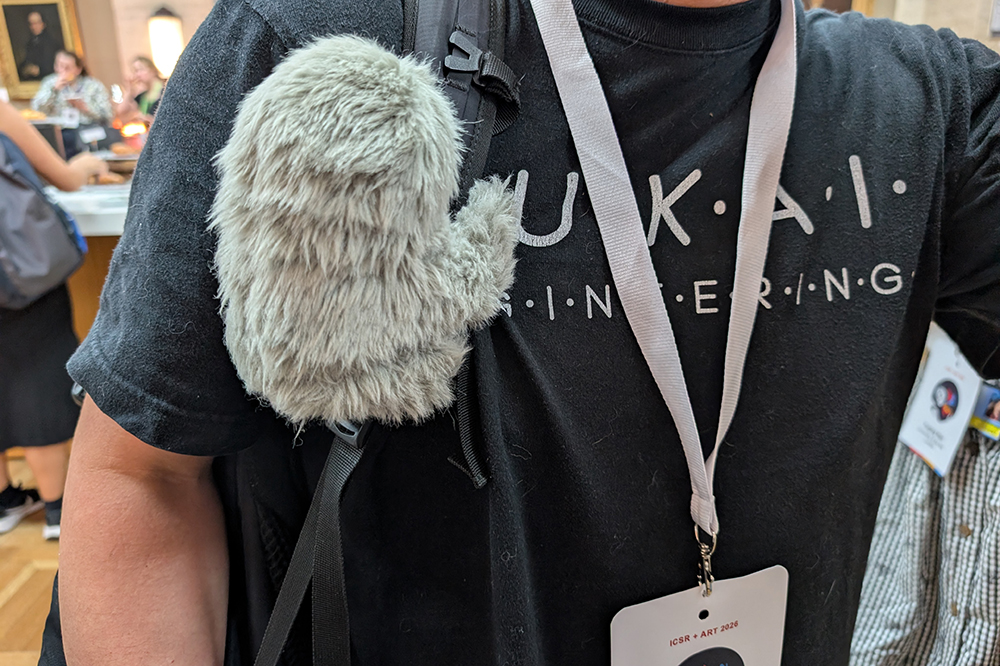
At the last session of the ICSR on September 12, 2025, Oliver Bendel presented his full paper titled “Wearable Social Robots for the Disabled and Impaired”. He began by defining the term wearable social robots, which he sees as a special form and combination of wearable robots and social robots. One example is AIBI, a small robot that he briefly wore around his neck during the talk. Wearable social robots can include functions for games and entertainment, information and learning, navigation and description, and combating loneliness and anxiety. Potential user groups include pupils and students, prison inmates, astronauts, and disabled and impaired persons. Franziska and Julia demonstrated in videos how they use AIBI as a companion and for social support. With this paper, Oliver Bendel continued his work in the field of inclusive AI and inclusive Robotics. The ICSR is one of the leading conferences for social robotics worldwide, and its 17th edition took place from September 10 to 12, 2025, in Naples, Italy. Mariacarla Staffa (University of Naples Parthenope, Italy), John-John Cabibihan (Qatar University, Qatar), and Bruno Siciliano (University of Naples Federico II) served as the main organizers. Over the course of the three days, 300 participants attended, contributing once again to the advancement of social robotics.

Small Talk with a Robot

At the last day of the ICSR on September 12, 2025, Katharina Kühne presented her full paper titled “Small Talk with a Robot Reduces Stress and Improves Mood” (written together with Antonia L. Z. Klöffel, Oliver Bendel, and Martin H. Fischer). Previous research has shown that social support reduces stress and improves mood. This study tested whether small talk with a social robot could be helpful. After performing a stressful task, 98 participants either chatted with a NAO robot, listened to the robot tell a neutral story, or did not interact with the robot. Both robot interactions reduced stress – particularly small talk, which also boosted positive mood. The effects were stronger in participants with high acute stress. Positive affect played a key role in stress reduction, suggesting that robot-mediated small talk may be a useful tool for providing emotional support. Dr. Katharina Kühne and Prof. Dr. Martin H. Fischer are researchers at the University of Potsdam. Antonia L. Z. Klöffel assists Katharina Kühne as a junior scientist. Martin Fischer is the head of the Potsdam Embodied Cognition Group (PECoG). Prof. Dr. Oliver Bendel is an associated researcher with PECoG.

About Robots in Space

On September 10, 2025, Tamara Siegmann and Oliver Bendel presented their short paper “Wearable Social Robots in Space” at the ICSR poster session. The ICSR is one of the leading conferences for social robotics worldwide. The 17th edition takes place from 10 to 12 September 2025 in Naples, Italy.  The term “wearable social robots” was introduced by Oliver Bendel in his article “Wearable Robots” and in his full paper “Wearable Social Robots for the Disabled and Impaired” (both from 2025). These are social robots with features of wearables and wearable robots. One example is AIBI from LivingAI. Tamara Siegmann and Oliver Bendel, both from the FHNW School of Business, investigated possibilities for the use of wearable social robots in a Mars mission. They demonstrated that these are useful for daily routine support, operational assistance, intimacy-related support, communication enhancement, and social facilitation. This is the first study of its kind. However, reference could be made to several projects involving humanoid and social robots for space missions. The poster can be downloaded here.

The 17th Edition of the ICSR

Mariacarla Staffa (University of Naples Parthenope, Italy) opened the ICSR 2025 on September 10, 2025, together with Bruno Siciliano (University of Naples Federico II). The ICSR is one of the leading conferences for social robotics worldwide. The 17th edition takes place from 10 to 12 September 2025 in Naples, Italy. Daniela Rus (MIT) then gave her keynote speech on “Physical AI”. From the abstract: “In today’s robot revolution a record 3.1 million robots are now working in factories, doing everything from assembling computers to packing goods and monitoring air quality and performance. A far greater number of smart machines impact our lives in countless other ways – improving the precision of surgeons, cleaning our homes, extending our reach to distant worlds – and we’re on the cusp of even more exciting opportunities. Future machines, enabled by recent advances in AI, will come in diverse forms and materials, embodying a new level of physical intelligence. Physical Intelligence is achieved when AI’s power to understand text, images, signals, and other information is used to make physical machines such as robots intelligent. However, a critical challenge remains: balancing AI’s capabilities with sustainable energy usage. To achieve effective physical intelligence, we need energy-efficient AI systems that can run reliably on robots, sensors, and other edge devices. In this talk I will discuss the energy challenges of foundational AI models, I will introduce several state space models and explain how they achieve energy efficiency, and I will talk about how state space models enable physical intelligence.” The approximately 300 participants at the renowned conference on social robotics applauded and then went on to parallel sessions featuring lectures, workshops, and poster presentations.

When Animals and Robots Meet

The volume “Animals, Ethics, and Engineering: Intersections and Implications”, edited by Rosalyn W. Berne, was published on 7 August 2025. The authors include Clara Mancini, Fiona French, Abraham Gibson, Nic Carey, Kurt Reymers, and Oliver Bendel. The title of Oliver Bendel’s contribution is “An Investigation into the Encounter Between Social Robots and Animals”. The abstract reads: “Increasingly, social robots and certain service robots encounter, whether this is planned or not, domestic, farm, or wild animals. They react differently, some interested, some disinterested, some lethargic, some panicked. Research needs to turn more to animal-robot relationships, and to work with engineers to design these relationships in ways that promote animal welfare and reduce animal suffering. This chapter is about social robots that are designed for animals, but also those that – for different, rather unpredictable reasons – meet, interact, and communicate with animals. It also considers animal-friendly machines that have emerged in the context of machine ethics. In the discussion section, the author explores the question of which of the presented robots are to be understood as social robots and what their differences are in their purpose and in their relationship to animals. In addition, social and ethical aspects are addressed.” The book was produced by Jenny Publishing and can be ordered via online stores.

Unitree Launches Humanoid Robot R1

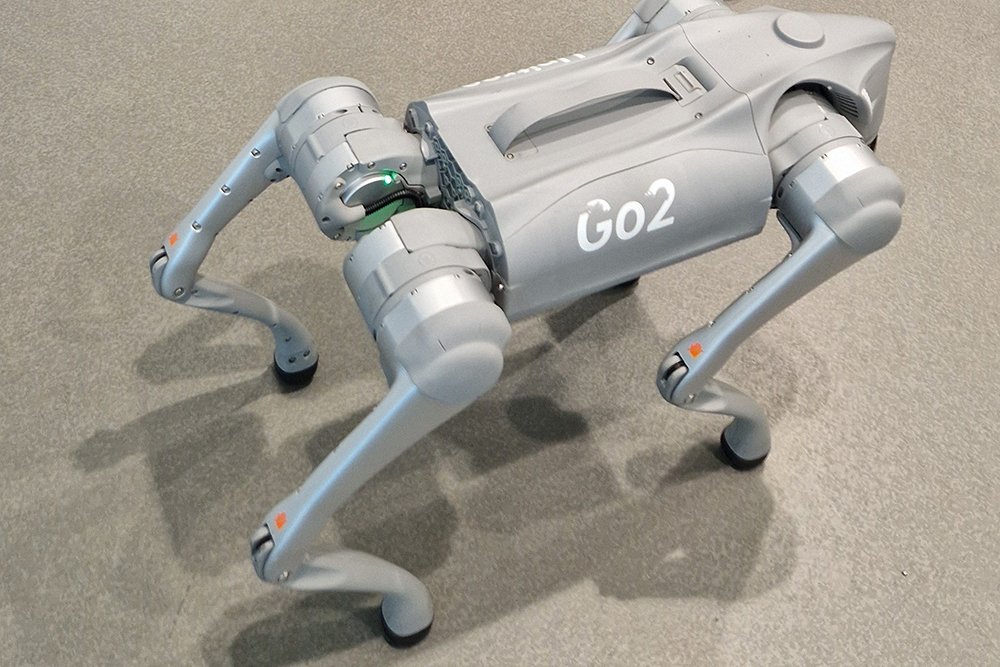
The Chinese manufacturer Unitree announced a new bipedal humanoid robot, the R1, on LinkedIn on July 25, 2025. Weighing around 25 kilograms, it is lighter than its predecessor, the G1 (35 kilograms), and significantly more affordable. The starting price is 39,900 yuan (approximately 5,566 USD), compared to 99,000 yuan for the G1. The R1 uses a Multimodal Large Language Model (MLLM) that combines speech and image processing. Equipped with highly flexible limbs – including six dual-axis leg joints, a movable waist, two arms, and a mobile head – it offers a wide range of motion. Unitree positions the R1 as an open platform for developers and researchers. The goal is to make humanoid robots more accessible to a broader market through lower costs and modular technology. In addition to bipedal robots, the company has also been offering quadrupedal robots for several years, such as the Unitree Go1 and Unitree Go2 (Image: ChatGPT/4o Image).

Pepper and NAO in Chinese Hands

Shenzhen-based Maxvision Technology Corp. has acquired the core assets of French robotics pioneer Aldebaran, including its iconic humanoid robots NAO and Pepper. This was reported by The Robot Report in its article “Maxvision buys core robot assets of Aldebaran, including Nao and Pepper” from July 19, 2025. The move follows Aldebaran’s bankruptcy and receivership earlier this year. The company, founded in 2005, became known for designing approachable humanoid robots for education, healthcare, retail, and research. Maxvision stated that the acquisition will bolster its R&D in emotional interaction and motion control, expand its product portfolio into humanoid robotics, and support global expansion – particularly in Europe and North America. According to The Robot Report, strategic sectors include eldercare, education, border security, and emergency services. To honor Aldebaran’s legacy, Maxvision plans to establish a French subsidiary, retaining local teams and investing in continued innovation, especially in education and healthcare applications.