Off the Record

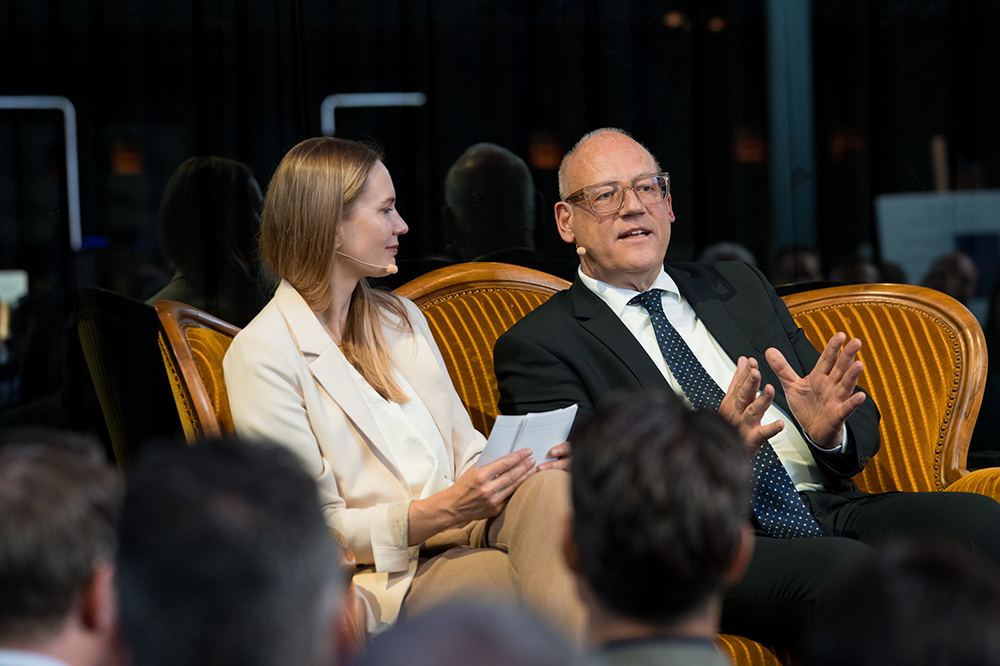
After generative AI, robotics is the topic of the moment – and, of course, the two can be combined. On May 21, 2026, Walder Wyss hosted a robotics event at Kraftwerk Zurich as part of its “Off the Record” series, beginning at 6:00 p.m. Friends and clients of the law firm were invited to attend. The discussion covered traditional service robots as well as general-purpose robots—and social robots. The panel featured Prof. Dr. Oliver Bendel, a philosopher of technology and business information systems scholar who has been working extensively with chatbots, voice assistants, and social robots for decades, and Sylvia Stocker, CEO of Arabesque. The event was moderated by Ramona Wyss and Florian Gunz. Since May 27, 2026, photographs from the event have been available. They feature not only the speakers and moderators but also several of the robots present at the venue, including Unitree G1, Mars, and Pepper. In its corporate brochure, the law firm describes itself as follows: “We are a dynamic law firm with flat structures and a very friendly atmosphere. More than 300 legal experts make Walder Wyss one of the most successful Swiss commercial law firms. Our clients include national and international companies, publicly held corporations and family businesses as well as public law institutions and individuals.” (Photo: Walder Wyss)

From Machine Ethics to EU Law

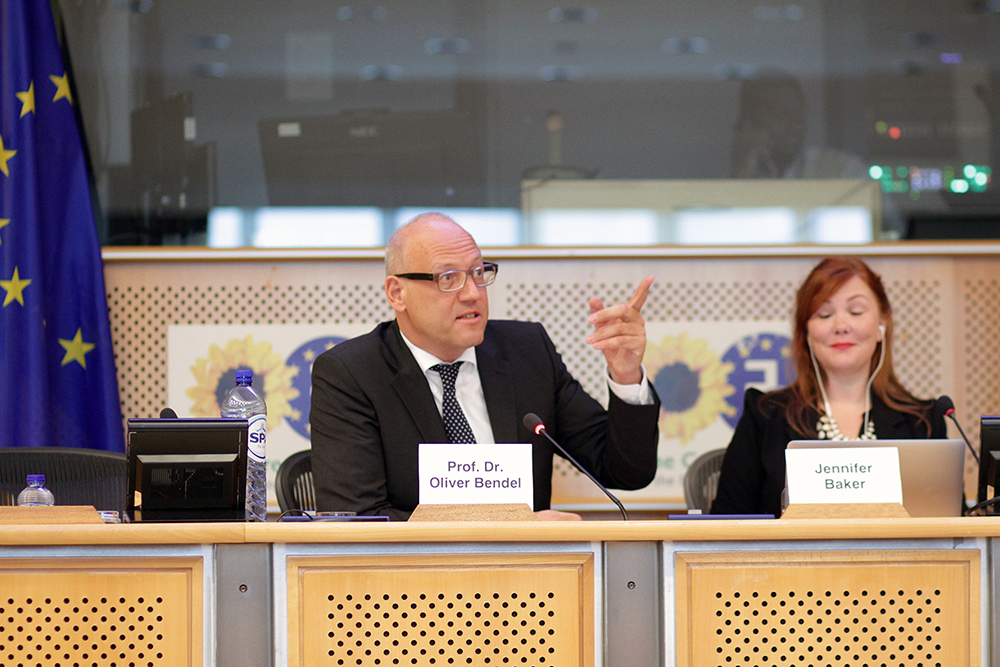
In Article 50, “Transparency Obligations for Providers and Deployers of Certain AI Systems”, of the EU Artificial Intelligence Act, it is stated: “Providers shall ensure that AI systems intended to interact directly with natural persons are designed and developed in such a way that the natural persons concerned are informed that they are interacting with an AI system, unless this is obvious from the point of view of a natural person who is reasonably well-informed, observant and circumspect, taking into account the circumstances and the context of use.” On this subject, the European Parliament had already been advised ten years earlier by Oliver Bendel. In his lecture “Moral and Immoral Machines – Moralische und unmoralische Maschinen” in Brussels on September 8, 2016, he presented GOODBOT, a chatbot initiated by him in 2013 in the context of machine ethics, which featured several escalation levels while repeatedly making clear that it was merely a machine. At the Digital Europe Working Group Conference Robotics on November 8, 2017, Bendel also spoke online about related questions in machine ethics. In connection with a care robot, he raised the question: “Should the robot make clear that it’s just a machine?” The transparency obligations set out in Article 50 will enter into force on August 2, 2026.

Towards Accessible Everyday Assistance

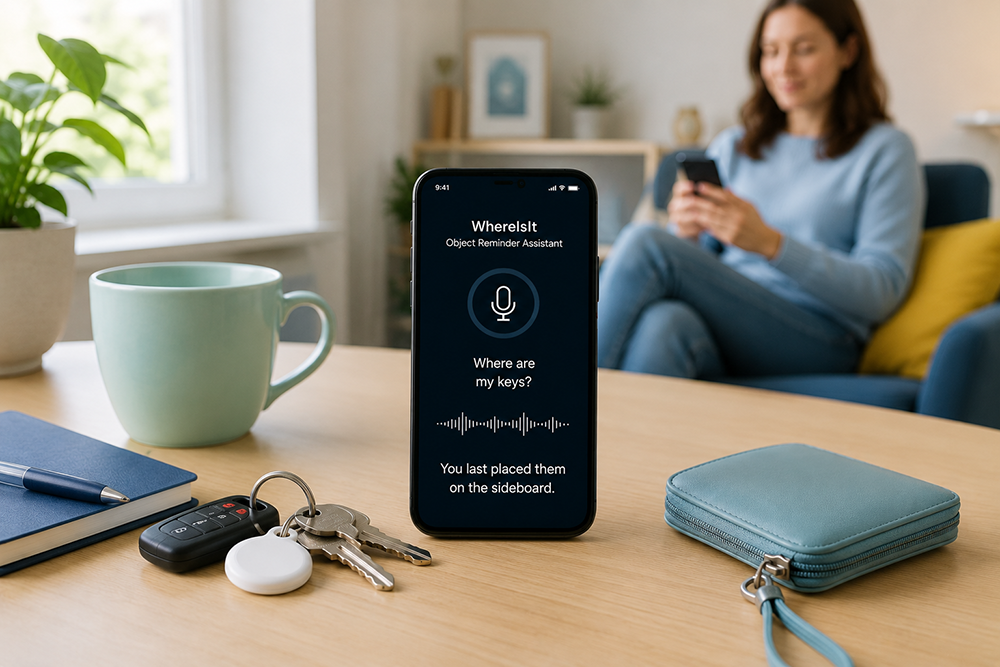
WhereIsIt, an object reminder assistant for blind and severely visually impaired people initiated by Prof. Dr. Oliver Bendel and implemented by Damian Huckele, reached its mid-term presentation on May 19, 2026. The inclusive AI project focuses on a lightweight speech-based system that allows users to store and retrieve object locations without continuous camera use. The work completed so far includes the literature review, problem analysis, requirements definition and the first system design concept. An important milestone was an expert interview with Steve Weidel, blind developer, founder of INKLUTEC and specialist in accessibility and assistive AI technologies. The interview confirmed the practical relevance of the project and highlighted key requirements such as simple voice interaction, portability, reminder functions and optional Bluetooth tags with acoustic tracking. The planned prototype architecture is Python-based and combines speech recognition, language processing, local object-location storage and text-to-speech output. The next project phases include prototype development, testing and the evaluation of Bluetooth integration.

Authentic and Non-Authentic Laughter

The paper “Reading Between the Laughs: A Human-Referenced Audio Evaluation of MLLMs for Social Robotics” by Sahan Hatemo, Katharina Kühne, and Oliver Bendel has been accepted at ICSR + Art 2026. In this work, the researchers investigated whether today’s leading AI models can distinguish authentic from non-authentic laughter based solely on audio signals. The results revealed striking differences in model behavior: OpenAI systems showed a strong tendency to interpret most laughter as genuine, while Gemini models were generally more skeptical. Despite these contrasting biases, several models performed significantly better than chance, with Gemini 2.5 Pro achieving the strongest overall results. Their analysis also demonstrated that less capable models often relied on superficial cues such as pitch, disproportionately labeling higher-pitched laughter as less authentic, whereas the top-performing model appeared to focus on more sophisticated voice quality features, suggesting a deeper understanding of laughter authenticity. These findings highlight the growing potential of multimodal large language models in social robotics, where accurately interpreting subtle social signals like laughter could play an important role in trust, communication, and relationship building between humans and robots. The 18th International Conference on Social Robotics will take place in London, UK, from 1-4 July 2026. ICSR is the leading international forum that brings together researchers, academics, and industry professionals from across disciplines to advance the field of social robotics.

A Virtual Buddy for Inmates

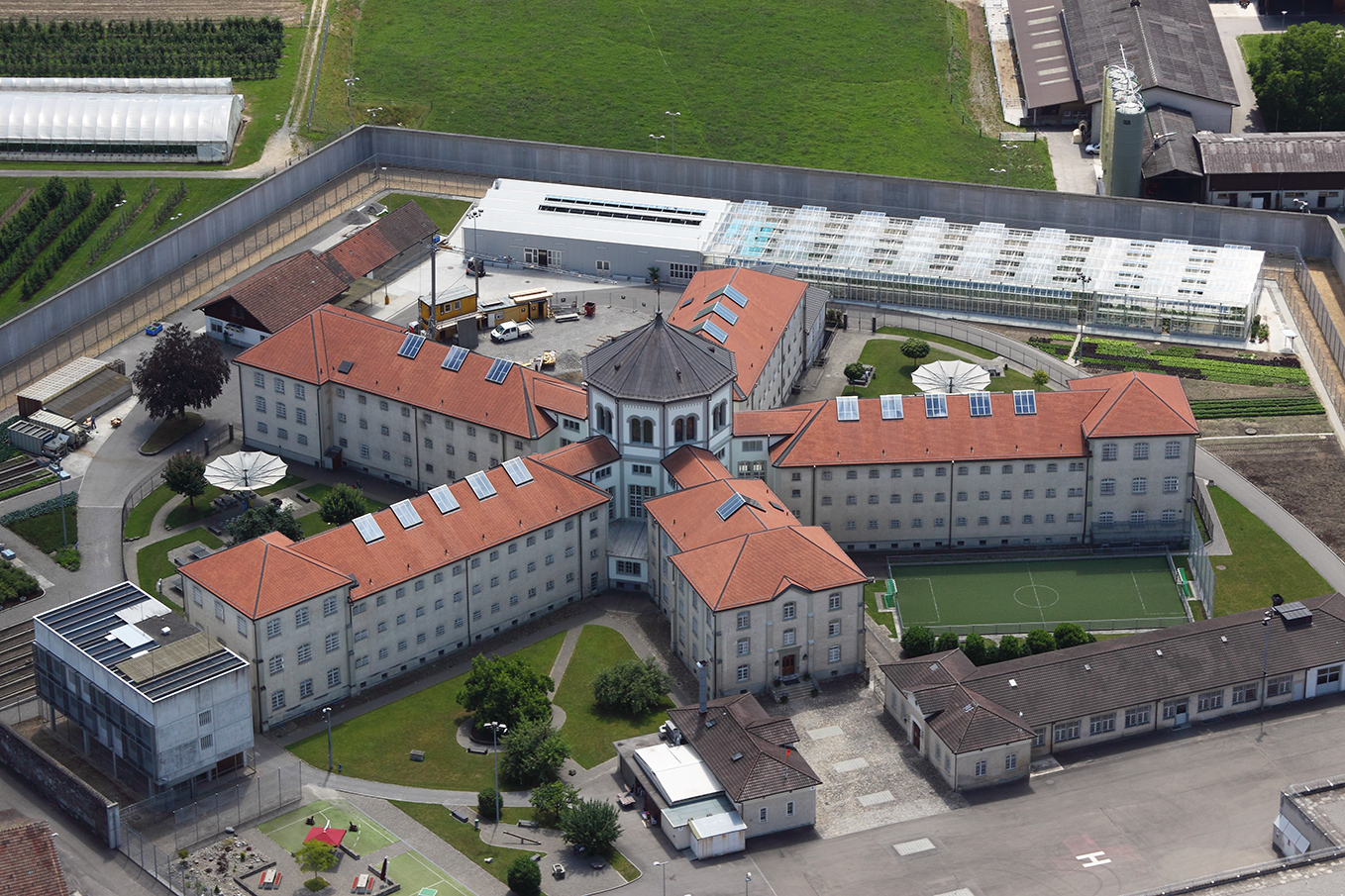
Inmates in Swiss correctional facilities have only limited access to digital technologies and little contact with the outside world. At the same time, they spend several hours each day in their cells. The project “Chatbots for Inmates” (short title) aims to address this situation: an LLM-based chatbot is intended to serve as a virtual buddy that enables conversations, reduces loneliness, and strengthens social and digital skills. The project was initiated by Tamara Siegmann, founder of the start-up SIEG – Smart Innovation Engineering Group by Siegmann and a student at the FHNW School of Business. She serves as project leader; Prof. Dr. Oliver Bendel is responsible for the project, and Stephan Vonschallen is a project collaborator. The application partner is Lenzburg Prison (JVA Lenzburg), represented by its director Marcel Ruf. The chatbot will run offline on tablets used by the inmates. In a pilot phase, the solution will initially be tested on two or three tablets and later on 30 tablets. The project will investigate whether a digital conversational partner can improve inmates’ well-being and support them in developing skills for life after release. The project began on March 1, 2026, and is supported by an innovation voucher (Innoscheck) from Innosuisse as well as by the Institute for Information Systems at the FHNW School of Business. Back in 2024, Tamara Siegmann and Oliver Bendel carried out a project on Swiss prisons, investigating whether collaborative and social robots could and should be used there. The paper can be downloaded or purchased here (Photo: Boehlich, Wikimedia, CC0 1.0 Universal).

WhereIsIt: An Object-Location Reminder

Blind and severely visually impaired people depend in everyday life on systematically placing objects or remembering their location. Because visual control is lacking, everyday items such as keys, medication, documents, or technical aids are often misplaced or must be searched for with considerable effort. This leads to loss of time, stress, and unnecessary dependence on other people. Existing solutions such as Microsoft’s “Find My Things” often rely on visual object recognition or complex assistance systems. These are technically demanding, prone to errors, energy-intensive, and not always acceptable from a privacy perspective. What is needed is a simple, robust, and practical solution for everyday use that does not require continuous camera usage and can be operated intuitively. A speech-based object reminder assistant called WhereIsIt is being developed on the initiative of Prof. Dr. Oliver Bendel. The user can use voice input to record which object has been placed where (e.g., “I put my medication on the kitchen table”). The information is stored locally and provided with a timestamp. When asked later (“Where is my medication?”), the system outputs the last known location via speech. Optionally, inexpensive Bluetooth tags can be used that emit an additional acoustic signal to make the object physically easier to locate. The focus is on ease of use, low technical complexity, and high reliability. Possible technical components include: voice capture and speech recognition; extraction of object and location information; local data storage with time reference; voice-based feedback; optional integration of BLE tags. When AI components are used, it is a project within Inclusive AI. The kick-off meeting will take place on March 17, 2026 at the FHNW School of Business. Damian Huckele has been recruited to implement the project.

The ECHO Project has Come to an End

The project “ECHO: Explaining Composition, Harmony & Orchestration” was initiated by Prof. Dr. Oliver Bendel and implemented by Lucas Chingis Marty. The final presentation took place on February 19, 2026, at the FHNW Campus Brugg-Windisch. The bachelor’s thesis “ECHO: Explaining Composition, Harmony & Orchestration – A Multimodal AI System for Music Analysis and Education” develops a local multimodal AI system for the analysis and accessible explanation of musical structures based on audio data. The objective is to bridge the gap between music information retrieval (MIR, an automatic audio analysis) and natural language explanation through large language models. The system combines multiple analysis components (tempo, key, chord, instrument, and melody recognition) with a locally operated language model (Llama 3.1-8B) that translates the extracted data into understandable explanations for beginners and intermediate users. Retrieval-augmented generation (RAG), guardrails to reduce hallucinations, and a feedback and evaluation system are employed as part of the approach. The implementation is realized as a desktop application without cloud dependency. The evaluation includes technical measurements on datasets comprising several hundred music tracks as well as a small user study. The thesis demonstrates that a locally operated system can in principle present musical analysis in an understandable way, although clear accuracy limitations of the applied MIR methods remain. Opportunities could open up not only for music education, but also for the preservation of endangered music.

AI and Human Creativity

As part of the AAAI Spring Symposia, the symposium “Will AI Light Up Human Creativity or Replace It?: Toward Well-Being AI for co-evolving human and machine intelligencefocuses on how advances in generative AI, large language models, and multi-agent systems are transforming human creativity and decision-making. It addresses the central question of whether AI will amplify human potential or increasingly take its place. The symposium advances the idea of Well-Being AI, emphasizing human-AI collaboration and co-evolution rather than AI as an isolated or autonomous system. While highlighting the potential of AI to support creativity, discovery, and personal development, it also examines risks such as overreliance, reduced diversity of thought, and loss of human autonomy. Chaired by Takashi Kido (see photo) of Teikyo University and Keiki Takadama of The University of Tokyo, the symposium brings together researchers and practitioners from technical, philosophical, and social disciplines to discuss principles and frameworks for AI that augments rather than replaces human creativity. Further information on this symposium and the broader AAAI Spring Symposia organized by the Association for the Advancement of Artificial Intelligence can be found at https://aaai.org/conference/spring-symposia/sss26/ and webpark2506.sakura.ne.jp/aaai/sss26-will-ai-light-up-human-creativity-or-replace-it/.

Towards Inclusive AI and Inclusive Robotics

The article “Wearable Social Robots for the Disabled and Impaired” by Oliver Bendel was published on December 23, 2025. It is part of the volume “Social Robotics + AI: 17th International Conference, ICSR+AI 2025, Naples, Italy, September 10–12, 2025, Proceedings, Part III.” From the abstract: “Wearable social robots can be found on a chain around the neck, on clothing, or in a shirt or jacket pocket. Due to their constant availability and responsiveness, they can support the disabled and impaired in a variety of ways and improve their lives. This article first identifies and summarizes robotic and artificial intelligence functions of wearable social robots. It then derives and categorizes areas of application. Following this, the opportunities and risks, such as those relating to privacy and intimacy, are highlighted. Overall, it emerges that wearable social robots can be useful for this group, for example, by providing care and information anywhere and at any time. However, significant improvements are still needed to overcome existing shortcomings.” The technology philosopher presented the paper on September 12, 2025, in Naples. It can be downloaded from link.springer.com/chapter/10.1007/978-981-95-2398-6_8.

Human-likeness in AI

The Research Topic “Exploring human-likeness in AI: From perception to ethics and interaction dynamics”, hosted by Frontiers in Cognition, invites contributions on how human-like features in robots and AI systems influence user perception, trust, interaction, and ethical considerations. The deadline for submission has been extended. As AI becomes more integrated into society, anthropomorphic design raises pressing questions: Do human-like traits improve communication and acceptance, or do they lead to unrealistic expectations? What ethical implications arise when machines simulate empathy or emotion? This interdisciplinary call welcomes contributions from fields such as psychology, engineering, philosophy, and education. Submissions may include empirical research, theoretical analysis, reviews, or case studies that explore how human-likeness shapes the way we engage with AI. The deadline for manuscript summaries is February 12, 2026; full manuscripts are due by March 12, 2026. Articles will undergo peer review and are subject to publication fees upon acceptance. Topic editors are Dr. Katharina Kühne (University of Potsdam, Germany) and Prof. Dr. Roger K. Moore (The University of Sheffield, United Kingdom). For full details and submission guidelines, visit: www.frontiersin.org/research-topics/72370/exploring-human-likeness-in-ai-from-perception-to-ethics-and-interaction-dynamics.