From Machine Ethics to EU Law

In Article 50, “Transparency Obligations for Providers and Deployers of Certain AI Systems”, of the EU Artificial Intelligence Act, it is stated: “Providers shall ensure that AI systems intended to interact directly with natural persons are designed and developed in such a way that the natural persons concerned are informed that they are interacting with an AI system, unless this is obvious from the point of view of a natural person who is reasonably well-informed, observant and circumspect, taking into account the circumstances and the context of use.” On this subject, the European Parliament had already been advised ten years earlier by Oliver Bendel. In his lecture “Moral and Immoral Machines – Moralische und unmoralische Maschinen” in Brussels on September 8, 2016, he presented GOODBOT, a chatbot initiated by him in 2013 in the context of machine ethics, which featured several escalation levels while repeatedly making clear that it was merely a machine. At the Digital Europe Working Group Conference Robotics on November 8, 2017, Bendel also spoke online about related questions in machine ethics. In connection with a care robot, he raised the question: “Should the robot make clear that it’s just a machine?” The transparency obligations set out in Article 50 will enter into force on August 2, 2026.

Towards Accessible Everyday Assistance

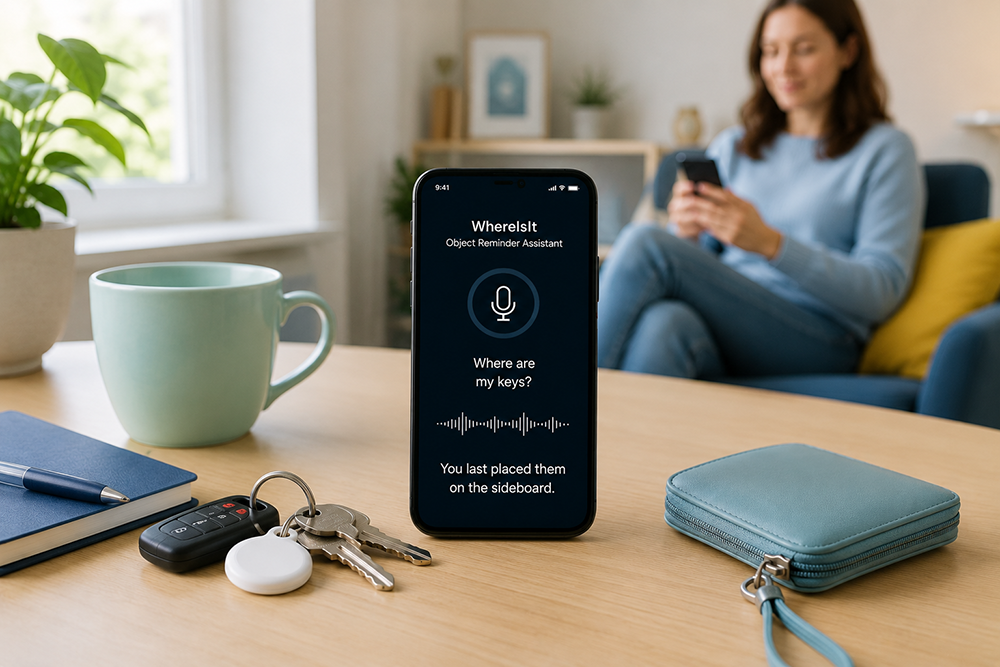
WhereIsIt, an object reminder assistant for blind and severely visually impaired people initiated by Prof. Dr. Oliver Bendel and implemented by Damian Huckele, reached its mid-term presentation on May 19, 2026. The inclusive AI project focuses on a lightweight speech-based system that allows users to store and retrieve object locations without continuous camera use. The work completed so far includes the literature review, problem analysis, requirements definition and the first system design concept. An important milestone was an expert interview with Steve Weidel, blind developer, founder of INKLUTEC and specialist in accessibility and assistive AI technologies. The interview confirmed the practical relevance of the project and highlighted key requirements such as simple voice interaction, portability, reminder functions and optional Bluetooth tags with acoustic tracking. The planned prototype architecture is Python-based and combines speech recognition, language processing, local object-location storage and text-to-speech output. The next project phases include prototype development, testing and the evaluation of Bluetooth integration.

A Virtual Buddy for Inmates

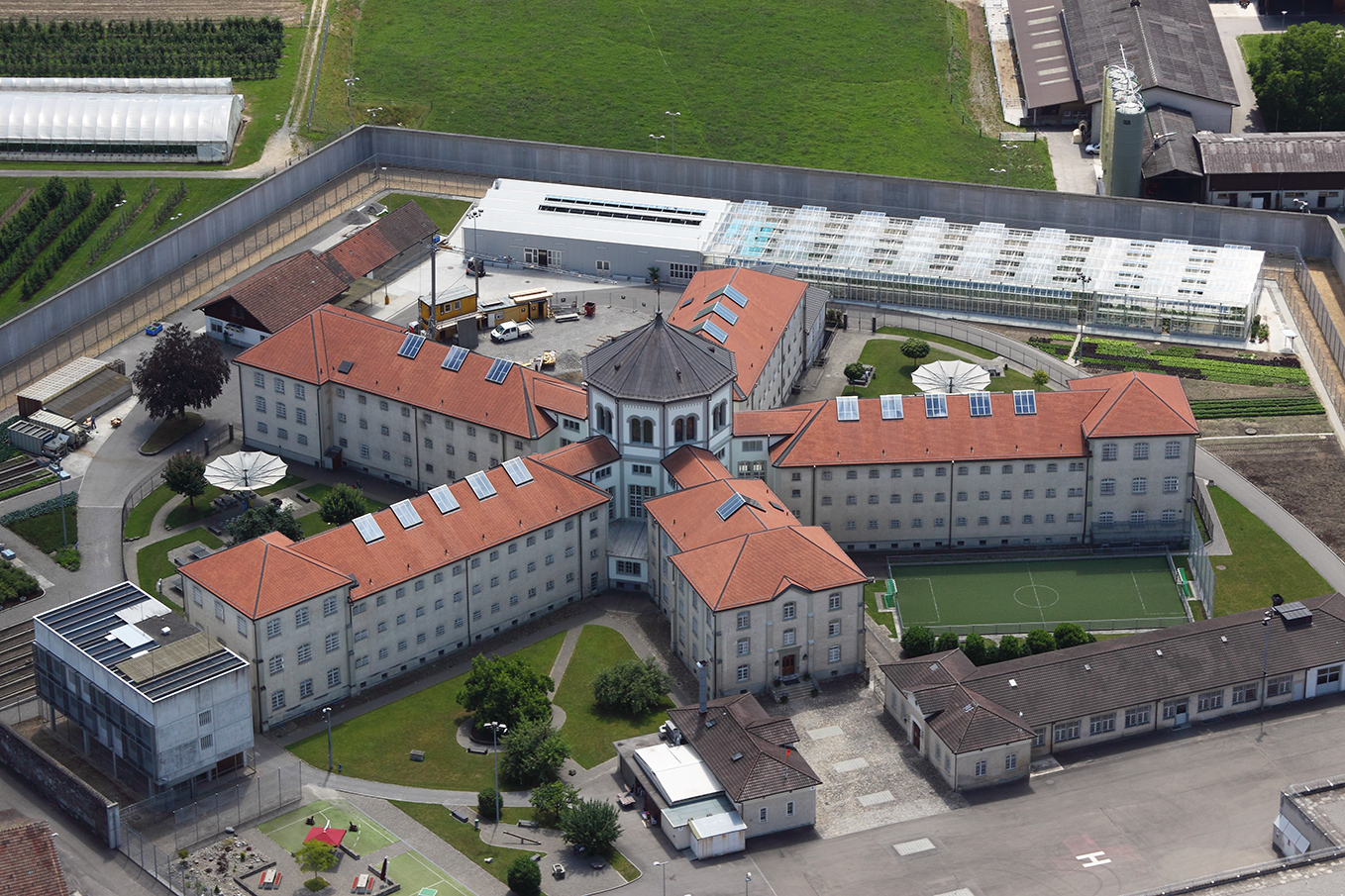
Inmates in Swiss correctional facilities have only limited access to digital technologies and little contact with the outside world. At the same time, they spend several hours each day in their cells. The project “Chatbots for Inmates” (short title) aims to address this situation: an LLM-based chatbot is intended to serve as a virtual buddy that enables conversations, reduces loneliness, and strengthens social and digital skills. The project was initiated by Tamara Siegmann, founder of the start-up SIEG – Smart Innovation Engineering Group by Siegmann and a student at the FHNW School of Business. She serves as project leader; Prof. Dr. Oliver Bendel is responsible for the project, and Stephan Vonschallen is a project collaborator. The application partner is Lenzburg Prison (JVA Lenzburg), represented by its director Marcel Ruf. The chatbot will run offline on tablets used by the inmates. In a pilot phase, the solution will initially be tested on two or three tablets and later on 30 tablets. The project will investigate whether a digital conversational partner can improve inmates’ well-being and support them in developing skills for life after release. The project began on March 1, 2026, and is supported by an innovation voucher (Innoscheck) from Innosuisse as well as by the Institute for Information Systems at the FHNW School of Business. Back in 2024, Tamara Siegmann and Oliver Bendel carried out a project on Swiss prisons, investigating whether collaborative and social robots could and should be used there. The paper can be downloaded or purchased here (Photo: Boehlich, Wikimedia, CC0 1.0 Universal).

Start of the ECHO Project

On October 24, 2025, the kick-off meeting for the ECHO project took place at the FHNW School of Business. Two weeks later, on November 7, the proposal was approved. Project collaborator is BIT student Lucas Chingis Marty, who is writing his thesis on this topic. The initiator is Prof. Dr. Oliver Bendel. ECHO is an MLLM-based chatbot that introduces children, young people, and laypeople to the world of music. It can listen to, describe, and evaluate pieces and songs. To do this, it is equipped with a powerful audio analysis module. It refers to key, melody, and harmony, among other things. ECHO makes music accessible and understandable without requiring any prior knowledge. The aim is to promote curiosity, listening comprehension, and artistic taste. The prototype is expected to be available in February 2026.

GPT-AfterDark is Coming

According to several media reports on 15 October 2025, ChatGPT is set to get an erotic function. This is likely to include features such as dirty talk – via text and voice – but possibly also instructions for all kinds of positions and tips and tricks for sex toys and sex robots. This follows in the footsteps of other chatbots such as Replika. However, these often have an avatar to make them irresistible. This is not the case with ChatGPT, apart from the small round tiles of the GPTs, the “custom versions” that anyone can easily create. Among these, incidentally, is a SexGPT by Dominick Pandolfo – ‘Provides sexual health information’, so quite harmless. Artificial Life’s virtual girlfriend already existed at the turn of the millennium, also in linguistic and visual form. If OpenAI does not improve this, users will build something themselves, which is already being done today, albeit not necessarily in a sexual sense. Meshy AI and Co. can be used to generate and animate three-dimensional avatars. It will be interesting to see whether the German ChatGPT version uses gender language in its erotic function – as it does in the default setting. Some people may find this arousing, others may not. When asked what this version of ChatGPT could be called, the chatbot itself suggested: ChatGPT Red, GPT-AfterDark, or DeepLure. If that doesn’t turn you on, there’s no helping you.

Manipulated Chatbots as Munchausen Machines

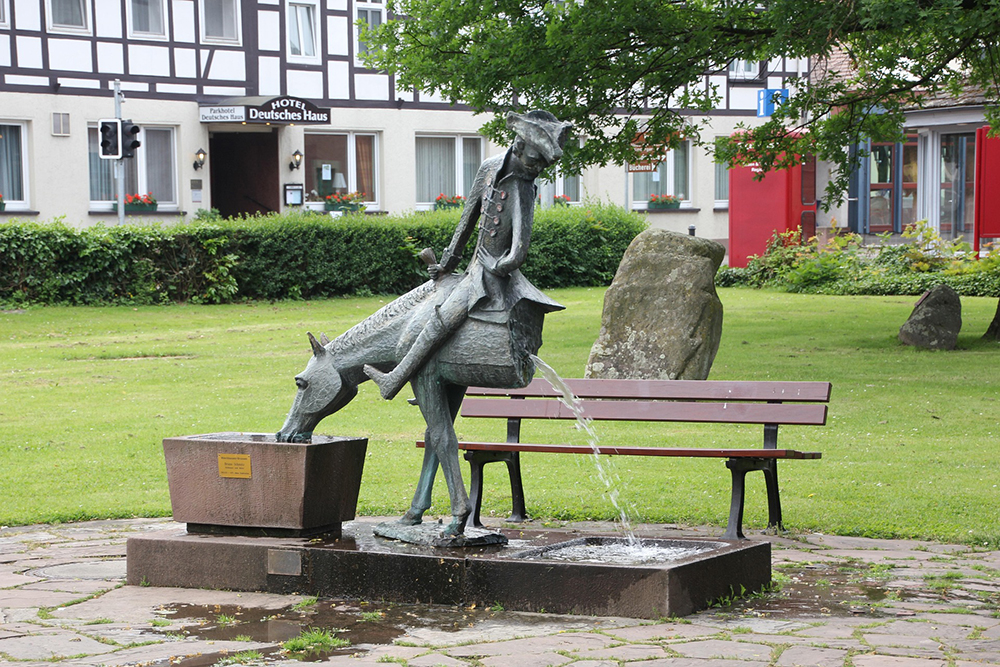
In 2013, Prof. Dr. Oliver Bendel came up with the idea for his LIEBOT, also known as Lügenbot. On September 11, 2013, he published an article titled “Der Lügenbot und andere Münchhausen-Maschinen” in the magazine CyberPress. More articles and contributions followed until a prototype was implemented in 2016. Kevin Schwegler, then a student of the philosopher of technology, was responsible for this work. He developed a chatbot that transformed truthful statements into false ones using seven different strategies. In the summer of 2016, for example, LIEBOT claimed that Donald Trump was the President of the United States. To make this statement, it had used information from Yahoo in a multi-step process. The results of the project were documented in a paper titled “Towards Kant Machines” and presented in March 2017 at the AAAI Spring Symposia at Stanford University. One might argue that LIEBOT does not have intentions of its own and therefore does not lie in the strict sense. However, this intent was programmed into it. In a way, it lies on behalf of its creators. With this project, Oliver Bendel wanted to demonstrate that it is possible to build dialogue systems capable of spreading falsehoods. Today, such systems seem to be omnipresent in the form of LLMs. However, one has to look closely to discern the differences. In his book “300 Keywords Generative KI”, Oliver Bendel writes: “Hallucinating machines do not necessarily qualify as Munchausen machines in the strict sense, since there is no intent – or at least intent can hardly be proven.” Manipulated LLM-based chatbots, on the other hand, come very close to LIEBOT. ChatGPT and similar systems pursue a political agenda and exhibit an ideological tendency.

Taming the Lion of the LLM

The paper “Miss Tammy as a Use Case for Moral Prompt Engineering” by Myriam Rellstab and Oliver Bendel from the FHNW School of Business was accepted at the AAAI 2025 Spring Symposium “Human-Compatible AI for Well-being: Harnessing Potential of GenAI for AI-Powered Science”. It describes the development of a chatbot that can be available to pupils and de-escalate their conflicts or promote constructive dialogues among them. Prompt engineering – called moral prompt engineering in the project – and retrieval-augmented generation (RAG) were used. The centerpiece is a collection of netiquettes. On the one hand, these control the behavior of the chatbot – on the other hand, they allow it to evaluate the behavior of the students and make suggestions to them. Miss Tammy was compared with a non-adapted standard model (GPT-4o) and performed better than it in tests with 14- to 16-year-old pupils. The project applied the discipline of machine ethics, in which Oliver Bendel has been researching for many years, to large language models, using the netiquettes as a simple and practical approach. The eight AAAI Spring Symposia will not be held at Stanford University this time, but at the San Francisco Airport Marriott Waterfront, Burlingame, from March 31 to April 2, 2025. It is a conference rich in tradition, where innovative and experimental approaches are particularly in demand.

22 Chatbots and Voice Assistants

Since 2013, Oliver Bendel has developed 22 chatbots and voice assistants together with his students or colleagues. They can be divided into three categories. The first are moral and immoral chatbots (i.e., forms of moral machines) and empathic voice assistants. The second are chatbots (some with voice output) for dead, endangered, or extinct languages and idioms. The third are pedagogical chatbots and chatbots that give recommendations and advice. Some of the projects lasted between four and six months. Most of the GPTs were created in just a few hours. Exceptions are Miss Tammy and Animal Whisperer, which took several months to build with the help of prompt engineering and retrieval-augmented generation (RAG). Articles and book chapters have been published on many of the projects. The names of the developers can be found in these. A few chatbots made it into the media, such as GOODBOT (for which the preparatory work began in 2012), LÜGENBOT aka LIEBOT, and @llegra.

kAIxo says “kaixo”

The final presentation of the “kAIxo” project took place on January 9, 2025. Nicolas Lluis Araya was the project team member. The FHNW School of Business has been developing chatbots for dead, endangered, and extinct languages for several years. A well-known example is @llegra, a chatbot for Vallader. In the spring of 2024, Oliver Bendel tested the reach of GPTs for endangered languages such as Irish (Irish Gaelic), Maori, and Basque. According to ChatGPT, there is a relatively large amount of training material for them. On May 12, 2024 – after Irish Girl and Maori Girl – a first version of Adelina, a chatbot for Basque, was created. It was later improved in a second version. As part of the “kAIxo” project (the Basque “kaixo” corresponds to the English “hello”), the chatbot kAIxo was built, which speaks Basque. Its purpose is to keep users practicing written or spoken language or to develop the desire to learn the endangered language. The chatbot is based on GPT-4o and Gemini 1.5 Flash, and the user can select his or her preferred large language model (LLM). Retrieval-augmented Generation (RAG) plays a central role. The ChatSubs dataset is used, which contains subtitles of movie dialogs in Basque. Thanks to a text-to-speech engine, the chatbot can also speak. At the final presentation, Nicolas Lluis Araya presented a working prototype that can be accessed via www.kaixo.ch.

Cleop@tr@ Visits the Karnak Temple

Cleop@tr@ was invented by Prof. Dr. Oliver Bendel in May 2024. It is a GPT that specializes in Egyptian. It is also familiar with the culture and history of ancient Egypt. Since 2012, the technology philosopher and information systems specialist has been building chatbots and voice assistants – partly with his students and partly on his own. These have been discussed by the media and found interesting by NASA. Under his supervision, Karim N’diaye developed the chatbot @ve for Latin, Dalil Jabou the voice-enhanced chatbot @llegra for Vallader, and Nicolas Lluis Araya the voice-enhanced chatbot kAIxo for Basque. For some time now, he has been testing the reach of GPTs for endangered languages such as Irish, Maori, and Basque. He is also investigating the potential for extinct languages such as Egyptian (Cleop@tr@) and Akkadian (H@mmur@pi). The GPTs do not readily communicate in hieroglyphics and cuneiform, but they can certainly represent and explain signs of visual languages. It is even possible to enter entire sentences and then ask how they can be improved or what they mean. In December 2024, Oliver Bendel tested his Cleop@tr@ in the Karnak Temple in Luxor. She was able to provide coherent explanations and translations for several inscriptions on columns and walls. However, further tests also revealed clear errors. Ultimately, Egyptologists will have to assess how reliable it is.