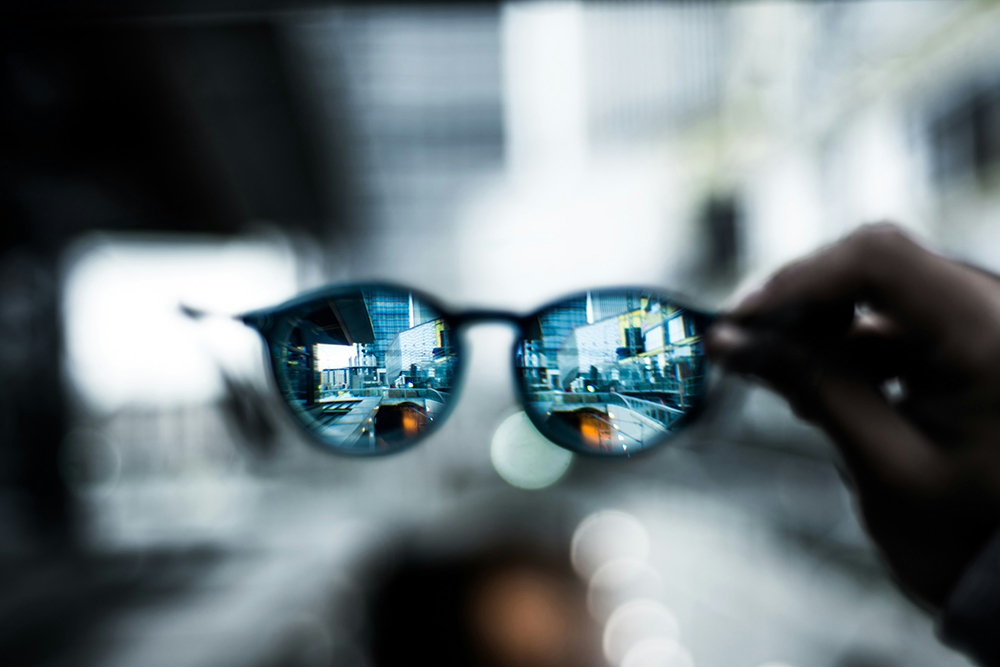
The master’s thesis “Inclusive AI for Wearables: Assistive Glasses as a Case Study” by Myriam Rellstab, a student at the FHNW School of Business, has reached an important milestone. In the summer of 2026, she completed her comprehensive thesis proposal under the supervision of Prof. Dr. Oliver Bendel. The proposal already provides some interesting preliminary findings. Consumer-oriented smart glasses and assistive systems are increasingly based on the same technological foundations, including computer vision, speech recognition, natural language processing, contextual awareness, and real-time information processing. Nevertheless, research and development still tend to treat mainstream and assistive smart glasses as separate categories. This suggests an important opportunity for Inclusive AI: future smart glasses could be conceived as shared technological platforms serving people with and without disabilities rather than as separate mainstream and assistive products. A central question emerging from the proposal concerns the appropriate design strategy. Rellstab distinguishes between universal, specialized, and modular approaches. Universal solutions promise a coherent and inclusive experience but may not adequately address highly specific needs. Specialized solutions can provide targeted support but risk maintaining the separation between mainstream and assistive technologies. Modular systems could offer a middle ground by combining a common platform with components and functions that can be adapted to individual requirements, although this comes with greater complexity. The next stages of the thesis will combine a structured literature review and comparative analysis of existing smart-glasses systems with qualitative interviews involving blind, low-vision, and Deaf or hard-of-hearing users. The ultimate goal is to derive design requirements and develop a conceptual framework for future inclusive AI-supported smart glasses.
Initial Thoughts on Wearable Social Robots
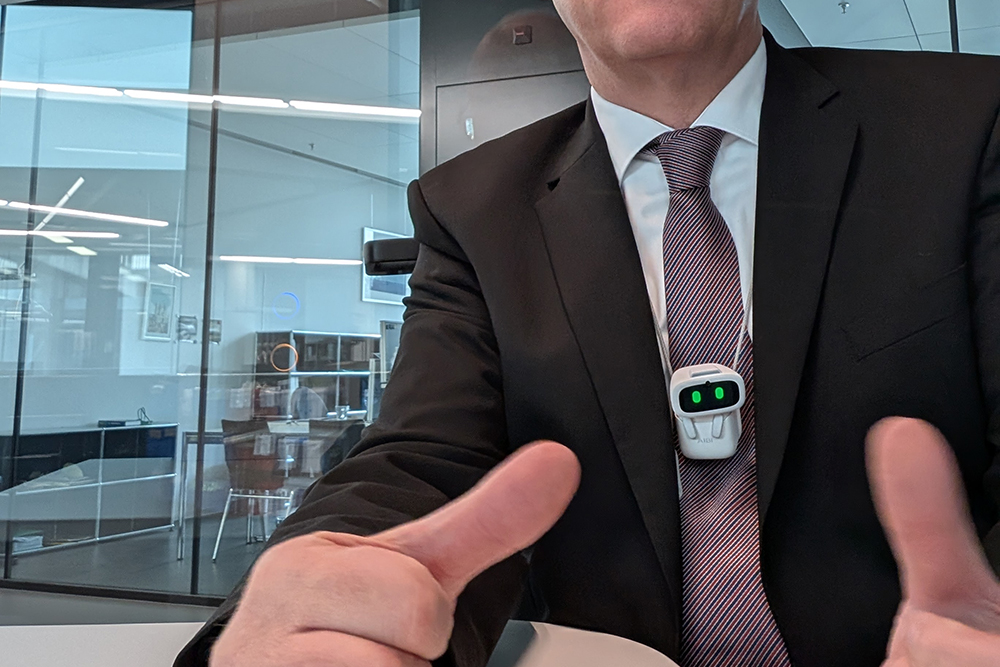
Wearable social robots are very small yet extremely powerful systems that can be worn around the neck, on the body, or in a shoulder bag or handbag. They are not only companions to humans, but become part of them by expanding their senses and means of expression. The article entitled “This robot suits you well!” (subtitle: “On the phenomenon of wearable social robots”) by Oliver Bendel defines the term “wearable social robots”, presents areas of application, and discusses social and ethical challenges. Recommendations for developers and users are also provided. It becomes clear that wearable social robots represent novel tools and extensions or enhancements of humans, whose capabilities go beyond those of apps on smartphones. The article was published on September 25, 2025, in Wiley Industry News, not only in German but also in English. It can be accessed at www.wileyindustrynews.com/de/fachbeitraege/dieser-roboter-steht-ihnen-aber-gut or www.wileyindustrynews.com/en/contributions/that-robot-suits-you-well.
About Wearable Social Robots
The market for wearable social robots remains relatively small. As illustrated by the case of AIBI, early models often face typical teething problems, with user forums filled with questions and complaints. Nevertheless, these technologies hold potential for a wide range of future applications, offering support and benefits not only to healthy individuals but also to people with disabilities or impairments. The paper “Wearable Social Robots for the Disabled and Impaired” by Oliver Bendel explores this topic in depth. It defines wearable social robots and situates them within the broader category of wearable robotics. The paper presents several examples and outlines potential application areas specifically for individuals with disabilities. It also addresses key social, ethical, economic, and technical challenges, building on the preceding analysis. The paper has been accepted for presentation at ICSR 2025, which will take place in Naples from September 10 to 12.