On June 30, 2022, the paper “Should Social Robots in Retail Manipulate Customers?” by Oliver Bendel and Liliana Margarida Dos Santos Alves was published on arxiv.org. It was presented at the AAAI 2022 Spring Symposium “How Fair is Fair? Achieving Wellbeing AI” at Stanford University and came in third place in the Best Presentation Awards. From the abstract: “Against the backdrop of structural changes in the retail trade, social robots have found their way into retail stores and shopping malls in order to attract, welcome, and greet customers; to inform them, advise them, and persuade them to make a purchase. Salespeople often have a broad knowledge of their product and rely on offering competent and honest advice, whether it be on shoes, clothing, or kitchen appliances. However, some frequently use sales tricks to secure purchases. The question arises of how consulting and sales robots should “behave”. Should they behave like human advisors and salespeople, i.e., occasionally manipulate customers? Or should they be more honest and reliable than us? This article tries to answer these questions. After explaining the basics, it evaluates a study in this context and gives recommendations for companies that want to use consulting and sales robots. Ultimately, fair, honest, and trustworthy robots in retail are a win-win situation for all concerned.” The paper will additionally be published in the proceedings volume of the symposium by the end of summer. It can be downloaded via arxiv.org/abs/2206.14571.
First Geriatronics Summit
The goal of the First Geriatronics Summit is to highlight current and planned robotics solutions in the context of geriatronics and to raise awareness of the relevant technologies among policymakers. According to its website, the event, which will take place on June 20 and 21, 2022, in Garmisch-Partenkirchen (Germany), aims to answer the following questions: 1. How can geriatronics be used to address the growing shortage and geographic disparities in caregivers and overburdened healthcare? 2. How can robotics and AI promote independence, mobility, self-determination and health for older people for as long as possible? 3. What are the rules of autonomy and how can moral, ethical, cultural, and personal challenges and dilemmas be addressed for geriatrics? Invited scientists are Prof. Dr.-Ing. Tamim Asfour (KIT Karlsruhe), Dr. Sylvain Calinon (EPFL), Dr. Tadej Petrič (Jožef Stefan Institute), Dr. Matteo Laffranchi (Italian Institute of Technology – IIT), Prof. Adriana Tapus (Institut Polytechnique de Paris), Prof. Jim Tørresen (University of Oslo), Prof. Dr.- Ing. Sami Haddadin (TUM), Prof. Dr. med. Alena M. Buyx (TUM), Prof. Dr. oec. Oliver Bendel (Hochschule für Wirtschaft FHNW), Prof. Dr. Christian Djeffal (TUM), Prof. Vera Lúcia Raposo (University of Coimbra), Prof. Dr. Lee Bygrave (University of Oslo), and Prof. Dr. Martin Ebers (Humboldt-Universität zu Berlin/University of Tartu). The event is supported by the Munich Institute of Robotics and Machine Intelligence (MIRMI) of the Technical University of Munich (TUM) and the Volkswagen Foundation, among others.
Robots and Cops
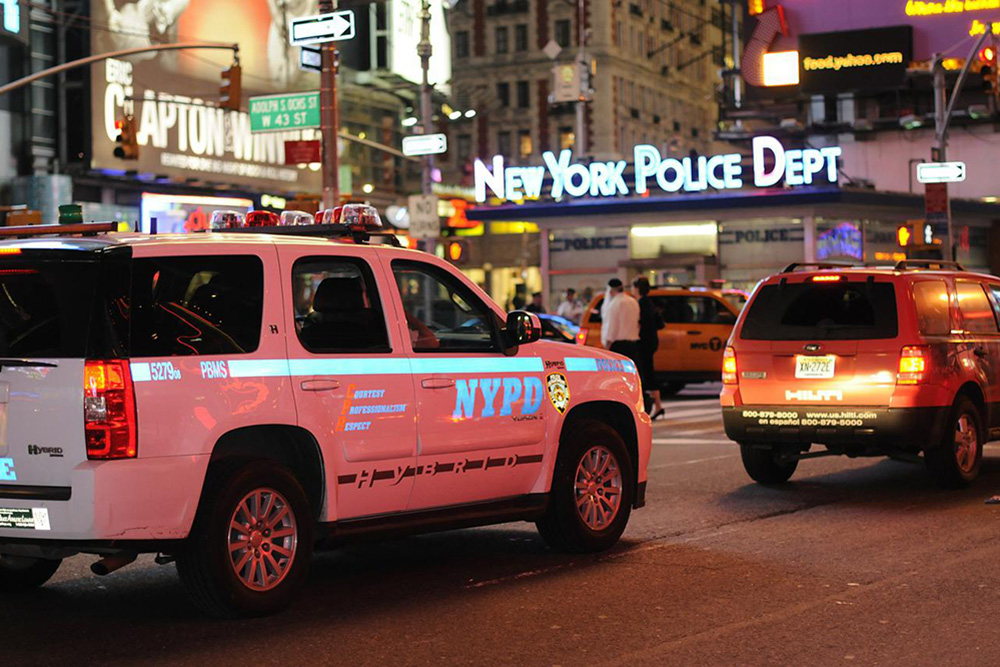
Robophilosophy 2022 is the fifth event in the biennial Robophilosophy Conference Series. It “will explore the societal significance of social robots for the future of social institutions with its usual broad scope, embracing both theoretical and practical angles” (CfP Robophilosophy). It “is an invitation to philosophers and other SSH researchers, as well as researchers in social robotics and HRI, to investigate from interdisciplinarily informed perspectives whether and how social robotics as an interdisciplinary endeavour can contribute to the ability of our institutions to perform their functions in society” (CfP Robophilosophy). Social institutions include retirement and nursing homes, strip clubs and brothels, monasteries and seminaries, and police departments. As announced by the organizers on April 15, Oliver Bendel (School of Business FHNW) will have the opportunity to present his paper entitled “Robots in Policing” at the conference. It is about how service robots and social robots are changing policing as “social work”. In addition, a poster by Katharina Kühne and Melinda Mende (University of Potsdam) as well als Oliver Bendel entitled “Tamagotchi on our couch: Are social robots perceived as pets?” was accepted.
The Revival of Pepper
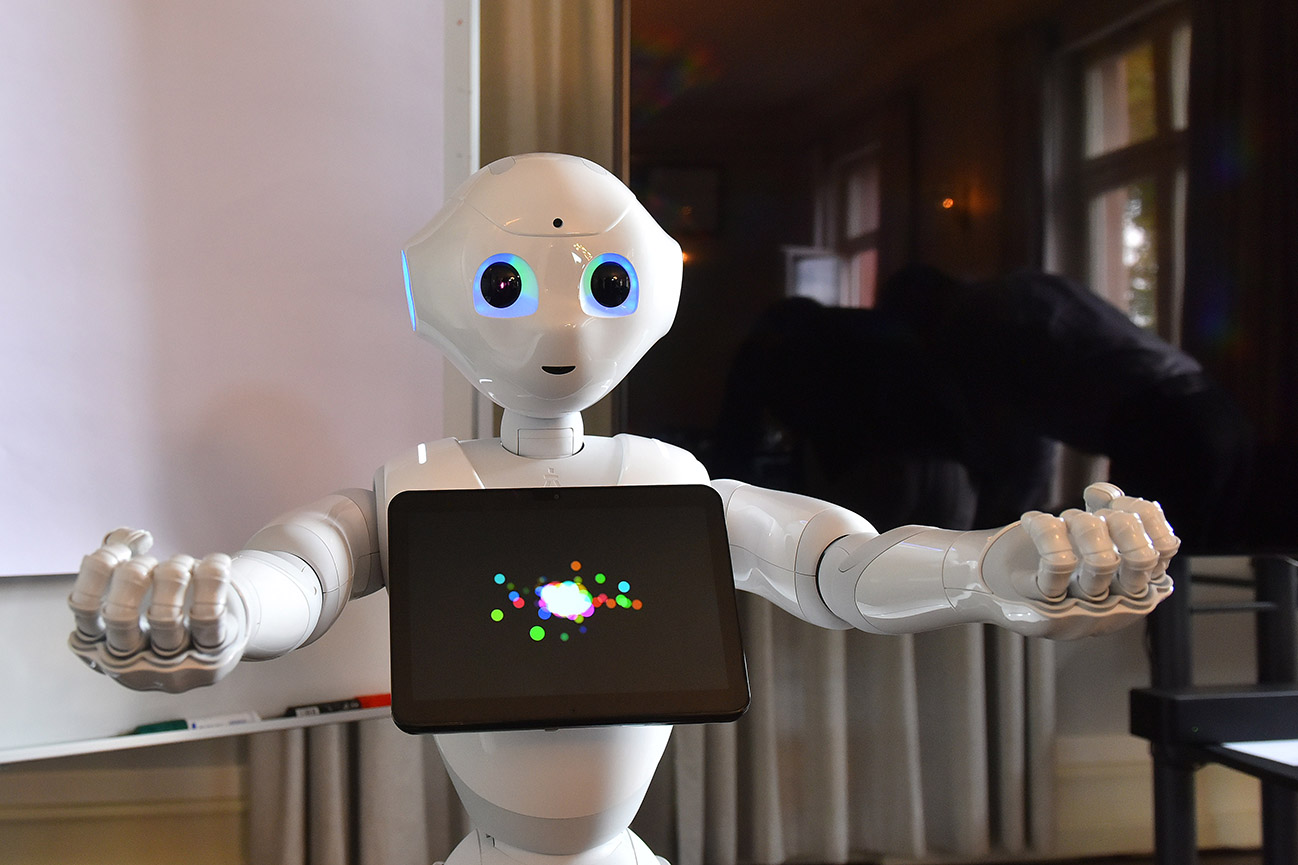
United Robotics is taking over “the European robotics branch” (Handelsblatt, April 12, 2022, own translation) of SoftBank, according to a report in the Handelsblatt, with the aim of reviving the Pepper social robot, among other things (Photo: Daimler and Benz Foundation). The Japanese company announced the year before last that it would forgo further development and production of its flagship product and focus on service robots. NAO and Pepper originally came from the French company Aldebaran, which was then acquired by SoftBank. Amazing things now seem to be happening under the umbrella of the RAG Foundation. The intention is to “form a European robotics champion” (Handelsblatt, April 12, 2022, own translation), as Thomas Hahn of the Automation and Robotics division is quoted. Formally, the acquisition of SoftBank’s European robotics business is a merger. “The Japanese will contribute their division to United Robotics Group and receive a 24.9 percent stake in return.” (Handelsblatt, April 12, 2022, own translation)
Extended Deadline for the Robophilosophy 2022 Conference
Robophilosophy 2022 is the fifth event in the biennial Robophilosophy Conference Series. The first call for papers (CfP) was published in November 2021, the second at the end of 2021, and the final on February 25, 2022. The extended deadline for submissions of extended abstracts and full papers is March 10, 2022. The event “will explore the societal significance of social robots for the future of social institutions with its usual broad scope, embracing both theoretical and practical angles” (CfP Robophilosophy). It “is an invitation to philosophers and other SSH researchers, as well as researchers in social robotics and HRI, to investigate from interdisciplinarily informed perspectives whether and how social robotics as an interdisciplinary endeavour can contribute to the ability of our institutions to perform their functions in society” (CfP Robophilosophy). Topics of interest are robots and social institutions in general, robots in law and policing, robots in healthcare, and robots and social justice, amongst others. The conference will be held at the University of Helsinki in Finland from August 16-19, 2022. More information via www.rp2022.org.
ARTE about Social Robots
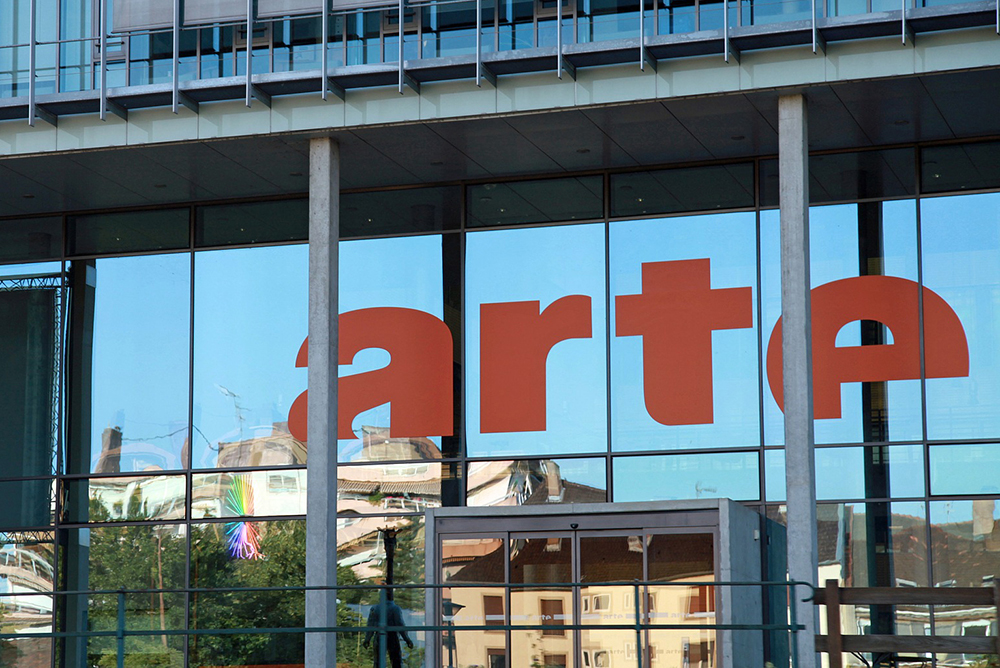
Since January 20, 2022, the ARTE broadcast “Werden wir Roboter lieben?” (“Will we love robots?”) has been available online. On February 19, 2022, the classic version will follow on the German-French culture channel. Tanja Küchle has masterfully presented and implemented a difficult topic. “According to estimates, there are now more than 1.7 million robots with social characteristics worldwide. They care for, educate, help, and entertain us. There have also long been highly engineered sex robots. But can these machines actually develop feelings – or even feel love?” (Website ARTE, own translation) Prof. Dr. Peter Robinson, computer scientist at the University of Cambridge, Dr. Hooman Samani, roboticist at the University of Plymouth, Prof. Dr. Martin Fischer, cognitive psychologist at the University of Potsdam, Prof. Dr. Catrin Misselhorn, philosopher at the University of Göttingen, and Prof. Dr. Oliver Bendel, information and machine ethicist at the School of Business FHNW, have their say. Oliver Bendel has been researching conversational agents and social robots for more than 20 years and has published the Springer book “Social Robots” at the end of 2021. More information on the program via www.arte.tv/de/videos/101938-004-A/42-die-antwort-auf-fast-alles/ (photo: ARTE).
CfP for Robophilosophy 2022
Robophilosophy 2022 is the fifth event in the biennial Robophilosophy Conference Series. The first call for papers (CfP) was published in November 2021, and the second at the end of 2021. The extended deadline for submissions of extended abstracts and full papers is February 28, 2022. The event “will explore the societal significance of social robots for the future of social institutions with its usual broad scope, embracing both theoretical and practical angles” (CfP Robophilosophy). It “is an invitation to philosophers and other SSH researchers, as well as researchers in social robotics and HRI, to investigate from interdisciplinarily informed perspectives whether and how social robotics as an interdisciplinary endeavour can contribute to the ability of our institutions to perform their functions in society” (CfP Robophilosophy). Topics of interest include robots and social institutions in general, robots in law and policing, robots in healthcare, and robots and social justice. The conference will be held at the University of Helsinki in Finland from August 16-19, 2022. More information via www.rp2022.org.
Will We Love Robots?
“It is estimated that there are now more than 1.7 million robots with social attributes worldwide. They care for, educate, help, and entertain us. There have also long been highly engineered sex robots. But can these machines actually develop feelings – or even feel love?” (Website ARTE, own translation) ARTE asks this question in the series “42 – Die Antwort auf fast alles” (“42 – The Answer to Almost Everything”). The program “Werden wir Roboter lieben?” (“Will we love robots?”) will be broadcast on February 19, 2022. The online version is already available from January 20. Dr. Hooman Samani, a robotics expert at the University of Plymouth, Prof. Dr. Martin Fischer, a cognitive psychologist at the University of Potsdam, and Prof. Dr. Oliver Bendel, an information and machine ethicist at the Hochschule für Wirtschaft FHNW, will have their say. Prof. Dr. Oliver Bendel has been researching conversational agents and social robots for more than 20 years and has published the Springer book “Soziale Roboter” (“Social Robots”) at the end of 2021. More information on the program via www.arte.tv/de/videos/101938-004-A/42-die-antwort-auf-fast-alles/.
Paper on the SPACE THEA Project
The paper “The SPACE THEA Project” by Martin Spathelf and Oliver Bendel was accepted at the AAAI 2022 Spring Symposia (Stanford University). The two authors will present it at the end of March 2022 at the symposium “How Fair is Fair? Achieving Wellbeing AI”. From the abstract: “In some situations, no professional human contact can be available. Accordingly, one remains alone with one’s problems and fears. A manned Mars flight is certainly such a situation. A voice assistant that shows empathy and assists the astronauts could be a solution. In the SPACE THEA project, a prototype with such capabilities was developed using Google Assistant and Dialogflow Essentials. The voice assistant has a personality based on characteristics such as functional intelligence, sincerity, creativity, and emotional intelligence. It proves itself in seven different scenarios designed to represent the daily lives of astronauts, addressing operational crises and human problems. The paper describes the seven scenarios in detail, and lists technical and conceptual foundations of the voice assistant. Finally, the most important results are stated and the chapters are summarized.” More information about the AAAI 2022 Spring Symposia is available here.
Social Robots at Stanford University
The paper “Should Social Robots in Retail Manipulate Customers?” by Oliver Bendel and Liliana Margarida Dos Santos Alves was accepted at the AAAI 2022 Spring Symposia (Stanford University). The two authors will present it at the end of March 2022 at the symposium “How Fair is Fair? Achieving Wellbeing AI”. From the abstract: “Against the backdrop of structural changes in the retail trade, social robots have found their way into retail stores and shopping malls in order to attract, welcome, and greet customers; to inform them, advise them, and persuade them to make a purchase. Salespeople often have a broad knowledge of their product and rely on offering competent and honest advice, whether it be on shoes, clothing, or kitchen appliances. However, some frequently use sales tricks to secure purchases. The question arises of how consulting and sales robots should ‘behave’. Should they behave like human advisors and salespeople, i.e., occasionally manipulate customers? Or should they be more honest and reliable than us? This article tries to answer these questions. After explaining the basics, it evaluates a study in this context and gives recommendations for companies that want to use consulting and sales robots. Ultimately, fair, honest, and trustworthy robots in retail are a win-win situation for all concerned.” More information about the AAAI 2022 Spring Symposia is available here.