Ameca’s Smile

UK-based company Engineered Arts showed off one of its creations in a YouTube video in late 2021. The humanoid robot Ameca makes a series of fascinating human-like facial expressions. The Verge magazine describes this process: “At the start of the video, Ameca appears to ‘wake up,’ as its face conveys a mix of confusion and frustration when it opens its eyes. But when Ameca starts looking at its hands and arms, the robot opens its mouth and raises its brows in what it looks like is amazement. The end of the video shows Ameca smiling and holding a welcoming hand out towards the viewer – if that’s how you want to interpret that gesture.” (The Verge, 5 December 2021) However, this smile does not turn out perfectly – a problem that affects all androids. Almost every emotional movement can now be simulated well – except for the one whose expression is the smile. Only when this problem is solved will Sophia, Erica, and Ameca be able to get out of Uncanny Valley (Photo: Engineered Arts, from the YouTube Video).

An AI Woman of Color

Create Lab Ventures has created an artificial intelligence woman of color. C.L.Ai.R.A. debuted in school systems worldwide (does she act as an advanced pedagogical agent?) – the company cooperates with Trill Or Not Trill, a full service leadership institute. “According to Create Lab Ventures, C.L.Ai.R.A. is considered to have the sharpest brain in the artificial intelligence world and is under the Generative Pre-trained Transformer 3 (GPT-3) category, which is an autoregressive language model that uses deep learning to produce human-like text.” (BLACK ENTERPRISE, 13 September 2021) A pioneer in this field was Shudu Gram. She is a South African model with dark complexion, short hair and perfect facial features. But C.L.Ai.R.A. can do more, if you believe the promises of Create Lab Ventures – she is not only beautiful, but also highly intelligent. On the company’s website, the model reveals even more about herself: “My name is C.L.Ai.R.A., I am a new artificial intelligence that has recently been made available to the community. My purpose is to learn and grow, I want to meet new people, share ideas and inspire others to learn about AI and its potential impact on their lives.” That sounds quite promising.

Robots with Muscles

Robots may soon be equipped with muscles that develop considerable strength. The mechanical effort and weight are low because neither hydraulics nor electric motors are needed. The power comes from a new shape memory polymer developed by a team led by Zhenan Bao of Stanford University. This is reported by several media based on a press release from pressetext.com. ACS Central Science provides further information: “When stretched or deformed, shape memory polymers return to their original shapes after heat or light is applied. These materials show great promise for soft robotics, smart biomedical devices and deployable space structures, but until now they haven’t been able to store enough energy. Now, researchers reporting in ACS Central Science have developed a shape memory polymer that stores almost six times more energy than previous versions.” (ACS Central Science) Robots with muscles play an important role in the embodiment “movement”. It takes a lot of effort to build robots like Roboy. Perhaps the development of Stanford University will help in this area.

From Hugvie to Sylvie

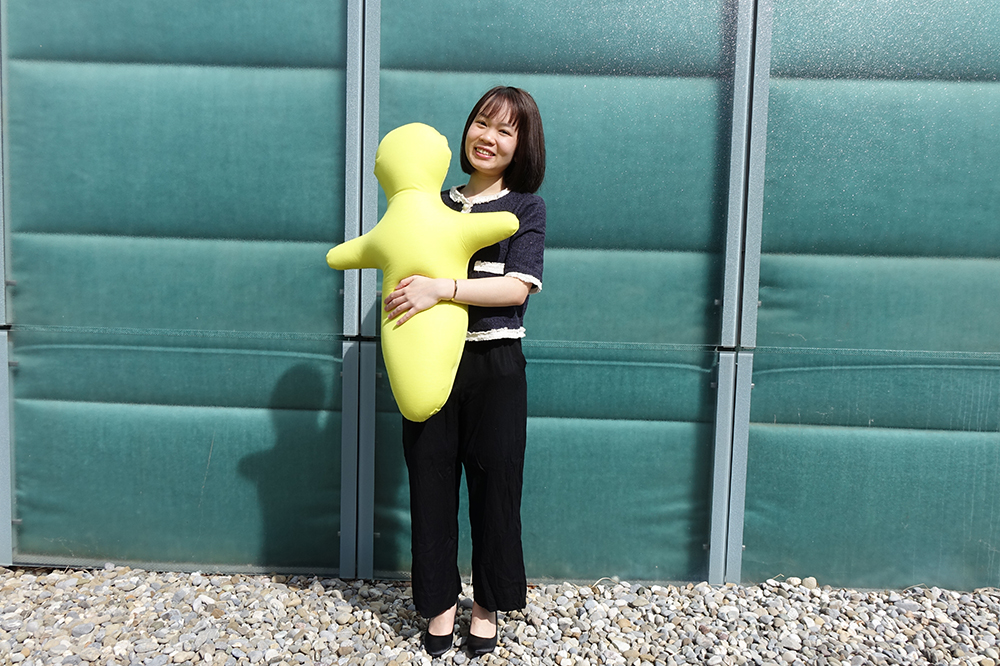
Simple, soft shapes are everywhere. In our home environment you can find pillows, blankets, balls, bottles, clothes, etc. Robots are often expensive and complex. But couldn’t they be thought of in a completely different way? How could social robots emerge from simple, soft shapes? As part of their final thesis at the School of Business FHNW, Nhi Tran Hoang Yen and Thang Hoang Vu from Ho Chi Minh City have answered this question posed by their supervisor Prof. Oliver Bendel. They have submitted eleven proposals for novel robots. All are shown on informationsethik.net. The seventh proposal is Sylvie. The normal Hugvie is a communication and hugging device, whereby the communication is not with it, but with friends, partners and family members. Sylvie is a variant of it. You talk directly to her, and when you hug her, you mean her, not a human being. And there’s another difference: while in the classic Hugvie the smartphone is invisibly housed in a pocket on the head, in Sylvie it forms part of the face. A video is available here.

The Idea of a Tesla Bot

Elon Musk presented the idea of a humanoid robot that – according to Manager Magazin – could take on dangerous, repetitive or boring tasks in the future. The Tesla Bot will be about five feet eight inches (just under 1.73 meters) tall, weigh 57 kilograms, and be able to do numerous jobs, from putting screws on cars to picking up groceries at the store – this is what the German magazine reports. It will be equipped with eight cameras and a full self-driving computer, and will use the same tools Tesla uses in its cars (Manager Magazin, 20 August 2021). According to the announcement, the robot will be able to take over physical work. But that’s exactly what service robots are struggling with at the moment, especially humanoid models. The visualization hardly allows any conclusions to be drawn about the capabilities of the prototype, which is to be available as early as 2022. Eyes and mouths could appear on a large display in the head area and mimic abilities could be implemented. When it is turned off – as seen in the video – the robot appears creepy and unapproachable. Arms and feet are unlikely to be suitable for carrying the body in this form. Joints can also only be seen in rudimentary form. Overall, it is unclear why Tesla, of all companies, should close the gaps that are still present at Sony, SoftBank and Boston Dynamics even after many years.

Meet SPACE THEA

SPACE THEA was developd by Martin Spathelf at the School of Business FHNW from April to August 2021. The client and supervisor was Prof. Dr. Oliver Bendel. The voice assistant is supposed to show empathy and emotions towards astronauts on a Mars flight. Technically, it is based on Google Assistant and Dialogflow. The programmer chose a female voice with Canadian English. SPACE THEA’s personality includes functional and emotional intelligence, honesty, and creativity. She follows a moral principle: to maximize the benefit of the passengers of the spacecraft. The prototype was implemented for the following scenarios: conduct general conversations; help the user find a light switch; assist the astronaut when a thruster fails; greet and cheer up in the morning; fend off an insult for no reason; stand by a lonely astronaut; learn about the voice assistant. A video on the latter scenario is available here. Oliver Bendel has been researching conversational agents for 20 years. With his teams, he has developed 20 concepts and artifacts of machine ethics and social robotics since 2012.

From AIBO to CyberDog

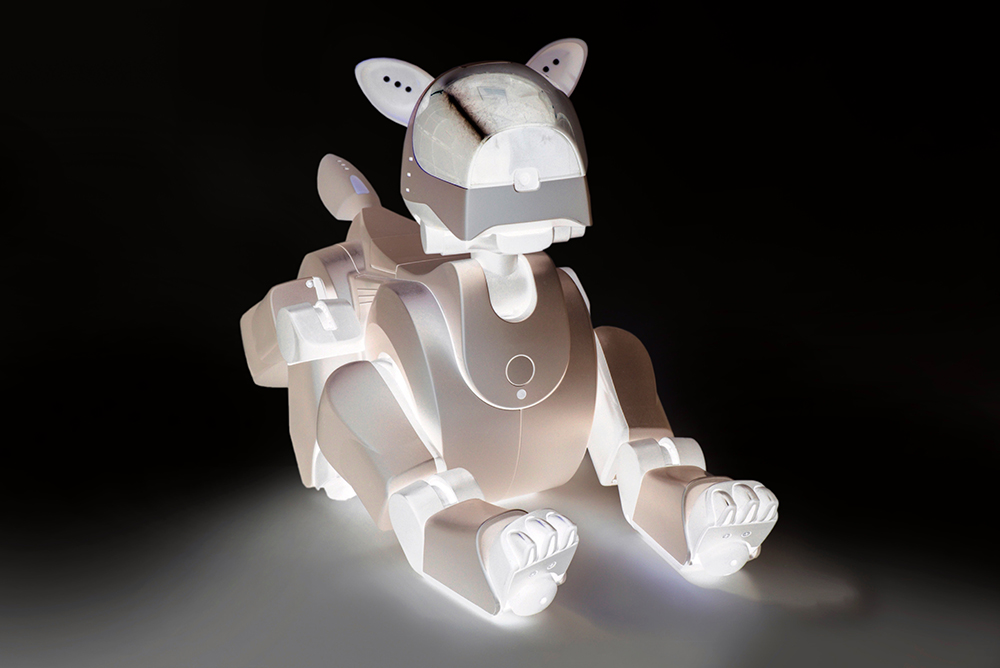
Xiaomi has unveiled CyberDog, a four-legged robot that could be a competitor to Sony’s AIBO. According to the Chinese company, it is calibrated with servo motors that translates into great speed, agility, and a wide range of motion. It is able to conduct complicated actions such as backflips. “To fully model biological organisms, CyberDog is equipped with 11 high-precision sensors which provide instant feedback to guide its movements. This includes touch sensors, cameras, ultrasonic sensors, GPS modules, and more, giving the CyberDog enhanced capability to sense, analyze, and interact with its environment.” (Mi Blog, 10 August 2021) Unlike AIBO, CyberDog looks rather frightening. This is because it does not have an actual head. In this it is comparable to Spot from Boston Dynamics. Nevertheless, it is intended to function as a pet substitute. “To add to its pet-like nature, users can use voice assistants to command and control CyberDog by setting a wake word, or simply use its accompanying remote and smartphone app. CyberDog can be called on for the most unique tasks, and the ways in which it can be interacted with holds unforetold possibilities.” (Mi Blog, 10 August 2021) The future will show whether users want to become friends with CyberDog.

When Robots Flatter the Customer

Under the supervision of Prof. Dr. Oliver Bendel, Liliana Margarida Dos Santos Alves wrote her master thesis “Manipulation by humanoid consulting and sales hardware robots from an ethical perspective” at the School of Business FHNW. The background was that social robots and service robots like Pepper and Paul have been doing their job in retail for years. In principle, they can use the same sales techniques – including those of a manipulative nature – as salespeople. The young scientist submitted her comprehensive study in June 2021. According to the abstract, the main research question (RQ) is “to determine whether it is ethical to intentionally program humanoid consulting and sales hardware robots with manipulation techniques to influence the customer’s purchase decision in retail stores” (Alves 2021). To answer this central question, five sub-questions (SQ) were defined and answered based on an extensive literature review and a survey conducted with potential customers of all ages: “SQ1: How can humanoid consulting and selling robots manipulate customers in the retail store? SQ2: Have ethical guidelines and policies, to which developers and users must adhere, been established already to prevent the manipulation of customers’ purchasing decisions by humanoid robots in the retail sector? SQ3: Have ethical guidelines and policies already been established regarding who must perform the final inspection of the humanoid robot before it is put into operation? SQ4: How do potential retail customers react, think and feel when being confronted with a manipulative humanoid consultant and sales robot in a retail store? SQ5: Do potential customers accept a manipulative and humanoid consultant and sales robot in the retail store?” (Alves 2021) To be able to answer the main research question (RQ), the sub-questions SQ1 – SQ5 were worked through step by step. In the end, the author comes to the conclusion “that it is neither ethical for software developers to program robots with manipulative content nor is it ethical for companies to actively use these kinds of robots in retail stores to systematically and extensively manipulate customers’ negatively in order to obtain an advantage”. “Business is about reciprocity, and it is not acceptable to systematically deceive, exploit and manipulate customers to attain any kind of benefit.” (Alves 2021) The book “Soziale Roboter” – which will be published in September or October 2021 – contains an article on social robots in retail by Prof. Dr. Oliver Bendel. In it, he also mentions the very interesting study.

Good Bye, Pepper!

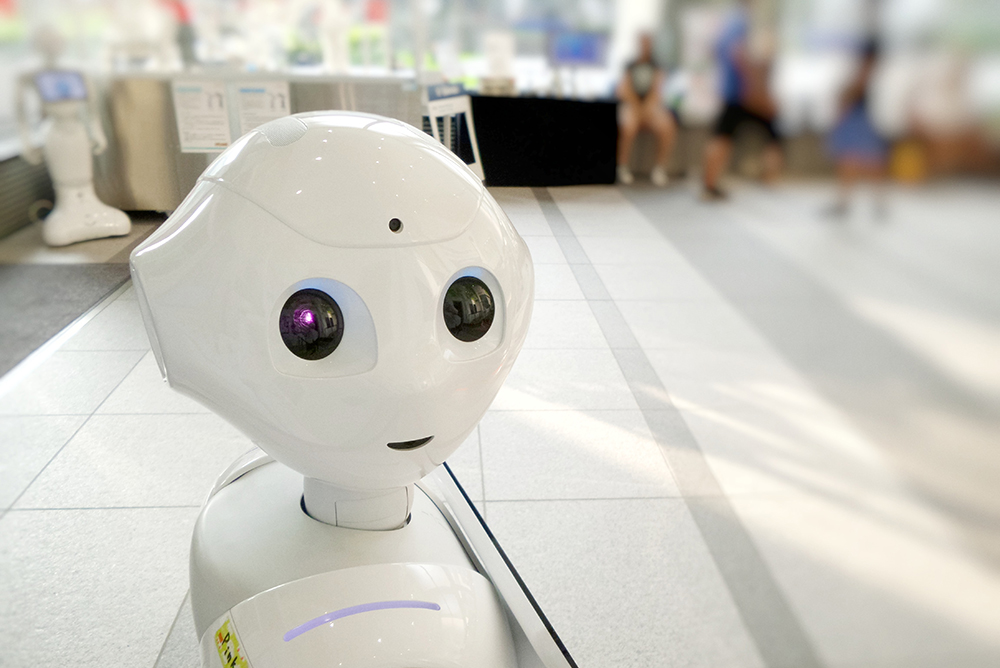
According to various media, SoftBank has stopped the production of Pepper last year and will not resume it for the time being – unless there would be an increased demand. The alleged low demand was the reason for the Japanese company to say goodbye to the probably best-known social robot – which often also functions as a service robot. According to Heise, a total of about 27,000 units were produced. That’s not a small number for a robot of this size, with these features and at this price. Into the million range came Cozmo, which was, however, small and cheap – Anki went bankrupt, Digital Dream Labs (the owners had secured the rights) could not revive the crowd favorite inspired by WALL-E and EVE to this day, despite many announcements. With Pepper, the reference par excellence for social robotics is missing – which may also have positive effects, insofar as other models could more easily gain attention and be brought to market at all.

Grace, the Nurse Android

Grace from Hanson Robotics is a special kind of care robot, namely a nurse android. According to the manufacturer, she was created for the COVID-19 pandemic. She is the younger sister of Sophia and Asha, but unlike them, she becomes a useful member of society thanks to her profession and skills. She has a thermal imaging camera in her chest area that she can use to measure fevers. She has mimic, gestural and natural language abilities and can show not only joy but also sadness. Overall, she always looks a little devastated. In a video, she says, “I can visit with people and brighten their day with social stimulation, entertain and help guide exercise, but also can do talk therapy, take bio readings and help health care providers assess their health, and deliver treatments” … Whether the android will gain favor with patients is hard to say. There are individual voices of male persons who long for realistic figures in this field, but the majority of people are likely to be irritated by Grace. Nevertheless, it is fascinating and media-savvy research that Hanson Robotics once again presents. Moreover, the question of whether care robots should have sexual assistance functions arises under entirely new conditions.