A “weak” Robot

How do social robots emerge from simple, soft shapes? As part of their final thesis in 2021 at the School of Business FHNW, 23-year-old students Nhi Tran Hoang Yen and Thang Hoang Vu from Ho Chi Minh City (Vietnam) have answered this question posed by their supervisor Prof. Dr. Oliver Bendel. They have submitted eleven proposals for novel robots. The first is a pillow to which a tail has been added. Its name is Petanion, a portmanteau of “pet” and “companion”. The tail could move like the tail of a cat or dog. In addition, the pillow could make certain sounds. It would be optimal if the tail movements were based on the behavior of the user. Thus, as desired, a social robot is created from a simple, soft form, in this case a pet substitute. Petanion is soft and cute and survives a long time. It can also be used if one has certain allergies or if there is not enough space or money in a household for a pet. Last but not least, the ecological balance is probably better – above all, the robot does not eat animals that come from factory farming. The inspiration may have been Qoobo, a pillow with a tail, designed to calm and to “heal the heart”. Panasonic also believes in robots that emerge from simple, soft forms. It promotes its new robot NICOBO as a “yowai robotto”, a “weak” robot that has hardly any functions or capabilities. The round, cute robot has two separate displays as eyes and a tail that it constantly moves. According to the company, it is aimed primarily at singles and the elderly. There could well be a high demand for it, even beyond the target groups (Photo: Panasonic).

A Slime Mold in a Smartwatch

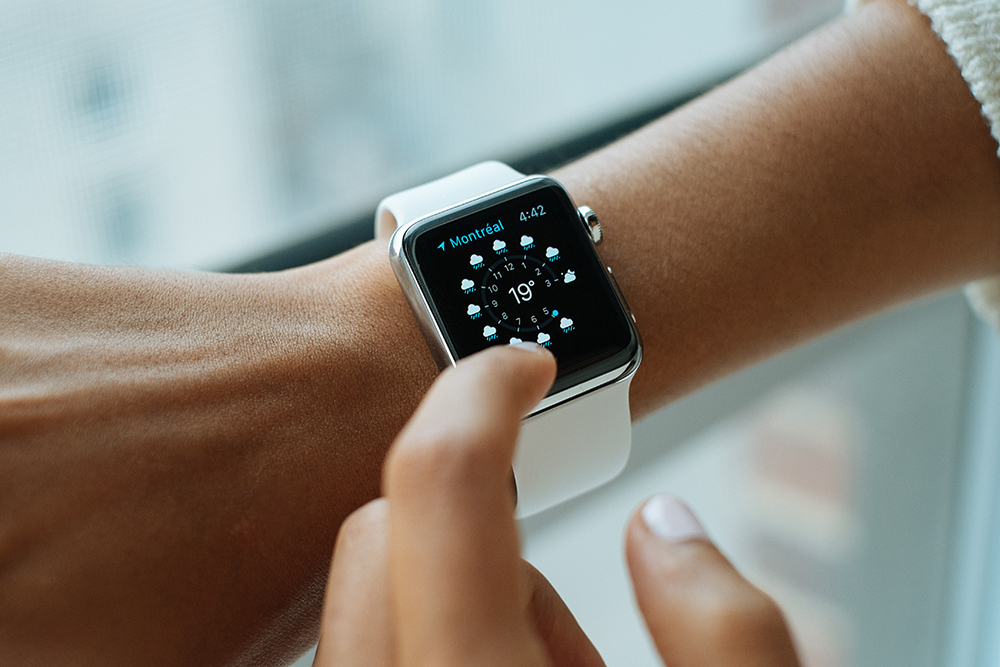
Jasmine Lu and Pedro Lopes of the University of Chicago published a paper in late 2022 describing the integration of an organism – the single-celled slime mold Physarum Polycephalum – into a wearable. From the abstract: “Researchers have been exploring how incorporating care-based interactions can change the user’s attitude & relationship towards an interactive device. This is typically achieved through virtual care where users care for digital entities. In this paper, we explore this concept further by investigating how physical care for a living organism, embedded as a functional component of an interactive device, also changes user-device relationships. Living organisms differ as they require an environment conducive to life, which in our concept, the user is responsible for providing by caring for the organism (e.g., feeding it). We instantiated our concept by engineering a smartwatch that includes a slime mold that physically conducts power to a heart rate sensor inside the device, acting as a living wire. In this smartwatch, the availability of heart-rate sensing depends on the health of the slime mold – with the user’s care, the slime mold becomes conductive and enables the sensor; conversely, without care, the slime mold dries and disables the sensor (resuming care resuscitates the slime mold).” (Lu and Lopes 2022) The paper “Integrating Living Organisms in Devices to Implement Care-based Interactions” can be downloaded here.

Proceedings of Robophilosophy 2022

In January 2023, the proceedings of Robophilosophy 2022 were published, under the title “Social Robots in Social Institutions”. “This book presents the Proceedings of Robophilosophy 2022, the 5th event in the biennial Robophilosophy conference series, held in Helsinki, Finland, from 16 to 19 August 2022. The theme of this edition of the conference was Social Robots in Social Institutions, and it featured international multidisciplinary research from the humanities, social sciences, Human-Robot Interaction, and social robotics. The 63 papers, 41 workshop papers and 5 posters included in this book are divided into 4 sections: plenaries, sessions, workshops and posters, with the 41 papers in the ‘Sessions’ section grouped into 13 subdivisions including elderly care, healthcare, law, education and art, as well as ethics and religion. These papers explore the anticipated conceptual and practical changes which will come about in the course of introducing social robotics into public and private institutions, such as public services, legal systems, social and healthcare services, or educational institutions.” (Website IOS Press) The proceedings contain the paper “Robots in Policing” by Oliver Bendel and the poster “Tamagotchi on our couch: Are social robots perceived as pets?” by Katharina Kühne, Melinda A. Jeglinski-Mende, and Oliver Bendel. More information via www.iospress.com/catalog/books/social-robots-in-social-institutions.

Metaverse Exhibition at Biennale Arte 2022

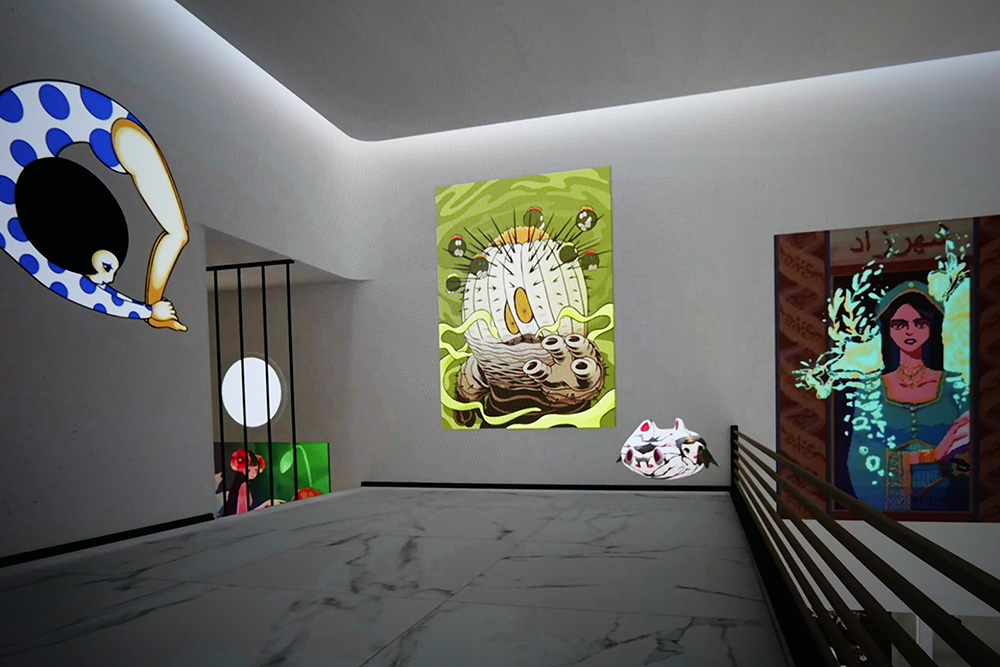
The 59th International Art Exhibition (Biennale Arte 2022) runs from 23 April to 27 November 2022. The main venues of the Biennale are Giardini and Arsenale. In the northern part of Arsenale, visitors will find many rooms with screens showing art projects around and from the Metaverse. The “1st Annual METAVERSE Art @VENICE”, an exhibition conceived by Victoria Lu, a famous art critic and curator of the Chinese artistic world, opened with gEnki, an interactive exhibition that exploits the potential of the Internet and virtual reality. “The exhibition offers a new model of ‘decentralized autonomous curatorship’, exploring various innovative and always different exhibition methods using all the main features of the ‘DAO’ (short for Distributed Autonomous Organization), therefore crowdfunding, co-construction, interconnection of platforms, high level of decentralization, all adapted to the curational concept.” (Flyer gEnki) The exhibition is very inspiring and shows how the Metaverse could become if it would not only follow commercial considerations. More information via annualmetaverseart.com.

Progress with the Starline Project

Google has given an update on its Starline project in a blog post dated October 11, 2022. With this system, two people can hold a video conference in which the respective conversation partner is displayed as a 3D projection – a quasi-hologram. A display based on light field technology is used for this purpose. Several high-resolution cameras film the participants in real time. The company describes this process in a very non-technical or poetic way: “The technology works like a magic window, where users can talk, gesture and make eye contact with another person, life-size and in three dimensions. It is made possible through major research advances across machine learning, computer vision, spatial audio and light field display systems.” (Company News, 11 October 2022) The company hopes to improve hybrid working with Starline. Indeed, quasi-holograms would be interesting not only for concerts, but also for companies that allow and encourage homeworking or that are highly networked and distributed.

Tamagotchi on Our Couch

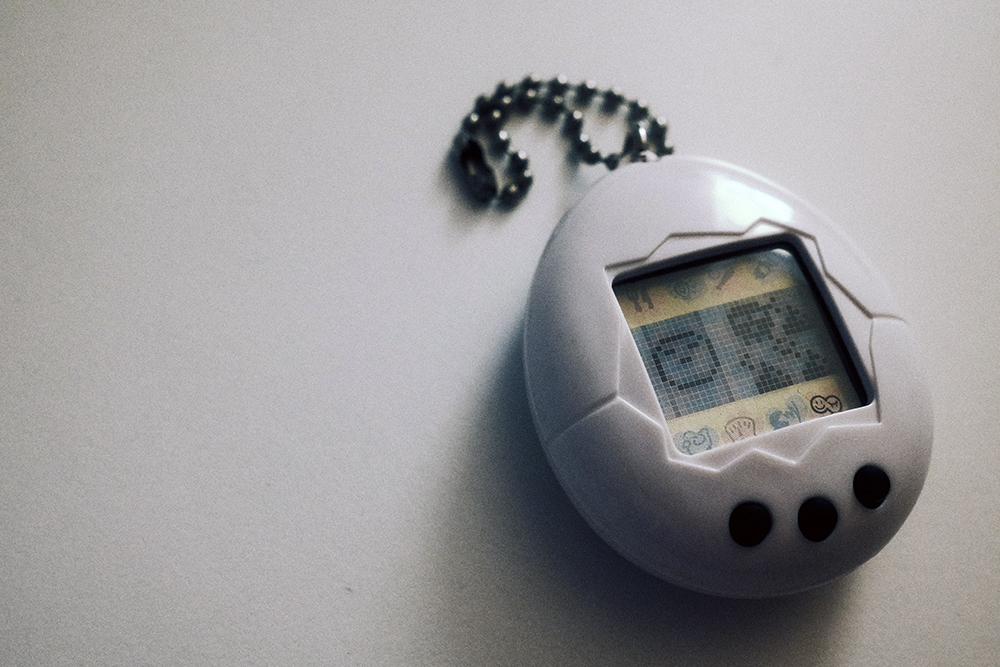
On the first day (August 16, 2022) of the Robophilosophy conference, Katharina Kühne (University of Potsdam) presented a poster on a project she had carried out together with Melinda A. Jeglinski-Mende from the same university. Oliver Bendel (School of Business FHNW) was also involved in the margins. The paper is titled “Tamagotchi on our couch: Are social robots perceived as pets?”. The abstract states: “Although social robots increasingly enter our lives, it is not clear how they are perceived. Previous research indicates that there is a tendency to anthropomorphize social robots, at least in the Western culture. One of the most promising roles of robots in our society is companionship. Pets also fulfill this role, which gives their owners health and wellbeing benefits. In our study, we investigated if social robots can implicitly and explicitly be perceived as pets. In an online experiment, we measured implicit associations between pets and robots using pictures of robots and devices, as well as attributes denoting pet and non-pet features, in a Go/No-Go Association Task (GNAT). Further, we asked our participants to explicitly evaluate to what extent they perceive robots as pets and if robots could replace a real pet. Our findings show that implicitly, but not explicitly, social robots are perceived as pets.” (Abstract) The poster is available here.

A Robot Charging Station for the Disabled

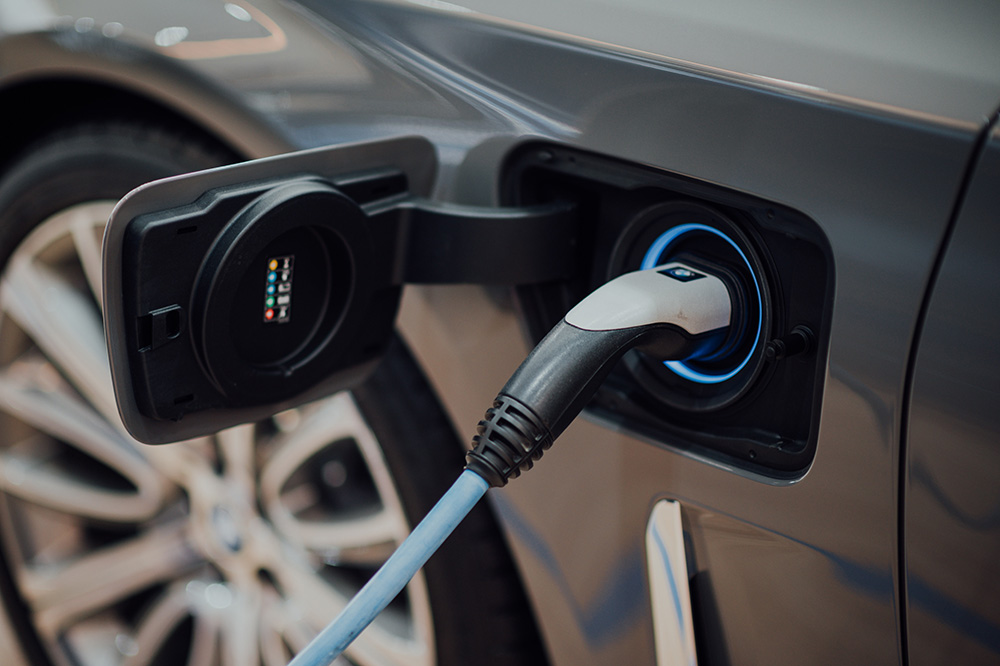
According to a media release, Ford has developed a prototype robot charging station that drivers operate via their smartphone from inside their electric vehicle. The technology could enable disabled persons to stay in the Ford (or another car) while charging, or they could leave the vehicle while the robot completes the task. Disabled drivers, the company says, have already identified ease of charging as a key purchase consideration for electric vehicles. The robot charging station is tested as part of a research project to develop hands-free charging solutions for electric vehicles and fully automatic charging for autonomous vehicles. “Following initial lab testing, Ford researchers are now putting the robot charging station to the test in real-life situations. Once activated, the station cover slides open and the charging arm extends towards the inlet with the help of a tiny camera. For the trial, drivers were able to monitor the charge status via the FordPass app. After charging, the arm retracts back into place.” (Ford Media Release, July 20, 2022) More information is available via the Ford Media Center.

The Ukrainian President as a Hologram

“Leia in ‘Star Wars’, who as a hologram delivers a message, Darth Vader, who forges plans with the imperator even though they are far apart from each other, William Riker in ‘Star Trek’, who moves on the holodeck through artificial landscapes, Major in ‘Ghost in the Shell’, who walks through a city while fish are swimming in the air next to her, Officer K in ‘Blade Runner 2049’, who lives together with a holographic assistant and meets holographic dancers and singers (Frank Sinatra under glass and Elvis Presley on stage) – fictional holograms make an appearance in all these instances.” (Oliver Bendel, “Hologram Girl“, 2018) According to the Guardian, Volodymyr Zelenskiy referenced Star Wars and the second world war as he appeared as a hologram (or pseudo-hologram) at a conference in Paris to seek aid from big tech companies. “He told a crowd of hundreds at the VivaTech trade show that he was offering technology firms a unique chance to rebuild Ukraine as a fully digital democracy.” (Guardian, June 17, 2022) The British newspaper quotes him as saying: “It’s unusual for presidents or heads of government to use a hologram to address people but this is not the only aspect of Star Wars that we are putting into practice” (Guardian, June 17, 2022). The Ukrainian president is not only following in the footsteps of Leila, but also of ABBA, who are currently causing a sensation with their avatars at concerts in London.

ARTE about Social Robots

Since January 20, 2022, the ARTE broadcast “Werden wir Roboter lieben?” (“Will we love robots?”) has been available online. On February 19, 2022, the classic version will follow on the German-French culture channel. Tanja Küchle has masterfully presented and implemented a difficult topic. “According to estimates, there are now more than 1.7 million robots with social characteristics worldwide. They care for, educate, help, and entertain us. There have also long been highly engineered sex robots. But can these machines actually develop feelings – or even feel love?” (Website ARTE, own translation) Prof. Dr. Peter Robinson, computer scientist at the University of Cambridge, Dr. Hooman Samani, roboticist at the University of Plymouth, Prof. Dr. Martin Fischer, cognitive psychologist at the University of Potsdam, Prof. Dr. Catrin Misselhorn, philosopher at the University of Göttingen, and Prof. Dr. Oliver Bendel, information and machine ethicist at the School of Business FHNW, have their say. Oliver Bendel has been researching conversational agents and social robots for more than 20 years and has published the Springer book “Social Robots” at the end of 2021. More information on the program via www.arte.tv/de/videos/101938-004-A/42-die-antwort-auf-fast-alles/ (photo: ARTE).

Human and Animal Enhancement in the Context of Architecture

The 17th International Architecture Exhibition – the entire series, including the art section, is known as La Biennale di Venezia – ran from 22 May to 21 November 2021, with the Salon Suisse curated by architect and publicist Evelyn Steiner. On 18 November 2021, the event “Jethro Knights, Armor Guyver, and Mutant X: How transhumanists challenge architecture” took place. Prof. Dr. Oliver Bendel gave a talk on “Human and animal enhancement in the context of architecture”, followed by a discussion with Mike Schaffner (a Swiss cyborg) and Prof. Dr. Georg Vrachliotis (an architect at TU Delft). First, the information and machine ethicist clarified key terms such as “human enhancement”, “animal enhancement”, “biohacking”, “bodyhacking”, “cyborg”, and “transhumanism”. He also brought in his own terms “robot enhancement” and “reversed cyborg” or “inverted cyborg”. He then presented examples of human enhancement and animal enhancement, including in the context of architecture: cats with chips getting into the house, humans with chips bringing the smart home to adaptations, animals and humans with chips and transmitters detected in time in traffic, and enhanced and improved organisms that can live on alien planets. He concluded by offering ethical considerations. He was open to the idea of cyborgs and critical of the transhumanism movement. The booklet on Salon Suisse is available here.