Keynote Speakers at ACI 2026

Arianna Ferrari, PhD, and Dr. iur. Dr. h.c. Antoine F. Goetschel will deliver the conference keynote addresses at the Animal-Computer Interaction International Conference 2026 (ACI 2026) at the FHNW Campus in Brugg-Windisch, Switzerland. Arianna Ferrari, PhD, is based at the AIT Austrian Institute of Technology, Austria’s largest research and technology organization. She is an ethicist and philosopher of science and technology with extensive experience in technology assessment, the critical evaluation of visions of technological futures (vision assessment), foresight, and human-animal studies. Dr. iur. Dr. h.c. Antoine F. Goetschel is a lawyer and former official animal lawyer for the Canton of Zurich in Switzerland. For more than three decades, he has worked at the intersection of law, ethics, and public policy, representing the interests of animals within legal systems and contributing to the development of animal protection standards at both national and international levels. The ACI International Conference is the leading conference in the field of animal-computer interaction. This year, the conference, hosted by Prof. Dr. Oliver Bendel, will include a dedicated call for contributions on animal-machine interaction. Further information is available at www.aciconf.org.

The Animal Whisperer at the STEAM Challenge

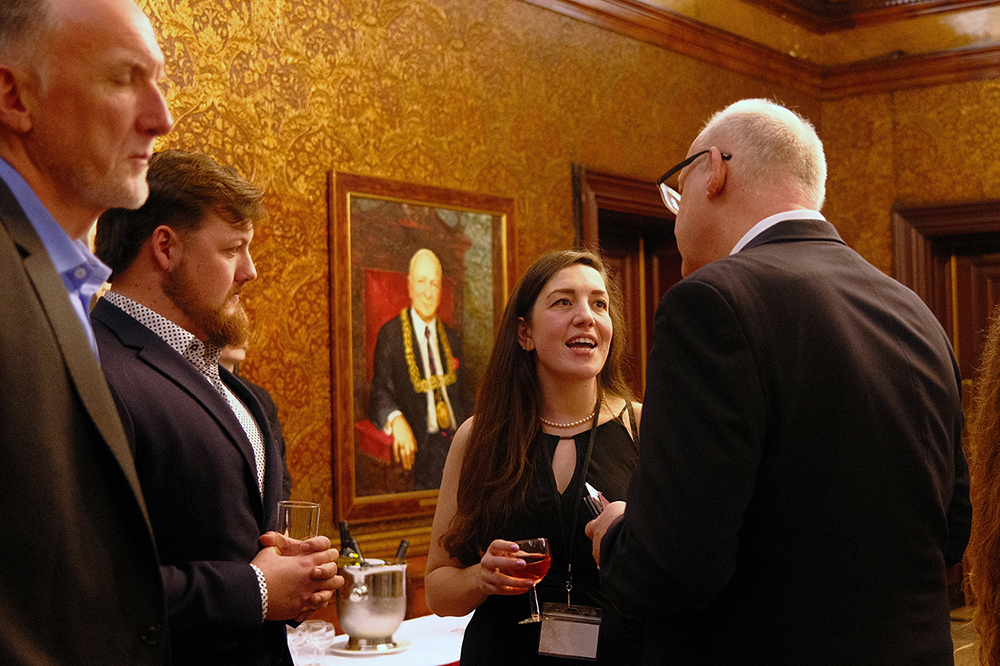
The STEAM Challenge 2026, under the motto “Innovation under Pressure”, will bring innovative ideas and entertaining performances to Spirgarten Zurich on March 3, 2026. Six teams and individual participants will present their projects live before an audience and a jury, competing against one another. The evening will be hosted by Sara Taubman-Hildebrand, while comedians Gülsha Adilji, Reena Krishnaraja, and Zukkihund will provide additional entertainment with humorous interludes. One of the featured projects is the Animal Whisperer, initiated by Prof. Dr. Oliver Bendel. His former student Nick Zbinden (second from left in the photo, together with Ilyena Hirskyj-Douglas and Oliver Bendel) implemented the Cow Whisperer, the Horse Whisperer, and the Dog Whisperer on his behalf. Using Retrieval-Augmented Generation (RAG), a Multimodal Large Language Model (MLLM) was endowed with the required capabilities. First, the body language of cows, horses, or dogs, as well as the overall situation, is analyzed and evaluated. The system then provides recommendations for how humans should behave when interacting with the animals. At Animal-Computer Interaction 2024 in Glasgow, Oliver Bendel and Nick Zbinden were already awarded a prize for their paper “The Animal Whisperer Project: A GenAI App for Decoding Animal Body Language and Behavior”. Further information is available at innovation.zuerich/#steam-challenge-innovation-under-pressure-2.

Robophilosophy 2026: Submission Deadline Extended

The Robophilosophy Conference 2026 (RP2026), titled “Connected Futures – Nature, Robots, and Society”, will take place August 11-14, 2026, in Dublin, Ireland, bringing together researchers from across disciplines to examine how robotics and artificial intelligence are reshaping human societies and the natural world. As robotic systems become increasingly embedded in everyday life, the conference aims to foster dialogue between fields ranging from social robotics, computer science, and human-robot interaction to the humanities, social sciences, law, economics, and environmental research. Central questions include how robotic technologies can uphold human dignity and social justice, how legal systems must adapt to autonomous decision-making, and whether robots can contribute to sustainability rather than accelerate ecological decline. The event marks the seventh installment in the Robophilosophy conference series and features plenary speakers such as Lynne Baillie, Ryan Calo, Hideki Kajima, Arno Klein, Bertram Malle, and Shannon Vallor. Importantly, the submission deadline for research papers, posters, and artistic contributions has been extended to March 15, 2026, offering additional time for scholars and practitioners to contribute to this interdisciplinary conversation. Registration will open soon, and further details are available here and at www.rp2026.org.

ACI 2026 Calls for Submissions

The Animal-Computer Interaction International Conference 2026 (ACI 2026) invites contributions for its thirteenth edition. The conference seeks theoretical, methodological, empirical, and ethical work that advances dialogue around animal-centered research and the design of computing-enabled systems. ACI brings together perspectives from computer science, informatics, engineering, interaction design, animal behavior and welfare science, veterinary science, ecology, sociology, philosophy, and related disciplines, with the aim of further developing Animal-Computer Interaction as a field. In an increasingly networked world shaped by pervasive technologies, animals – both human and nonhuman – are entangled in complex webs of interaction. These interactions may be direct or indirect, physical or cognitive, distributed or dyadic, synchronous or asynchronous. Contributions are encouraged that critically examine how technology shapes human-animal relationships, how large-scale technological deployments affect animals, and how future systems can be designed responsibly and ethically. The conference also welcomes submissions in Animal-Machine Interaction (AMI), which explores interaction and communication between animals and machines, including autonomous systems such as drones and robots. AMI focuses on designing machines that benefit animals and safeguard their interests, supporting survival and well-being. Research Papers and Emerging Work Papers are due May 1, 2026, and Workshop Proposals are due June 1, 2026. All submissions will be peer-reviewed. Further information is available at www.aciconf.org, and submission details can be found at www.aciconf.org/call-for-contributions.

The ECHO Project has Come to an End

The project “ECHO: Explaining Composition, Harmony & Orchestration” was initiated by Prof. Dr. Oliver Bendel and implemented by Lucas Chingis Marty. The final presentation took place on February 19, 2026, at the FHNW Campus Brugg-Windisch. The bachelor’s thesis “ECHO: Explaining Composition, Harmony & Orchestration – A Multimodal AI System for Music Analysis and Education” develops a local multimodal AI system for the analysis and accessible explanation of musical structures based on audio data. The objective is to bridge the gap between music information retrieval (MIR, an automatic audio analysis) and natural language explanation through large language models. The system combines multiple analysis components (tempo, key, chord, instrument, and melody recognition) with a locally operated language model (Llama 3.1-8B) that translates the extracted data into understandable explanations for beginners and intermediate users. Retrieval-augmented generation (RAG), guardrails to reduce hallucinations, and a feedback and evaluation system are employed as part of the approach. The implementation is realized as a desktop application without cloud dependency. The evaluation includes technical measurements on datasets comprising several hundred music tracks as well as a small user study. The thesis demonstrates that a locally operated system can in principle present musical analysis in an understandable way, although clear accuracy limitations of the applied MIR methods remain. Opportunities could open up not only for music education, but also for the preservation of endangered music.

Deadlines Extended for ICSR + Art 2026

The 18th International Conference on Social Robotics (ICSR + Art 2026) will take place in London, UK, from 1-4 July 2026. ICSR is the leading international forum that brings together researchers, academics, and industry professionals from across disciplines to advance the field of social robotics. For its 18th edition, the conference will present the special theme ICSR + Art, highlighting how robots can move beyond their conventional roles to become tools, partners, and co-creators within artistic and creative practices. At the same time, the conference remains open to the full breadth of social robotics research, including human-robot interaction, medical and assistive robotics, artificial intelligence and machine learning, ethics, design, education, and cultural applications. Accepted papers will be published in Springer’s Lecture Notes in Artificial Intelligence (LNAI) series and indexed in major academic databases. The conference programme will encompass regular papers, short papers, special sessions, a design and art competition, debates, the Robot Fringe live performance strand, and an Industry Day dedicated to emerging robotics and technology companies. Regular Papers for the main track must follow the submission guidelines provided on the conference website and be submitted via the Springer Meteor system by 6 March 2026. Contributions to Special Sessions should likewise follow the Regular Paper instructions and be submitted to the respective session. Short Papers must comply with the specific Short Paper guidelines and be submitted accordingly. The ICSR Design / Art Competition, proposals for debates, and submissions for the Robot Fringe live robotic performance programme are due by 15 March 2026. Early-stage robotics and technology companies wishing to showcase their work at the Industry Day may apply until 15 May 2026. Further details, submission instructions, and relevant links are available at icsr2026.uk.

Social Robots at Campus Brugg-Windisch

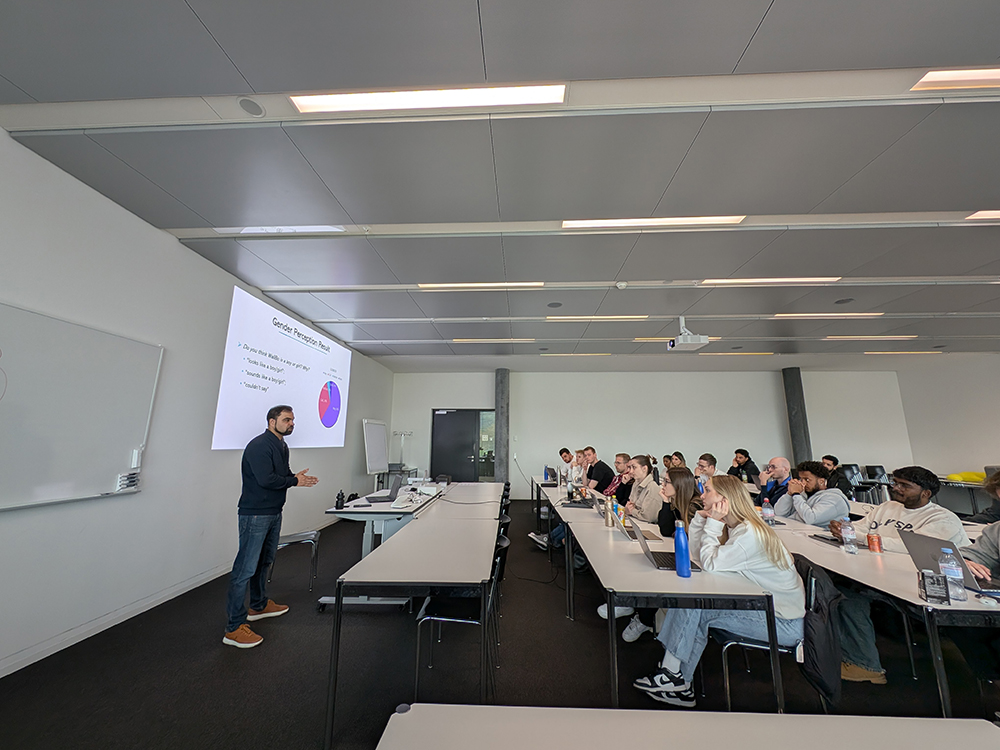
The elective module “Soziale Roboter aus technischer, wirtschaftlicher und ethischer Sicht” (“Social robots from a technical, economic, and ethical perspective”) by Prof. Dr. Oliver Bendel will be held again from February 12 to 14, 2026 at the FHNW in Brugg-Windisch. It is primarily aimed at aspiring business economists, but prospective information systems specialists can also take part. Dr. Amol Deshmukh has been invited again as a guest speaker. He previously worked for the University of Glasgow and now conducts research at ETH Zurich. In his lecture, he will present the findings from his paper “Leveraging Social Robots to Promote Hand Hygiene: A Cross-Cultural and Socio-Economic Study of Children in Diverse School Settings”. Unitree Go2, Alpha Mini, Cozmo, Vector, Aibi, Furby, and Booboo from Oliver Bendel’s private Social Robots Lab will also be on site. Social Robotics Girl, a so-called GPT who specializes in this topic, will be available as a tutor throughout the event. Basic works are “Soziale Roboter” (2021) and “300 Keywords Soziale Robotik” (2021). At the end of the elective module, students design social robots – also with the help of generative AI – that they find useful, meaningful, or simply attractive. The elective modules have been offered since 2021 and are very popular.