The 2026 World Humanoid Robot Games

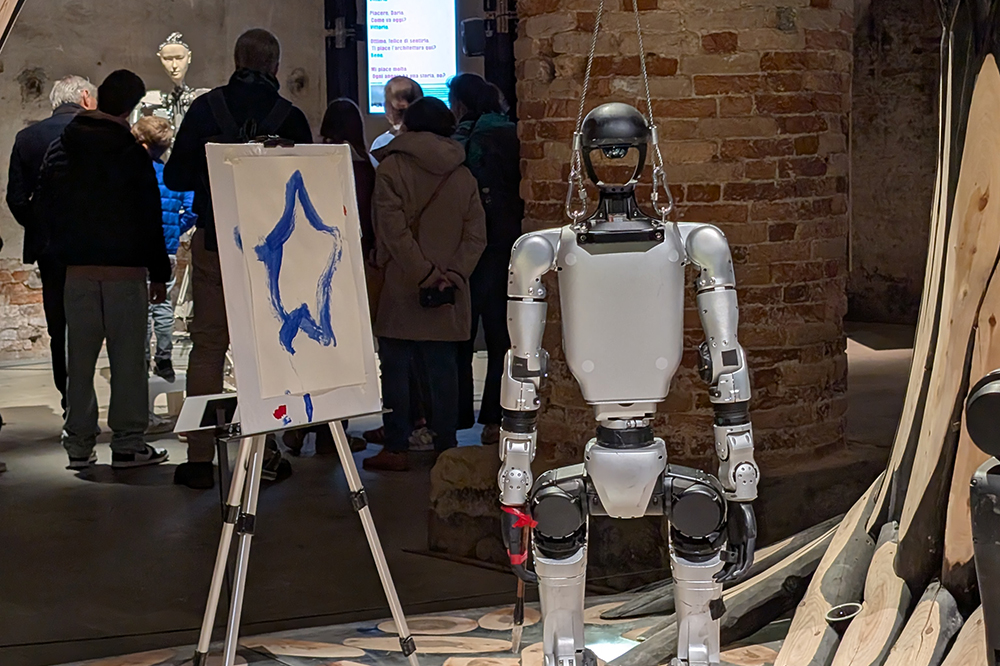
The 2026 World Humanoid Robot Games are taking place in Beijing from August 23 to 25, 2026. More than 2,000 humanoid robots from over 660 teams are competing in 30 sports events and 21 scenario-based competitions. Alongside media and robotics organizations, the Beijing municipal government is one of the co-organizers. Most of the models are general-purpose robots or are based on general-purpose robot platforms that have been modified to varying degrees. While the sports competitions are primarily about spectacle, effects, and emotion, the scenario-based competitions are intended to demonstrate whether the machines can actually perform in manufacturing, logistics, hospitality and catering, retail, household environments, offices, and rescue operations. The fluid movements in kickboxing are particularly impressive, even though the robots are remotely controlled. In tennis, the robots operate autonomously, albeit still at a modest level. The running records are spectacular as well, while slowing down and coming to a controlled stop continue to pose problems. Overall, the picture is clear: things are still somewhat shaky, much like image and video generators were a few years ago, but they are becoming steadily more stable. China has caught up rapidly in general-purpose robots and humanoid robotics more broadly in recent years and now enjoys advantages in manufacturing, infrastructure, supply chains, production volumes, and pricing. Around 80 percent of global shipments now come from China. Ultimately, the event is a demonstration of technological prowess and power.

Paper on “Robots in Policing”

In January 2023, the Proceedings of Robophilosophy 2022 were published. Included is the paper “Robots in Policing” by Oliver Bendel. From the abstract: “This article is devoted to the question of how robots are used in policing and what opportunities and risks arise in social terms. It begins by briefly explaining the characteristics of modern police work. It puts service robots and social robots in relation to each other and outlines relevant disciplines. The article also lists types of robots that are and could be relevant in the present context. It then gives examples from different countries of the use of robots in police work and security services. From these, it derives the central tasks of robots in this area and their most important technical features. A discussion from social, ethical, and technical perspectives seeks to provide clarity on how robots are changing the police as a social institution and with social actions and relationships, and what challenges need to be addressed.” (Abstract) Robots and AI systems in police work have become a hot topic. The author accepted manuscript of this article is therefore being made freely available on this site for non-commercial use only and with no derivatives, in line with the publisher’s self-archiving policy.

On Metamorphoses in the Factory

The Workshop “The Social Significance of Human Effort – What Are the Parameters For Positive Human-Robot Interaction In the Context of Industry 5.0?” took place on the third day of Robophilosophy 2024. Prof. Dr. Oliver Bendel gave the lecture “Metamorphoses in the Factory. From Classic Industrial Robots over Cobots and Classic Service Robots to Universal Robots”. From the abstract: “Robots play an important role in industry. In recent years, there have been interesting innovations in production and logistics. Large classic industrial robots are turning into small cobots. Cobots become service robots. Classic service robots are discovering the factory. Metamorphoses are taking place. This talk hypothesizes that recent developments will have a significant impact on workers and work. In particular, the precursors of universal robots could significantly change the factory of the future, just as they will change society as a whole. After all, with universal robots, the boundaries between industrial and service robots are becoming increasingly blurred.” (Website Robophilosophy 2024)

Why Animals Can (Still) Outrun Robots

In an article published in Science Robotics in April 2024, Samuel A. Burden and his co-authors explore the question of why animals can outrun robots. In their abstract they write: “Animals are much better at running than robots. The difference in performance arises in the important dimensions of agility, range, and robustness. To understand the underlying causes for this performance gap, we compare natural and artificial technologies in the five subsystems critical for running: power, frame, actuation, sensing, and control. With few exceptions, engineering technologies meet or exceed the performance of their biological counterparts. We conclude that biology’s advantage over engineering arises from better integration of subsystems, and we identify four fundamental obstacles that roboticists must overcome. Toward this goal, we highlight promising research directions that have outsized potential to help future running robots achieve animal-level performance.” (Abstract) The article was published at a time when the market for robotic four-legged friends is exploding. Spot, Unitree Go2 and many others can certainly compete with some animals when it comes to running. But when it comes to suppleness and elegance, further progress is still needed.

A Robot Boat to Clean the Rivers

Millions of tons of plastic waste float down polluted urban rivers and industrial waterways and into the world’s oceans every year. According to Microsoft, a Hong Kong-based startup has come up with a solution to help stem these devastating waste flows. “Open Ocean Engineering has developed Clearbot Neo – a sleek AI-enabled robotic boat that autonomously collects tons of floating garbage that otherwise would wash into the Pacific from the territory’s busy harbor.” (Deayton 2023) After a long period of development, its inventors plan to scale up and have fleets of Clearbot Neos cleaning up and protecting waters around the globe. The start-up’s efforts are commendable. However, polluted rivers and harbors are not the only problem. A large proportion of plastic waste comes from the fishing industry. This was proven last year by The Ocean Cleanup project. So there are several places to start: We need to avoid plastic waste. Fishing activities must be reduced. And rivers, lakes and oceans must be cleared of plastic waste (Image: DALL-E 3).

Zulu and Charlie at Zurich Airport

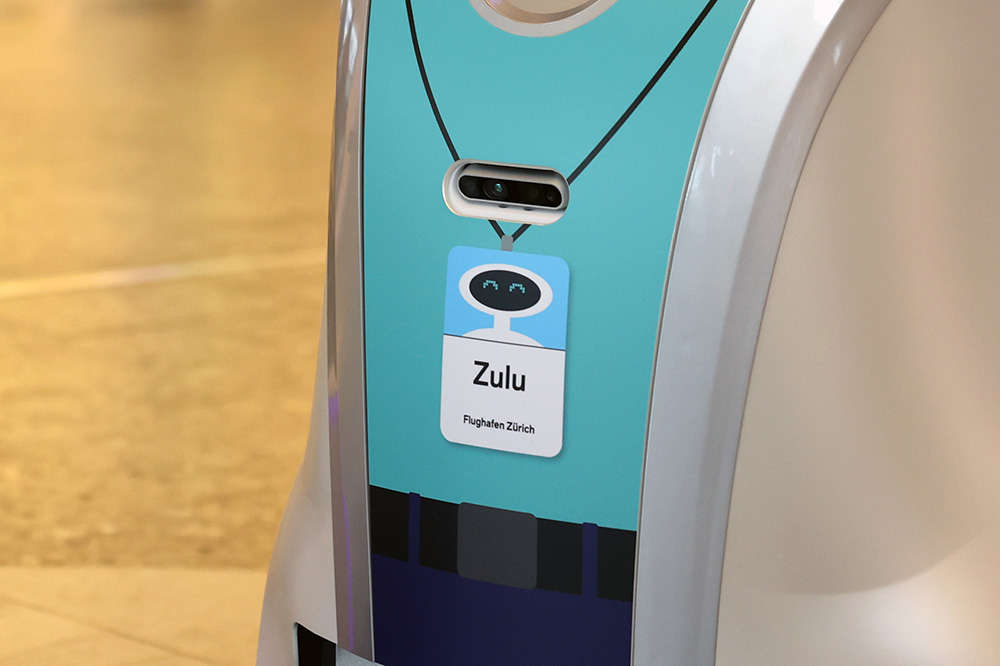
According to an announcement on December 14, 2023, Zurich Airport is adding Zulu and Charlie to its 300-strong building cleaning team for test purposes. The two service robots are from LionsBot, a Singapore-based company (www.lionsbot.com) and belong to the LEOBOTS. Oliver Bendel writes in the Gabler Wirtschaftslexikon: “Cleaning robots are (partially) autonomous service robots for cleaning surfaces, objects and water sources. They usually have a tangible design and resemble flat cylinders or cuboids. … There are hardly any approaches among the cleaning robots that would turn them into social robots. However, some can communicate with the owners or operators, either by means of text and images on the display or by spoken language.” (own translation) … According to Zurich Airport, Zulu and Charlie can do more than just clean areas. “They can also interact with passengers. If you scan the QR code on the device, you can select questions that the robot will answer.” (Zurich Airport, December 14, 2023) It goes on to say: “Zulu and Charlie have various sensors. These can recognize outlines, but do not create video footage. The test phase of the devices will run until mid-February. The robots are autonomous and will clean the areas on their own after a short initial phase.” (Zurich Airport, December 14, 2023) Further information is available at www.flughafen-zuerich.ch/newsroom/en/flughafen-zuerich-ag-relies-on-robot-support/ (Photo: Zurich Airport).

15th International Conference on Social Robotics (ICSR 2023)

The International Conference on Social Robotics (ICSR 2023) is, next to Robophilosophy, the most important conference on social robotics. The deadline for paper submission is approaching. “The 15th International Conference on Social Robotics (ICSR 2023) will bring together researchers and practitioners working on the interaction between humans and intelligent robots and on the integration of social robots into our society.  ICSR 2023 will take place in Doha as a face-to-face conference on December 4-7, 2023. This will be the first time that the conference will be hosted in Qatar and in the Middle East and North Africa region.” (Website ICSR) The theme of this year’s ICSR is “Human-Robot Collaboration: Sea, Air, Land, Space and Cyberspace”. According to the organizers, the theme emphasizes on all physical and cyber-physical domains where humans and robots collaborate. Papers can be submitted until August 21, 2023. Notifications will be made by September 18 of that year. More information via icsr23.qa.

ADAM the Bartender

Bar robots are mostly cobots, housed in a kiosk or behind the counter. They prepare coffee, as barista robots, or cocktails, as cocktail robots. Daily Mail Online reported on May 11, 2023: “New York City’s first coffee shop run by robot baristas is coming to Greenpoint, where a two-armed robot called ADAM will serve up potentially hundreds and hundreds of cups of coffee a day at Botbar.” (Daily Mail Online, 11 May 2023) Two-armed bar robots are the exception so far. One of them is Toni from Makr Shakr. It accesses 158 different bottles hanging from the ceiling of the open bar and shakes and stirs the liquids. ADAM looks like an egg with a head. It has two extra-long arms with many degrees of freedom. “Beyond coffee-making, ADAM will have several other skills, including dancing for and waving at customers. The technological feat can produce up to 50 espresso drinks per hour. The new neighbor-hood haunt will also serve food.” (Daily Mail Online, 11 May 2023) One of the few researchers investigating bar robots and other robots in the hospitality industry is Oliver Bendel. Together with Lea Peier, he presented the paper “How Can Bar Robots Enhance the Well-being of Guests?” at the AAAI 2023 Spring Symposia in San Francisco. A preprint is available here.

The Rise of the Humanoid Robots

If a report in Wired is to be believed, humanoid robotics has entered a decisive phase. The editor describes the case of Figure AI. This company from Sunnyvale, CA is building a humanoid robot for warehouse work and recently announced $70 million in investment funding. Chief Technology Officer Jerry Pratt is one of the key figures. “Pratt says his company’s robot is taking its first steps around a mocked-up warehouse in Sunnyvale, California. Brett Adcock, Figure’s CEO, reckons it should be possible to build humanoids at the same cost of making a car, providing there is enough demand to ramp up production.” (Wired, 25 May 2023) According to Wired, Figure AI is not the only company betting that humanoid robots are maturing. “Others include 1X, Apptronik, and Tesla.” (Wired, 25 May 2023) Tesla’s Optimus recently made an appearance on stage that was much more convincing than the first. By the way, it looks similar to the Figure AI model. Improvements in the robots can be seen in motor skills, but also in perception and control. Language models like PaLM-E could play an important role here in the future.

Robots in Hawai’i – Part 7

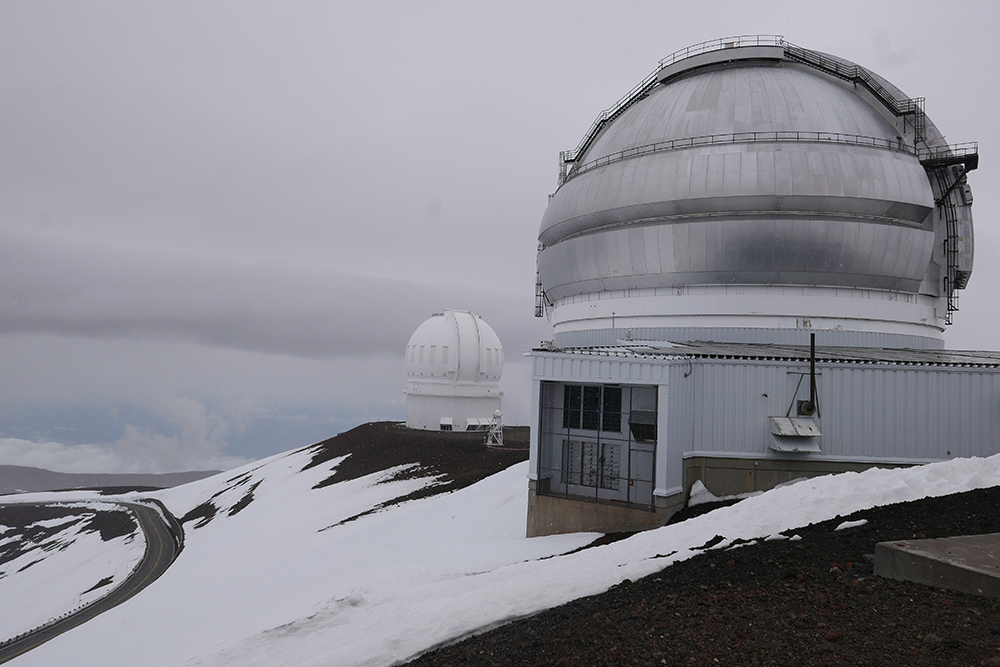
Mauna Kea volcano is the highest mountain in the world, measured from the bottom of the sea. It is considered a sacred place in the culture of Hawai’i. In this context, the famous and important telescopes on the top are always the cause of bitter disputes. The operation of drones is also not allowed on the mountain. However, a small robot made it on it in 2008. This was reported by several media outlets, including Science Daily. “During the field experiment, Nov. 1-13, the robot called Scarab will simulate a lunar mission to extract water, hydrogen, oxygen and other compounds that could potentially be mined for use by future lunar explorers. The four-wheeled robot will trek to different sites, using a Canadian-built drill to obtain a one-meter geologic core at each site. Each core will be chemically analyzed by on-board instruments developed by NASA.” (Science Daily, 14 October 2008) After that, it became increasingly difficult for robots to climb Mauna Kea. It is easier for scientists and tourists, who only need 4-wheel drive and robust health.