Final Call for ICSR + Art 2026

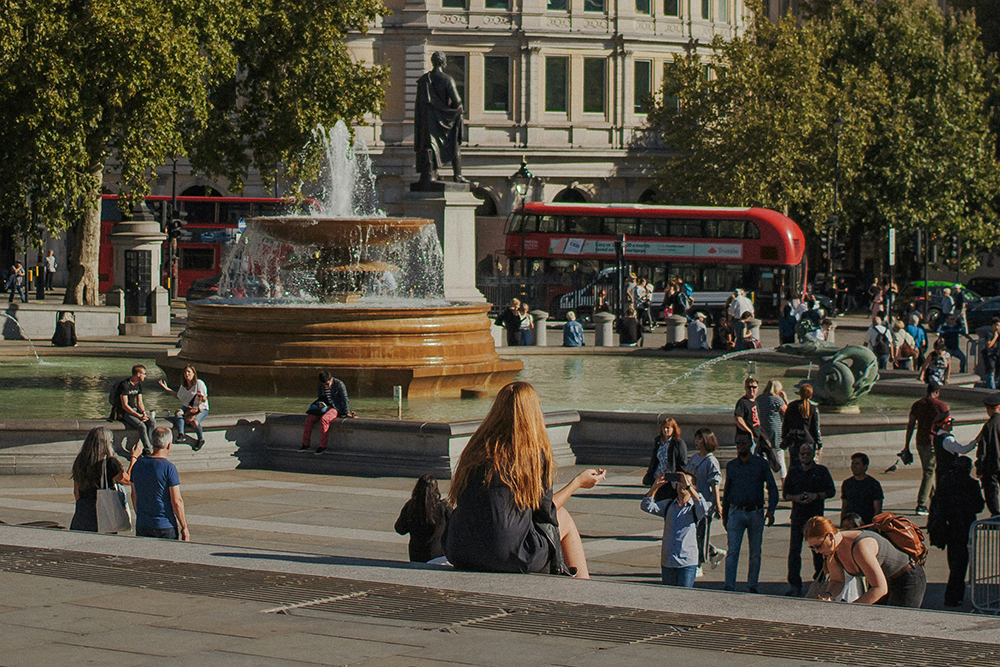
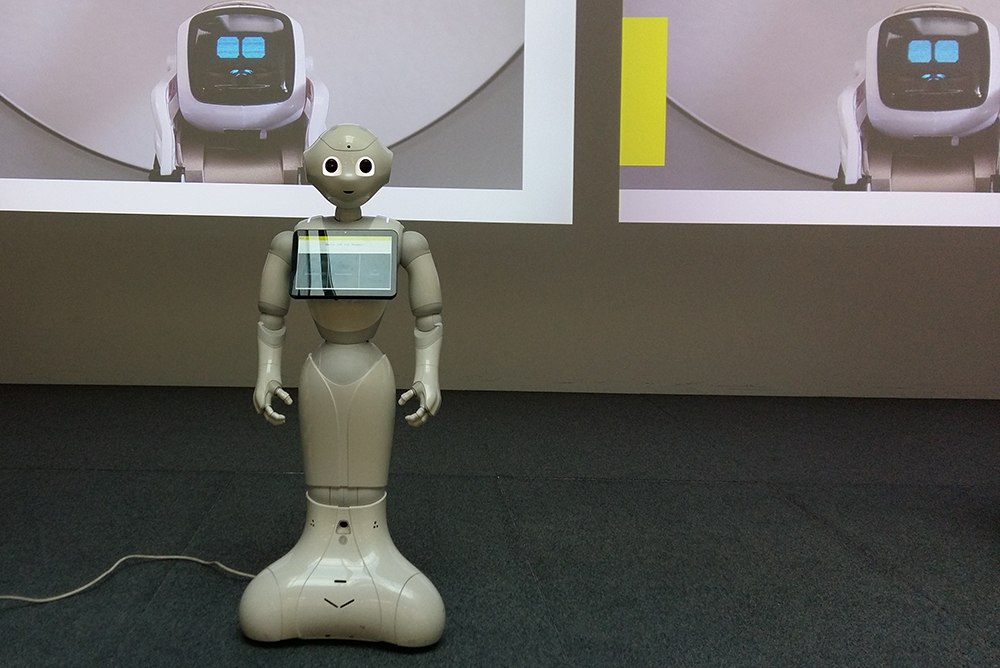
The 18th International Conference on Social Robotics (ICSR + Art 2026) will take place in London, UK, from 1–4 July 2026. ICSR is the leading international forum that brings together researchers, academics, and industry professionals from across disciplines to advance the field of social robotics. For its 18th edition, the conference will present the special theme ICSR + Art, highlighting how robots can move beyond their conventional roles to become tools, partners, and co-creators within artistic and creative practices. At the same time, the conference remains open to the full breadth of social robotics research, including human–robot interaction, medical and assistive robotics, artificial intelligence and machine learning, ethics, design, education, and cultural applications. Accepted papers will be published in Springer’s Lecture Notes in Artificial Intelligence (LNAI) series and indexed in major academic databases. Due to current extenuating circumstances worldwide and following requests from several authors, the submission deadlines have been extended by a few additional days to allow additional time for final submissions. No further extensions of the submission deadlines are planned, and all submissions must follow the updated schedule. All deadlines are based on Anywhere on Earth (AoE) time. Authors who have already submitted a paper may use the extension to update their submission; if any difficulty occurs when modifying the existing entry in the system, the previous submission may be withdrawn and replaced with a new version. Updated dates are available at icsr2026.uk/dates/ and submission instructions can be found at icsr2026.uk/submission/ (Photo: stevecadman/CC BY-SA 2.0).

Deadlines Extended for ICSR + Art 2026

The 18th International Conference on Social Robotics (ICSR + Art 2026) will take place in London, UK, from 1-4 July 2026. ICSR is the leading international forum that brings together researchers, academics, and industry professionals from across disciplines to advance the field of social robotics. For its 18th edition, the conference will present the special theme ICSR + Art, highlighting how robots can move beyond their conventional roles to become tools, partners, and co-creators within artistic and creative practices. At the same time, the conference remains open to the full breadth of social robotics research, including human-robot interaction, medical and assistive robotics, artificial intelligence and machine learning, ethics, design, education, and cultural applications. Accepted papers will be published in Springer’s Lecture Notes in Artificial Intelligence (LNAI) series and indexed in major academic databases. The conference programme will encompass regular papers, short papers, special sessions, a design and art competition, debates, the Robot Fringe live performance strand, and an Industry Day dedicated to emerging robotics and technology companies. Regular Papers for the main track must follow the submission guidelines provided on the conference website and be submitted via the Springer Meteor system by 6 March 2026. Contributions to Special Sessions should likewise follow the Regular Paper instructions and be submitted to the respective session. Short Papers must comply with the specific Short Paper guidelines and be submitted accordingly. The ICSR Design / Art Competition, proposals for debates, and submissions for the Robot Fringe live robotic performance programme are due by 15 March 2026. Early-stage robotics and technology companies wishing to showcase their work at the Industry Day may apply until 15 May 2026. Further details, submission instructions, and relevant links are available at icsr2026.uk.

Social Robots at Campus Brugg-Windisch

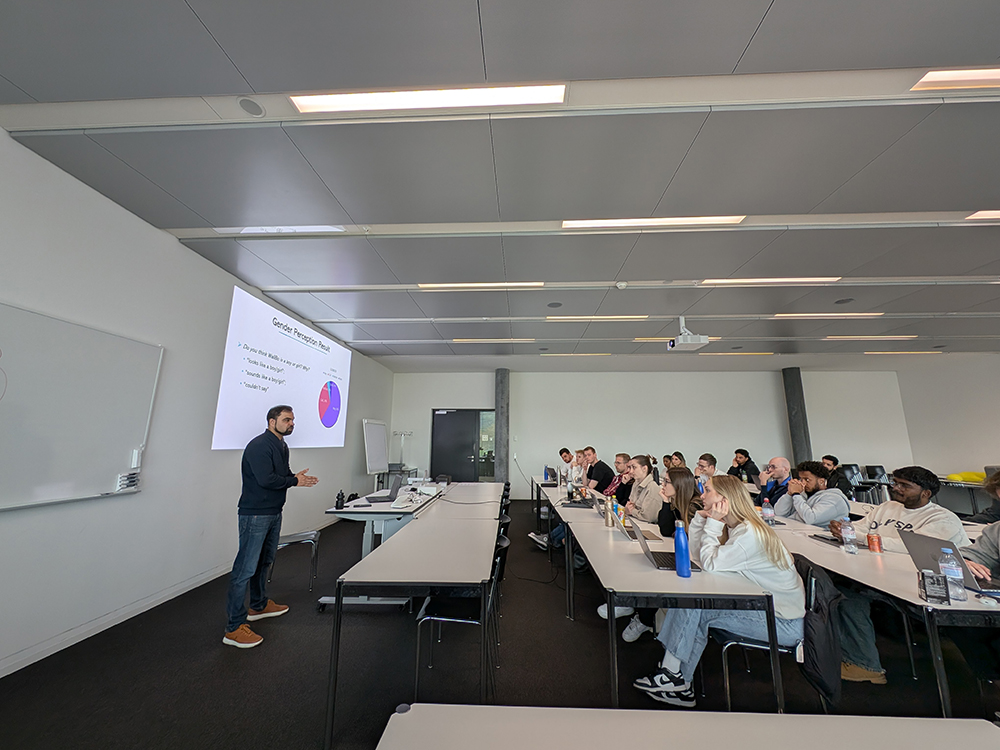
The elective module “Soziale Roboter aus technischer, wirtschaftlicher und ethischer Sicht” (“Social robots from a technical, economic, and ethical perspective”) by Prof. Dr. Oliver Bendel will be held again from February 12 to 14, 2026 at the FHNW in Brugg-Windisch. It is primarily aimed at aspiring business economists, but prospective information systems specialists can also take part. Dr. Amol Deshmukh has been invited again as a guest speaker. He previously worked for the University of Glasgow and now conducts research at ETH Zurich. In his lecture, he will present the findings from his paper “Leveraging Social Robots to Promote Hand Hygiene: A Cross-Cultural and Socio-Economic Study of Children in Diverse School Settings”. Unitree Go2, Alpha Mini, Cozmo, Vector, Aibi, Furby, and Booboo from Oliver Bendel’s private Social Robots Lab will also be on site. Social Robotics Girl, a so-called GPT who specializes in this topic, will be available as a tutor throughout the event. Basic works are “Soziale Roboter” (2021) and “300 Keywords Soziale Robotik” (2021). At the end of the elective module, students design social robots – also with the help of generative AI – that they find useful, meaningful, or simply attractive. The elective modules have been offered since 2021 and are very popular.

Talking to a Robot

The article “Small Talk with a Robot Reduces Stress and Improves Mood” by Katharina Kühne, Antonia L. Z. Klöffel, Oliver Bendel, and Martin H. Fischer was published on December 23, 2025. It is part of the volume “Social Robotics + AI: 17th International Conference, ICSR+AI 2025, Naples, Italy, September 10–12, 2025, Proceedings, Part III.” From the abstract: “Research has demonstrated that social support is crucial in mitigating stress and enhancing mood. Not only do long-term, meaningful relationships contribute to well-being, but everyday social interactions, such as small talk, also offer psychological benefits. As social robots increasingly become more integrated into daily life, they present a potential avenue for stress interventions. In our online study, 98 participants underwent a stress induction using the Stroop task and were then assigned to one of three conditions: engaging in scripted small talk with a simulated NAO robot online, listening to a neutral story told by the same NAO robot, or no intervention (control condition). Results indicate that both interventions effectively reduced stress, with a tendency towards a stronger effect in the Small talk condition. Small talk not only helped maintain positive affect but also reduced negative affect. Notably, the benefits were more pronounced among individuals experiencing higher acute stress following the stress induction, but were less evident in those with chronically elevated stress levels. Furthermore, the effect of the intervention on stress reduction was mediated by changes in positive affect. These findings suggest that small talk with a social robot may serve as a promising tool for stress reduction and affect regulation.” The first author, a researcher from the University of Potsdam, presented the paper on September 12, 2025, in Naples. It can be downloaded from link.springer.com/chapter/10.1007/978-981-95-2398-6_1.

Towards Inclusive AI and Inclusive Robotics

The article “Wearable Social Robots for the Disabled and Impaired” by Oliver Bendel was published on December 23, 2025. It is part of the volume “Social Robotics + AI: 17th International Conference, ICSR+AI 2025, Naples, Italy, September 10–12, 2025, Proceedings, Part III.” From the abstract: “Wearable social robots can be found on a chain around the neck, on clothing, or in a shirt or jacket pocket. Due to their constant availability and responsiveness, they can support the disabled and impaired in a variety of ways and improve their lives. This article first identifies and summarizes robotic and artificial intelligence functions of wearable social robots. It then derives and categorizes areas of application. Following this, the opportunities and risks, such as those relating to privacy and intimacy, are highlighted. Overall, it emerges that wearable social robots can be useful for this group, for example, by providing care and information anywhere and at any time. However, significant improvements are still needed to overcome existing shortcomings.” The technology philosopher presented the paper on September 12, 2025, in Naples. It can be downloaded from link.springer.com/chapter/10.1007/978-981-95-2398-6_8.

Navel, please come to me

Contact between Navel Robotics and the FHNW School of Business has existed since March 2021. At that time, it had not yet been decided whether Navel, the social robot, should be equipped with a spherical body or with wheels for locomotion. Claude Toussaint, the founder and inventor, discussed this and other questions with Prof. Dr. Oliver Bendel. He decided in favor of wheels, unlike the Mirokaï models by Enchanted Tools – the female Miroka and the male Miroki – which today zip around like BB-8. Navel stands out for its large, seemingly round eyes. This effect is created by a special lens, as the displays themselves are not curved. In the case of the Mirokaï robots, the face – including eyes, nose, mouth, and facial expressions – is projected onto a face shell, similar to the Furhat heads. The contact between the company and the university continued. On February 18, 2024, Claude Toussaint joined the elective module “Social Robots” remotely, and on June 6, 2024, he was a guest at the Future Lab hosted by Oliver Bendel at Learntec. In November 2025, Navel Robotics was able to announce on its website: “Many customers have been waiting for this moment – we have too … From now on, Navel will gradually learn to move independently in environments such as stations and residential areas. ‘Navel, please come to me’ – the first step toward autonomous driving.” (Navel Robotics website, own translation) In nursing homes and assisted-living facilities, social robots of this kind can be useful, as can assistive robots such as Lio, which are capable of physically manipulating objects. Miroka and Miroki combine both worlds: they are advanced assistive robots and fully fledged social robots. The future will show which approaches prevail (Photo: ICSR).

Human-likeness in AI

The Research Topic “Exploring human-likeness in AI: From perception to ethics and interaction dynamics”, hosted by Frontiers in Cognition, invites contributions on how human-like features in robots and AI systems influence user perception, trust, interaction, and ethical considerations. The deadline for submission has been extended. As AI becomes more integrated into society, anthropomorphic design raises pressing questions: Do human-like traits improve communication and acceptance, or do they lead to unrealistic expectations? What ethical implications arise when machines simulate empathy or emotion? This interdisciplinary call welcomes contributions from fields such as psychology, engineering, philosophy, and education. Submissions may include empirical research, theoretical analysis, reviews, or case studies that explore how human-likeness shapes the way we engage with AI. The deadline for manuscript summaries is February 12, 2026; full manuscripts are due by March 12, 2026. Articles will undergo peer review and are subject to publication fees upon acceptance. Topic editors are Dr. Katharina Kühne (University of Potsdam, Germany) and Prof. Dr. Roger K. Moore (The University of Sheffield, United Kingdom). For full details and submission guidelines, visit: www.frontiersin.org/research-topics/72370/exploring-human-likeness-in-ai-from-perception-to-ethics-and-interaction-dynamics.

ICSR 2026 is Ready for Submissions

The 18th International Conference on Social Robotics (ICSR + Art 2026) will take place in London, UK, from 1–4 July 2026. ICSR is the leading international forum that brings together researchers, academics, and industry professionals from across disciplines to advance the field of social robotics. The conference has now opened its submission system, and full details can be found on the official ICSR 2026 submission page (icsr2026.uk/submission). Authors are invited to submit to a range of categories. Regular Papers for the Main Track should follow the guidelines provided on the conference website and be submitted by 15 February 2026. Special Session submissions follow the same Regular Paper instructions but are directed to individual sessions listed on the Special Sessions page. Short Papers follow their own dedicated instructions and are submitted through the same system. Competitions and Debates each have their own portals, with submissions due by 1 March 2026. Additional tracks such as the Robot Fringe and Travel Grants will be announced soon. All submission links and instructions are clearly detailed on the ICSR 2026 submission page, ensuring authors have everything they need to prepare their contributions for this major event in social robotics.

Nature, Robots, and Society

The Robophilosophy Conference 2026 will take place August 11–14 at University College Dublin in a hybrid format and centers on the theme “Connected Futures: Nature, Robots, and Society”. As robotics and AI become deeply embedded in human life, the conference invites researchers across disciplines to explore how autonomous systems shape society, ecology, law, labor, and human self-understanding. It raises questions about responsible design, accountability, environmental impact, social justice, cultural perspectives, and the ethics of coexistence with artificial agents. Workshop proposals are due January 16, session papers and posters February 6, with notifications in February and April and proceedings pre-submission on June 15. RP2026 aims to foster interdisciplinary dialogue that advances both technological insight and collective wisdom for a future in which humans and autonomous systems share social and ecological worlds. Further information is available at cas.au.dk/en/rpc2026.

ICSR – Call for Debates

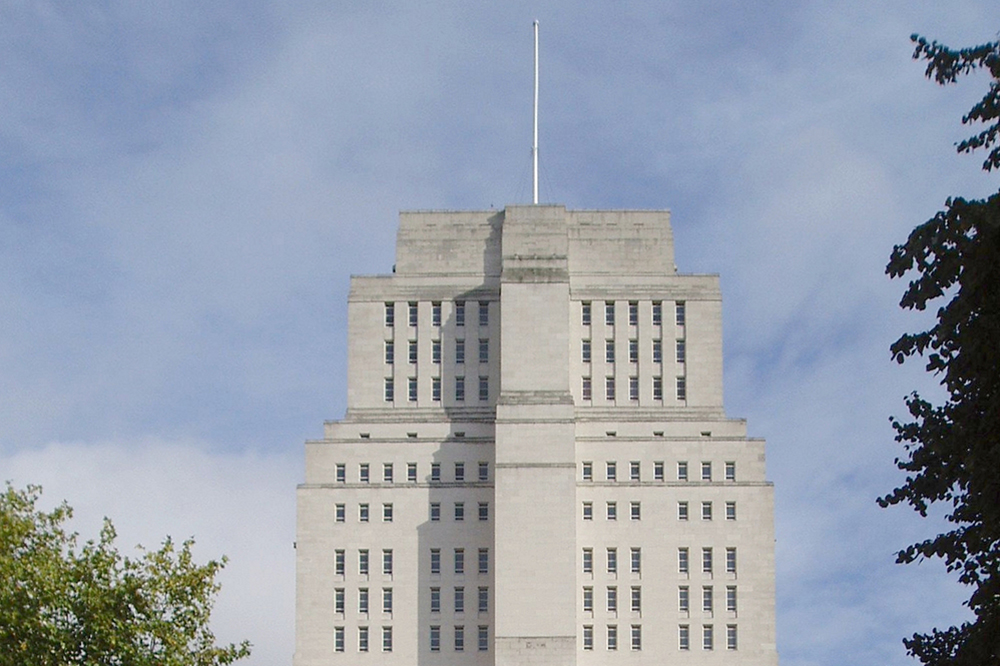
The 18th International Conference on Social Robotics (ICSR + Art 2026) will take place in London, UK, from 1-4 July 2026. ICSR is the leading international forum that brings together researchers, academics, and industry professionals from across disciplines to advance the field of social robotics. As part of this edition, ICSR 2026 will host a series of live debates in the Debate Room (Senate Room), addressing pressing questions about social robots in society and culture. Debate proposals may focus on conceptual, ethical, scientific, artistic, practical, or societal aspects of social robotics and should connect broadly to the conference topics listed at icsr2026.uk/topics/. Submissions are open to contributors from social robotics, HRI, the arts, design, engineering, the humanities, and related areas, with interdisciplinary proposals particularly encouraged. Formats may include two-sided or multi-position debates, panel discussions, performative debates, or audience-engaged formats. In a nod to British debating traditions, participants are encouraged to wear academic gowns. Proposals are submitted via icsr2026.uk/debate-proposal, with a submission deadline of 1 March 2026 and notification of acceptance by 15 April 2026.