The field of animal-machine interaction is gaining new research topics with social robots. Meiying Qin from Yale University and her co-authors have brought together a Nao and a dog. From the abstract of their paper: “In two experiments, we investigate whether dogs respond to a social robot after the robot called their names, and whether dogs follow the ‘sit’ commands given by the robot. We conducted a between-subjects study (n = 34) to compare dogs’ reactions to a social robot with a loudspeaker. Results indicate that dogs gazed at the robot more often after the robot called their names than after the loudspeaker called their names. Dogs followed the ‘sit’ commands more often given by the robot than given by the loudspeaker. The contribution of this study is that it is the first study to provide preliminary evidence that 1) dogs showed positive behaviors to social robots and that 2) social robots could influence dog’s behaviors. This study enhance the understanding of the nature of the social interactions between humans and social robots from the evolutionary approach. Possible explanations for the observed behavior might point toward dogs perceiving robots as agents, the embodiment of the robot creating pressure for socialized responses, or the multimodal (i.e., verbal and visual) cues provided by the robot being more attractive than our control condition.” (Abstract) You can read the full paper via dl.acm.org/doi/abs/10.1145/3371382.3380734.
Care Robots with Sexual Assistance Functions
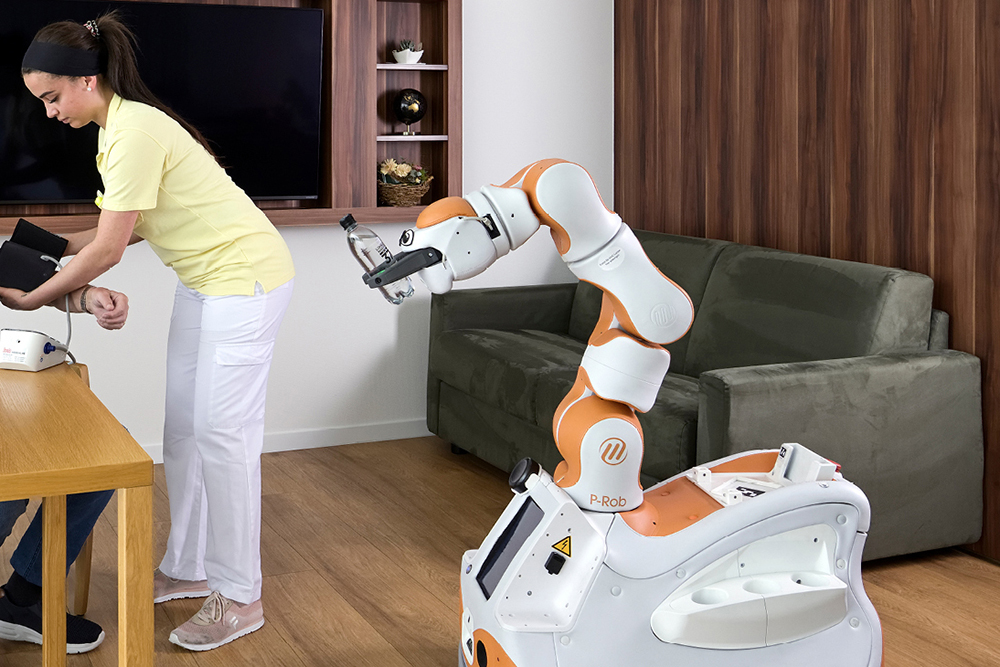
In his lecture at the Orient-Institut Istanbul on 18 December 2019, Oliver Bendel dealt with care robots as well as therapy and surgery robots. He presented well-known and less known examples and clarified the goals, tasks and characteristics of these service robots in the healthcare sector. Afterwards he investigates current and future functions of care robots, including sexual assistance functions. Against this background, the lecture considered both the perspective of information ethics and machine ethics. In the end, it became clear which robot types and prototypes or products are available in healthcare, which purposes they fulfil, which functions they assume, how the healthcare system changes through their use and which implications and consequences this has for the individual and society. The lecture took place within the series “Human, medicine and society: past, present and future encounters” … The Orient-Institut Istanbul is a turkological and regional scientific research institute in the association of the Max Weber Foundation. In close cooperation with Turkish and international scientists, it dedicates itself to a multitude of different research areas. More information via www.oiist.org.
AI Workshop at the University of Potsdam
In 2018, Dr. Yuefang Zhou and Prof. Dr. Martin Fischer initiated the first international workshop on intimate human-robot relations at the University of Potsdam, “which resulted in the publication of an edited book on developments in human-robot intimate relationships”. This year, Prof. Dr. Martin Fischer, Prof. Dr. Rebecca Lazarides, and Dr. Yuefang Zhou are organizing the second edition. “As interest in the topic of humanoid AI continues to grow, the scope of the workshop has widened. During this year’s workshop, international experts from a variety of different disciplines will share their insights on motivational, social and cognitive aspects of learning, with a focus on humanoid intelligent tutoring systems and social learning companions/robots.” (Website Embracing AI) The international workshop “Learning from Humanoid AI: Motivational, Social & Cognitive Perspectives” will take place on 29 and 30 November 2019 at the University of Potsdam. Keynote speakers are Prof. Dr. Tony Belpaeme, Prof. Dr. Oliver Bendel, Prof. Dr. Angelo Cangelosi, Dr. Gabriella Cortellessa, Dr. Kate Devlin, Prof. Dr. Verena Hafner, Dr. Nicolas Spatola, Dr. Jessica Szczuka, and Prof. Dr. Agnieszka Wykowska. Further information is available at embracingai.wordpress.com/.
How to Improve Robot Hugs
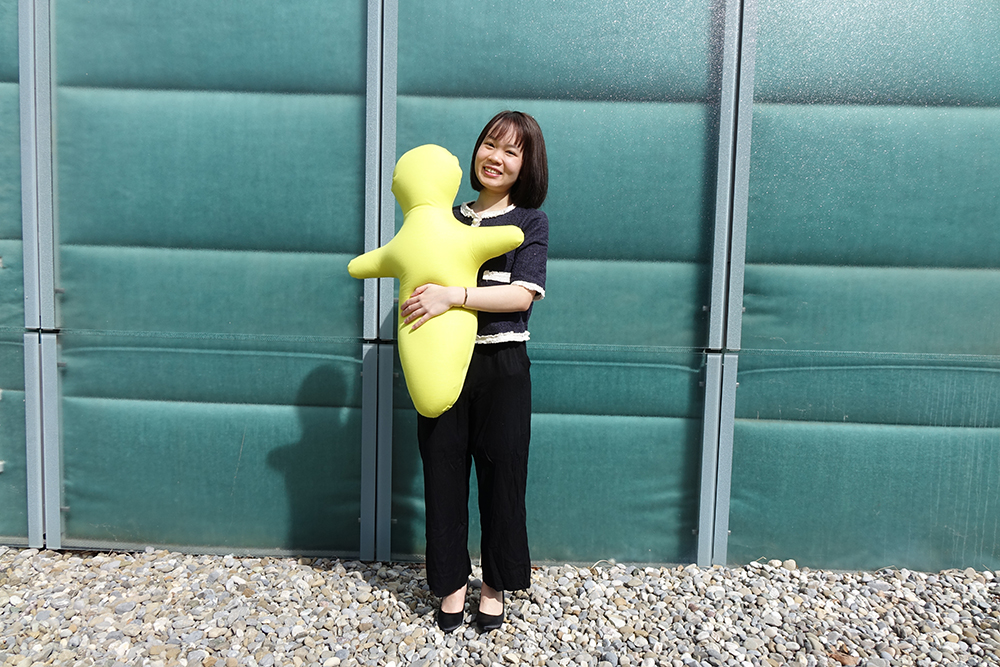
Hugs are very important to many of us. We are embraced by familiar and strange people. When we hug ourselves, it does not have the same effect. And when a robot hugs us, it has no effect at all – or we don’t feel comfortable. But you can change that a bit. Alexis E. Block and Katherine J. Kuchenbecker from the Max Planck Institute for Intelligent Systems have published a paper on a research project in this field. The purpose of the project was to evaluate human responses to different robot physical characteristics and hugging behaviors. “Analysis of the results showed that people significantly prefer soft, warm hugs over hard, cold hugs. Furthermore, users prefer hugs that physically squeeze them and release immediately when they are ready for the hug to end. Taking part in the experiment also significantly increased positive user opinions of robots and robot use.” (Abstract) The paper “Softness, Warmth, and Responsiveness Improve Robot Hugs” was published in the International Journal of Social Robotics in January 2019 (First Online: 25 October 2018). It is available via link.springer.com/article/10.1007/s12369-018-0495-2.
The Sleep Robot by your Side
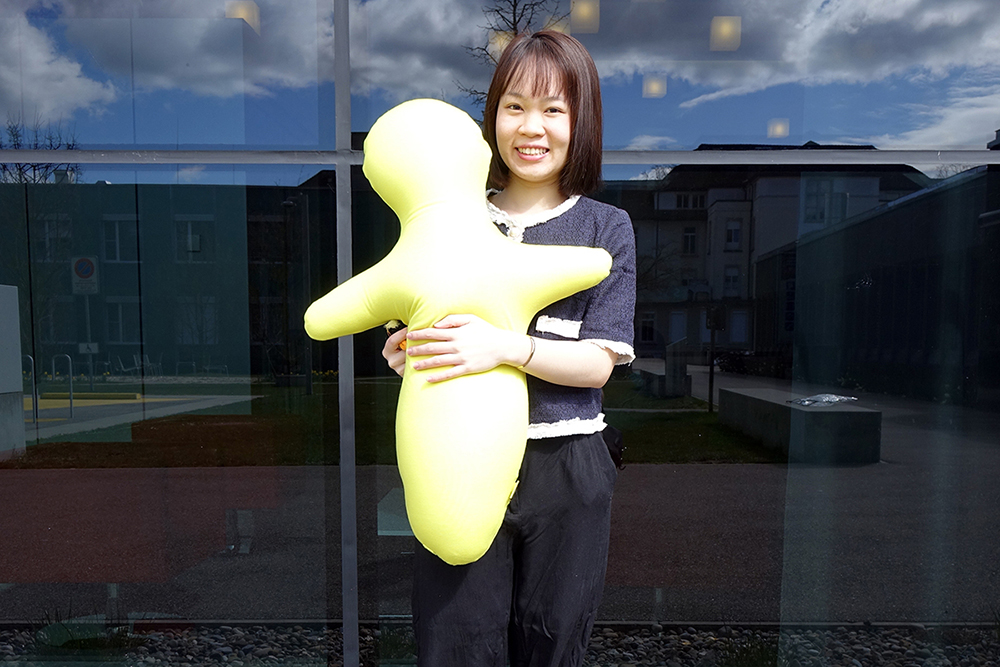
A Guardian journalist just tested the Somnox Sleep Robot that aims to banish insomnia, aiding natural rest and reducing stress. According to him, it could be revolutionary in the field because many overnight devices merely track sleep rather than promoting it. Somnox describes its robot as a “sleep companion”. “The kidney-shaped, possibly sentient cushion breathes softly in and out, and plays calming noises. The idea is that users hold it close to them in bed, building up an emotional bond over time. Every night, you breathe together in time until you fall sleep, perchance to dream of electric sheep.” (Guardian, 15 October 2019) The journalist was not satisfied with the device at all. But an advanced sleeping robot could be of help to certain groups. Maybe some people are mainly interested in the feeling of having something next to them. One should give the sleep robot a second chance.
Robots, Empathy and Emotions
“Robots, Empathy and Emotions” – this research project was tendered some time ago. The contract was awarded to a consortium of FHNW, ZHAW and the University of St. Gallen. The applicant, Prof. Dr. Hartmut Schulze from the FHNW School of Applied Psychology, covers the field of psychology. The co-applicant Prof. Dr. Oliver Bendel from the FHNW School of Business takes the perspective of information, robot and machine ethics, the co-applicant Prof. Dr. Maria Schubert from the ZHAW that of nursing science. The client TA-SWISS stated on its website: “What influence do robots … have on our society and on the people who interact with them? Are robots perhaps rather snitches than confidants? … What do we expect from these machines or what can we effectively expect from them? Numerous sociological, psychological, economic, philosophical and legal questions related to the present and future use and potential of robots are still open.” (Website TA-SWISS, own translation) The kick-off meeting with a top-class accompanying group took place in Bern, the capital of Switzerland, on 26 June 2019.