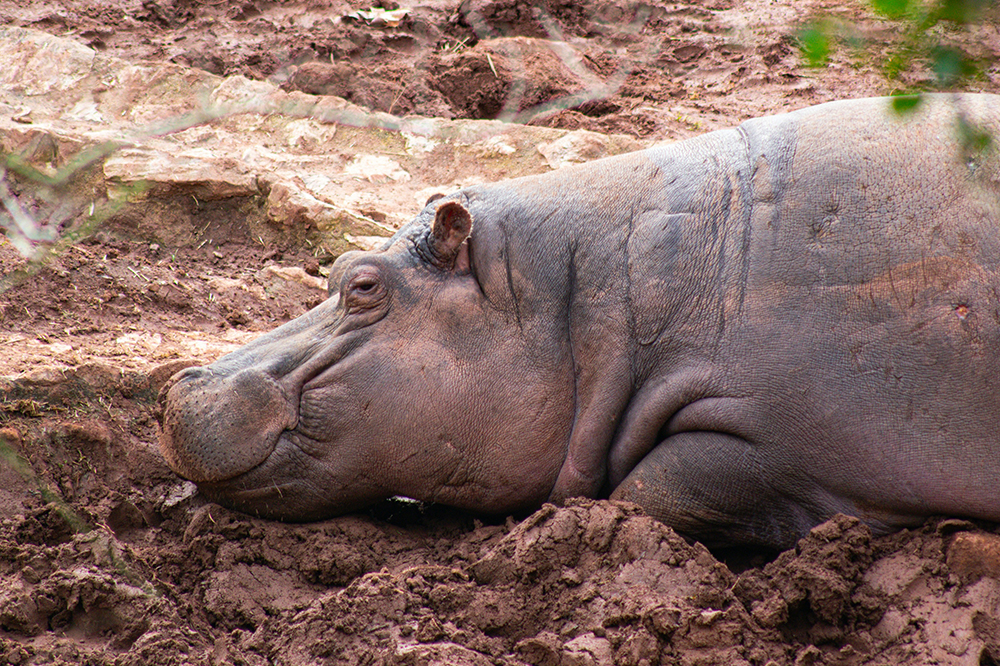
On November 10, 2025, the article “There’s a Large Hippo Resting in the Mud” by Oliver Bendel and Doris Jovic was published introducing the VISUAL project. “VISUAL” stands for “Virtual Inclusive Safaris for Unique Adventures and Learning”. All over the world, there are webcams showing wild animals. Sighted people can use them to go on photo and video safaris comfortably from their sofas. Blind and visually impaired people are at a disadvantage here. As part of Inclusive AI, the project developed a prototype specifically for them. Public webcams around the world that are directed at wild animals are tapped. Users can choose between several habitats on land or in water. They can also select “Adult” or “Child” as a profile and choose a role (“Safari Adventurer”, “Field Scientist”, “Calm Observer”). When the live video is accessed, three screenshots are taken and combined into a bundle. This bundle is analyzed and evaluated by GPT-4o, an MLLM. The user then hears a spoken description of the scene and the activities. The project is likely one of the first to combine Inclusive AI with new approaches in Animal-Computer Interaction (ACI). The article was published in Wiley Industry News and can be accessed at: wileyindustrynews.com/en/contributions/theres-a-large-hippo-resting-in-the-mud. It should be noted that it is also available in German.
Start of the VISUAL Project
The kick-off meeting for the VISUAL project took place on March 20, 2025. It was initiated by Prof. Dr. Oliver Bendel from the FHNW School of Business. “VISUAL” stands for “Virtual Inclusive Safaris for Unique Adventures and Learning”. There are webcams all over the world that show wild animals. Sighted people can use them to go on a photo safari from the comfort of their sofa. Blind and visually impaired people are at a disadvantage. As part of Inclusive AI – an approach and a movement that also includes apps such as Be My Eyes with the Be My AI function – a solution is to be found for them. The aim of the project is to develop a prototype by August 2025 that enables blind and visually impaired people to have webcam images or videos of wild animals described to them. The system analyzes and evaluates them with the help of a multimodal LLM. It presents the results in spoken language via an integrated text-to-speech engine. As a by-product, poaching, bush and forest fires and other events can be detected. The project is likely to be one of the first to combine inclusive AI with new approaches to animal-computer interaction (ACI). Doris Jovic, who is completing her degree in BIT, has been recruited to work on the project.
The VISUAL Project
The VISUAL project will be launched in March 2025 at the FHNW School of Business. It was initiated by Prof. Dr. Oliver Bendel. VISUAL stands for “Virtual Inclusive Safaris for Unique Adventures and Learning”. There are webcams all over the world showing wild animals. Sighted people can use them to go on photo safaris from the comfort of their sofa. Blind and visually impaired people are at a disadvantage. As part of inclusive AI – a movement that includes apps like Be My Eyes with the Be My AI feature – a solution is to be found for them. The project aims to develop a prototype by August 2025 that will allow blind and visually impaired people to have webcam images of wildlife described to them. The system takes regular snapshots of the videos and analyzes and evaluates them using a multimodal LLM. It presents the results ini spoken language via an integrated text-to-speech engine. As a byproduct, poaching, bush and forest fires, and other events can be detected. The project is likely to be one of the first to combine inclusive AI with new approaches of animal-computer interaction (ACI).