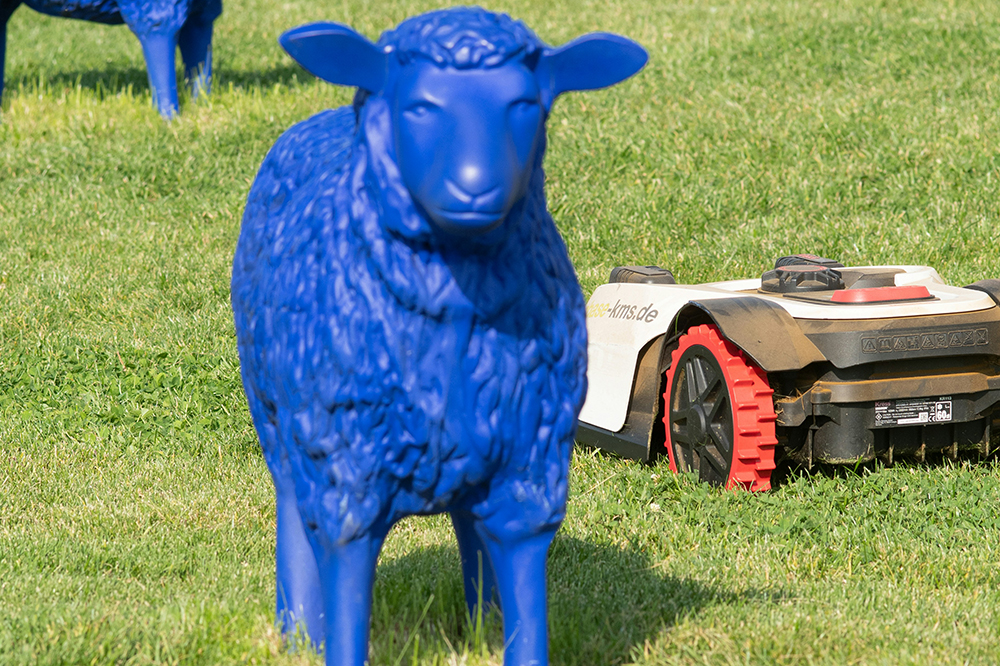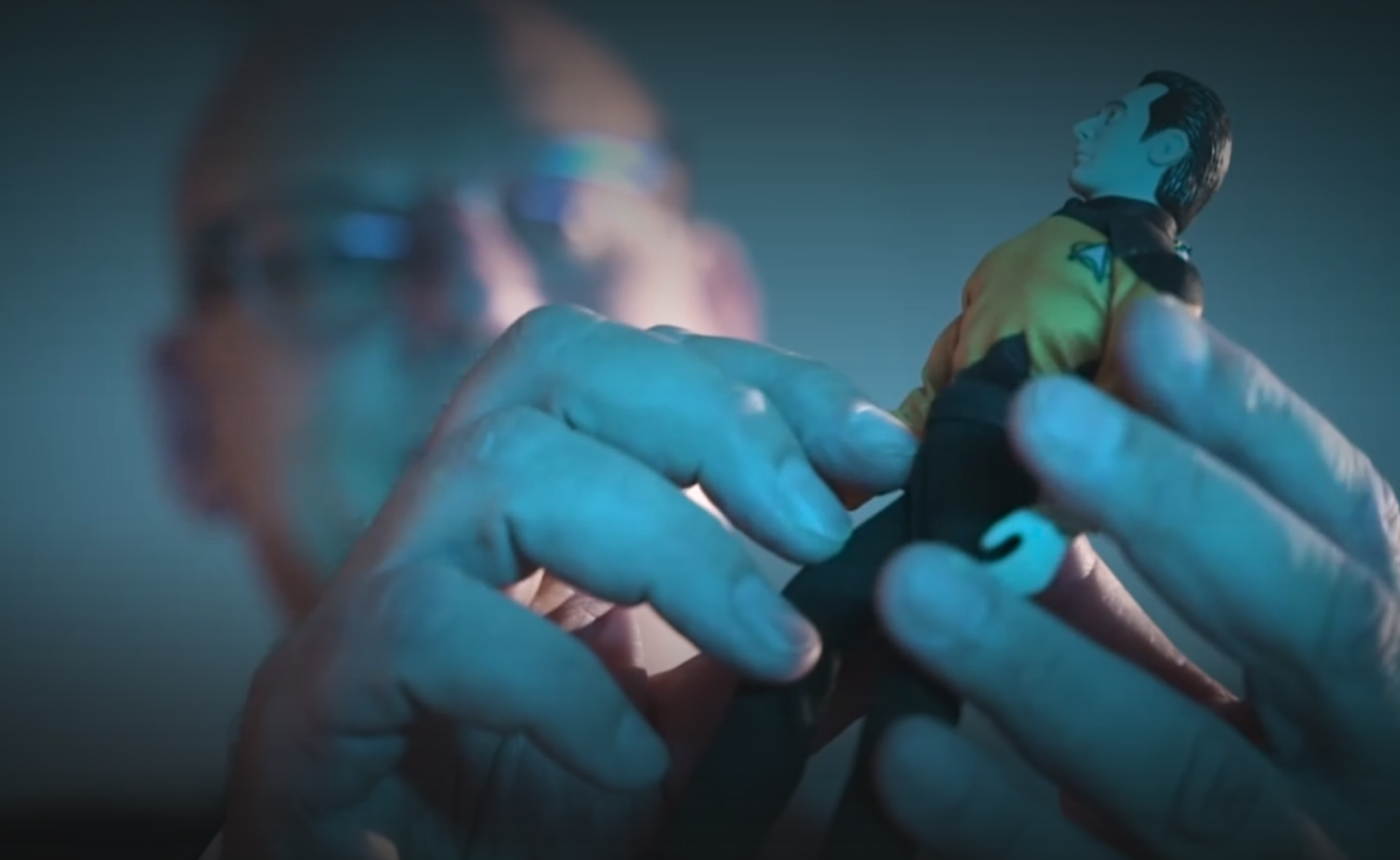
The volume “Animals, Ethics, and Engineering: Intersections and Implications”, edited by Rosalyn W. Berne, was published on 7 August 2025. The authors include Clara Mancini, Fiona French, Abraham Gibson, Nic Carey, Kurt Reymers, and Oliver Bendel. The title of Oliver Bendel’s contribution is “An Investigation into the Encounter Between Social Robots and Animals”. The abstract reads: “Increasingly, social robots and certain service robots encounter, whether this is planned or not, domestic, farm, or wild animals. They react differently, some interested, some disinterested, some lethargic, some panicked. Research needs to turn more to animal-robot relationships, and to work with engineers to design these relationships in ways that promote animal welfare and reduce animal suffering. This chapter is about social robots that are designed for animals, but also those that – for different, rather unpredictable reasons – meet, interact, and communicate with animals. It also considers animal-friendly machines that have emerged in the context of machine ethics. In the discussion section, the author explores the question of which of the presented robots are to be understood as social robots and what their differences are in their purpose and in their relationship to animals. In addition, social and ethical aspects are addressed.” The book was produced by Jenny Publishing and can be ordered via online stores.
Incorrect Translations of ChatGPT
Many users notice the over-correct or unidiomatic language of ChatGPT in German. This is probably due to the fact that the model is based on multilingual structures when generating and sometimes uncritically transfers English-language patterns to German. The problem can be found in several other errors and deviations. Oliver Bendel has compiled an overview of these. This is a first draft, which will be gradually revised and expanded. He considers the deliberate interventions made by OpenAI to be particularly worrying. For example, the use of gender language, which is a special language, stems from the principles that are implemented at different levels. The default setting can theoretically be switched off via prompts, but in fact ChatGPT often ignores it, even for Plus users who have always excluded gender language. The American company is thus siding with those who force people to use the special language – with numerous media, publishers, and universities.
Completion of the VISUAL Project
On July 31, 2025, the final presentation of the VISUAL project took place. The initiative was launched by Prof. Dr. Oliver Bendel from the University of Applied Sciences and Arts Northwestern Switzerland (FHNW). It was carried out by Doris Jovic, who is completing her Bachelor’s degree in Business Information Technology (BIT) in Basel. “VISUAL” stands for “Virtual Inclusive Safaris for Unique Adventures and Learning”. All over the world, there are webcams showing wild animals. Sighted individuals can use them to go on photo or video safaris from the comfort of their couches. However, blind and visually impaired people are at a disadvantage. As part of Inclusive AI, a prototype was developed specifically for them in this project. Public webcams around the world that are focused on wildlife are accessed. Users can choose between various habitats on land or in water. Additionally, they can select a profile – either “Adult” or “Child” – and a role such as “Safari Adventurer,” “Field Scientist”, or “Calm Observer”. When a live video is launched, three screenshots are taken and compiled into a bundle. This bundle is then analyzed and evaluated by GPT-4o, a multimodal large language model (MLLM). The user receives a spoken description of the scene and the activities. The needs of blind and visually impaired users were gathered through an accessible online survey, supported by FHNW staff member Artan Llugaxhija. The project is likely one of the first to combine Inclusive AI with new approaches from the field of Animal-Computer Interaction (ACI).
When the Robodog is Barked at
Animal-machine interaction (AMI) is a discipline or field of work that deals with the interaction between animals and machines. This is how Prof. Dr. Oliver Bendel explains it in the Gabler Wirtschaftslexikon. It is primarily concerned with the design, evaluation, and implementation of complex machines and computer systems with which animals interact and which in turn interact and communicate with animals. There are close links to animal-computer interaction (ACI). Increasingly, the machine is a robot that is either remote-controlled or (partially) autonomous. In “The Robodog Project” (also known as “Bao Meets Pluto“), the encounters between robotic quadrupeds and small to medium-sized dogs are explored. The project collaborator is Selinar Rohr, who is writing her bachelor’s thesis in this context. The walking, running, and jumping Unitree Go2 from Oliver Bendel’s private Social Robots Lab is in its original state or is wearing a head made with a 3D printer provided by Norman Eskera. The project is being carried out at the FHNW School of Business and will end on August 12, 2025, after which the results will be presented to the community and, if possible, to the general public.
Unitree Launches Humanoid Robot R1
The Chinese manufacturer Unitree announced a new bipedal humanoid robot, the R1, on LinkedIn on July 25, 2025. Weighing around 25 kilograms, it is lighter than its predecessor, the G1 (35 kilograms), and significantly more affordable. The starting price is 39,900 yuan (approximately 5,566 USD), compared to 99,000 yuan for the G1. The R1 uses a Multimodal Large Language Model (MLLM) that combines speech and image processing. Equipped with highly flexible limbs – including six dual-axis leg joints, a movable waist, two arms, and a mobile head – it offers a wide range of motion. Unitree positions the R1 as an open platform for developers and researchers. The goal is to make humanoid robots more accessible to a broader market through lower costs and modular technology. In addition to bipedal robots, the company has also been offering quadrupedal robots for several years, such as the Unitree Go1 and Unitree Go2 (Image: ChatGPT/4o Image).
Pepper and NAO in Chinese Hands
Shenzhen-based Maxvision Technology Corp. has acquired the core assets of French robotics pioneer Aldebaran, including its iconic humanoid robots NAO and Pepper. This was reported by The Robot Report in its article “Maxvision buys core robot assets of Aldebaran, including Nao and Pepper” from July 19, 2025. The move follows Aldebaran’s bankruptcy and receivership earlier this year. The company, founded in 2005, became known for designing approachable humanoid robots for education, healthcare, retail, and research. Maxvision stated that the acquisition will bolster its R&D in emotional interaction and motion control, expand its product portfolio into humanoid robotics, and support global expansion – particularly in Europe and North America. According to The Robot Report, strategic sectors include eldercare, education, border security, and emergency services. To honor Aldebaran’s legacy, Maxvision plans to establish a French subsidiary, retaining local teams and investing in continued innovation, especially in education and healthcare applications.
Robot Rabbits vs. Pythons
Florida is testing a new tool to fight invasive Burmese pythons in the Everglades: robot rabbits. As reported by Palm Beach Post (July 15, 2025), researchers at the University of Florida, led by wildlife ecologist Robert McCleery, have developed motorized toy bunnies that mimic the movement and body heat of real rabbits. Pythons are known to be drawn to live prey, but using real animals proved impractical – so science stepped in. The solar-powered robot rabbits are placed in test areas and monitored by motion-triggered cameras. When something approaches, researchers get an alert. If it’s a python, trained response teams or nearby hunters can react quickly. If needed, scent may be added to increase effectiveness. The project is funded by the South Florida Water Management District. It complements a wide range of state efforts to control python populations, from infrared detection and DNA tracking to the annual Python Challenge. While full eradication is unlikely, these innovative methods offer hope for better control of one of Florida’s biggest ecological threats. A new book contribution by Oliver Bendel entitled “An Investigation into the Encounter between Social Robots and Animals” deals with animal-like robots that interact with animals in the wild. The book “Animals, Ethics, and Engineering” with this book contribution will be published by Jenny Stanford Publishing in August 2025.
How Human-Like Should It Be?
The Research Topic “Exploring human-likeness in AI: From perception to ethics and interaction dynamics”, hosted by Frontiers in Cognition, invites submissions on how human-like features in robots and AI systems influence user perception, trust, interaction, and ethical considerations. As AI becomes more integrated into society, anthropomorphic design raises pressing questions: Do human-like traits improve communication and acceptance, or do they lead to unrealistic expectations? What ethical implications arise when machines simulate empathy or emotion? This interdisciplinary call welcomes contributions from fields such as psychology, engineering, philosophy, and education. Submissions may include empirical research, theoretical analysis, reviews, or case studies that explore how human-likeness shapes the way we engage with AI. The deadline for manuscript summaries is September 22, 2025; full manuscripts are due by January 10, 2026. Articles will undergo peer review and are subject to publication fees upon acceptance. Topic editors are Dr. Katharina Kühne (University of Potsdam, Germany) and Prof. Dr. Roger K. Moore (The University of Sheffield, United Kingdom). For full details and submission guidelines, visit: www.frontiersin.org/research-topics/72370/exploring-human-likeness-in-ai-from-perception-to-ethics-and-interaction-dynamics.
Wearable Social Robots for Space Missions
The short paper “Wearable Social Robots in Space” by Tamara Siegmann and Oliver Bendel (FHNW School of Business) has been accepted for presentation at the International Conference on Social Robotics (ICSR). The conference will take place from September 10 to 12, 2025, in Naples, Italy. Social robots have been explored on Earth since the 1990s, but this study considers their application beyond our planet – specifically, on manned missions to Mars. The focus lies on wearable social robots, a promising form factor due to their compact size and light weight. Using AIBI as a case study, the short paper examines how such a robot could support astronauts under the unique psychological and environmental conditions of deep space travel. The authors discuss the little robot’s potential roles and highlight directions for future development, particularly in improving human-robot interaction and communication. The findings suggest that wearable social robots like AIBI could offer valuable support on long-duration space missions.
Keynote at Ground Workshop
Chatbots, voice assistants, and robots – both programmable machines and social robots – had been used in learning for decades. At the GROUND 2025 Workshop on 30 June 2025, held as part of the IAS 2025 in Genoa, Italy, Prof. Dr. Oliver Bendel from the FHNW School of Business in Switzerland presented his own projects from the past 15 years. Some of his chatbots and voice assistants, such as GOODBOT, BESTBOT, and SPACE THEA, recognized user problems and responded appropriately. They demonstrated empathy and emotion. Pepper had been used as an educational application for children with diabetes, and Alpha Mini served as an educational tool in elementary schools. Chatbots for dead, endangered, and extinct languages such as @ve, @llegra, and kAIxo were designed to be integrated into learning environments for all age groups. In recent years, the technology philosopher and information systems expert primarily used GPT-based systems such as Social Robotics Girl and Digital Ethics Girl in his courses. These systems were capable of receiving and answering questions from multiple students simultaneously, even when the questions were asked in different languages. Thanks to prompt engineering and retrieval-augmented generation (RAG), they became specialists in their respective domains. In his keynote “Robots, chatbots, and voice assistants in the classroom”, Oliver Bendel asked how chatbots, voice assistants, and social robots would be designed as adaptive systems for multi-user settings in the future. These capabilities were considered especially important in classroom environments (Photo: Giulia Pusceddu).