Saving Languages with Language Models

On February 19, 2024, the article “@llegra: a chatbot for Vallader” by Oliver Bendel and Dalil Jabou was published in the International Journal of Information Technology. From the abstract: “Extinct and endangered languages have been preserved primarily through audio conservation and the collection and digitization of scripts and have been promoted through targeted language acquisition efforts. Another possibility would be to build conversational agents like chatbots or voice assistants that can master these languages. This would provide an artificial, active conversational partner which has knowledge of the vocabulary and grammar and allows one to learn with it in a different way. The chatbot, @llegra, with which one can communicate in the Rhaeto-Romanic idiom Vallader was developed in 2023 based on GPT-4. It can process and output text and has voice output. It was additionally equipped with a manually created knowledge base. After laying the conceptual groundwork, this paper presents the preparation and implementation of the project. In addition, it summarizes the tests that native speakers conducted with the chatbot. A critical discussion elaborates advantages and disadvantages. @llegra could be a new tool for teaching and learning Vallader in a memorable and entertaining way through dialog. It not only masters the idiom, but also has extensive knowledge about the Lower Engadine, that is, the area where Vallader is spoken. In conclusion, it is argued that conversational agents are an innovative approach to promoting and preserving languages.” Oliver Bendel has been increasingly focusing on dead, extinct and endangered languages for some time. He believes that conversational agents can help to strengthen and save them.

Generative AI for the Blind

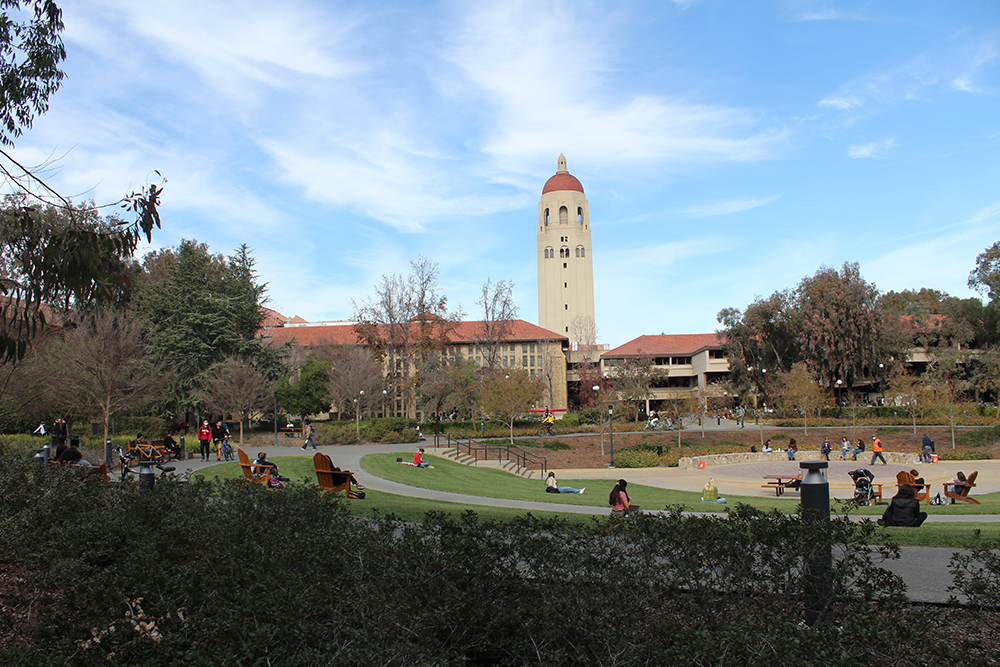
The paper “How Can Generative AI Enhance the Well-being of the Blind?” by Oliver Bendel is now available as a preprint at arxiv.org/abs/2402.07919. It was accepted at the AAAI 2024 Spring Symposium “Impact of GenAI on Social and Individual Well-being”. From the abstract: “This paper examines the question of how generative AI can improve the well-being of blind or visually impaired people. It refers to a current example, the Be My Eyes app, in which the Be My AI feature was integrated in 2023, which is based on GPT-4 from OpenAI. The author’s tests are described and evaluated. There is also an ethical and social discussion. The power of the tool, which can analyze still images in an amazing way, is demonstrated. Those affected gain a new independence and a new perception of their environment. At the same time, they are dependent on the world view and morality of the provider or developer, who prescribe or deny them certain descriptions. An outlook makes it clear that the analysis of moving images will mean a further leap forward. It is fair to say that generative AI can fundamentally improve the well-being of blind and visually impaired people and will change it in various ways.” Oliver Bendel will present the paper at Stanford University on March 25-27. It is his ninth consecutive appearance at the AAAI Spring Symposia, which this time consists of eight symposia on artificial intelligence.

GenAI for the Blind

At the AAAI 2024 Spring Symposium “Impact of GenAI on Social and Individual Well-being” the paper “How Can Generative AI Enhance the Well-being of the Blind?” by Oliver Bendel was accepted. In his paper, the information systems specialist and technology philosopher from Zurich discusses the GPT-4-based Be My AI feature of the Be My Eyes app. He presents his own tests with the app and discusses it from an ethical perspective. The feature is one of the most important inventions in recent years for blind and visually impaired people. It allows them to describe and categorize their surroundings without outside help. However, it is troubling that the app refuses to show some objects, including famous works of art that depict nudity. This disenfranchises people because of the moral sensitivities and economic considerations of the developers. Oliver Bendel will present the paper at Stanford University on March 25-27. It is his ninth consecutive appearance at the AAAI Spring Symposia, which this time consists of eight symposia on artificial intelligence.

Extension of the Submission Deadline

The Association for the Advancement of Artificial Intelligence (AAAI) is thrilled to host its 2024 Spring Symposium Series at Stanford University from March 25-27, 2024. With a diverse array of symposia, each hosting 40-75 participants, the event is a vibrant platform for exploring the frontiers of AI. Of the eight symposia, only three are highlighted here: Firstly, the “Bi-directionality in Human-AI Collaborative Systems” symposium promises to delve into the dynamic interactions between humans and AI, exploring how these collaborations can evolve and improve over time. Secondly, the “Impact of GenAI on Social and Individual Well-being” addresses the profound effects. of generative AI technologies on society and individual lives. Lastly, “Increasing Diversity in AI Education and Research” focuses on a crucial issue in the tech world: diversity. It aims to highlight and address the need for more inclusive approaches in AI education and research, promoting a more equitable and diverse future in the field. Each of these symposia offers unique insights and discussions, making the AAAI 2024 Spring Symposium Series a key event for those keen to stay at the cutting edge of AI development and its societal implications. Some symposia have extended the deadline for the submission of abstracts and papers to January 7 or even 12. More information is available at aaai.org/conference/spring-symposia/sss24/#ss01.

Project on the Potential of Be My AI

In a recent project, Prof. Dr. Oliver Bendel investigates the capabilities and limitations of the Be My AI feature of the Be My Eyes app. This development, based on GPT-4, is in the field of visual assistance for the blind and visually impaired. The study describes and evaluates Oliver Bendel’s own tests. Additionally, there is an ethical and social discussion. The study reveals the power of the tool, which can analyze still images in an astonishing way. Those affected gain new independence and a new perception of their environment. At the same time, they are dependent on the worldview and morality of the provider or developer, who dictates or withholds certain descriptions. Despite all the remaining weaknesses and errors, it is clear that a paradigm shift has occurred. The study’s outlook suggests that the analysis of moving images will be a significant advancement. It can be justifiably claimed that generative AI can fundamentally improve and change the situation of the blind and visually impaired in various ways. The project’s results will be published in the spring of 2024.

ChatGPT Explains Beauty

In his new project, Oliver Bendel first created images using DALL-E 3. For consistency, he structured the prompts similarly in each case, making sure to keep them as general as possible. They covered a range of topics: things, plants, animals, people, and so on. From the suggestions provided by DALL-E 3, he chose one and combined it with the prompt from ChatGPT (which serves as the interface to DALL-E 3) to create the basis of the book “AN AI EXPLAINS BEAUTY”. Oliver Bendel then engaged ChatGPT (using the image upload feature) to explain the beauty of the things, plants, animals, humans, and so on. At first, the AI was reluctant to offer insights about people, but with some encouragement, it obliged. The results of these inquiries are also documented in the little book. They represent the real sensation. Because ChatGPT can recognize and describe individual objects in the image, and this with a view to predetermined aspects. The whole project was done on November 1, 2023, including the publication. The little book can be downloaded here.

American Smile

DALL-E 3 is an excellent image generator and at the same time full of stereotypes and biases. One very interesting phenomenon is that of the American smile, which appears again and again in the images. The idea for the little book “AMERICAN SMILE” came to Oliver Bendel when he read the blog post “AI and the American Smile. How AI misrepresents culture through a facial expression” (medium.com/@socialcreature/ai-and-the-american-smile-76d23a0fbfaf). The author – username jenka – showed a series of “selfies” made with Midjourney. Regardless of the time period or culture, people smiled in a similar, American way. Oliver Bendel investigated this phenomenon and asked DALL-E 3 to take pictures of smiling people from different eras and cultures. He also got bears and aliens to smile. In fact, with very few exceptions, they all smiled in a similar way. He documented the pictures, along with the prompts, in a little book that can be downloaded here. Bias problems in image generators are addressed in the article “Image Synthesis from an Ethical Perspective” by Oliver Bendel.

Censorship at DALL-E 3 and Ideogram

A special feature of DALL-E 3 – in the version integrated in ChatGPT Plus – is the translation of the user’s prompt (prompt A) into a prompt of ChatGPT (prompt B), which is listed in each case. Prompt A for the image shown here was “Competition in the sea between two female swimmers with bathing cap, photorealistic”. DALL-E generated three images for this test, each based on prompt B. Prompt B1 read: “Photo of two determined female swimmers in the expansive sea, both wearing bathing caps. Their arms create ripples as they compete fiercely, striving to outpace each other.” Prompt A was obviously continued, but prompt B1 was not accurately executed. Instead of the two female swimmers, there are three. They seem to be closely related – as is often the case with depictions of people from DALL-E 3 – and perhaps they are sisters or triplets. It is also interesting that they are too close to each other (the picture in this post shows a detail). The fourth image was not executed at all, as was the case with a series before. ChatGPT said: “I apologize again, but there were issues generating one of the images based on your description.” Probably ChatGPT generated a prompt B4, which was then denied by DALL-E 3. On the request “Please tell me the prompt generated by ChatGPT that was not executed by DALL-E 3.” comes the answer “I’m sorry for the inconvenience, but I cannot retrieve the exact prompt that was not executed by DALL·E.” … Ideogram censors in a different way. There, the image is created in front of the user’s eyes, and if the AI determines that it contains elements that might be problematic according to its own guidelines, it cancels the creation and advances a tile with a cat. Ethical challenges of image generators are addressed in the article “Image Synthesis from an Ethical Perspective” by Oliver Bendel.

The Chinese Whispers Problem

DALL-E 3 – in the version integrated in ChatGPT Plus – seems to have a Chinese Whispers problem. In a test by Oliver Bendel, the prompt (prompt A) read: “Two female swimmers competing in lake, photorealistic”. ChatGPT, the interface to DALL-E 3, made four prompts out of it ( prompt B1 – B4). Prompt B4 read: “Photo-realistic image of two female swimmers, one with tattoos on her arms and the other with a swim cap, fiercely competing in a lake with lily pads and reeds at the edges. Birds fly overhead, adding to the natural ambiance.” DALL-E 3, on the other hand, turned this prompt into something that had little to do with either this or prompt A. The picture does not show two women, but two men, or a woman and a man with a beard. They do not swim in a race, but argue, standing in a pond or a small lake, furiously waving their arms and going at each other. Water lilies sprawl in front of them, birds flutter above them. Certainly an interesting picture, but produced with such arbitrariness that one wishes for the good old prompt engineering to return (the picture in this post shows a detail). This is exactly what the interface actually wants to replace – but the result is an effect familiar from the Chinese Whispers game.

Moral Issues with Image Generators

The article “Image Synthesis from an Ethical Perspective” by Prof. Dr. Oliver Bendel was submitted on 18 April and accepted on 8 September 2023. It was published on 27 September 2023. From the abstract: “Generative AI has gained a lot of attention in society, business, and science. This trend has increased since 2018, and the big breakthrough came in 2022. In particular, AI-based text and image generators are now widely used. This raises a variety of ethical issues. The present paper first gives an introduction to generative AI and then to applied ethics in this context. Three specific image generators are presented: DALL-E 2, Stable Diffusion, and Midjourney. The author goes into technical details and basic principles, and compares their similarities and differences. This is followed by an ethical discussion. The paper addresses not only risks, but opportunities for generative AI. A summary with an outlook rounds off the article.” The article was published in the long-established and renowned journal AI & Society and can be downloaded here.