The Red Attraction Effect

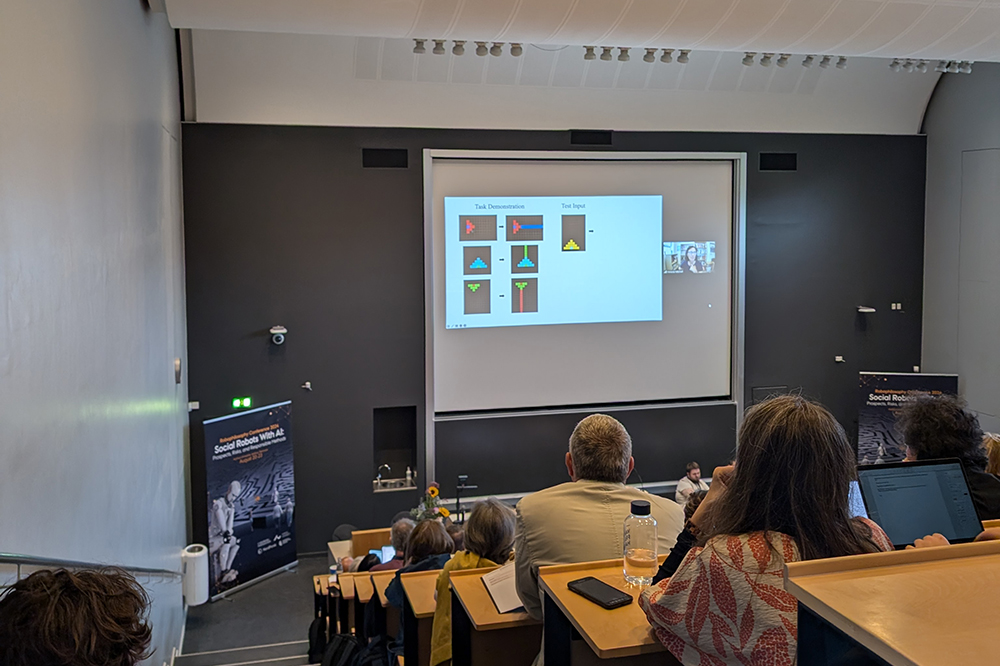
The Robophilosophy 2026 conference took place from August 11–14, 2026, at University College Dublin (UCD) in Dublin, Ireland. Held under the theme “Connected Futures – Nature, Robots, and Society”, the seventh installment of the international conference series brought together researchers from a wide range of disciplines to explore how robotics and artificial intelligence are transforming human societies and the natural world. On the first day of the conference, Katharina Kühne presented the paper “No Red Romance for Robots? Investigating the Red Attraction Effect in Humanlike Robots”, authored by Emma Luisa M. Waller, Diana P. Ebenburger, Oliver Bendel, Martin Fischer, and herself. The study investigates whether the red-attraction effect known from research on human perception also occurs when people evaluate humanlike robots. From the abstract: “The color red has been shown to positively influence ratings of attractiveness and willingness to spend money (e.g., on a date), while having no effect on other perceptions, such as likeability. In an online study, we aimed to conceptually replicate the red-attraction effect using humanoid robots as stimuli. Forty-four heterosexual female participants evaluated 16 images of medium and highly humanlike robots on attractiveness, likeability, trustworthiness, and willingness to spend money to rent the robot. We found no evidence of a red-attraction effect. Female-looking robots received higher ratings overall. These findings have implications for robot design and suggest that basic cues, such as color, may not operate in the same way for robots. Instead, humanoid robots may constitute a distinct category but still be perceived as social agents.” The proceedings, containing all conference papers, are expected to become available in late 2026.

Robophilosophy 2016 Opens at UCD

The Robophilosophy Conference 2026 (RP2026) opened on August 11, 2026, at University College Dublin (UCD) in Dublin, Ireland. Held under the theme “Connected Futures – Nature, Robots, and Society”, the conference runs from August 11–14 and brings together researchers from a wide range of disciplines to explore how robotics and artificial intelligence are transforming human societies and the natural world. RP2026 is the seventh installment in the international Robophilosophy conference series. University College Dublin (UCD) is Ireland’s largest university and one of the country’s leading research institutions. Located in Dublin, the capital of Ireland, UCD is home to more than 34,000 students and has a strong international profile. As robotic systems become increasingly embedded in everyday life, RP2026 seeks to foster dialogue across fields including social robotics, computer science, human-robot interaction, the humanities, social sciences, law, economics, and environmental research. Key questions include how robotic technologies can uphold human dignity, autonomy, and social justice; how legal systems need to adapt to autonomous decision-making; and whether robots can contribute to sustainability rather than accelerate ecological decline. The conference also addresses the impact of automation on labor markets and economic inequality, the changing meaning of work and human care, and the responsibilities humans may have toward the artificial agents they create. The first day of the conference featured keynote presentations by Lynne Baillie and Arno Klein. The program also included two sessions: “Environmental Robotics and Society”, chaired by Oliver Bendel, and “Responsible Technology Development”, chaired by Sun Park. Several workshops complemented the program, offering additional perspectives on the social, ethical, and environmental dimensions of robotics and artificial intelligence. The Robophilosophy Conference 2026 provides a space for dialogue between technological, philosophical, social-scientific, and environmental perspectives. At its core is the question of how technological innovation can be shaped not only to create new possibilities, but also to contribute to a humane, just, and sustainable future. Further details are available at www.ucd.ie/robophilosophy2026/.

Nature, Robots, and Society

The Robophilosophy Conference 2026 will take place August 11–14 at University College Dublin in a hybrid format and centers on the theme “Connected Futures: Nature, Robots, and Society”. As robotics and AI become deeply embedded in human life, the conference invites researchers across disciplines to explore how autonomous systems shape society, ecology, law, labor, and human self-understanding. It raises questions about responsible design, accountability, environmental impact, social justice, cultural perspectives, and the ethics of coexistence with artificial agents. Workshop proposals are due January 16, session papers and posters February 6, with notifications in February and April and proceedings pre-submission on June 15. RP2026 aims to foster interdisciplinary dialogue that advances both technological insight and collective wisdom for a future in which humans and autonomous systems share social and ecological worlds. Further information is available at cas.au.dk/en/rpc2026.

Interpersonal Distance Preferences in Human-Robot Interactions

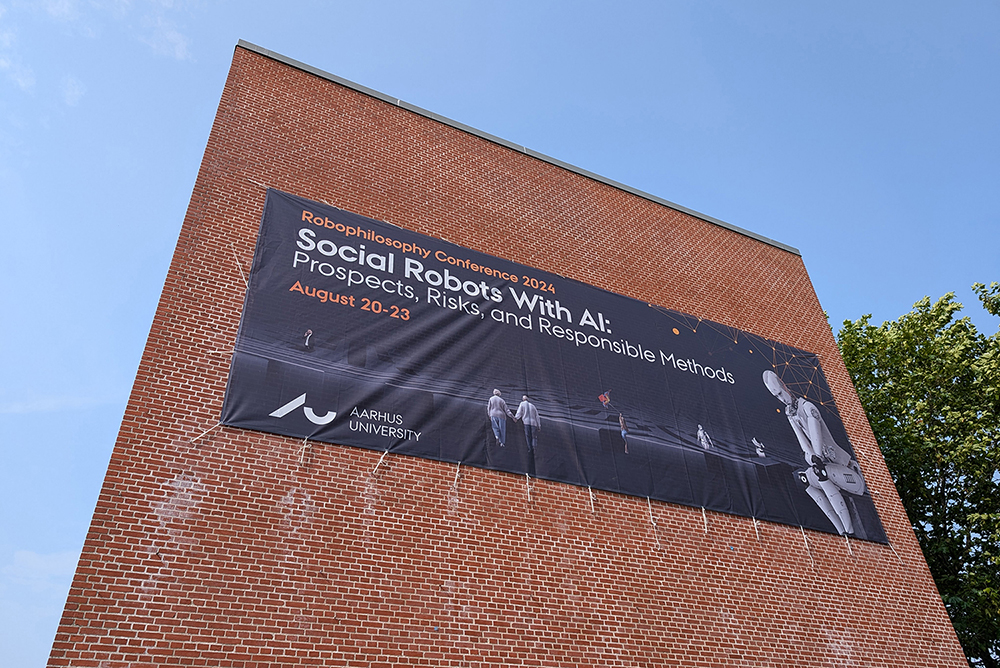
The paper “Robots at arm’s length: Unveiling the dynamics of interpersonal distance preferences in human-robot interactions” by Katharina Kühne, Laura M. Zimmer, Melina Jeglinski-Mende, Oliver Bendel, Yuefang Zhou, and Martin H. Fischer was published in February 2025 in the proceedings volume “Social Robots with AI: Prospects, Risks, and Responsible Methods” … From the abstract: “In social interactions, interpersonal distance is a vital factor influencing relationships, providing protection, and regulating arousal. Despite the intuitive nature of adopting specific distances, little is known about comfortable interpersonal distances with social robots. In our online study with 66 participants using a Go/No-Go task, we investigated perceptions of individuals standing face-to-face with a robot at different distances. In line with the negativity bias hypothesis, participants exhibited a preference for greater distances , as reflected in longer reaction times. Furthermore, the human-likeness of the robots moderated the link between distance and arousal. Finally, the most human-like robot was less liked and evoked higher arousal. These findings have implications for designing social robots and optimizing interactions, particularly in educational or medical contexts.” The proceedings volume comprises the papers presented at Robophilosophy 2024 in Aarhus. Leading philosophers, computer scientists, and roboticists met there in August. Like the ICSR, the conference is one of the world’s leading conferences on social robotics.

A New Paper on Universal Robots

The paper “The Universal Robot of the 21st Century” by Oliver Bendel was published in February 2025 in the proceedings volume “Social Robots with AI: Prospects, Risks, and Responsible Methods” … From the abstract: “Developments in several areas of computer science, robotics, and social robotics make it seem likely that a universal robot will be available in the foreseeable future. Large language models for communication, perception, and control play a central role in this. This article briefly outlines the developments in the various areas and uses them to create the overall image of the universal robot. It then discusses the associated challenges from an ethical and social science perspective. It can be said that the universal robot will bring with it new possibilities and will perhaps be one of the most powerful human tools in physical space. At the same time, numerous problems are foreseeable, individual, social, and ecological.” The proceedings volume comprises the papers presented at Robophilosophy 2024 in Aarhus. Leading philosophers, computer scientists and roboticists met there in August. Like the ICSR, the conference is one of the world’s leading conferences on social robotics (Photo: Katharina Kühne).

Closing Event of a Successful Conference

Robophilosophy 2024 took place for three and a half days in Aarhus (Denmark). It is a biennial dedicated to social robotics. Alongside the ICSR, it is the most important conference in this field. The program was again very extensive. Workshops were held and presentations given in four different tracks. There were keynotes and plenary sessions by well-known names, from Wendell Wallach to Hiroshi Ishiguro. After a sunny start, it began to rain, which made it all the easier to concentrate on the scientific exchange. In the end, the sun came out again in time for the closing event. Johanna Seibt, the brains behind Robophilosophy, received a bouquet of flowers and a standing ovation. The experts will meet again in two years’ time. Where has not yet been decided. A few potential hosts spoke up. Edinburgh would be an option, but so would California.

Talk by Hiroshi Ishiguro

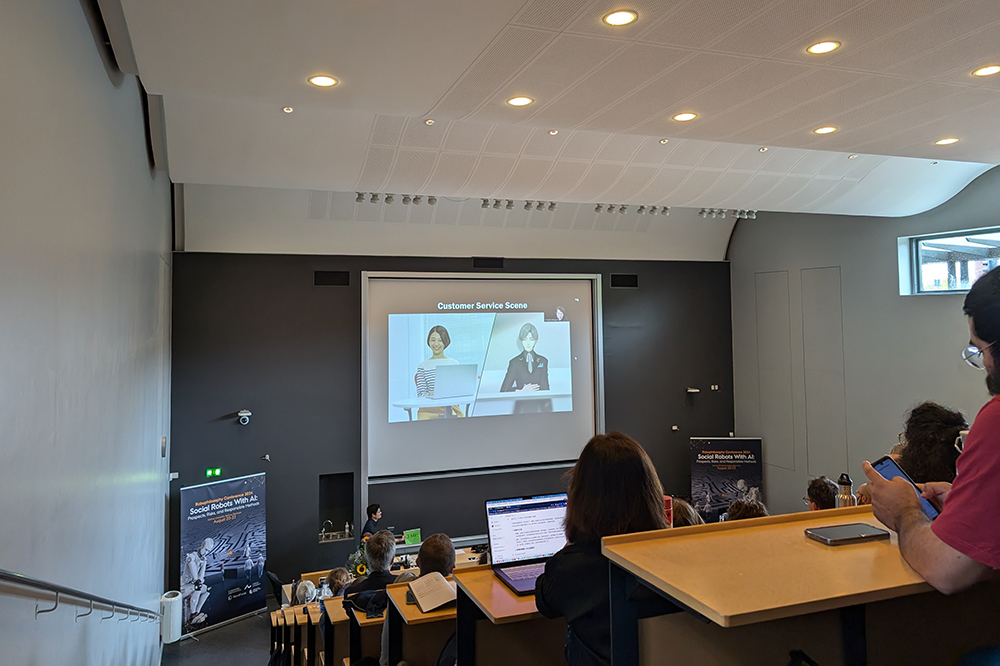
On the fourth day of Robophilosophy 2024, Hiroshi Ishiguro, Professor at the Department of Systems Innovation in the Graduate School of Engineering Science at Osaka University, gave a talk entitled “AI Avatars and the Future Society”. From the abstract: “In this lecture, the presenter will report on the research and development of remotely operated robots and CG agents, also known as avatars. Avatar technology has advanced significantly in recent years, thanks to progress in AI technology. We will discuss the various services that can be deployed using avatars and the kind of society we can realize as a result.” (Website Robophilosophy 2024) After the lecture, the roboticist was questioned by Raja Chatila, Sorbonne University (France), and Mihaela Constantinescu, Faculty of Philosophy, University of Bucharest (Romania). Hiroshi Ishiguro had been a regular guest at Robophilosophy. In 2018, he appeared on site in Vienna.

Talk on Universal Robots

On the fourth day of Robophilosophy 2024, Oliver Bendel, Professor at the FHNW School of Business, gave a talk entitled “The Universal Robot of the 21st Century”. From the abstract: “Developments in several areas of computer science, robotics, and social robotics make it seem likely that a universal robot will be available for the mass market in the foreseeable future. Large language models for communication, perception, and control play a central role in this. This article briefly outlines the developments in the various areas and uses them to create the overall image of the universal robot. It then discusses the associated challenges from an ethical and social science perspective. It can be said that the universal robot will bring with it new possibilities and will perhaps be one of the most powerful human tools in physical space. At the same time, numerous problems are foreseeable, individual, social, and ecological.” (Website Robophilosophy 2024) This was followed by an intensive plenary discussion on the design and usefulness of universal robots. In an individual discussion, Oliver Bendel suggested designing universal robots like early humans or apes. They can move on all fours, but can also stand up on two legs if the situation requires it. This would at least solve some of the safety problems posed by bipeds.

The Rainbow Above the Museum

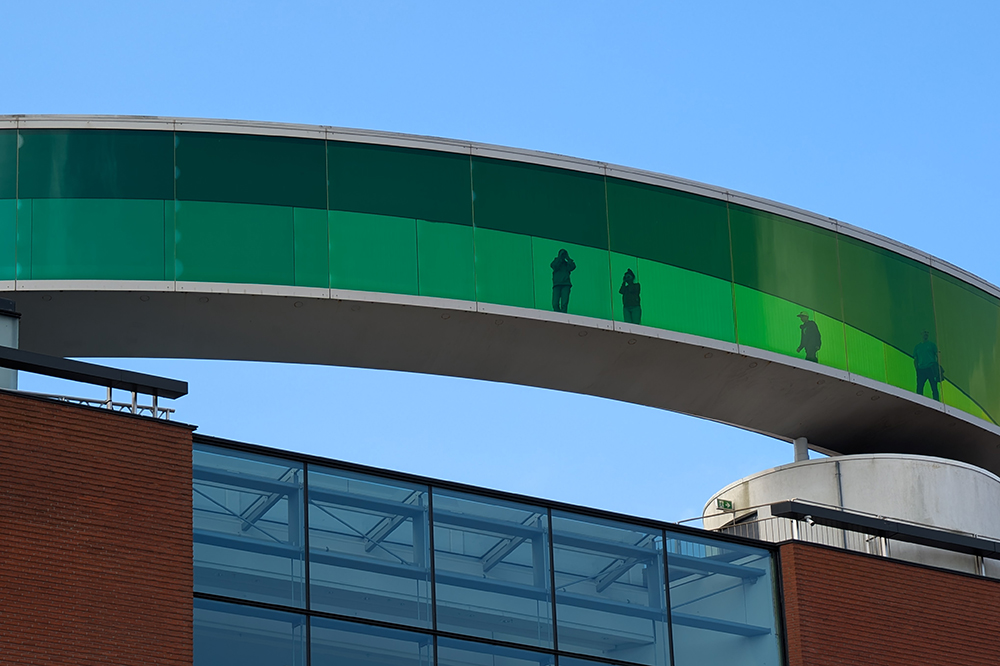
The Robophilosophy community consists of philosophers, psychologists, roboticists, and representatives of other disciplines. It is a tradition for everyone to come together for a social event to get new inspiration and chat about their work and motivation in an informal atmosphere. This time, they attended a robot performance in the theater on the second day. On the third day, the conference dinner was held together in the rooftop restaurant of the AROS Art Museum. One of the highlights was the tour of the ninth floor. The Danish-Icelandic artist Olafur Eliasson has created Your rainbow panorama which was officially opened in May 2011. You can see Aarhus with its church towers, residential buildings, streets, and people through the colorful panes. Afterwards, the tireless went out into the city’s nightlife.

Keynote by Melanie Mitchell

On the third day of Robophilosophy 2024, Melanie Mitchell, Professor at the Santa Fe Institute (USA), gave a keynote speech entitled “AI’s Challenge to Understanding the World”. From the abstract: “I will survey a debate in the artificial intelligence (AI) research community on the extent to which current AI systems can be said to “understand” language and the physical and social situations language encodes. I will describe arguments that have been made for and against such understanding, hypothesize about what humanlike understanding entails, and discuss what methods can be used to fairly evaluate understanding and intelligence in AI systems.” (Website Robophilosophy 2024) In this keynote – as in previous keynotes and presentations – the restrictions of AI and generative AI were emphasized. In response to a question from an audience member, the potential was also acknowledged.