Self-Repairing Robots

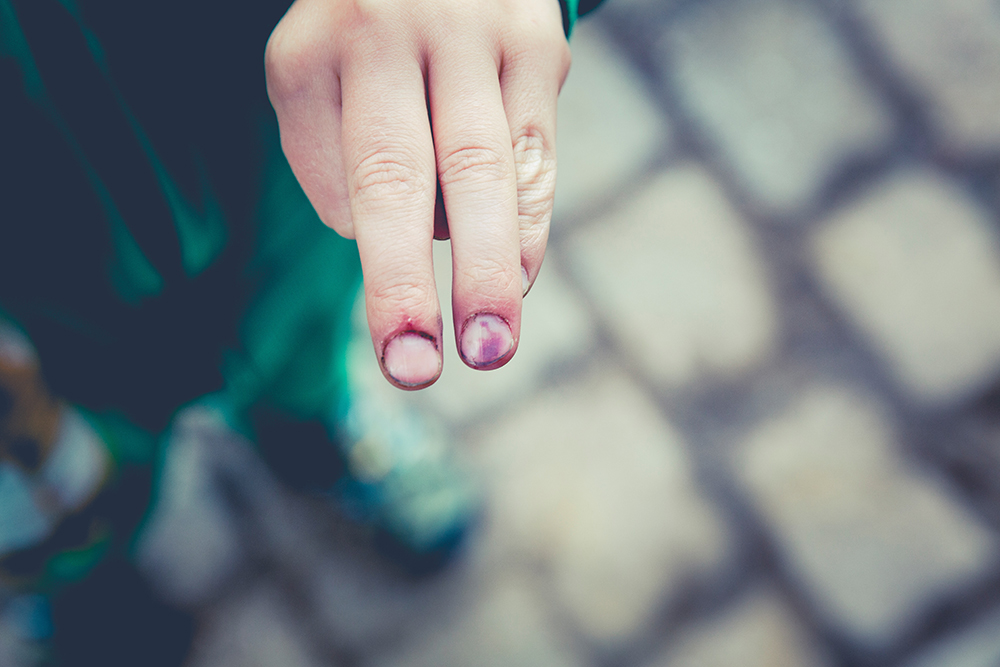
Soft robots with soft surfaces and soft fingers are in vogue. They can touch people, animals, and plants as well as fragile things in such a way that nothing is hurt or destroyed. However, they are vulnerable themselves. One cut, one punch, and they are damaged. According to the Guardian, a European commission-funded project is trying to solve this problem. It aims to create “self-healing” robots “that can feel pain, or sense damage, before swiftly patching themselves up without human intervention”. “The researchers have already successfully developed polymers that can heal themselves by creating new bonds after about 40 minutes. The next step will be to embed sensor fibres in the polymer which can detect where the damage is located. The end goal is to make the healing automated, avoiding the current need for heat to activate the system, through the touch of a human hand.” (Guardian, 8 August 2019) Surely the goal will not be that the robots really suffer. This would have tremendous implications – they would have to be given rights. Rather, it is an imaginary pain – a precondition for the self-repairing process or other reactions.

Deceptive Machines

“AI has definitively beaten humans at another of our favorite games. A poker bot, designed by researchers from Facebook’s AI lab and Carnegie Mellon University, has bested some of the world’s top players …” (The Verge, 11 July 2019) According to the magazine, Pluribus was remarkably good at bluffing its opponents. The Wall Street Journal reported: “A new artificial intelligence program is so advanced at a key human skill – deception – that it wiped out five human poker players with one lousy hand.” (Wall Street Journal, 11 July 2019) Of course you don’t have to equate bluffing with cheating – but in this context interesting scientific questions arise. At the conference “Machine Ethics and Machine Law” in 2016 in Krakow, Ronald C. Arkin, Oliver Bendel, Jaap Hage, and Mojca Plesnicar discussed on the panel the question: “Should we develop robots that deceive?” Ron Arkin (who is in military research) and Oliver Bendel (who is not) came to the conclusion that we should – but they had very different arguments. The ethicist from Zurich, inventor of the LIEBOT, advocates free, independent research in which problematic and deceptive machines are also developed, in favour of an important gain in knowledge – but is committed to regulating the areas of application (for example dating portals or military operations). Further information about Pluribus can be found in the paper itself, entitled “Superhuman AI for multiplayer poker”.

How to Treat Animals

Parallel to his work in machine ethics, Oliver Bendel is trying to establish animal-machine interaction (AMI) as a discipline. He was very impressed by Clara Mancini’s paper “Animal-Computer Interaction (ACI): A Manifesto” on animal-computer interaction. In his AMI research, he mainly investigates robots, gadgets, and devices and their behavior towards animals. There are not only moral questions, but also questions concerning the design of outer appearance and the ability to speak. The general background for his considerations is that more and more machines and animals meet in closed, half-open and open worlds. He believes that semi-autonomous and autonomous systems should have rules so that they treat animals well. They should not disturb, frighten, injure or kill them. Examples are toy robots, domestic robots, service robots in shopping malls and agricultural robots. Jackie Snow, who writes for New York Times, National Geographic, and Wall Street Journal, has talked to several experts about the topic. In an article for Fast Company, she quotes the ethicists Oliver Bendel and Peter Singer. Clara Mancini is also expressing her point of view. The article with the title “AI’s next ethical challenge: how to treat animals” can be downloaded here.

Hologram Girl

The article “Hologram Girl” by Oliver Bendel deals first of all with the current and future technical possibilities of projecting three-dimensional human shapes into space or into vessels. Then examples for holograms from literature and film are mentioned, from the fictionality of past and present. Furthermore, the reality of the present and the future of holograms is included, i.e. what technicians and scientists all over the world are trying to achieve, in eager efforts to close the enormous gap between the imagined and the actual. A very specific aspect is of interest here, namely the idea that holograms serve us as objects of desire, that they step alongside love dolls and sex robots and support us in some way. Different aspects of fictional and real holograms are analyzed, namely pictoriality, corporeality, motion, size, beauty and speech capacity. There are indications that three-dimensional human shapes could be considered as partners, albeit in a very specific sense. The genuine advantages and disadvantages need to be investigated further, and a theory of holograms in love could be developed. The article is part of the book “AI Love You” by Yuefang Zhou and Martin H. Fischer and was published on 18 July 2019. Further information can be found via link.springer.com/book/10.1007/978-3-030-19734-6.

About Robophilosophy

Robophilosophy or robot philosophy is a field of philosophy that deals with robots (hardware and software robots) as well as with enhancement options such as artificial intelligence. It is not only about the reality and history of development, but also the history of ideas, starting with the works of Homer and Ovid up to science fiction books and movies. Disciplines such as epistemology, ontology, aesthetics and ethics, including information and machine ethics, are involved. The website robophilosophy.com or robophilosophy.net is operated by Oliver Bendel, a robot philosopher who lives and works in Switzerland. Guest contributions are welcome. They should be exclusively scientific and should not advertise for companies.