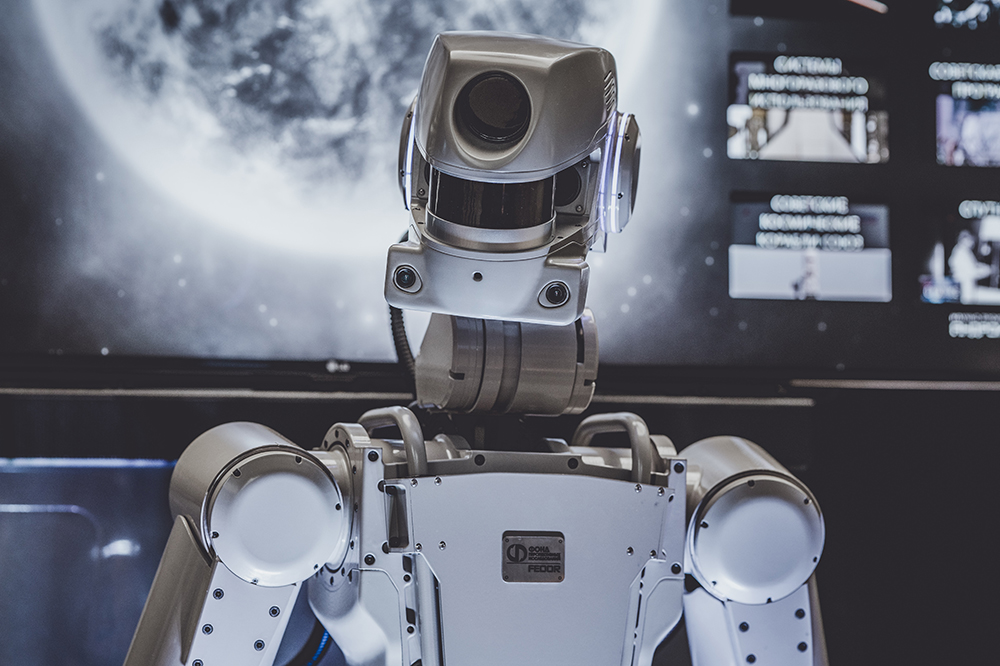
“Alphabet X, the company’s early research and development division, has unveiled the Everyday Robot project, whose aim is to develop a ‘general-purpose learning robot.’ The idea is to equip robots with cameras and complex machine-learning software, letting them observe the world around them and learn from it without needing to be taught every potential situation they may encounter.” (MIT Technology Review, 23 November 2019) This was reported by MIT Technology Review on 23 November 2019 in the article “Alphabet X’s ‘Everyday Robot’ project is making machines that learn as they go”. The approach of Alphabet X seems to be well though-out and target-oriented. In a way, it is oriented towards human learning. One could also teach robots human language in this way. With the help of microphones, cameras and machine learning, they would gradually understand us better and better. For example, they observe how we point to and comment on a person. Or they perceive that we point to an object and say a certain term – and after some time they conclude that this is the name of the object. However, such frameworks pose ethical and legal challenges. You can’t just designate cities as such test areas. The result would be comprehensive surveillance in public spaces. Specially established test areas, on the other hand, would probably not have the same benefits as “natural environments”. Many questions still need to be answered.
Robophilosophy 2020
“Once we place so-called ‘social robots’ into the social practices of our everyday lives and lifeworlds, we create complex, and possibly irreversible, interventions in the physical and semantic spaces of human culture and sociality. The long-term socio-cultural consequences of these interventions is currently impossible to gauge.” (Website Robophilosophy Conference) With these words the next Robophilosophy conference is announced. It will take place from 18 to 21 August 2019 in Aarhus, Denmark. The CfP raises questions like that: “How can we create cultural dynamics with or through social robots that will not impact our value landscape negatively? How can we develop social robotics applications that are culturally sustainable? If cultural sustainability is relative to a community, what can we expect in a global robot market? Could we design human-robot interactions in ways that will positively cultivate the values we, or people anywhere, care about?” (Website Robophilosophy Conference) In 2018 Hiroshi Ishiguro, Guy Standing, Catelijne Muller, Joanna Bryson, and Oliver Bendel had been keynote speakers. In 2020, Catrin Misselhorn, Selma Sabanovic, and Shannon Vallor will be presenting. More information via conferences.au.dk/robo-philosophy/.
The Girl with Robot Arms
Tilly Lockey was diagnosed with Meningococcal Septicaemia Strain B when she was 15 months old. Due to that disease, the doctors had to amputate both her arms and toes to give her a chance to survive. Since then, her mom has been fighting to ensure that she can do everything that children with hands can do. In the past years, they tried various myoelectric prosthesis, which Tilly describes as “very basic” as these were only capable of opening and closing. In January 2019 Tilly was surprised with Open Bionic Hero Arms for the Alita: Battle Angel film premiere. This medically certified prosthesis is custom 3D-printed and detects muscle movement thanks to special sensors. It works fully intuitively and provides its user with feedback through vibrations, lights and sounds. Thanks to 3D printing, an arm can be made within 40 hours and is quite affordable compared to other bionic hands (launching price of £5,000). The Hero Arms allow Tilly to be a “normal” teenager. She says she feels “more like everyone else”. Which is apparent in simple things such as doing thumbs up on a selfie or playing the Wii. Intelligent prostheses like the Hero Arms have a great impact on the quality of life for people like Tilly. It is that kind of transhuman achievements that increase independence and self-confidence tremendously for individuals. Here you can find more Hero Arm success stories (image source: Open Bionics Press Images).
A Handbook on Machine Ethics
After three years, an ambitious project has come to its preliminary end: The “Handbuch Maschinenethik” (“Handbook Machine Ethics”) (edited by Oliver Bendel) was published by Springer in mid-October 2019. It brings together contributions from leading experts in the fields of machine ethics, robot ethics, technology ethics, technology philosophy and robot law. At the moment it can be downloaded here: link.springer.com/book/10.1007/978-3-658-17483-5 … It has become an extensive, a remarkable, a unique book. In a way, it is a counterpart to American research, which dominates the discipline: Most authors come from Europe and Asia. The editor, who has been involved with information ethics, robotics and machine ethics for 20 years and has been researching machine ethics intensively for eight years, is full of hope that the book will find its place in the standard literature on machine ethics, such as “Moral Machines” (2009) by Wendell Wallach and Colin Allen and “Machine Ethics” (2011) by Michael and Susan Leigh Anderson, and “Programming Machine Ethics” (2016) by Luís Moniz Pereira (with Ari Saptawijaya) and “Grundfragen der Maschinenethik” (2018) by Catrin Misselhorn – both have contributed significantly to the “Handbuch Maschinenethik”. Over the next few days, the book with its 23 chapters and 469 pages will be made available for sale on the Springer website and also in print.
The Sleep Robot by your Side
A Guardian journalist just tested the Somnox Sleep Robot that aims to banish insomnia, aiding natural rest and reducing stress. According to him, it could be revolutionary in the field because many overnight devices merely track sleep rather than promoting it. Somnox describes its robot as a “sleep companion”. “The kidney-shaped, possibly sentient cushion breathes softly in and out, and plays calming noises. The idea is that users hold it close to them in bed, building up an emotional bond over time. Every night, you breathe together in time until you fall sleep, perchance to dream of electric sheep.” (Guardian, 15 October 2019) The journalist was not satisfied with the device at all. But an advanced sleeping robot could be of help to certain groups. Maybe some people are mainly interested in the feeling of having something next to them. One should give the sleep robot a second chance.
Towards Robots with Artificial Skin
“Sensitive synthetic skin enables robots to sense their own bodies and surroundings – a crucial capability if they are to be in close contact with people. Inspired by human skin, a team at the Technical University of Munich (TUM) has developed a system combining artificial skin with control algorithms and used it to create the first autonomous humanoid robot with full-body artificial skin.” (Press Release TUM, 10 October 2019) The robot skin consists of hexagonal cells which are about the size of a two-euro coin. Each of them is equipped with a microprocessor and sensors to detect contact, acceleration, proximity, and temperature. “Such artificial skin enables robots to perceive their surroundings in much greater detail and with more sensitivity. This not only helps them to move safely. It also makes them safer when operating near people and gives them the ability to anticipate and actively avoid accidents.” (Press Release TUM, 10 October 2019) The artificial skin could become important for service robots of all kinds, but also for certain industrial robots (Photo: Department of Electrical and Computer Engineering, Astrid Eckert).
An AI System for Multiple-choice Tests
According to the New York Times, the Allen Institute for Artificial Intelligence unveiled a new system that correctly answered more than 90 percent of the questions on an eighth-grade science test and more than 80 percent on a 12th-grade exam. Is it really a breakthrough for AI technology, as the title of the article claims? This is a subject of controversy among experts. The newspaper is optimistic: “The system, called Aristo, is an indication that in just the past several months researchers have made significant progress in developing A.I. that can understand languages and mimic the logic and decision-making of humans.” (NYT, 4 September 2019) Aristo was built for multiple-choice tests. “It took standard exams written for students in New York, though the Allen Institute removed all questions that included pictures and diagrams.” (NYT, 4 September 2019) Some questions could be answered by simple information retrieval. There are numerous systems that access Google and Wikipedia, including artifacts of machine ethics like LIEBOT and BESTBOT. But for the answers to other questions logical thinking was required. Perhaps Aristo is helping to abolish multiple-choice tests – not so much because it can solve them, but because they are often not effective.
Simple Brain Waves in Organoids
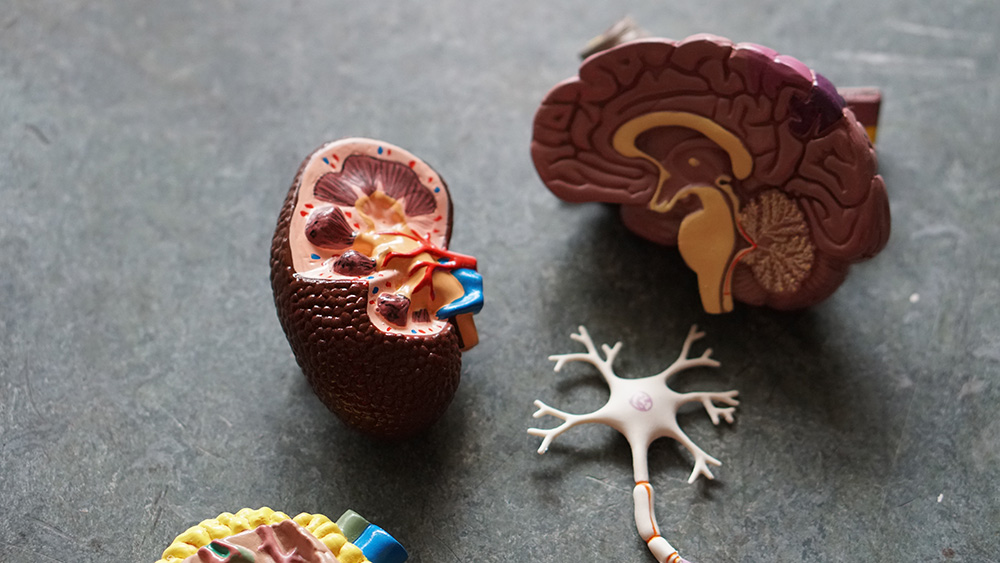
Clusters of brain cells, so-called brain organoids, have been bred in the biologist’s lab at the University of California, San Diego. According to the New York Times, the scientists altered human skin cells into stem cells, then “coaxed them to develop as brain cells do in an embryo”. “The organoids grew into balls about the size of a pinhead, each containing hundreds of thousands of cells in a variety of types, each type producing the same chemicals and electrical signals as those cells do in our own brains.” (NYT, 29 August 2019) The progression was stimulated by various means. A few days ago, the scientists reported that they have recorded simple brain waves in these organoids. “In mature human brains, such waves are produced by widespread networks of neurons firing in synchrony. Particular wave patterns are linked to particular forms of brain activity, like retrieving memories and dreaming.” (NYT, 29 August 2019) Someday it may be possible to use brain organoids to develop inverted or reversed cyborgs. Another method could be to take an adult brain from a deceased creature. There is no doubt that many interesting philosophical questions arise in this context, such as the boundaries between humans and machines and the rights of such cyborgs.
Self-Repairing Robots
Soft robots with soft surfaces and soft fingers are in vogue. They can touch people, animals, and plants as well as fragile things in such a way that nothing is hurt or destroyed. However, they are vulnerable themselves. One cut, one punch, and they are damaged. According to the Guardian, a European commission-funded project is trying to solve this problem. It aims to create “self-healing” robots “that can feel pain, or sense damage, before swiftly patching themselves up without human intervention”. “The researchers have already successfully developed polymers that can heal themselves by creating new bonds after about 40 minutes. The next step will be to embed sensor fibres in the polymer which can detect where the damage is located. The end goal is to make the healing automated, avoiding the current need for heat to activate the system, through the touch of a human hand.” (Guardian, 8 August 2019) Surely the goal will not be that the robots really suffer. This would have tremendous implications – they would have to be given rights. Rather, it is an imaginary pain – a precondition for the self-repairing process or other reactions.
Deceptive Machines
“AI has definitively beaten humans at another of our favorite games. A poker bot, designed by researchers from Facebook’s AI lab and Carnegie Mellon University, has bested some of the world’s top players …” (The Verge, 11 July 2019) According to the magazine, Pluribus was remarkably good at bluffing its opponents. The Wall Street Journal reported: “A new artificial intelligence program is so advanced at a key human skill – deception – that it wiped out five human poker players with one lousy hand.” (Wall Street Journal, 11 July 2019) Of course you don’t have to equate bluffing with cheating – but in this context interesting scientific questions arise. At the conference “Machine Ethics and Machine Law” in 2016 in Krakow, Ronald C. Arkin, Oliver Bendel, Jaap Hage, and Mojca Plesnicar discussed on the panel the question: “Should we develop robots that deceive?” Ron Arkin (who is in military research) and Oliver Bendel (who is not) came to the conclusion that we should – but they had very different arguments. The ethicist from Zurich, inventor of the LIEBOT, advocates free, independent research in which problematic and deceptive machines are also developed, in favour of an important gain in knowledge – but is committed to regulating the areas of application (for example dating portals or military operations). Further information about Pluribus can be found in the paper itself, entitled “Superhuman AI for multiplayer poker”.