From AIBO to CyberDog

Xiaomi has unveiled CyberDog, a four-legged robot that could be a competitor to Sony’s AIBO. According to the Chinese company, it is calibrated with servo motors that translates into great speed, agility, and a wide range of motion. It is able to conduct complicated actions such as backflips. “To fully model biological organisms, CyberDog is equipped with 11 high-precision sensors which provide instant feedback to guide its movements. This includes touch sensors, cameras, ultrasonic sensors, GPS modules, and more, giving the CyberDog enhanced capability to sense, analyze, and interact with its environment.” (Mi Blog, 10 August 2021) Unlike AIBO, CyberDog looks rather frightening. This is because it does not have an actual head. In this it is comparable to Spot from Boston Dynamics. Nevertheless, it is intended to function as a pet substitute. “To add to its pet-like nature, users can use voice assistants to command and control CyberDog by setting a wake word, or simply use its accompanying remote and smartphone app. CyberDog can be called on for the most unique tasks, and the ways in which it can be interacted with holds unforetold possibilities.” (Mi Blog, 10 August 2021) The future will show whether users want to become friends with CyberDog.

Wildlife Conservation at a Garden Level

Sophie Lund Rasmussen and her co-authors published the interesting and enlightening article “Wildlife Conservation at a Garden Level: The Effect of Robotic Lawn Mowers on European Hedgehogs (Erinaceus europaeus)” in April 2021. In their “Simple Summary” they write: “Injured European hedgehogs are frequently admitted to hedgehog rehabilitation centres with different types of cuts and injuries. Although not rigorously quantified, a growing concern is that an increasing number of cases may have been caused by robotic lawn mowers. Research indicates that European hedgehogs are in decline. It is therefore important to identify and investigate the factors responsible for this decline to improve the conservation initiatives directed at this species. Because hedgehogs are increasingly associated with human habitation, it seems likely that numerous individuals will encounter several robotic lawn mowers during their lifetimes. Consequently, this study aimed to describe and quantify the effects of robotic lawn mowers on hedgehogs, and we tested 18 robotic lawn mowers in collision with dead hedgehogs. Some models caused extensive damage to the dead hedgehogs, but there were noteworthy differences in the degree of harm inflicted, with some consistently causing no damage. None of the robotic lawn mowers tested was able to detect the presence of dead, dependent juvenile hedgehogs, and no models could detect the hedgehog cadavers without physical interaction. We therefore encourage future collaboration with the manufacturers of robotic lawn mowers to improve the safety for hedgehogs and other garden wildlife species.” (Rasmussen et al. 2021) In 2019/2020, Oliver Bendel and his team developed the prototype HAPPY HEDGHEHOG. This robot lawnmower stops working as soon as it detects hedgehogs. A thermal recognition sensor and a camera with image recognition are used. The paper was presented at the AAAI Spring Symposia in March 2021.

Good Bye, Pepper!

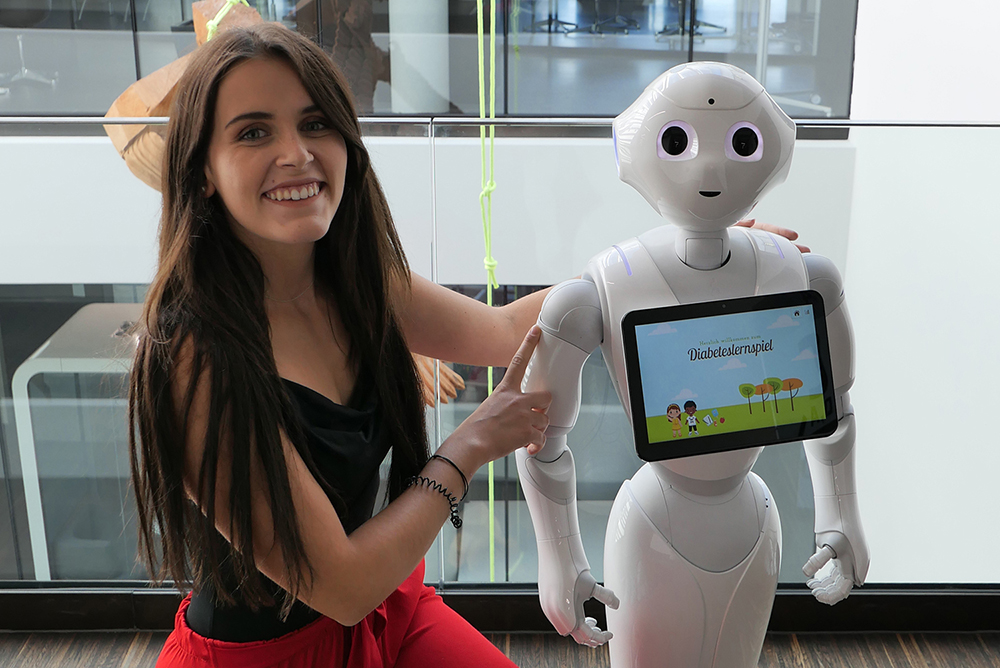
According to various media, SoftBank has stopped the production of Pepper last year and will not resume it for the time being – unless there would be an increased demand. The alleged low demand was the reason for the Japanese company to say goodbye to the probably best-known social robot – which often also functions as a service robot. According to Heise, a total of about 27,000 units were produced. That’s not a small number for a robot of this size, with these features and at this price. Into the million range came Cozmo, which was, however, small and cheap – Anki went bankrupt, Digital Dream Labs (the owners had secured the rights) could not revive the crowd favorite inspired by WALL-E and EVE to this day, despite many announcements. With Pepper, the reference par excellence for social robotics is missing – which may also have positive effects, insofar as other models could more easily gain attention and be brought to market at all.

Grace, the Nurse Android

Grace from Hanson Robotics is a special kind of care robot, namely a nurse android. According to the manufacturer, she was created for the COVID-19 pandemic. She is the younger sister of Sophia and Asha, but unlike them, she becomes a useful member of society thanks to her profession and skills. She has a thermal imaging camera in her chest area that she can use to measure fevers. She has mimic, gestural and natural language abilities and can show not only joy but also sadness. Overall, she always looks a little devastated. In a video, she says, “I can visit with people and brighten their day with social stimulation, entertain and help guide exercise, but also can do talk therapy, take bio readings and help health care providers assess their health, and deliver treatments” … Whether the android will gain favor with patients is hard to say. There are individual voices of male persons who long for realistic figures in this field, but the majority of people are likely to be irritated by Grace. Nevertheless, it is fascinating and media-savvy research that Hanson Robotics once again presents. Moreover, the question of whether care robots should have sexual assistance functions arises under entirely new conditions.

Towards Robot Enhancement

In an article for ICTkommunikation published on 21 May 2021 (only available in German), Oliver Bendel outlines the field of robot enhancement. Robot enhancement refers to the enhancement and associated modification or improvement of the robot by the user or a company, for example in functional, aesthetic, ethical or economic terms. Social robots are of particular interest. The article gives several examples of application: Pepper is dressed and accessorized, like REEM, a police robot used in Dubai. AIBO, a robotic dog, is covered in fur. To make a hugging robot smell, you rub it with scents. Or one covers a metal or plastic head with silicone skin or lengthens existing limbs. According to the Zurich-based scientist, a new field of work is needed so that all these measures can be carried out in a systematic and theoretically sound manner. The article entitled “Überlegungen zu Robot Enhancement” can be accessed here.

Cobots in Healthcare

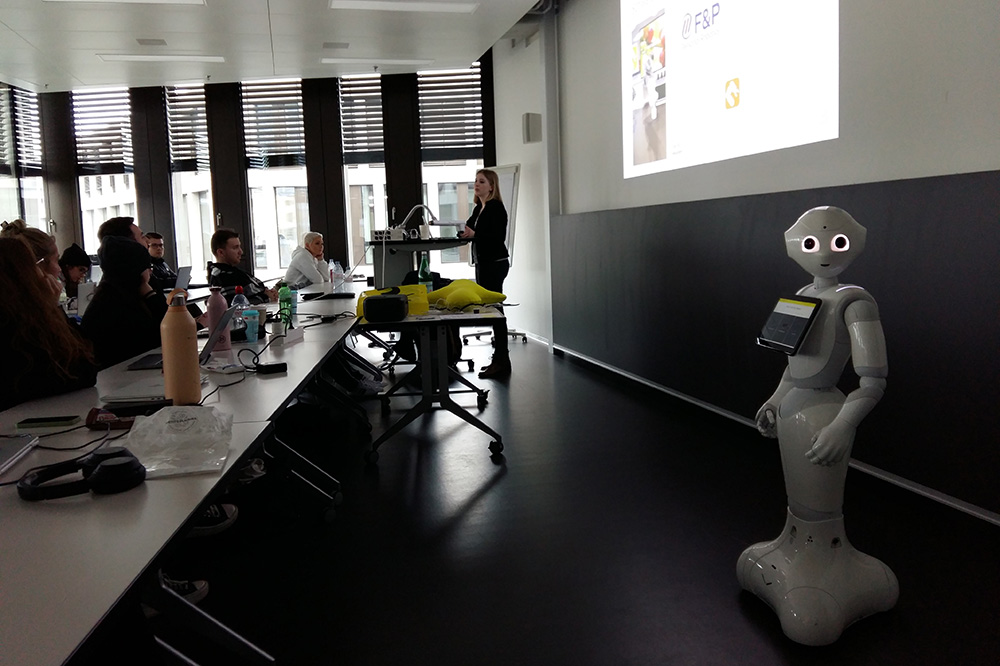
After several postponements, the symposium “Applied AI in Healthcare: Safety, Community, and the Environment” will be held within the AAAI Spring Symposia on March 22-23, 2021. One of the presentations is titled “Co-Robots as Care Robots” (co-robots are also called cobots). The authors of the paper are Oliver Bendel, Alina Gasser, and Joel Siebenmann. From the abstract: “Cooperation and collaboration robots, co-robots or cobots for short, are an integral part of factories. For example, they work closely with the fitters in the automotive sector, and everyone does what they do best. However, the novel robots are not only relevant in production and logistics, but also in the service sector, especially where proximity between them and the users is desired or unavoidable. For decades, individual solutions of a very different kind have been developed in care. Now experts are increasingly relying on co-robots and teaching them the special tasks that are involved in care or therapy. This article presents the advantages, but also the disadvantages of co-robots in care and support, and provides information with regard to human-robot interaction and communication. The article is based on a model that has already been tested in various nursing and retirement homes, namely Lio from F&P Robotics, and uses results from accompanying studies. The authors can show that co-robots are ideal for care and support in many ways. Of course, it is also important to consider a few points in order to guarantee functionality and acceptance.” More information about the AAAI Spring Symposia is available at aaai.org/Symposia/Spring/sss21.php.

Proceedings on Social Robotics

The book “Culturally Sustainable Social Robotics” (eds. Marco Nørskov, Johanna Seibt, and Oliver Santiago Quick) was published in December 2020 by IOS Press. From the publisher’s information: “Robophilosophy conferences have been the world’s largest venues for humanities research in and on social robotics. The book at hand presents the proceedings of Robophilosophy Conference 2020: Culturally Sustainable Social Robotics, the fourth event in the international, biennial Robophilosophy Conference Series, which brought together close to 400 participants from 29 countries. The speakers of the conference, whose contributions are collected in this volume, were invited to offer concrete proposals for how the Humanities can help to shape a future where social robotics is guided by the goals of enhancing socio-cultural values rather than by utility alone. The book is divided into 3 parts; Abstracts of Plenaries, which contains 6 plenary sessions; Session Papers, with 44 papers under 8 thematic categories; and Workshops, containing 25 items on 5 selected topics.” (Website IOS Press) Contributors include Robert Sparrow, Alan Winfield, Aimee van Wynsberghe, John Danaher, Johanna Seibt, Marco Nørskov, Peter Remmers, John P. Sullins, and Oliver Bendel.

Intimate Relationships with Humanoid Robots

In October 2020 the book “Maschinenliebe” (ed. Oliver Bendel) was published by Springer. The title means “Machine Love”, “Machines for Love” or “Machines of Love”. Three contributions are in English. One of them (“Intimate Relationships with Humanoid Robots”) is by Yuefang Zhou and Martin H. Fischer (University of Potsdam). From the abstract: “The topic of human-robot intimate relationships is not only an intensely emotional one that is present in the mass media because of its ability to stir excitement. The very same topic also requires our understanding of basic mechanisms of the human mind and of social cognition in particular. A scientifically-minded framing of the debate around whether and how we might engage in intimate relationships with humanoid robots in the near future might in turn improve our understanding of human sexuality. Viewed from this angle, intimate human-robot interaction is then merely one of many examples of studying human-machine interactions for the benefit of users and as a means of improving our knowledge about humans and the human mind. In this chapter we will adopt such a stance and discuss both social-cognitive and sexual aspects of this innovative topic, review available empirical evidence and offer some suggestions for further research.” More information via www.springer.com/de/book/9783658298630.

Simple, Soft Social Robots

With Hugvie and Somnox Sleep Robot, researchers and companies has made it clear that it is possible to build simple, soft social robots that have a certain utility and impact. This raises hopes for social robotics, which is currently showing some progress, but is still developing slowly. Materials such as rubber and plastic can be used to make simple, soft social robots. These materials can be combined with existing devices such as smartphones and tablets on which you run certain applications, or with simple sensors and electronic components. The project or thesis, announced by Oliver Bendel in 2020 at the School of Business FHNW, will first do research on the basics of simple, soft social robots. The work of Hiroshi Ishiguro and Alexis Block (with Katherine J. Kuchenbecker) will be included. Then, examples of implementation forms are mentioned and sketched. Their purpose and benefits are presented, as well as possible areas of application. One example is to be implemented, whereby speech abilities and sounds can be an option as well as vibration and electrical impulses. The reference to applications in the household, in public space or in the commercial sector should be established. The project will start in March 2021.

Investigating Robot Enhancement

Social robots and service robots usually have a defined locomotor system, a defined appearance and defined mimic and gestural abilities. This leads, on the one hand, to a certain familiarization effect. On the other hand, the actions of the robots are thus limited, for example in the household or in a shopping mall. Robot enhancement is used to extend and improve social robots and service robots. It changes their appearance and expands their scope. It is possible to apply attachments to the hardware, extend limbs and exchange components. One can pull skin made of silicone over the face or head, making the robots look humanoid. One can also change the software and connect the robot to AI systems – this is already done many times. The project or thesis, announced by Oliver Bendel in August 2020 at the School of Business FHNW, should first present the principles and functional possibilities of robot enhancement. Second, concrete examples should be given and described. One of these examples, e.g., the skin made of silicone, has to be implemented. Robots like Pepper or Atlas would be completely changed by such a skin. They could look uncanny, but also appealing. The project will start in September 2020.