The paper “The Universal Robot of the 21st Century” by Oliver Bendel was published in February 2025 in the proceedings volume “Social Robots with AI: Prospects, Risks, and Responsible Methods” … From the abstract: “Developments in several areas of computer science, robotics, and social robotics make it seem likely that a universal robot will be available in the foreseeable future. Large language models for communication, perception, and control play a central role in this. This article briefly outlines the developments in the various areas and uses them to create the overall image of the universal robot. It then discusses the associated challenges from an ethical and social science perspective. It can be said that the universal robot will bring with it new possibilities and will perhaps be one of the most powerful human tools in physical space. At the same time, numerous problems are foreseeable, individual, social, and ecological.” The proceedings volume comprises the papers presented at Robophilosophy 2024 in Aarhus. Leading philosophers, computer scientists and roboticists met there in August. Like the ICSR, the conference is one of the world’s leading conferences on social robotics. General-purpose robots, the predecessors of universal robots, have now become widespread, as exemplified by Digit, Apollo, and Figure 03. The author accepted manuscript of this article is therefore being made freely available on this site for non-commercial use only and with no derivatives, in line with the publisher’s self-archiving policy.
Paper on “Robots in Policing”
In January 2023, the Proceedings of Robophilosophy 2022 were published. Included is the paper “Robots in Policing” by Oliver Bendel. From the abstract: “This article is devoted to the question of how robots are used in policing and what opportunities and risks arise in social terms. It begins by briefly explaining the characteristics of modern police work. It puts service robots and social robots in relation to each other and outlines relevant disciplines. The article also lists types of robots that are and could be relevant in the present context. It then gives examples from different countries of the use of robots in police work and security services. From these, it derives the central tasks of robots in this area and their most important technical features. A discussion from social, ethical, and technical perspectives seeks to provide clarity on how robots are changing the police as a social institution and with social actions and relationships, and what challenges need to be addressed.” (Abstract) Robots and AI systems in police work have become a hot topic. The author accepted manuscript of this article is therefore being made freely available on this site for non-commercial use only and with no derivatives, in line with the publisher’s self-archiving policy.
Navel, please come to me
Contact between Navel Robotics and the FHNW School of Business has existed since March 2021. At that time, it had not yet been decided whether Navel, the social robot, should be equipped with a spherical body or with wheels for locomotion. Claude Toussaint, the founder and inventor, discussed this and other questions with Prof. Dr. Oliver Bendel. He decided in favor of wheels, unlike the Mirokaï models by Enchanted Tools – the female Miroka and the male Miroki – which today zip around like BB-8. Navel stands out for its large, seemingly round eyes. This effect is created by a special lens, as the displays themselves are not curved. In the case of the Mirokaï robots, the face – including eyes, nose, mouth, and facial expressions – is projected onto a face shell, similar to the Furhat heads. The contact between the company and the university continued. On February 18, 2024, Claude Toussaint joined the elective module “Social Robots” remotely, and on June 6, 2024, he was a guest at the Future Lab hosted by Oliver Bendel at Learntec. In November 2025, Navel Robotics was able to announce on its website: “Many customers have been waiting for this moment – we have too … From now on, Navel will gradually learn to move independently in environments such as stations and residential areas. ‘Navel, please come to me’ – the first step toward autonomous driving.” (Navel Robotics website, own translation) In nursing homes and assisted-living facilities, social robots of this kind can be useful, as can assistive robots such as Lio, which are capable of physically manipulating objects. Miroka and Miroki combine both worlds: they are advanced assistive robots and fully fledged social robots. The future will show which approaches prevail (Photo: ICSR).
Human-likeness in AI
The Research Topic “Exploring human-likeness in AI: From perception to ethics and interaction dynamics”, hosted by Frontiers in Cognition, invites contributions on how human-like features in robots and AI systems influence user perception, trust, interaction, and ethical considerations. The deadline for submission has been extended. As AI becomes more integrated into society, anthropomorphic design raises pressing questions: Do human-like traits improve communication and acceptance, or do they lead to unrealistic expectations? What ethical implications arise when machines simulate empathy or emotion? This interdisciplinary call welcomes contributions from fields such as psychology, engineering, philosophy, and education. Submissions may include empirical research, theoretical analysis, reviews, or case studies that explore how human-likeness shapes the way we engage with AI. The deadline for manuscript summaries is February 12, 2026; full manuscripts are due by March 12, 2026. Articles will undergo peer review and are subject to publication fees upon acceptance. Topic editors are Dr. Katharina Kühne (University of Potsdam, Germany) and Prof. Dr. Roger K. Moore (The University of Sheffield, United Kingdom). For full details and submission guidelines, visit: www.frontiersin.org/research-topics/72370/exploring-human-likeness-in-ai-from-perception-to-ethics-and-interaction-dynamics.
ICSR 2026 is Ready for Submissions
The 18th International Conference on Social Robotics (ICSR + Art 2026) will take place in London, UK, from 1–4 July 2026. ICSR is the leading international forum that brings together researchers, academics, and industry professionals from across disciplines to advance the field of social robotics. The conference has now opened its submission system, and full details can be found on the official ICSR 2026 submission page (icsr2026.uk/submission). Authors are invited to submit to a range of categories. Regular Papers for the Main Track should follow the guidelines provided on the conference website and be submitted by 15 February 2026. Special Session submissions follow the same Regular Paper instructions but are directed to individual sessions listed on the Special Sessions page. Short Papers follow their own dedicated instructions and are submitted through the same system. Competitions and Debates each have their own portals, with submissions due by 1 March 2026. Additional tracks such as the Robot Fringe and Travel Grants will be announced soon. All submission links and instructions are clearly detailed on the ICSR 2026 submission page, ensuring authors have everything they need to prepare their contributions for this major event in social robotics.
Sexuality and Generative AI
The upcoming “SAGA: Sexuality and Generative AI” symposium, taking place on April 30, 2026 at the Université du Québec à Montréal, explores how generative AI is reshaping intimacy, desire, relationships, and sexual expression. As AI systems increasingly create images, stories, and even interactive romantic companions, they raise new ethical, legal, and social questions that researchers, practitioners, and industry voices will tackle together. The hybrid, bilingual event is free and open to all, offering live translation and captioning. In its first block on social impacts, the symposium features talks such as Brian Willoughby’s exploration of how romantic AI affects young adults’ relationships, Arnaud Anciaux’s analysis of ownership and consent around AI-generated sexual content, Beáta Bőthe’s work on AI-generated pornography and problematic use, and Oliver Bendel’s look at erotic chatbot interactions. With discussions ranging from the regulation of AI-generated pornography to digital intimacy and AI-supported therapeutic interventions, the event promises a rich and essential conversation. Full details and submissions are available at https://event.fourwaves.com/sexualiteia/pages.
ACI Conference in Switzerland
Prof. Dr. Oliver Bendel will host the next ACI Conference, marking the first time the event comes to continental Europe as it convenes on the FHNW campus in Brugg-Windisch, Switzerland, from 2-5 December 2026. Building on a tradition that has taken the community from Glasgow to North Carolina, Newcastle, Bloomington, Milton Keynes, Haifa and Atlanta, this edition continues the conference’s role as the premier venue for advancing Animal-Computer Interaction. As the field grows, researchers and practitioners explore how technology shapes animals’ lives, wellbeing, cognition and social dynamics while developing animal-centered systems and methods that embrace multispecies perspectives. The conference maintains its commitment to interdisciplinary collaboration across biology, technology and cultural studies, supporting work that seeks to design ethically grounded, welfare-enhancing and inclusive technological futures for all animals, humans included. The proceedings will be published in a volume of a renowned organization. The official conference website will go live in January 2026. Information on previous ACI conferences is available at www.aciconf.org.
Nature, Robots, and Society
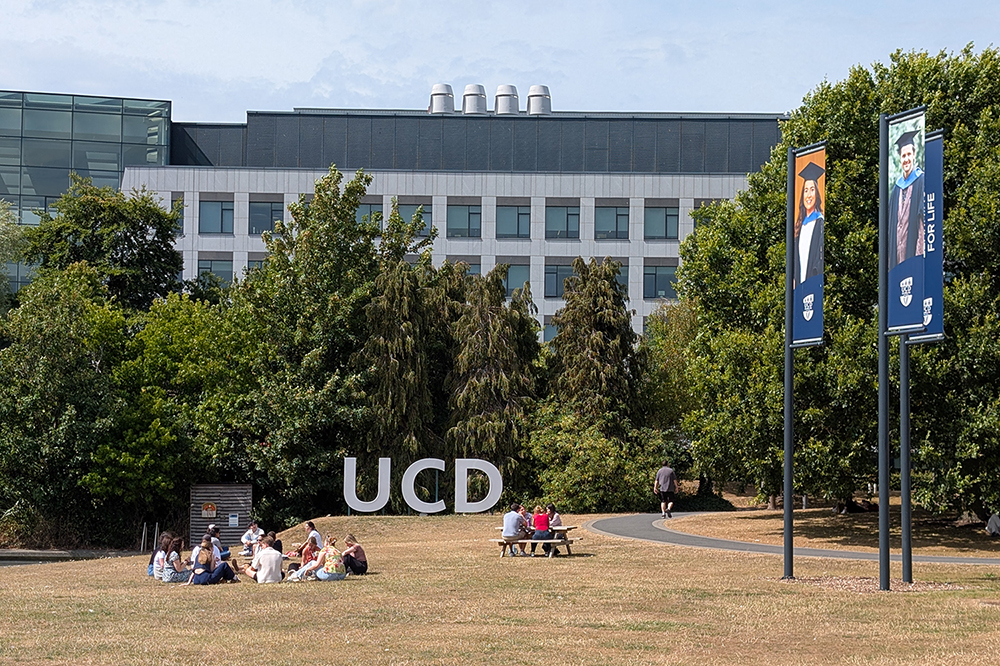
The Robophilosophy Conference 2026 will take place August 11–14 at University College Dublin in a hybrid format and centers on the theme “Connected Futures: Nature, Robots, and Society”. As robotics and AI become deeply embedded in human life, the conference invites researchers across disciplines to explore how autonomous systems shape society, ecology, law, labor, and human self-understanding. It raises questions about responsible design, accountability, environmental impact, social justice, cultural perspectives, and the ethics of coexistence with artificial agents. Workshop proposals are due January 16, session papers and posters February 6, with notifications in February and April and proceedings pre-submission on June 15. RP2026 aims to foster interdisciplinary dialogue that advances both technological insight and collective wisdom for a future in which humans and autonomous systems share social and ecological worlds. Further information is available at cas.au.dk/en/rpc2026.
ICSR – Call for Debates
The 18th International Conference on Social Robotics (ICSR + Art 2026) will take place in London, UK, from 1-4 July 2026. ICSR is the leading international forum that brings together researchers, academics, and industry professionals from across disciplines to advance the field of social robotics. As part of this edition, ICSR 2026 will host a series of live debates in the Debate Room (Senate Room), addressing pressing questions about social robots in society and culture. Debate proposals may focus on conceptual, ethical, scientific, artistic, practical, or societal aspects of social robotics and should connect broadly to the conference topics listed at icsr2026.uk/topics/. Submissions are open to contributors from social robotics, HRI, the arts, design, engineering, the humanities, and related areas, with interdisciplinary proposals particularly encouraged. Formats may include two-sided or multi-position debates, panel discussions, performative debates, or audience-engaged formats. In a nod to British debating traditions, participants are encouraged to wear academic gowns. Proposals are submitted via icsr2026.uk/debate-proposal, with a submission deadline of 1 March 2026 and notification of acceptance by 15 April 2026.
Communicating with Fellow Beings and Extraterrestrials
As part of the ToBIT event series at the University of Applied Sciences and Arts Northwestern Switzerland (FHNW), four students working with Prof. Dr. Oliver Bendel are addressing four topics within his research area: “The Decoding of Symbolic Languages of Animals”, “The Decoding of Animal Body Language”, “The Decoding of Animal Facial Expressions and Behavior”, and “The Decoding of Extraterrestrial Languages”. The first three topics are also being explored – or have already been explored – in dedicated projects. DEEP VOICE focuses on whale communication. The Animal Whisperer Project comprised three apps that analyzed and evaluated the body language of cows, horses, and dogs, while VISUAL provided blind and visually impaired individuals with audio descriptions of images from wildlife webcams. In ANIFACE, a system was designed to identify individual bears in the Alps using facial recognition. Projects involving the reception of extraterrestrial signals and communication with alien life forms were discussed in the book “300 Keywords Weltraum“. The students presented their interim results on November 26, 2025. The final ToBIT event will take place in January 2026.