There’s No Place Like Home

The 18th International Conference on Social Robotics (ICSR + Art 2026) will take place in London, UK, from 1–4 July 2026. ICSR is the leading international forum that brings together researchers, academics, and industry professionals from across disciplines to advance the field of social robotics. As part of the conference programme, ICSR Industry Day will offer a dynamic platform connecting research and industry through a panel debate, a UKRI-led workshop, and a pitch session showcasing emerging robotics start-ups. A key highlight will be the panel discussion “There’s No Place Like Home: Exploring the Next Frontier for Social Robots”, taking place on Friday, 3 July from 2.30-4.00 pm. Bringing together leading voices from industry, the session will examine the growing interest in domestic environments as the next major market for social robotics. While companies increasingly envision robots supporting household tasks, personalised assistance, ageing-in-place, and companionship, the home presents unique challenges as a deeply personal and unpredictable setting where trust, privacy, and reliability are essential. Drawing on firsthand experience in deploying consumer robots, the panellists will discuss both the opportunities and the obstacles of integrating robots into everyday domestic life, addressing issues such as surveillance, dependency, social acceptance, and design limitations. The panel will feature Ira Renfrew, Co-Founder and Chief People Product Officer at Familiar Machines & Magic; Shunsuke Aoki, Founder of Yukai Engineering; Craig Allen, former Chief Creative Officer at Embodied (now Moxie Robots); and Samuel Ader, VP Growth & Supply at Cera (Genie Connect). The discussion will be moderated by Elizabeth Jochum. Together, the speakers will explore how thoughtful, human-centred innovation can help social robots earn a meaningful place in people’s homes and daily lives. Further information and registration details for the Industry Day panel are available at: icsr2026.uk/industry-day/.

Ukraine Expands Use of Military Robots

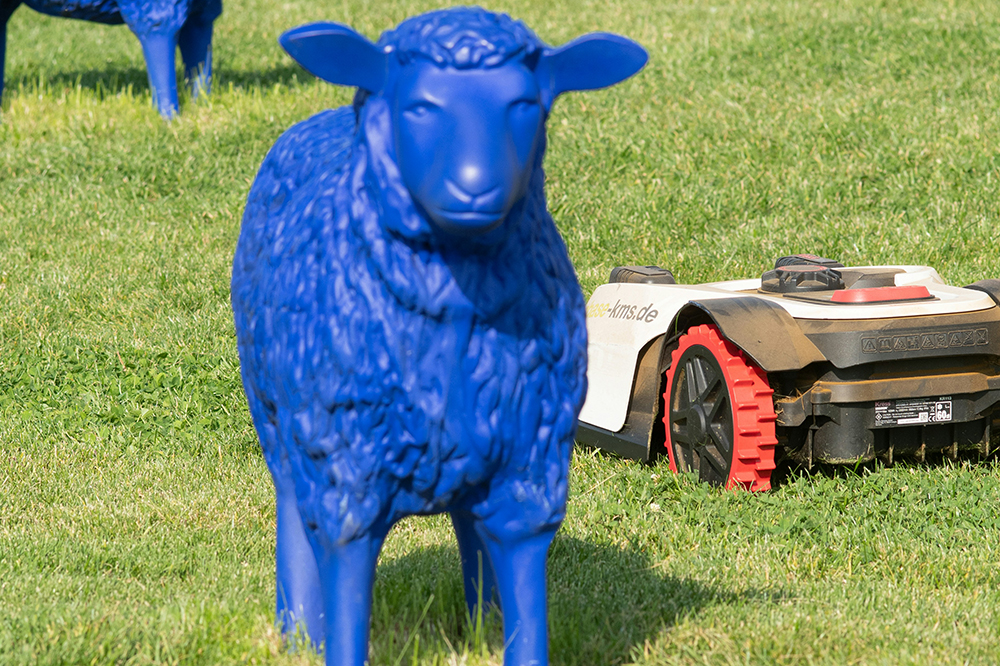
According to German tech publication Golem.de, Ukraine says it has captured a Russian position for the first time using only unmanned systems, including ground robots and drones, in what could mark a significant milestone in modern warfare. President Volodymyr Zelenskyy described the operation as another sign of how rapidly battlefield technology is evolving, although independent confirmation of the exact circumstances remains limited. Ukraine has increasingly relied on robotic systems in recent months, with unmanned platforms reportedly being used for combat missions, reconnaissance, and even prisoner captures. The country’s defense-tech sector now includes hundreds of manufacturers developing a wide range of unmanned ground vehicles, highlighting Kyiv’s growing focus on automation and battlefield innovation. More details are available via www.golem.de.

ACI 2026 Extends Submission Deadline

The Animal-Computer Interaction International Conference 2026 (ACI 2026) invites contributions for its thirteenth edition. The conference seeks theoretical, methodological, empirical, and ethical work that advances dialogue around animal-centered research and the design of computing-enabled systems. ACI brings together perspectives from computer science, informatics, engineering, interaction design, animal behavior and welfare science, veterinary science, ecology, sociology, philosophy, and related disciplines, with the aim of further developing Animal-Computer Interaction as a field. In an increasingly networked world shaped by pervasive technologies, animals – both human and nonhuman – are entangled in complex webs of interaction. These interactions may be direct or indirect, physical or cognitive, distributed or dyadic, synchronous or asynchronous. Contributions are encouraged that critically examine how technology shapes human-animal relationships, how large-scale technological deployments affect animals, and how future systems can be designed responsibly and ethically. The conference also welcomes submissions in Animal-Machine Interaction (AMI), which explores interaction and communication between animals and machines, including autonomous systems such as drones and robots. AMI focuses on designing machines that benefit animals and safeguard their interests, supporting survival and well-being. The submission deadline for Research Papers and Emerging Work Papers has been extended by two weeks and is now May 15, 2026. The deadline for Workshop Proposals remains unchanged at June 1, 2026. All submissions will be peer-reviewed. Further information is available at www.aciconf.org, and submission details can be found at www.aciconf.org/call-for-contributions.

Chatbots for Endangered Languages

On April 8, 2026, the article “Chatbots for Dead, Endangered, and Extinct Languages: Possibilities and Limitations of Generative AI for Continuing Education” by Oliver Bendel was published in Wiley Industry News. The focus is on how chatbots based on generative AI can contribute to the preservation and promotion of dead, endangered, and extinct languages in continuing education (as well as in vocational training). Following an introduction to the technical and conceptual foundations, several projects at the FHNW School of Business are presented and discussed from technical, ethical, and didactic perspectives. These dimensions are revisited in the next section and expanded into general and overarching considerations. Finally, possible and necessary steps are outlined that go beyond the purely technological discourse. Additionally, an outlook is provided on future possibilities related to new versions of large language models. This article provides the first comprehensive overview of the projects initiated by Oliver Bendel that are dedicated to dead, endangered, and extinct languages, including @ve (for Latin), @llegra (for Vallader), and kAIxo (for Basque), as well as Cleop@tr@ (Egyptian). It can be accessed via the publisher’s website or downloaded here as a PDF.

Keynote Speakers of ICSR + Art 2026

The 18th International Conference on Social Robotics (ICSR + Art 2026) will take place in London, UK, from 1–4 July 2026. ICSR is the leading international forum that brings together researchers, academics, and industry professionals from across disciplines to advance the field of social robotics. This year’s conference will feature three distinguished keynote speakers whose work is shaping the future of artificial intelligence, robotics, and human-robot interaction. Hatice Gunes, Professor of Affective Intelligence and Robotics at the University of Cambridge, is internationally recognised for her pioneering research on affective computing, multimodal intelligence, and socially aware AI systems, with a strong emphasis on ethics, fairness, and wellbeing in robotics. Jean Oh, Associate Research Professor at Carnegie Mellon University and Director of the roBot Intelligence Group, is known for her work on collaborative robots, social navigation, and creative physical AI, focusing on developing robots that learn, adapt, and work safely alongside humans in shared environments. Nicolas Heess, Research Scientist and Director at Google DeepMind, leads cutting-edge research on general-purpose robotics and embodied AI, exploring how advances in machine learning, perception, and motor control can bring intelligent robots into the physical world. Together, these keynote speakers represent the forefront of research and innovation driving the next generation of social robotics. Further information on the keynote programme is available at: icsr2026.uk/keynote/.

Robot Dog Helps Blind Navigation

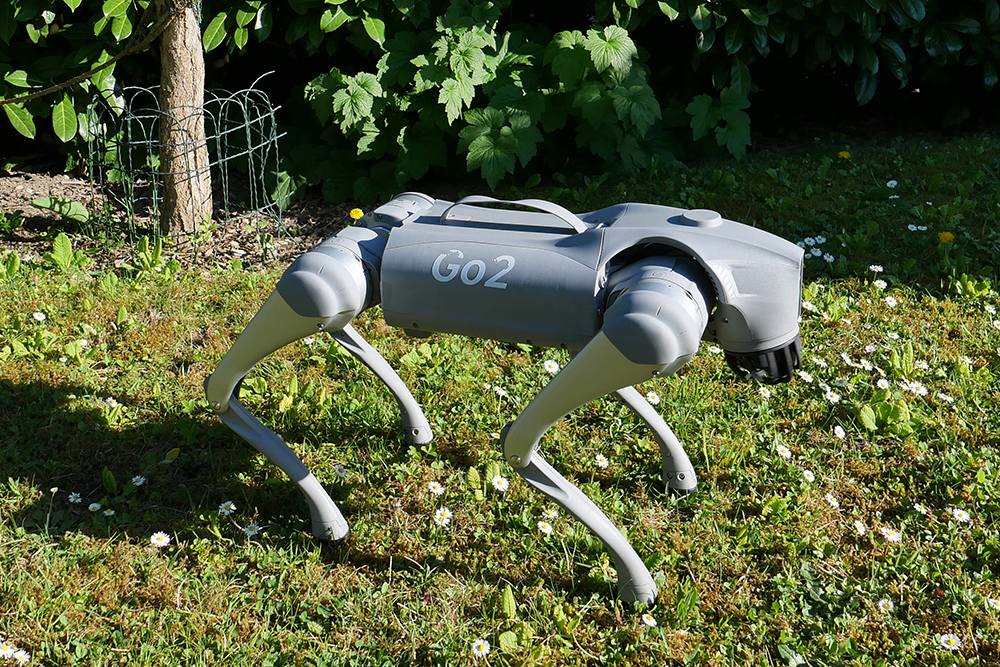
According to a Golem article published on April 12, 2026, researchers at Binghamton University have developed an AI-powered robotic guide dog designed to assist blind people through spoken interaction. Unlike traditional systems that rely on leash signals, the robotic dog uses large language models to understand voice commands, suggest different route options with estimated travel times, and verbally describe surroundings while guiding its user. As it moves, the robot continuously explains nearby hallways, obstacles, and environmental details to improve situational awareness. In tests with seven legally blind participants navigating an office environment, users responded very positively and especially appreciated the combination of route planning and real-time commentary. The research team plans to further improve the robot’s autonomy and expand testing in both indoor and outdoor settings, highlighting the technology’s potential as a future alternative or supplement to traditional guide dogs. An important practical consideration will also be how real dogs react to the robotic guide dog. This was examined in the Robodog project by Prof. Dr. Oliver Bendel and his student Selina Rohr.

SAGA Conference Program

The upcoming “SAGA: Sexuality and Generative AI” symposium, taking place on April 30, 2026 at the Université du Québec à Montréal, explores how generative AI is reshaping intimacy, desire, relationships, and sexual expression. The first block, titled “Societal Impacts”, brings together a set of talks that examine how emerging technologies are already influencing human connection and cultural norms. Brian Willoughby (Brigham Young University, United States) opens with “Engagement with Romantic AI: Implications for Young Adult Dating and Relationships”, addressing how AI companions may alter expectations and behaviors in modern dating. Arnaud Anciaux (Université Laval, Canada) follows with “Toward a Great Bypass? Property, Consent, and Value Creation in AI-Generated Sexual Content”, focusing on legal and ethical questions around ownership and consent. Émilie Gaudet (Université de Montréal, Canada) contributes “AI-Generated Pornography and Problematic Pornography Use”, exploring the psychological and societal risks associated with synthetic sexual media. Finally, Oliver Bendel (FHNW School of Business, Switzerland) looks ahead in “Physical AI and the Future of Intimacy”, considering how embodied AI systems could transform intimate relationships. The program also features “Panel 1 – Technological Solutions to the Challenges of AI”, with contributions from Sophie Mortimer (UK Revenge Porn Helpline, United Kingdom), Alex Georges (AetherLab, United States), and Madelaine Thomas (Image Angel, United Kingdom), who discuss practical responses to harms such as non-consensual content and digital abuse. Overall, the symposium is structured into four thematic blocks and includes two panels, offering a compact yet wide-ranging exploration of one of the most sensitive and rapidly evolving intersections of technology and human life. The SAGA conference program is now available online and can be downloaded here.