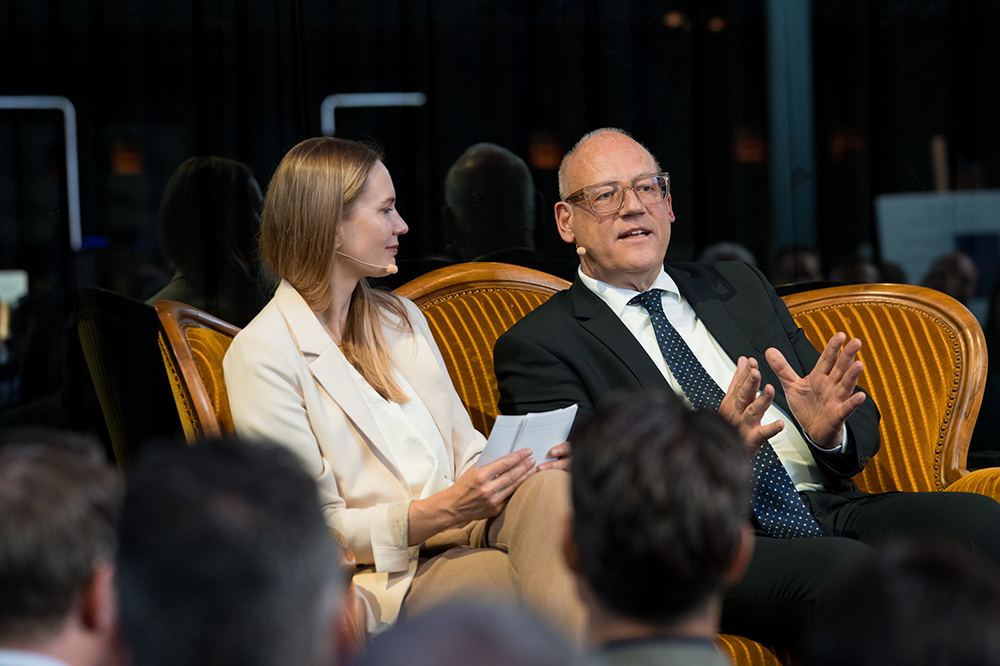
After generative AI, robotics is the topic of the moment – and, of course, the two can be combined. On May 21, 2026, Walder Wyss hosted a robotics event at Kraftwerk Zurich as part of its “Off the Record” series, beginning at 6:00 p.m. Friends and clients of the law firm were invited to attend. The discussion covered traditional service robots as well as general-purpose robots—and social robots. The panel featured Prof. Dr. Oliver Bendel, a philosopher of technology and business information systems scholar who has been working extensively with chatbots, voice assistants, and social robots for decades, and Sylvia Stocker, CEO of Arabesque. The event was moderated by Ramona Wyss and Florian Gunz. Since May 27, 2026, photographs from the event have been available. They feature not only the speakers and moderators but also several of the robots present at the venue, including Unitree G1, Mars, and Pepper. In its corporate brochure, the law firm describes itself as follows: “We are a dynamic law firm with flat structures and a very friendly atmosphere. More than 300 legal experts make Walder Wyss one of the most successful Swiss commercial law firms. Our clients include national and international companies, publicly held corporations and family businesses as well as public law institutions and individuals.” (Photo: Walder Wyss)
Physical AI and the Future of Intimacy
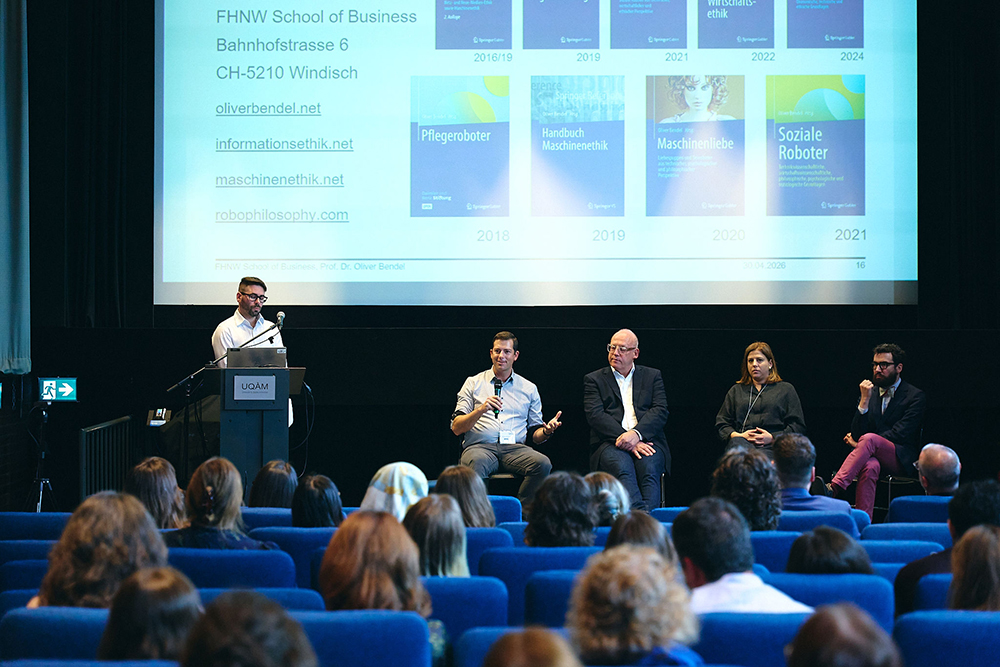
On April 30, 2026, Prof. Dr. Oliver Bendel gave a talk on “Physical AI and the Future of Intimacy” at the SAGA Conference in Montreal. From the abstract: “The presentation begins with the Tamagotchi, the iconic digital pet that demonstrated how simple interactive systems can evoke emotional attachment. It then turns to social robots, wearable social robots, and AI-enhanced sex toys, love dolls, and sex robots. Today, large language models (LLMs) and multimodal language models (MLLMs) enable dialogue, perception, and evaluation in these systems. Such capabilities may also benefit people with disabilities, including blind users, by facilitating communication and interaction. At the same time, the physical dimension remains crucial. Embodied systems create presence and proximity: they can be touched, held, and stroked, and experienced through movement, vibration, or sound. The talk argues that future intimate technologies will emerge from the convergence of generative intelligence and physical embodiment, combining conversational AI with the sensory experience of a physically present companion.” On May 19, 2026, the photos from the event, taken by Maison Toki, an independent art agency in Montreal, were made available (Photo: Maison Toki).
From Machine Ethics to EU Law
In Article 50, “Transparency Obligations for Providers and Deployers of Certain AI Systems”, of the EU Artificial Intelligence Act, it is stated: “Providers shall ensure that AI systems intended to interact directly with natural persons are designed and developed in such a way that the natural persons concerned are informed that they are interacting with an AI system, unless this is obvious from the point of view of a natural person who is reasonably well-informed, observant and circumspect, taking into account the circumstances and the context of use.” On this subject, the European Parliament had already been advised ten years earlier by Oliver Bendel. In his lecture “Moral and Immoral Machines – Moralische und unmoralische Maschinen” in Brussels on September 8, 2016, he presented GOODBOT, a chatbot initiated by him in 2013 in the context of machine ethics, which featured several escalation levels while repeatedly making clear that it was merely a machine. At the Digital Europe Working Group Conference Robotics on November 8, 2017, Bendel also spoke online about related questions in machine ethics. In connection with a care robot, he raised the question: “Should the robot make clear that it’s just a machine?” The transparency obligations set out in Article 50 will enter into force on August 2, 2026.
Towards Accessible Everyday Assistance
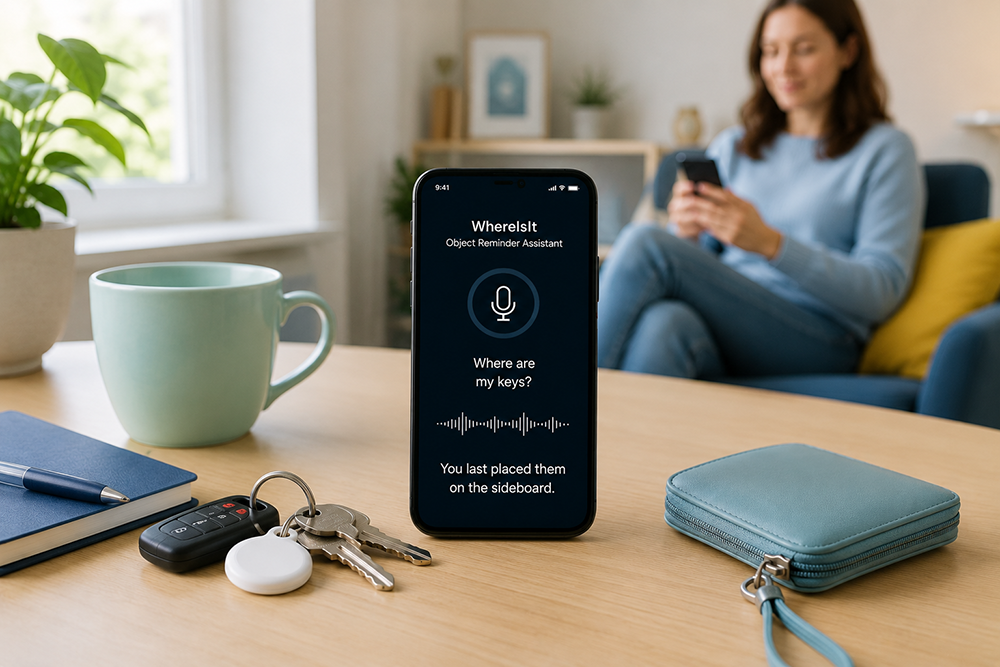
WhereIsIt, an object reminder assistant for blind and severely visually impaired people initiated by Prof. Dr. Oliver Bendel and implemented by Damian Huckele, reached its mid-term presentation on May 19, 2026. The inclusive AI project focuses on a lightweight speech-based system that allows users to store and retrieve object locations without continuous camera use. The work completed so far includes the literature review, problem analysis, requirements definition and the first system design concept. An important milestone was an expert interview with Steve Weidel, blind developer, founder of INKLUTEC and specialist in accessibility and assistive AI technologies. The interview confirmed the practical relevance of the project and highlighted key requirements such as simple voice interaction, portability, reminder functions and optional Bluetooth tags with acoustic tracking. The planned prototype architecture is Python-based and combines speech recognition, language processing, local object-location storage and text-to-speech output. The next project phases include prototype development, testing and the evaluation of Bluetooth integration.
Southwest Airlines Bans Humanoid and Animaloid Robots from Flights
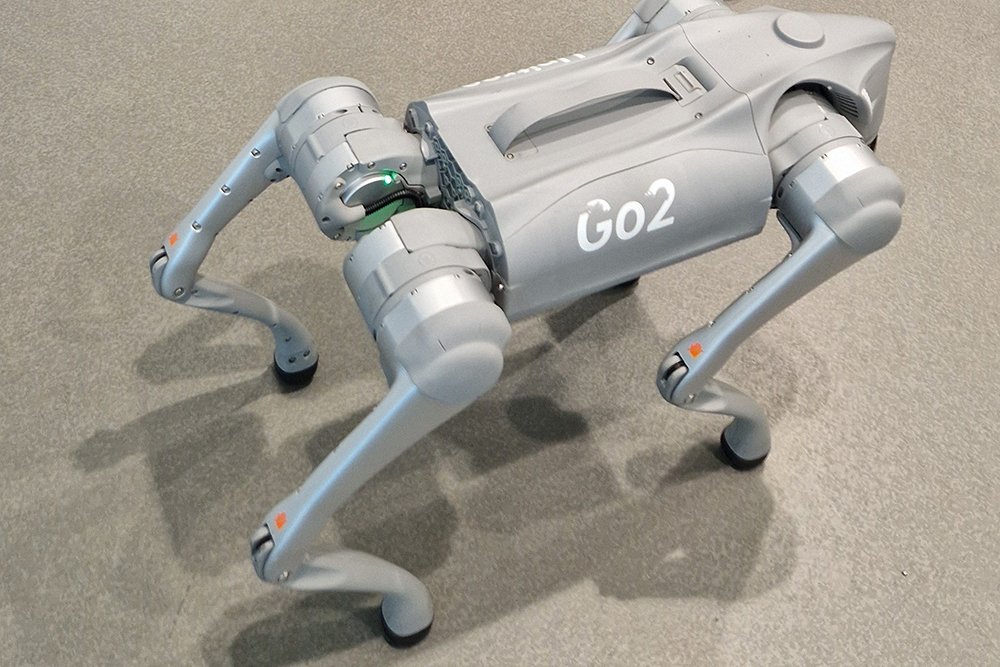
Southwest Airlines has added a new clause to its baggage policy prohibiting humanoid and animaloid robots from being transported onboard, either in the cabin or as checked baggage. The airline defines a “human-like robot” as any robot designed to imitate human appearance, movement, or behavior. Likewise, an “animal-like robot” – more precisely described as an animaloid or zoomorph robot – refers to machines designed to resemble animals. The restriction would likely apply to robotic bipeds such as NAO, Pepper, Unitree G1, Apollo, Figure 03, or NEO, as well as robotc quadrupeds like Unitree Go2, Boston Dynamics’ Spot or Sony’s AIBO. While such machines are still uncommon in everyday travel, they are regularly used in research, engineering, education, and commercial demonstrations, making air transport a practical consideration for some owners and institutions. Southwest has not publicly explained the rationale behind the rule, but battery safety, handling concerns, and operational procedures are likely factors. Other robots and robotic toys remain permitted if they fit inside normal carry-on luggage and comply with existing battery restrictions. More information is available via support.southwest.com.
New Submission Deadline for ACI 2026
The Animal-Computer Interaction International Conference 2026 (ACI 2026) invites contributions for its thirteenth edition. The conference seeks theoretical, methodological, empirical, and ethical work that advances dialogue around animal-centered research and the design of computing-enabled systems. ACI brings together perspectives from computer science, informatics, engineering, interaction design, animal behavior and welfare science, veterinary science, ecology, sociology, philosophy, and related disciplines, with the aim of further developing Animal-Computer Interaction as a field. In an increasingly networked world shaped by pervasive technologies, animals – both human and nonhuman – are entangled in complex webs of interaction. These interactions may be direct or indirect, physical or cognitive, distributed or dyadic, synchronous or asynchronous. Contributions are encouraged that critically examine how technology shapes human-animal relationships, how large-scale technological deployments affect animals, and how future systems can be designed responsibly and ethically. The conference also welcomes submissions in Animal-Machine Interaction (AMI), which explores interaction and communication between animals and machines, including autonomous systems such as drones and robots. AMI focuses on designing machines that benefit animals and safeguard their interests, supporting survival and well-being. The submission deadline for Research Papers and Emerging Work Papers has been extended by one week and is now May 22, 2026. The deadline for Workshop Proposals remains unchanged at June 1, 2026. All submissions will be peer-reviewed. Further information is available at www.aciconf.org, and submission details can be found at www.aciconf.org/call-for-contributions.
About Mythomorphic Design
The article “It Does Not Always Have to Be a Humanoid Robot: Mythomorphic Design as an Option and a Perspective” by Oliver Bendel was published in Wiley Industry News on May 13, 2026. The philosopher of technology proposes the term “mythomorph” to expand upon the categories of “humanoid” and “animalid” (“zoomorph”). This allows robots such as Mirokaï, Furby, and Cozmo to be better categorized than before. From the abstract: “Social robots are often designed in a humanoid or zoomorphic manner. In addition, there are object-like designs that attempt to avoid imitation of living beings. Nevertheless, humanoid or zoomorphic features may still appear, such as human-like eyes or an animal-like tail. Less common, but clearly present, is a design perspective that can be described as mythomorphic. In this case, humans or animals do not serve, or do not directly serve, as models; instead, extraterrestrials, fantasy figures, or mythological beings are used as inspiration. This contribution first addresses what can be understood by mythomorphic design. It then collects, describes, and classifies examples of social robots that follow this approach. Subsequently, an ontological, aesthetic, and ethical discussion is conducted, with opportunities and risks identified in each case. It becomes apparent that mythomorphic design can be understood as a distinct perspective within the broader design space of social robotics.” The article can be accessed here.
The Discipline of Animal-Machine Interaction
Oliver Bendel’s paper “Towards a Discipline of Animal-Machine Interaction” has been accepted for presentation at Robophilosophy 2026. The renowned conference on the philosophical aspects of social robotics has been held since 2014 and will take place in Dublin this year. Autonomous and semi-autonomous machines such as robots and drones are increasingly moving into natural and urban environments, leading to a growing number of interactions between animals and machines and raising corresponding new ethical and conceptual challenges. This article proposes animal-machine interaction (AMI) as a distinct discipline concerned with the design and governance of machines that encounter animals. After clarifying core concepts and delineating AMI from related fields, the article highlights the role of machine ethics in developing animal-friendly systems. Selected application examples illustrate how machines can support animal survival and well-being, while the ethical discussion addresses both opportunities and risks of technological intervention in animal habitats. It is becoming clear that AMI is an increasingly important field of research, but one that must be constantly reoriented and questioned. Oliver Bendel has participated in the biennial conference series since 2018. That year, he delivered a keynote speech in Vienna alongside Hiroshi Ishiguro, Guy Standing, and Joanna Bryson. His book “Tier-Maschine-Interaktion” (“Animal-Machine Interaction”) was recently published by Springer Gabler.
Authentic and Non-Authentic Laughter
The paper “Reading Between the Laughs: A Human-Referenced Audio Evaluation of MLLMs for Social Robotics” by Sahan Hatemo, Katharina Kühne, and Oliver Bendel has been accepted at ICSR + Art 2026. In this work, the researchers investigated whether today’s leading AI models can distinguish authentic from non-authentic laughter based solely on audio signals. The results revealed striking differences in model behavior: OpenAI systems showed a strong tendency to interpret most laughter as genuine, while Gemini models were generally more skeptical. Despite these contrasting biases, several models performed significantly better than chance, with Gemini 2.5 Pro achieving the strongest overall results. Their analysis also demonstrated that less capable models often relied on superficial cues such as pitch, disproportionately labeling higher-pitched laughter as less authentic, whereas the top-performing model appeared to focus on more sophisticated voice quality features, suggesting a deeper understanding of laughter authenticity. These findings highlight the growing potential of multimodal large language models in social robotics, where accurately interpreting subtle social signals like laughter could play an important role in trust, communication, and relationship building between humans and robots. The 18th International Conference on Social Robotics will take place in London, UK, from 1-4 July 2026. ICSR is the leading international forum that brings together researchers, academics, and industry professionals from across disciplines to advance the field of social robotics.
A Successful Conference on GenAI and Sexuality
Those who had already arrived on Sunday or Monday were welcomed to Montreal with beautiful sunshine and mild temperatures. The Clock Tower Beach had been prepared, though it was not yet open. On Thursday, April 30, 2026, the SAGA conference took place at the Judith-Jasmin Pavilion Extension in slightly cooler weather. Renowned experts such as David Lafortune and Simon Dubé were among the hosts, alongside rising stars like Valérie A. Lapointe. Through a series of outstanding presentations and panels, the conference explored the theme “Sexuality and Generative AI: Benefits, Risks, and Paths for Action”. This included both generative AI and other AI systems on computers, as well as those embedded in robots and physical systems. The talks, delivered in English and French, were translated live with the help of AI. Both on stage and in the audience were sexologists, psychologists, and philosophers, as well as practitioners from a wide range of fields. There was no hesitation – neither among participants nor in engaging with the topics discussed. This conference was made possible through the financial support of the Social Sciences and Humanities Research Council (SSHRC). The program can be viewed here.