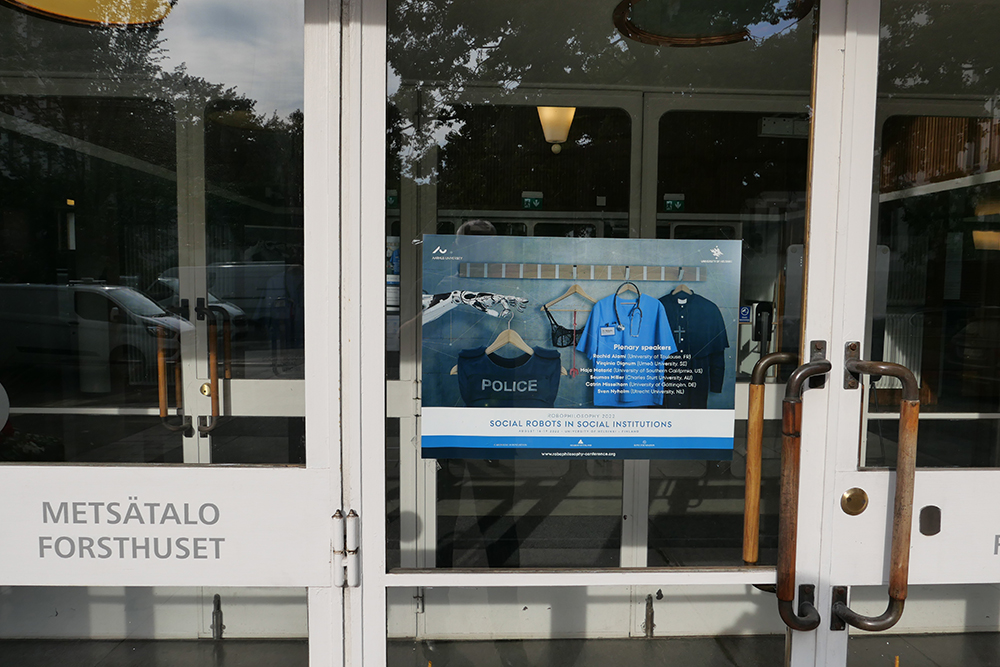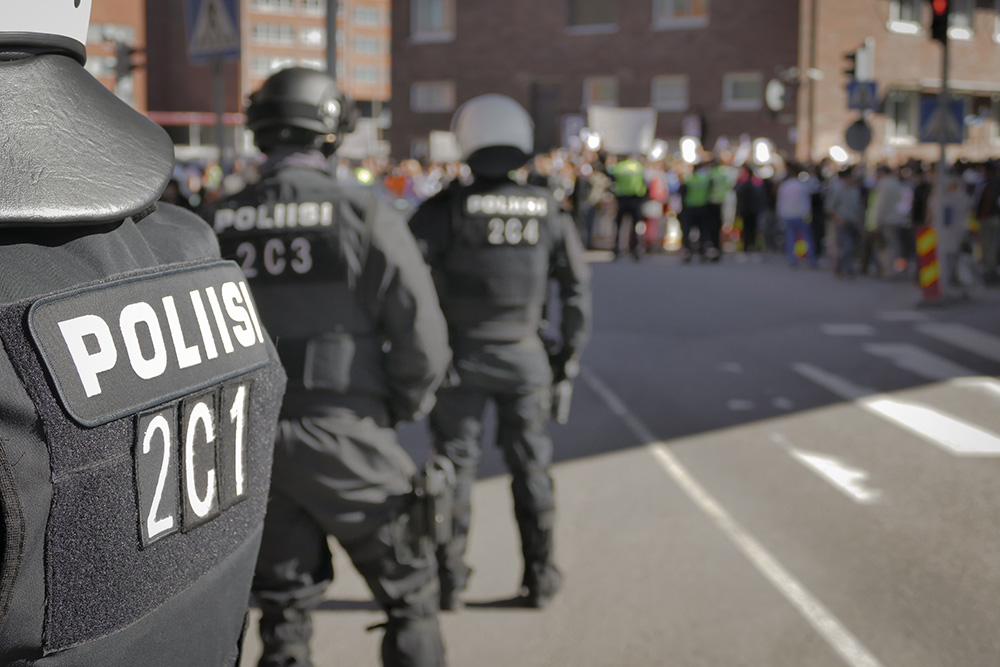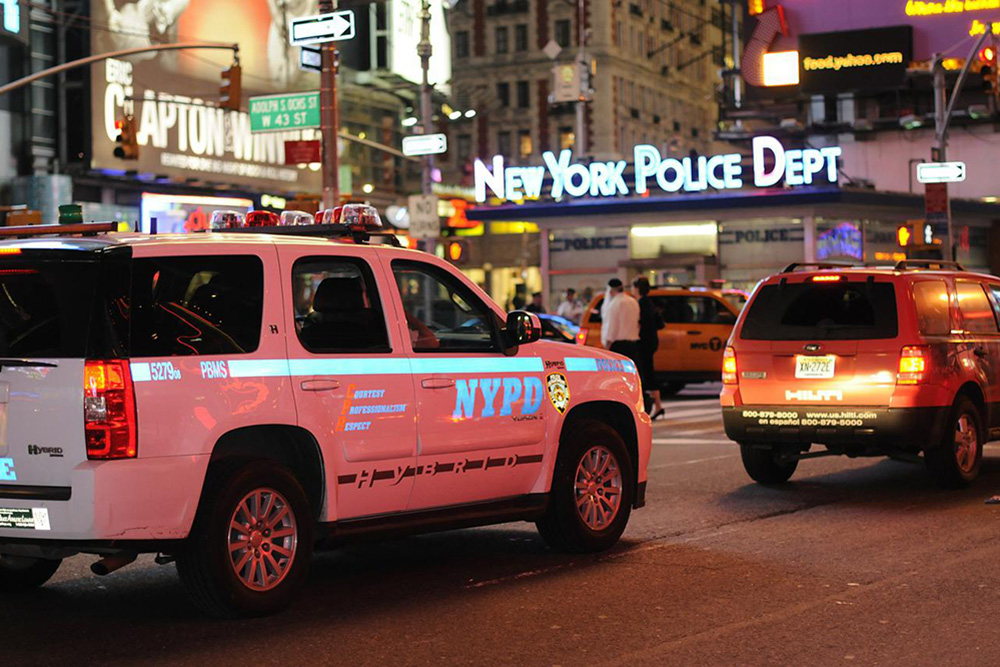
Robophilosophy 2022 at the University of Helsinki is the fifth event in the biennial Robophilosophy Conference Series. It “will explore the societal significance of social robots for the future of social institutions with its usual broad scope, embracing both theoretical and practical angles” (CfP Robophilosophy). It “is an invitation to philosophers and other SSH researchers, as well as researchers in social robotics and HRI, to investigate from interdisciplinarily informed perspectives whether and how social robotics as an interdisciplinary endeavour can contribute to the ability of our institutions to perform their functions in society” (CfP Robophilosophy). Social institutions include retirement and nursing homes, strip clubs and brothels, monasteries and seminaries, and police departments. Oliver Bendel (School of Business FHNW) will have the opportunity to present his paper entitled “Robots in Policing” in session 1, “Robots in Law and Policing”. Cindy Friedman (“Granting Negative Rights to Humanoid Robots”) and Jakob Stenseke (“The Use and Abuse of Normative Ethics for Moral Machines”) will speak after him. In addition, a poster by Katharina Kühne and Melinda Mende (University of Potsdam) as well als Oliver Bendel entitled “Tamagotchi on our couch: Are social robots perceived as pets?” was accepted. The full program is now available online.
Robots and Cops
Robophilosophy 2022 is the fifth event in the biennial Robophilosophy Conference Series. It “will explore the societal significance of social robots for the future of social institutions with its usual broad scope, embracing both theoretical and practical angles” (CfP Robophilosophy). It “is an invitation to philosophers and other SSH researchers, as well as researchers in social robotics and HRI, to investigate from interdisciplinarily informed perspectives whether and how social robotics as an interdisciplinary endeavour can contribute to the ability of our institutions to perform their functions in society” (CfP Robophilosophy). Social institutions include retirement and nursing homes, strip clubs and brothels, monasteries and seminaries, and police departments. As announced by the organizers on April 15, Oliver Bendel (School of Business FHNW) will have the opportunity to present his paper entitled “Robots in Policing” at the conference. It is about how service robots and social robots are changing policing as “social work”. In addition, a poster by Katharina Kühne and Melinda Mende (University of Potsdam) as well als Oliver Bendel entitled “Tamagotchi on our couch: Are social robots perceived as pets?” was accepted.
Extended Deadline for the Robophilosophy 2022 Conference
Robophilosophy 2022 is the fifth event in the biennial Robophilosophy Conference Series. The first call for papers (CfP) was published in November 2021, the second at the end of 2021, and the final on February 25, 2022. The extended deadline for submissions of extended abstracts and full papers is March 10, 2022. The event “will explore the societal significance of social robots for the future of social institutions with its usual broad scope, embracing both theoretical and practical angles” (CfP Robophilosophy). It “is an invitation to philosophers and other SSH researchers, as well as researchers in social robotics and HRI, to investigate from interdisciplinarily informed perspectives whether and how social robotics as an interdisciplinary endeavour can contribute to the ability of our institutions to perform their functions in society” (CfP Robophilosophy). Topics of interest are robots and social institutions in general, robots in law and policing, robots in healthcare, and robots and social justice, amongst others. The conference will be held at the University of Helsinki in Finland from August 16-19, 2022. More information via www.rp2022.org.
CfP for Robophilosophy 2022
Robophilosophy 2022 is the fifth event in the biennial Robophilosophy Conference Series. The first call for papers (CfP) was published in November 2021, and the second at the end of 2021. The extended deadline for submissions of extended abstracts and full papers is February 28, 2022. The event “will explore the societal significance of social robots for the future of social institutions with its usual broad scope, embracing both theoretical and practical angles” (CfP Robophilosophy). It “is an invitation to philosophers and other SSH researchers, as well as researchers in social robotics and HRI, to investigate from interdisciplinarily informed perspectives whether and how social robotics as an interdisciplinary endeavour can contribute to the ability of our institutions to perform their functions in society” (CfP Robophilosophy). Topics of interest include robots and social institutions in general, robots in law and policing, robots in healthcare, and robots and social justice. The conference will be held at the University of Helsinki in Finland from August 16-19, 2022. More information via www.rp2022.org.
Unimals are Among Us
Agrim Gupta, Fei-Fei Li and other scientists from Stanford University use so-called unimals “to explore two questions that often get overlooked in AI research: how intelligence is tied to the way bodies are laid out, and how abilities can be developed through evolution as well as learned” (MIT Technology Review, 19 October 2021). MIT Technology Review quotes Josh Bongard from University of Vermont as saying: “This work is an important step in a decades-long attempt to better understand the body-brain relationship in robots” (MIT Technology Review, 19 October 2021). The research seems like a continuation of the embodiment movement, which the Swiss Rolf Pfeifer played a major role in shaping. And indeed, Bongard says: “Embodiment is our only hope of making machines that are both smart and safe.” (MIT Technology Review, 19 October 2021) The unimals look a bit like figures from the cycle “Bizzarie di varie figure” by Giovanni Battista Braccelli. The drawings from the year 1624 show embodiments of cubes, wires, and machine parts. However, they are static, while the unimals move and constantly change their bodies – the title of the article in the magazine reads accordingly: “These weird virtual creatures evolve their bodies to solve problems” …
Basic Rights for Primates
The initiative “Grundrechte für Primaten” (“Basic Rights for Primates”) went online with its website on April 30, 2021. The supporters demand the introduction of basic rights for non-human primates at cantonal constitutional level in Basel-Stadt. Among them are Simon Fankhauser (co-president Young Green Alliance), Dr. Charlotte E. Blattner (lawyer), Prof. Dr. Markus Wild (philosopher), Prof. Dr. Oliver Bendel (ethicist and business information systems scientist), Jaël Malli (musician), and Dr. Colin Goldner (head of the Great Ape Project Germany). Prof. Dr. Oliver Bendel goes particularly far in his requests: “I am for human rights for humans and for animal rights for animals. Basic rights such as the right to life and the right to physical integrity should go to all primates, but also to other mammals as well as reptiles and amphibians. The idea is not to protect animals from other animals, but from humans.” He combines animal ethics and animal welfare with machine ethics and develops animal-friendly machines with his teams. The initiative’s website can be reached at www.primaten-initiative.ch.
Little Sophia
Hanson Robotics is most famous for Sophia. Now the Hong Kong-based company is preparing to launch a new robot. According to the website, Little Sophia is the little sister of Sophia and the newest member of the Hanson Robotics family. “Little Sophia can walk, talk, sing, play games and, like her big sister, even tell jokes! She is a programmable, educational companion for kids, that will inspire children to learn about coding, AI, science, technology, engineering and math through a safe, interactive, human-robot experience. Unlike most educational toys designed by toy companies, Little Sophia is crafted by the same renowned developers, engineers, roboticists and AI scientists that created Sophia the Robot.” (Website Hanson Robotics) In photos, Little Sophia looks even creepier than Sophia. In videos, this impression is no different. The boy in the photo could be Little Sophia’s brother. What is special about her is that she has a wide range of facial expressions. It must be emphasized that, as in the case of Sophia, this is not a virtual face, but a real one. From a technical point of view, this is without a doubt an interesting product.
Alexa has Hunches
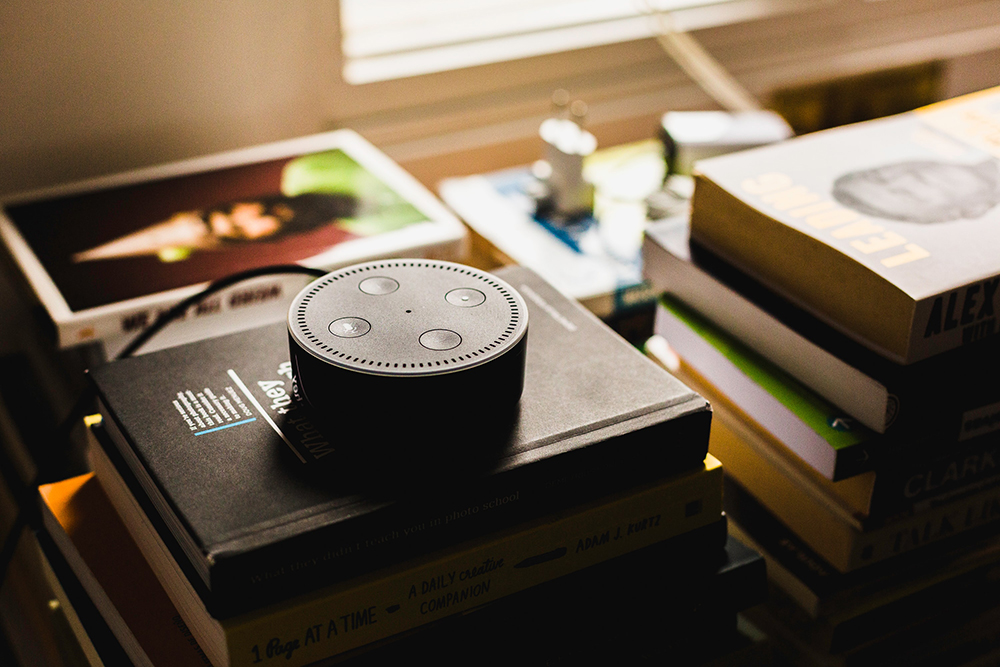
Amazon’s Alexa can perform actions on her own based on previous instructions from the user without asking beforehand. Until now, the voicebot always asked before it did anything. Now it has hunches, which is what Amazon calls the function. On its website, the company writes: “Managing your home’s energy usage is easier than ever, with the Alexa energy dashboard. It works with a variety of smart lights, plugs, switches, water heaters, thermostats, TVs and Echo devices. Once you connect your devices to Alexa, you can start tracking the energy they use, right in the Alexa app. Plus, try an exciting new Hunches feature that can help you save energy without even thinking about it. Now, if Alexa has a hunch that you forgot to turn off a light and no one is home or everyone went to bed, Alexa can automatically turn it off for you. It’s a smart and convenient way to help your home be kinder to the world around it. Every device, every home, and every day counts. Let’s make a difference, together. Amazon is committed to building a sustainable business for our customers and the planet.” (Website Amazon) It will be interesting to see how often Alexa is right with her hunches and how often she is wrong.
Artificial Intelligence and its Siblings
Artificial intelligence (AI) has gained enormous importance in research and practice in the 21st century after decades of ups and downs. Machine ethics and machine consciousness (artificial consciousness) were able to bring their terms and methods to the public at the same time, where they were more or less well understood. Since 2018, a graphic has attempted to clarify the terms and relationships of artificial intelligence, machine ethics and machine consciousness. It is constantly evolving, making it more precise, but also more complex. A new version has been available since the beginning of 2021. In it, it is made even clearer that the three disciplines not only map certain capabilities (mostly of humans), but can also expand them.
The Morality Menu Project
From 18 to 21 August 2020, the Robophilosophy conference took place. Due to the pandemic, participants could not meet in Aarhus as originally planned, but only in virtual space. Nevertheless, the conference was a complete success. At the end of the year, the conference proceedings were published by IOS Press, including the paper “The Morality Menu Project” by Oliver Bendel. From the abstract: “The discipline of machine ethics examines, designs and produces moral machines. The artificial morality is usually pre-programmed by a manufacturer or developer. However, another approach is the more flexible morality menu (MOME). With this, owners or users replicate their own moral preferences onto a machine. A team at the FHNW implemented a MOME for MOBO (a chatbot) in 2019/2020. In this article, the author introduces the idea of the MOME, presents the MOBO-MOME project and discusses advantages and disadvantages of such an approach. It turns out that a morality menu could be a valuable extension for certain moral machines.” The book can be ordered on the publisher’s website. An author’s copy is available here.