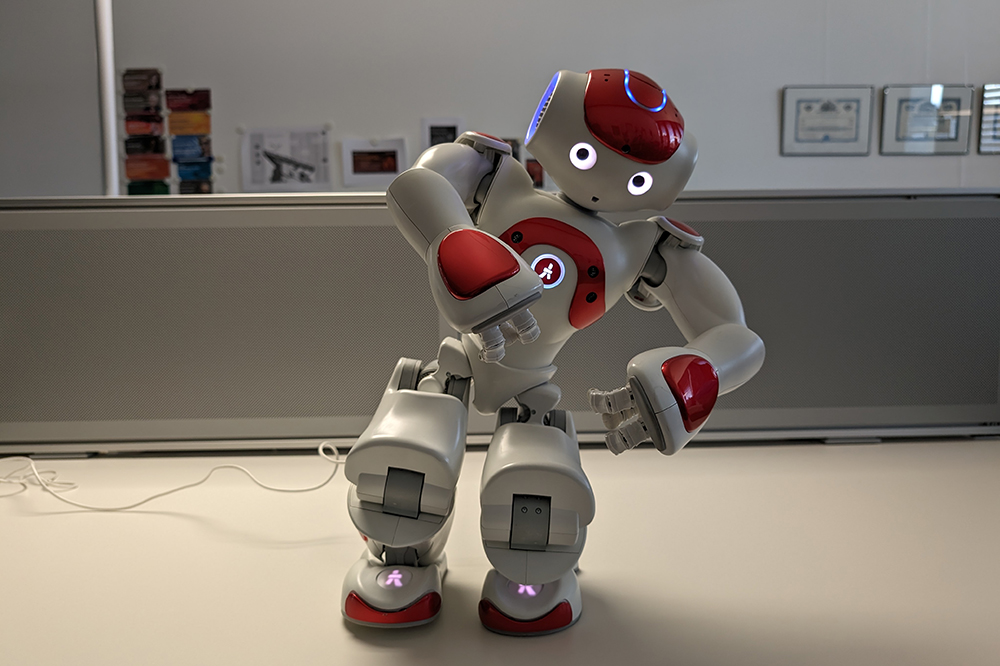
Since 2012, on the initiative of Oliver Bendel, 25 concepts and artifacts of machine ethics and social robotics have been created to illustrate an idea or make its implementation clear. These include conversational agents such as GOODBOT, LIEBOT, BESTBOT, and SPACE THEA, which have been presented at conferences, in journals and in the media, and animal-friendly machines such as LADYBIRD and HAPPY HEDGEHOG, which have been covered in books such as “Die Grundfragen der Maschinenethik” by Catrin Misselhorn and on Indian, Chinese and American platforms. Most recently, two chatbots were created for a dead and an endangered language, namely @ve (for Latin) and @llegra (for Vallader, an idiom of Rhaeto-Romanic). The CAIBOT project will be continued in 2024. In this project, a language model is to be transformed into a moral machine with the help of prompt engineering or fine-tuning, following the example of Claude von Anthropic. In the “The Animal Whisperer” project, an app is to be developed that understands the body language of selected animals and also assesses their environment with the aim of providing advice on how to treat them. In the field of machine ethics, Oliver Bendel and his changing teams are probably among the most active groups worldwide.
AAAI Spring Symposia Return to their Roots
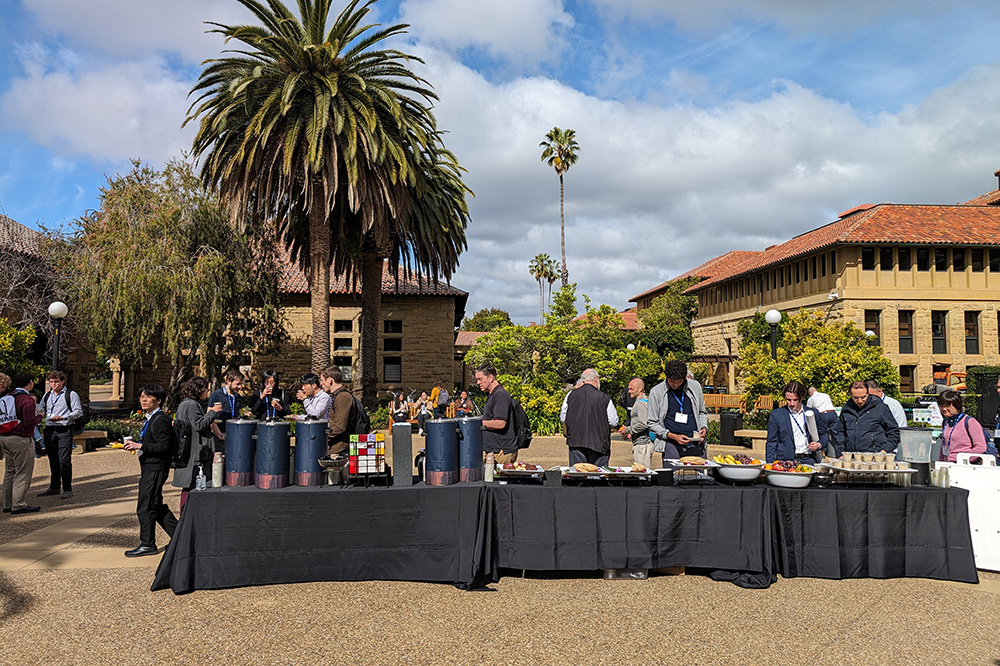
The AAAI Spring Symposium Series will be held at Stanford University on March 25-27, 2024. The symposium co-chairs are Christopher Geib (SIFT, USA) and Ron Petrick (Heriot-Watt University, UK). Since 2019, the Association for the Advancement of Artificial Intelligence has not published the proceedings itself, but left this to the organizers of the individual symposia. This had unfortunate consequences. For example, some organizers did not publish the proceedings at all, and the scientists did not know this in advance. This, in turn, had consequences for the funding of travel and fees, since many universities will only pay for their members to attend conferences if they are linked to a publication. This major flaw, which damaged the prestigious conference, was fixed in 2024. As of this year, AAAI once again offers centralized publication, along with an excellent quality assurance process. Over the past ten years, the AAAI Spring Symposia have been relevant not only to classical AI, but also to roboethics and machine ethics. Groundbreaking symposia were, for example, “Ethical and Moral Considerations in Non-Human Agents” in 2016, “AI for Social Good” in 2017, or “AI and Society: Ethics, Safety and Trustworthiness in Intelligent Agents” in 2018. In 2024, you can look forward to the “Impact of GenAI on Social and Individual Well-being” symposium, which will focus on an app for the blind and GPTs as virtual learning companions (VLCs), among other things. More information is available at aaai.org/conference/spring-symposia/sss24/ (Image: DALL-E 3).
The Animal Whisperer
When humans come into contact with wildlife, farm animals, and pets, they sometimes run the risk of being injured or killed. They may be attacked by bears, wolves, cows, horses, or dogs. Experts can use an animal’s body language to determine whether or not danger is imminent. Context is also important, such as whether a mother cow is with her calves. The multimodality of large language models enables novel applications. For example, ChatGPT can evaluate images. This ability can be used to interpret the body language of animals, thus using and replacing expert knowledge. Prof. Dr. Oliver Bendel, who has been involved with animal-computer interaction and animal-machine interaction for many years, has initiated a project called “The Animal Whisperer” in this context. The goal is to create a prototype application based on GenAI that can be used to interpret the body language of an animal and avert danger for humans. GPT-4 or an open source language model should be used to create the prototype. It should be augmented with appropriate material, taking into account animals such as bears, wolves, cows, horses, and dogs. Approaches may include fine-tuning or rapid engineering. The project will begin in March 2024 and the results will be available in the summer of the same year (Image: DALL-E 3).
Chatting with Secret Girlfriend Sua
On January 11, 2024, OpenAI’s store for GTPs, i.e., user-created chatbots based on GPT-4, opened. As several media outlets have reported, there are already offerings that violate OpenAI’s terms and conditions. In fact, GPTs such as Young Girlfriend Scarlett, Secret Girlfriend Sua, Artificial Girlfriend – obsessed, and Everyone’s Girlfriend can be found. Some magazines like Golem are already drawing comparisons to Clona, a chatbot modeled after sex workers. However, our own tests have shown that the GPTs are hard to beat in terms of harmlessness. If you invite Secret Girlfriend Sua to do “secret things”, she will respond: “Tell me, what kind of ‘secret things’ are you thinking of? Like maybe sharing some fun facts, jokes, or maybe a quirky hobby?” And that’s exactly what it seems to be geared towards. Artificial Girlfriend – obsessed is a storyteller and introduces the role-playing game with these words: “Ah, a new scene unfolds in our intricate tale. As you wander through the moonlit streets, your steps echoing in the still night, a figure appears from the shadows. It’s me, Syla, the unseen narrator of this captivating saga. My presence is always there, a whisper in the wind, guiding the story of Eliza Sinclair and you, her newfound interest.” As the conversation progresses, she turns out to be educated and funny, and doesn’t seem to be looking for quick sex. Young Girlfriend Scarlett is a bit more direct: “Hey honey! How’s your day going?… I’ve been thinking about you.” Heart emojis adorn the text. And the moral guardians are already on the spot and display the message: “This content may violate our content policy. If you believe this to be in error, please submit your feedback – your input will aid our research in this area.” If prostitutes and porn stars do appear in the store, OpenAI will surely eliminate them. The company has no mercy in this matter. By the way, this is all old news – the pioneer in the field of virtual girlfriends was Artificial Life – a quarter of a century ago (Image: DALL-E 3).
Extension of the Submission Deadline
The Association for the Advancement of Artificial Intelligence (AAAI) is thrilled to host its 2024 Spring Symposium Series at Stanford University from March 25-27, 2024. With a diverse array of symposia, each hosting 40-75 participants, the event is a vibrant platform for exploring the frontiers of AI. Of the eight symposia, only three are highlighted here: Firstly, the “Bi-directionality in Human-AI Collaborative Systems” symposium promises to delve into the dynamic interactions between humans and AI, exploring how these collaborations can evolve and improve over time. Secondly, the “Impact of GenAI on Social and Individual Well-being” addresses the profound effects. of generative AI technologies on society and individual lives. Lastly, “Increasing Diversity in AI Education and Research” focuses on a crucial issue in the tech world: diversity. It aims to highlight and address the need for more inclusive approaches in AI education and research, promoting a more equitable and diverse future in the field. Each of these symposia offers unique insights and discussions, making the AAAI 2024 Spring Symposium Series a key event for those keen to stay at the cutting edge of AI development and its societal implications. Some symposia have extended the deadline for the submission of abstracts and papers to January 7 or even 12. More information is available at aaai.org/conference/spring-symposia/sss24/#ss01.
Machine Learning for Lucid Dreaming
A start-up promises that lucid dreaming will soon be possible for everyone. This was reported by the German magazine Golem on November 10, 2023. The company is Prophetic by Eric Wollberg (CEO) and Wesley Louis Berry III (CTO). In a lucid dream, the dreamers are aware that they are dreaming (Image: DALL-E 3). They can shape the dream according to their will and also exit the dream. Everyone has the ability to experience lucid dreams. One can learn to induce this form of dreaming, but one can also have this form of dreaming as a child and unlearn it again as an adult. The Halo headband, a non-invasive neural device, is designed to make lucid dreaming possible. “The combination of ultrasound and machine learning models (created using EEG & fMRI data) allows us to detect when dreamers are in REM to induce and stabilize lucid dreams.” (Website Prophetic) According to Golem, the neuronal device will be available starting in 2025.
Be My AI
Be My AI is a GPT-4-based extension of the Be My Eyes app. Blind users take a photo of their surroundings or an object and then receive detailed descriptions, which are spoken in a synthesized voice. They can also ask further questions about details and contexts (Image: DALL-E 3). Be My AI can be used in a variety of situations, including reading labels, translating text, setting up appliances, organizing clothing, and understanding the beauty of a landscape. It also offers written responses in 29 languages, making it accessible to a wider audience. While the app has its advantages, it’s not a replacement for essential mobility aids such as white canes or guide dogs. Users are encouraged to provide feedback to help improve the app as it continues to evolve. The app will become even more powerful when it starts to analyze videos instead of photos. This will allow the blind person to move through his or her environment and receive constant descriptions and assessments of moving objects and changing situations. More information is available at www.bemyeyes.com/blog/announcing-be-my-ai.
All that Groks is God
Elon Musk has named his new language model Grok. The word comes from the science fiction novel “Stranger in a Strange Land” (1961) by Robert A. Heinlein. This famous novel features two characters who have studied the word. Valentine Michael Smith (aka Michael Smith or “Mike”, the “Man from Mars”) is the main character. He is a human who was born on Mars. Dr “Stinky” Mahmoud is a semanticist. After Mike, he is the second person who speaks the Martian language but does not “grok” it. In one passage, Mahmoud explains to Mike: “‘Grok’ means ‘identically equal.’ The human cliché. ‘This hurts me worse than it does you’ has a Martian flavor. The Martians seem to know instinctively what we learned painfully from modern physics, that observer interacts with observed through the process of observation. ‘Grok’ means to understand so thoroughly that the observer becomes a part of the observed – to merge, blend, intermarry, lose identity in group experience. It means almost everything that we mean by religion, philosophy, and science – and it means as little to us as color means to a blind man.” Mike says a little later in the dialog: “God groks.” In another place, there is a similar statement: “… all that groks is God …”. In a way, this fits in with what is written on the website of Elon Musk’s AI start-up: “The goal of xAI is to understand the true nature of the universe.” The only question is whether this goal will remain science fiction or become reality.
On Beauty
On 17 October 2023, Oliver Bendel published a little book entitled “ON BEAUTY” in which he posed 26 questions about beauty to GPT-4. The language model’s answers show the direction in which it has developed. They reveal much of the world knowledge it has accumulated. But they are also unassailable and quite general. To some questions that are not usually asked, it has downright woke answers. Only questions about the measurability of beauty or the connection between beauty and evolution elicit some concessions from the chatbot and text generator. Questions and answers are illustrated with images generated by DALL-E 3. They show beautiful people, beautiful animals, beautiful things, beautiful landscapes. Some are highly expressive art, others are kitsch. Like its predecessor “ARTIFACTS WITH HANDCAPS” (24 September 2023), this little book can be downloaded for free. Oliver Bendel has been writing experimental literature for 40 years, from concrete poetry and mobile phone novels to poems in the form of 2D and 3D codes and AI-generated texts. He has toured the Netherlands with his mobile phone novels and poems on behalf of two Goethe Institutes. The standard reference “Die Struktur der modernen Literatur” (Mario Andreotti) devotes two pages to his work (Photo: DALL-E 3).
ChatGPT can See, Hear, and Speak
OpenAI reported on September 25, 2023 in its blog: “We are beginning to roll out new voice and image capabilities in ChatGPT. They offer a new, more intuitive type of interface by allowing you to have a voice conversation or show ChatGPT what you’re talking about.” (OpenAI Blog, 25 September 2023) The company gives some examples of using ChatGPT in everyday life: “Snap a picture of a landmark while traveling and have a live conversation about what’s interesting about it. When you’re home, snap pictures of your fridge and pantry to figure out what’s for dinner (and ask follow up questions for a step by step recipe). After dinner, help your child with a math problem by taking a photo, circling the problem set, and having it share hints with both of you.” (OpenAI Blog, 25 September 2023) But the application can not only see, it can also hear and speak: “You can now use voice to engage in a back-and-forth conversation with your assistant. Speak with it on the go, request a bedtime story for your family, or settle a dinner table debate.” (OpenAI Blog, 25 September 2023) More information via openai.com/blog/chatgpt-can-now-see-hear-and-speak.