On Beauty

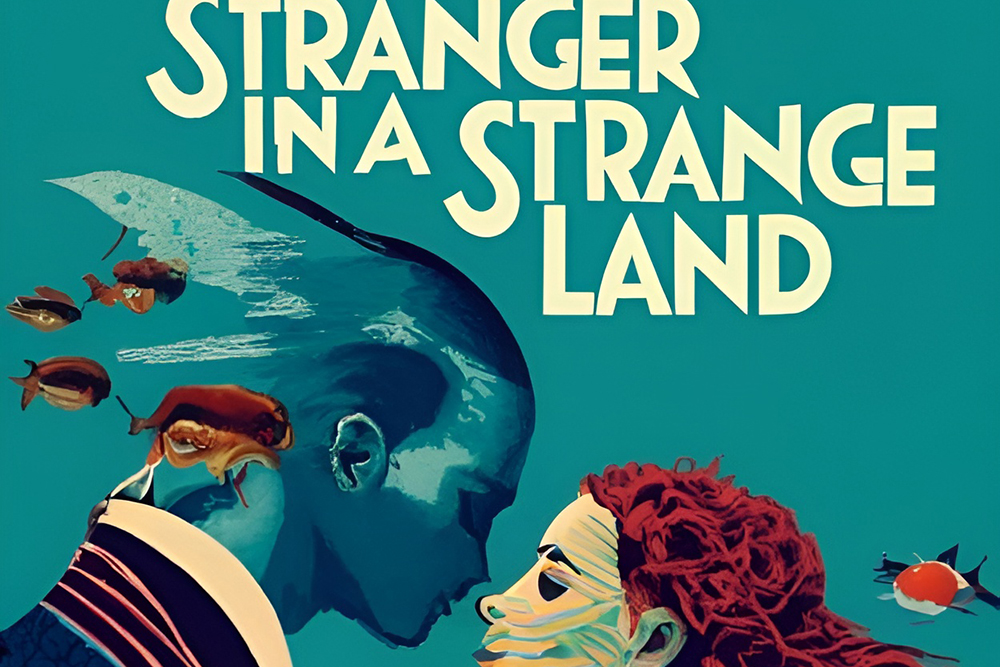
On 17 October 2023, Oliver Bendel published a little book entitled “ON BEAUTY” in which he posed 26 questions about beauty to GPT-4. The language model’s answers show the direction in which it has developed. They reveal much of the world knowledge it has accumulated. But they are also unassailable and quite general. To some questions that are not usually asked, it has downright woke answers. Only questions about the measurability of beauty or the connection between beauty and evolution elicit some concessions from the chatbot and text generator. Questions and answers are illustrated with images generated by DALL-E 3. They show beautiful people, beautiful animals, beautiful things, beautiful landscapes. Some are highly expressive art, others are kitsch. Like its predecessor “ARTIFACTS WITH HANDCAPS” (24 September 2023), this little book can be downloaded for free. Oliver Bendel has been writing experimental literature for 40 years, from concrete poetry and mobile phone novels to poems in the form of 2D and 3D codes and AI-generated texts. He has toured the Netherlands with his mobile phone novels and poems on behalf of two Goethe Institutes. The standard reference “Die Struktur der modernen Literatur” (Mario Andreotti) devotes two pages to his work (Photo: DALL-E 3).

ChatGPT can See, Hear, and Speak

OpenAI reported on September 25, 2023 in its blog: “We are beginning to roll out new voice and image capabilities in ChatGPT. They offer a new, more intuitive type of interface by allowing you to have a voice conversation or show ChatGPT what you’re talking about.” (OpenAI Blog, 25 September 2023) The company gives some examples of using ChatGPT in everyday life: “Snap a picture of a landmark while traveling and have a live conversation about what’s interesting about it. When you’re home, snap pictures of your fridge and pantry to figure out what’s for dinner (and ask follow up questions for a step by step recipe). After dinner, help your child with a math problem by taking a photo, circling the problem set, and having it share hints with both of you.” (OpenAI Blog, 25 September 2023) But the application can not only see, it can also hear and speak: “You can now use voice to engage in a back-and-forth conversation with your assistant. Speak with it on the go, request a bedtime story for your family, or settle a dinner table debate.” (OpenAI Blog, 25 September 2023) More information via openai.com/blog/chatgpt-can-now-see-hear-and-speak.

AI-generated Short Stories

The technology philosopher and writer Oliver Bendel published the book “ARTIFACTS WITH HANDICAPS” on 24 September 2023. The information about the author reads: “Oliver Bendel featuring Ideogram and GPT-4”. In fact, the entire work was created with the help of generative AI. It consists of 11 images, each followed by a short story. This one deals with the imperfection of representation. Once a hand looks like that of a mummy, once a skateboard floats in the air above the wheels. But there is also one or another representation that looks perfect. In this case, the story explains what is different about the person, their history, or their behavior. Ultimately, it is about the otherness and the fact that this is in fact a special feature. The book is freely available and can be distributed and used as desired, with credit given to the authors, i.e. the artist and the AI systems. Oliver Bendel has been writing experimental literature, including digital literature, for 40 years. As of 2007, he was one of the best-known cell phone novelists in Europe. In 2010, he attracted attention with a volume of haiku – “handyhaiku” – in which the poems were printed in the form of QR codes. In 2020, the volume “Die Astronautin” was published, in which the poems are printed in the form of 3D codes. The standard work “Die Struktur der modernen Literatur” (“The Structure of Modern Literature”) by Mario Andreotti devotes two pages to the writer’s work.

Artificial Intelligence & Animals

The online event “Artificial Intelligence & Animals” will take place on 16 September 2023. “AI experts and attorneys will discuss the intersection of AI and animals in this UIA Animal Law Commission and GW Animal Law webinar” (Website Eventbrite) Speakers are Prof. Dr. Oliver Bendel (FHNW University of Applied Sciences and Arts Northwestern Switzerland), Yip Fai Tse (University Center for Human Values, Center for Information Technology Policy, Princeton University), and Sam Tucker (CEO VegCatalyst, AI-Powered Marketing, Melbourne). Panelists are Ian McDougall (Executive Vice President and General Counsel, LexisNexis London), Jamie McLaughlin (Animal Law Commission Vice President, UIA), and Joan Schaffner (Associate Professor of Law, George Washington University). Oliver Bendel “has been thinking on animal ethics since the 1980s and on information and machine ethics since the 1990s”. “Since 2012, he has been systematically researching machine ethics, combining it with animal ethics and animal welfare. With his changing teams, he develops animal-friendly robots and AI systems.” (Website Eventbrite)

AI-based Robots for the Disposal of Discarded Ammunition

The Robotics Innovation Center (RIC) at the German Research Centre for Artificial Intelligence (DFKI) in Bremen wants to clear the seabed of discarded ammunition in the North Sea and Baltic Sea. This was reported by the online magazine Golem on 14 June 2023. The researchers are using the autonomous underwater vehicle Cuttlefish, developed at DFKI, as a test platform. According to Golem, the robot has been equipped with two deep-sea-capable gripper systems. These are designed to enable flexible handling of objects under water, even difficult objects such as explosive devices. The AI-based control system allows the robot to change its buoyancy and centre of gravity during the dive. According to the online magazine, the AUV is equipped with numerous sensors such as cameras, sonars, laser scanners, and magnetometers. This is how it is supposed to approach an object without colliding with it. The system will certainly be effective – whether it is efficient remains to be seen.

Robot Hand Can Operate in the Dark

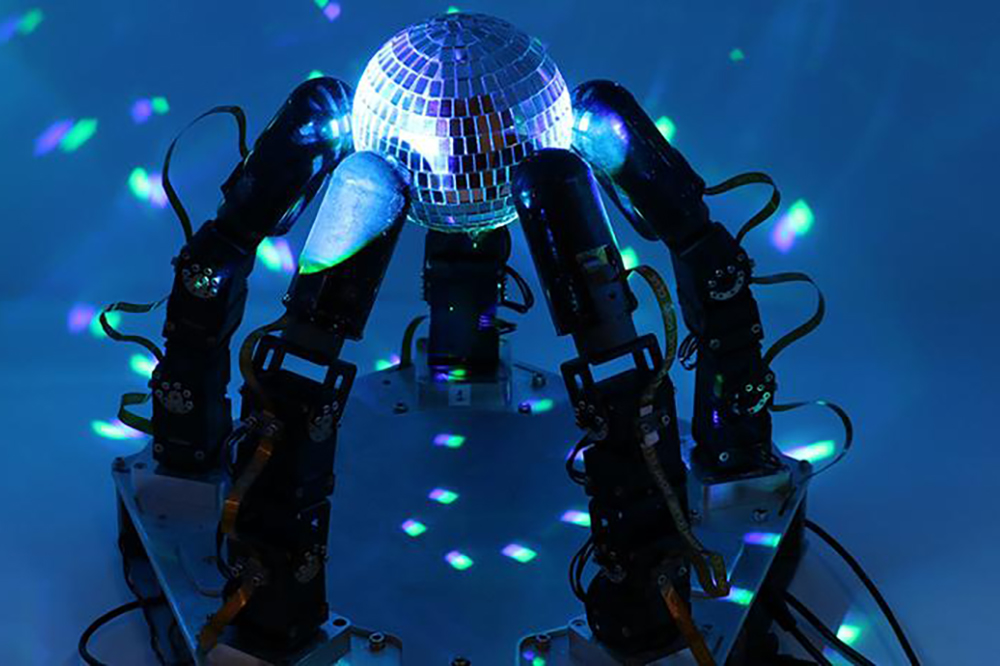
“Researchers at Columbia Engineering have demonstrated a highly dexterous robot hand, one that combines an advanced sense of touch with motor learning algorithms in order to achieve a high level of dexterity.” (Website Columbia Engineering, 28 April 2023) Columbia Engineering reported this on its website on April 28, 2023. The text goes on to say: “As a demonstration of skill, the team chose a difficult manipulation task: executing an arbitrarily large rotation of an unevenly shaped grasped object in hand while always maintaining the object in a stable, secure hold. This is a very difficult task because it requires constant repositioning of a subset of fingers, while the other fingers have to keep the object stable. Not only was the hand able to perform this task, but it also did it without any visual feedback whatsoever, based solely on touch sensing.” (Website Columbia Engineering, 28 April 2023) “While our demonstration was on a proof-of-concept task, meant to illustrate the capabilities of the hand, we believe that this level of dexterity will open up entirely new applications for robotic manipulation in the real world”, said Matei Ciocarlie according to the website. He is the Associate Professor in the Departments of Mechanical Engineering and Computer Science who developed the hand together with his graduate student Gagan Khandate (Photo: Columbia University ROAM Lab).

Self-driving Cars Stopped by Fog

“Five self-driving vehicles blocked traffic early Tuesday morning in the middle of a residential street in San Francisco’s Balboa Terrace neighborhood, apparently waylaid by fog that draped the southwestern corner of the city.” (San Francisco Chronicle, 11 April 2023) The San Francisco Chronicle reported this in an article published on April 11, 2023. The fact that fog is a problem for Waymo’s vehicles has been known to the company for some time. A blog post from 2021 states: “Fog is finicky – it comes in a range of densities, it can be patchy, and can affect a vehicle’s sensors differently.” (Blog Waymo, 15 November 2021) Against this background, it is surprising that vehicles are allowed to roll through the city unaccompanied, especially since Frisco – this name comes from sailors – is very often beset by fog. But fog is not the only challenge for the sensors of self-driving cars. A thesis commissioned and supervised by Prof. Dr. Oliver Bendel presented dozens of phenomena and methods that can mislead sensors of self-driving cars. The San Francisco Chronicle article “Waymo says dense S.F. fog brought 5 vehicles to a halt on Balboa Terrace street” can be accessed at www.sfchronicle.com/bayarea/article/san-francisco-waymo-stopped-in-street-17890821.php.

Bar Robots for Well-being of Guests

From March 27-29, 2023, the AAAI 2023 Spring Symposia will feature the symposium “Socially Responsible AI for Well-being” by Takashi Kido (Teikyo University, Japan) and Keiki Takadama (The University of Electro-Communications, Japan). The venue is usually Stanford University. For staffing reasons, this year the conference will be held at the Hyatt Regency in San Francisco. On March 28, Prof. Dr. Oliver Bendel and Lea Peier will present their paper “How Can Bar Robots Enhance the Well-being of Guests?”. From the abstract: “This paper addresses the question of how bar robots can contribute to the well-being of guests. It first develops the basics of service robots and social robots. It gives a brief overview of which gastronomy robots are on the market. It then presents examples of bar robots and describes two models used in Switzerland. A research project at the School of Business FHNW collected empirical data on them, which is used for this article. The authors then discuss how the robots could be improved to increase the well-being of customers and guests and better address their individual wishes and requirements. Artificial intelligence can play an important role in this. Finally, ethical and social problems in the use of bar robots are discussed and possible solutions are suggested to counter these.” More Information via aaai.org/conference/spring-symposia/sss23/.

GPT-4 as Multimodal Model

GPT-4 was launched by OpenAI on March 14, 2023. “GPT-4 is a large multimodal model (accepting image and text inputs, emitting text outputs) that, while less capable than humans in many real-world scenarios, exhibits human-level performance on various professional and academic benchmarks.” (Website OpenAI) On its website, the company explains the multimodal options in more detail: “GPT-4 can accept a prompt of text and images, which – parallel to the text-only setting – lets the user specify any vision or language task. Specifically, it generates text outputs (natural language, code, etc.) given inputs consisting of interspersed text and images.” (Website OpenAI) The example that OpenAI gives is impressive. An image with multiple panels was uploaded. The prompt is: “What is funny about this image? Describe it panel by panel”. This is exactly what GPT-4 does and then comes to the conclusion: “The humor in this image comes from the absurdity of plugging a large, outdated VGA connector into a small, modern smartphone charging port.” (Website OpenAI) The technical report is available via cdn.openai.com/papers/gpt-4.pdf.

Bard Comes into the World

Sundar Pichai, the CEO of Google and Alphabet, announced the answer to ChatGPT in a blog post dated February 6, 2023. According to him, Bard is an experimental conversational AI service powered by LaMDA. It has been opened to trusted testers and will be made available to the public in the coming weeks. “Bard seeks to combine the breadth of the world’s knowledge with the power, intelligence and creativity of our large language models. It draws on information from the web to provide fresh, high-quality responses. Bard can be an outlet for creativity, and a launchpad for curiosity, helping you to explain new discoveries from NASA’s James Webb Space Telescope to a 9-year-old, or learn more about the best strikers in football right now, and then get drills to build your skills.” (Sundar Pichai 2023) In recent weeks, Google had come under heavy pressure from OpenAI’s ChatGPT. It was clear that they had to present a comparable application based on LaMDA as soon as possible. In addition, Baidu wants to launch the Ernie Bot, which means another competing product. More information via blog.google/technology/ai/bard-google-ai-search-updates/.