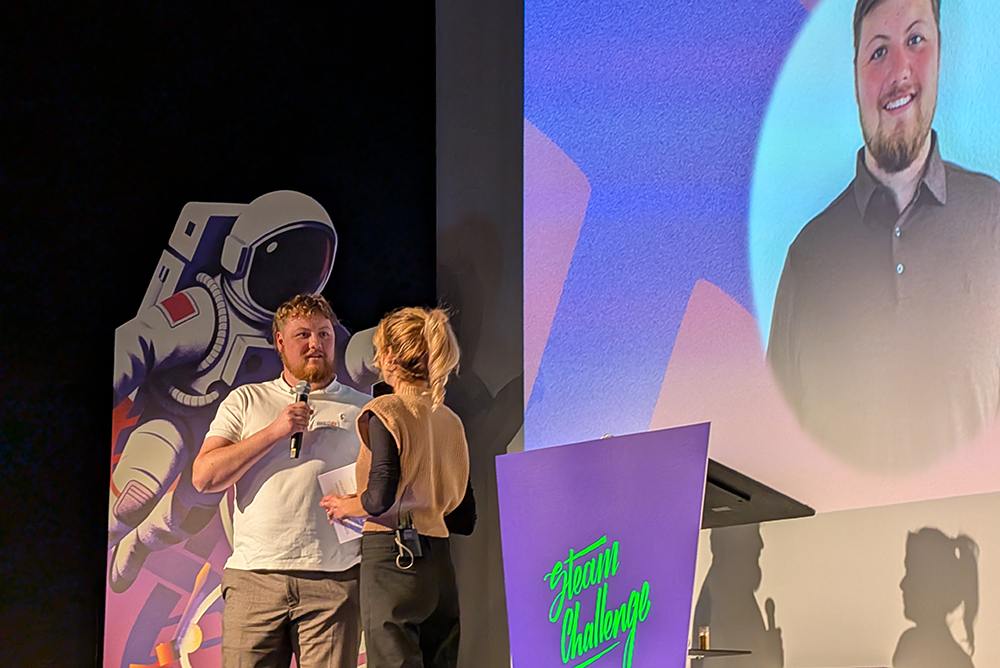
At the STEAM Challenge 2026, held under the motto “Innovation under Pressure”, six projects competed against each other on March 3, 2026, at Spirgarten Zurich. Among them were Autobike by Daniel Lagnaux and Mark Bezmalinovic from ETH Zurich, and Repair Scanner by Aron Bienge, a master carpenter. The evening was hosted by Sara Taubman-Hildebrand, while comedians Gülsha Adilji, Reena Krishnaraja, and Zukkihund provided additional entertainment with humorous interludes, interpreting the projects in their own way. More than 200 people filled the hall and remained in excellent spirits throughout the two-hour event. One of the projects presented was the Animal Whisperer, initiated by Prof. Dr. Oliver Bendel from the School of Business FHNW. His student at the time, Nick Zbinden, implemented the Cow Whisperer, Horse Whisperer, and Dog Whisperer on his behalf. A multimodal large language model (MLLM) was endowed with the desired capabilities using retrieval-augmented generation (RAG). The system first analyzes and evaluates the body language of cows, horses, or dogs as well as the overall situation. It then provides recommendations for how humans should behave when interacting with the animals. At Animal-Computer Interaction 2024 in Glasgow, Oliver Bendel and Nick Zbinden had already received an award for their paper “The Animal Whisperer Project: A GenAI App for Decoding Animal Body Language and Behavior”. In her interpretation, Gülsha Adilji also saw potential for dating – suggesting that the body language of men could be interpreted as well. Jury member Nathalie Klauser praised the Animal Whisperer Project for incorporating animals. In the end, BlueGreens by Sebastian Haymann took first place. The audience award went to Zurich pupils Nina Zvezdina and Poppy Alexander.
The Animal Whisperer at the STEAM Challenge
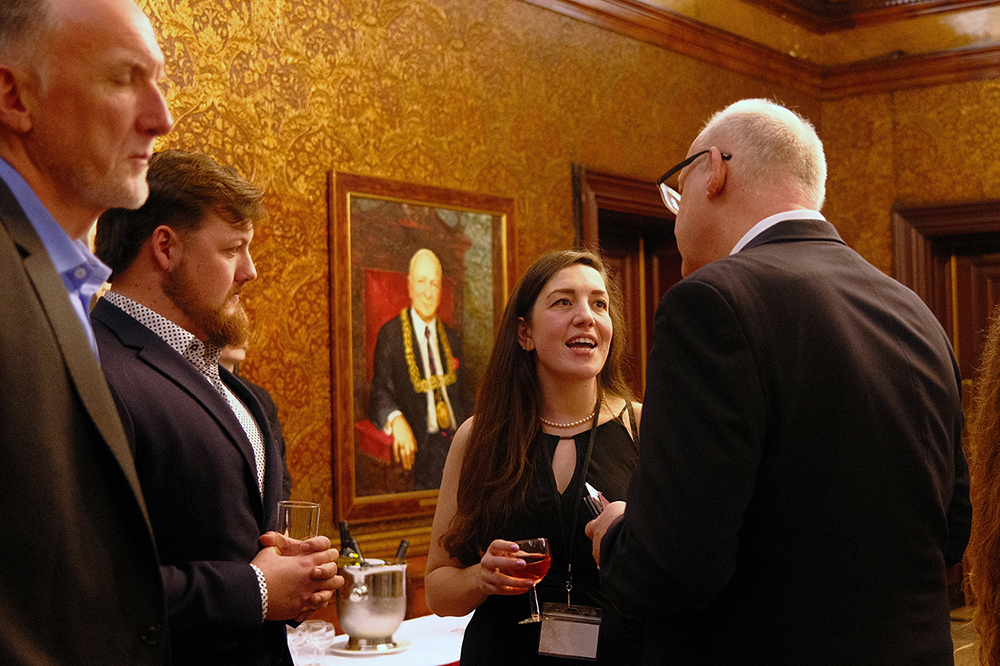
The STEAM Challenge 2026, under the motto “Innovation under Pressure”, will bring innovative ideas and entertaining performances to Spirgarten Zurich on March 3, 2026. Six teams and individual participants will present their projects live before an audience and a jury, competing against one another. The evening will be hosted by Sara Taubman-Hildebrand, while comedians Gülsha Adilji, Reena Krishnaraja, and Zukkihund will provide additional entertainment with humorous interludes. One of the featured projects is the Animal Whisperer, initiated by Prof. Dr. Oliver Bendel. His former student Nick Zbinden (second from left in the photo, together with Ilyena Hirskyj-Douglas and Oliver Bendel) implemented the Cow Whisperer, the Horse Whisperer, and the Dog Whisperer on his behalf. Using Retrieval-Augmented Generation (RAG), a Multimodal Large Language Model (MLLM) was endowed with the required capabilities. First, the body language of cows, horses, or dogs, as well as the overall situation, is analyzed and evaluated. The system then provides recommendations for how humans should behave when interacting with the animals. At Animal-Computer Interaction 2024 in Glasgow, Oliver Bendel and Nick Zbinden were already awarded a prize for their paper “The Animal Whisperer Project: A GenAI App for Decoding Animal Body Language and Behavior”. Further information is available at innovation.zuerich/#steam-challenge-innovation-under-pressure-2.
Cow Whisperer, Horse Whisperer, and Dog Whisperer
On August 5, 2024, the final presentation for the project “The Animal Whisperer” took place at the FHNW School of Business. It was initiated by Prof. Dr. Oliver Bendel, who has been working on animal-computer interaction and animal-machine interaction for many years. Nick Zbinden, a budding business informatics specialist, was recruited as a project collaborator. From March 2024, he developed three applications based on GPT-4o, the Cow Whisperer, the Horse Whisperer and the Dog Whisperer. They can be used to analyze the body language, behaviour, and environment of cows, horses and dogs. The aim is to avert danger to humans and animals. For example, a hiker can receive a recommendation on their smartphone not to cross a pasture if a mother cow and her calves are present. All they have to do is call up the application and take photos of the surroundings. The three apps are now available as prototypes. With the help of prompt engineering, they have been given extensive knowledge and skills. Above all, self-created and labeled photos were used. In the majority of cases, the apps correctly describe the animals’ body language and behavior. Their recommendations for human behavior are also adequate. The project team summarized the results in a paper and submitted it to an international conference (Image: Ideogram).