If a report in Wired is to be believed, humanoid robotics has entered a decisive phase. The editor describes the case of Figure AI. This company from Sunnyvale, CA is building a humanoid robot for warehouse work and recently announced $70 million in investment funding. Chief Technology Officer Jerry Pratt is one of the key figures. “Pratt says his company’s robot is taking its first steps around a mocked-up warehouse in Sunnyvale, California. Brett Adcock, Figure’s CEO, reckons it should be possible to build humanoids at the same cost of making a car, providing there is enough demand to ramp up production.” (Wired, 25 May 2023) According to Wired, Figure AI is not the only company betting that humanoid robots are maturing. “Others include 1X, Apptronik, and Tesla.” (Wired, 25 May 2023) Tesla’s Optimus recently made an appearance on stage that was much more convincing than the first. By the way, it looks similar to the Figure AI model. Improvements in the robots can be seen in motor skills, but also in perception and control. Language models like PaLM-E could play an important role here in the future.
A New Version of Optimus
Tesla has so far caused more amazement than admiration among roboticists. Now the company has unveiled a revised version of its Optimus humanoid robot. It is said to have more capabilities than its predecessor. A video released by Tesla shows five of the robots in action. As an editor of the German magazine Golem points out, the robots walk much more safely than before and are also capable of sensitive interactions. The progress is attributed to improvements in the actuators and to human assistance. The design is still likely to put off many users. In particular, the head without a face will take some getting used to. But perhaps the eyes and mouth, including facial expressions, will be digitally implemented later. You can watch the video here.
Robots in Hawai’i – Part 8
Hawaiian Host is the largest manufacturer of chocolate-covered macadamias in the world, with millions of boxes of the treats distributed around the globe. According to its website, the company “combines premium ingredients – handcrafted milk chocolate, dark chocolate, Hawaiian honey, Kona coffee, to name a few – with dry-roasted macadamias to create its signature delights” (Website Hawaiian Host). Hawaiian Host has now taken a big step forward in packaging. Watch a video of Chris Rabago getting his first look at Cama’s new equipment. The robot, which is protected by glass walls in the video, allows the chocolate-covered macadamias to be packaged at high speed in a small space. This is important because rental and construction costs in Honolulu are very high and factory expansions are difficult and expensive. It’s actually several robots working together – it’s very effective and looks fascinating. How many workers this new level of automation will replace is unknown.
Mind-controlled Four-legged Robot
“Researchers from the University of Technology Sydney (UTS) have developed biosensor technology that will allow you to operate devices, such as robots and machines, solely through thought-control.” (UTS, 20 March 2023) This was reported by UTS on its website on March 20, 2023. The brain-machine interface was developed by Chin-Teng Lin and Francesca Iacopi (UTS Faculty of Engineering and IT) in collaboration with the Australian Army and Defence Innovation Hub. “The user wears a head-mounted augmented reality lens which displays white flickering squares. By concentrating on a particular square, the brainwaves of the operator are picked up by the biosensor, and a decoder translates the signal into commands.” (UTS, 20 March 2023) According to the website, the technology was demonstrated by the Australian Army, where selected soldiers operated a quadruped robot using the brain-machine interface. “The device allowed hands-free command of the robotic dog with up to 94% accuracy.” (UTS, 20 March 2023) The paper “Noninvasive Sensors for Brain–Machine Interfaces Based on Micropatterned Epitaxial Graphene” can be accessed at pubs.acs.org/doi/10.1021/acsanm.2c05546.
An Investigation of Robotic Hugs
From March 27-29, 2023, the AAAI 2023 Spring Symposia will feature the symposium “Socially Responsible AI for Well-being” by Takashi Kido (Teikyo University, Japan) and Keiki Takadama (The University of Electro-Communications, Japan). The venue is usually Stanford University. For staffing reasons, this year the conference will be held at the Hyatt Regency in San Francisco. On March 28, Prof. Dr. Oliver Bendel will present the paper “Increasing Well-being through Robotic Hugs”, written by himself, Andrea Puljic, Robin Heiz, Furkan Tömen, and Ivan De Paola. From the abstract: “This paper addresses the question of how to increase the acceptability of a robot hug and whether such a hug contributes to well-being. It combines the lead author’s own research with pioneering research by Alexis E. Block and Katherine J. Kuchenbecker. First, the basics of this area are laid out with particular attention to the work of the two scientists. The authors then present HUGGIE Project I, which largely consisted of an online survey with nearly 300 participants, followed by HUGGIE Project II, which involved building a hugging robot and testing it on 136 people. At the end, the results are linked to current research by Block and Kuchenbecker, who have equipped their hugging robot with artificial intelligence to better respond to the needs of subjects.” More information via aaai.org/conference/spring-symposia/sss23/.
Hugged by a Robot
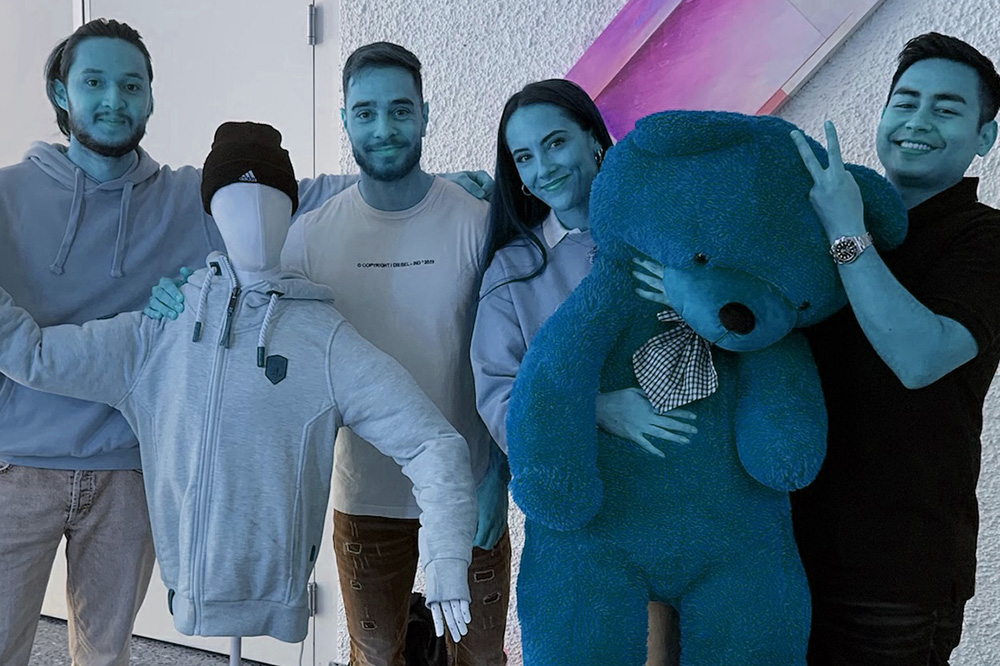
The HUGGIE project at the School of Business FHNW is moving forward. Under the supervision of Prof. Dr. Oliver Bendel, the team of four (Andrea Puljic, Robin Heiz, Ivan De Paola, Furkan Tömen) will test a hug doll on users until January 2023. It is already known that warmth and softness of the arms and body are desired. Now the team is investigating whether, for example, voice, vibration and smell also increase acceptance. The key question of the practical project is: Can a social robot help increase physical and mental well-being through hugs and touches, and what factors should be taken into account? The basis of HUGGIE is a dressmaker’s dummy. Added to this are clothing, a warming element, a vibration element, and an audio system. In addition, a scent is applied. The arms are moved by invisible strings so that active hugs are possible. Overall, the impression of a hugging robot is created. A trial run with 65 test persons took place in a Swiss company in November 2022. They were hugged by HUGGIE and a giant teddy bear. Based on the results and impressions, the questionnaire and the test setup will be improved. From the end of November 2022, the project will enter its final phase, with implementation and evaluation of the tests.
A Robot Among Penguins
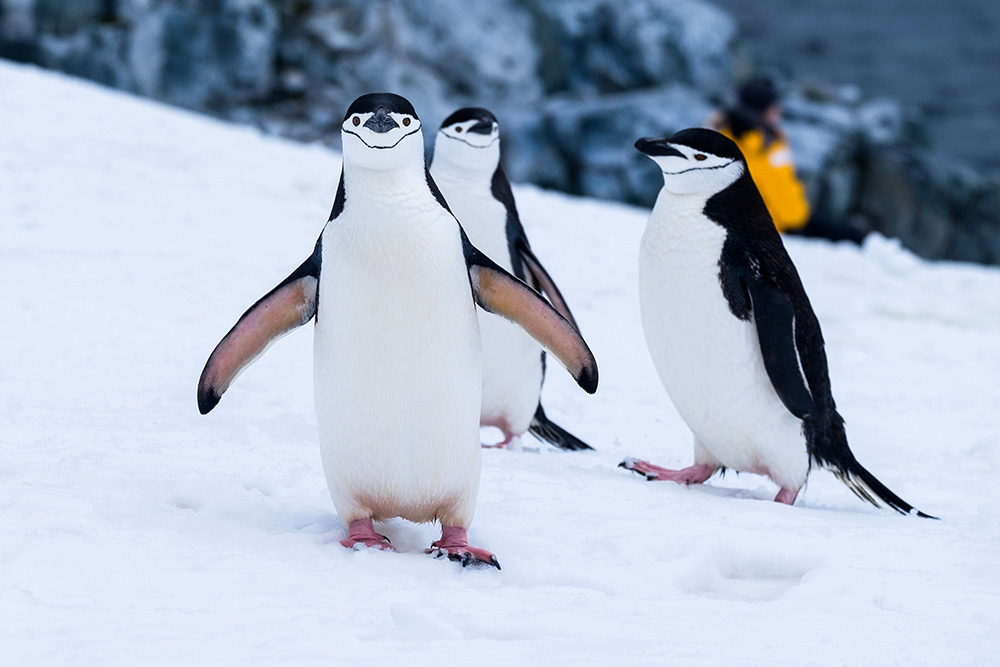
British Filmmaker John Downer has created artificial monkeys, wolves, hippos, turtles, alligators, etc., to observe appropriate wildlife and obtain spectacular images. His well-known robots are very intricately designed and resemble the animals they mimic in almost every detail. It is not necessary to resort to such technically elaborate and artistically demanding means for all species. USA Today reports in a recent article about a robot called ECHO. “ECHO is a remote-controlled ground robot that silently spies on the emperor penguin colony in Atka Bay. The robot is being monitored by the Single Penguin Observation and Tracking observatory. Both the SPOT observatory, which is also remote-operated through a satellite link, and the ECHO robot capture photographs and videos of animal population in the Arctic.” (USA Today, May 6, 2022) ECHO does not resemble a penguin in any way. It is a yellow vehicle with four thick wheels. But as a video shows, the animals seem to have gotten used to it. It comes very close to them without scaring them. Wildlife monitoring using robots is becoming increasingly important, and obviously very different types are being considered.
The Idea of a Tesla Bot
Elon Musk presented the idea of a humanoid robot that – according to Manager Magazin – could take on dangerous, repetitive or boring tasks in the future. The Tesla Bot will be about five feet eight inches (just under 1.73 meters) tall, weigh 57 kilograms, and be able to do numerous jobs, from putting screws on cars to picking up groceries at the store – this is what the German magazine reports. It will be equipped with eight cameras and a full self-driving computer, and will use the same tools Tesla uses in its cars (Manager Magazin, 20 August 2021). According to the announcement, the robot will be able to take over physical work. But that’s exactly what service robots are struggling with at the moment, especially humanoid models. The visualization hardly allows any conclusions to be drawn about the capabilities of the prototype, which is to be available as early as 2022. Eyes and mouths could appear on a large display in the head area and mimic abilities could be implemented. When it is turned off – as seen in the video – the robot appears creepy and unapproachable. Arms and feet are unlikely to be suitable for carrying the body in this form. Joints can also only be seen in rudimentary form. Overall, it is unclear why Tesla, of all companies, should close the gaps that are still present at Sony, SoftBank and Boston Dynamics even after many years.
A Four-legged Robocop
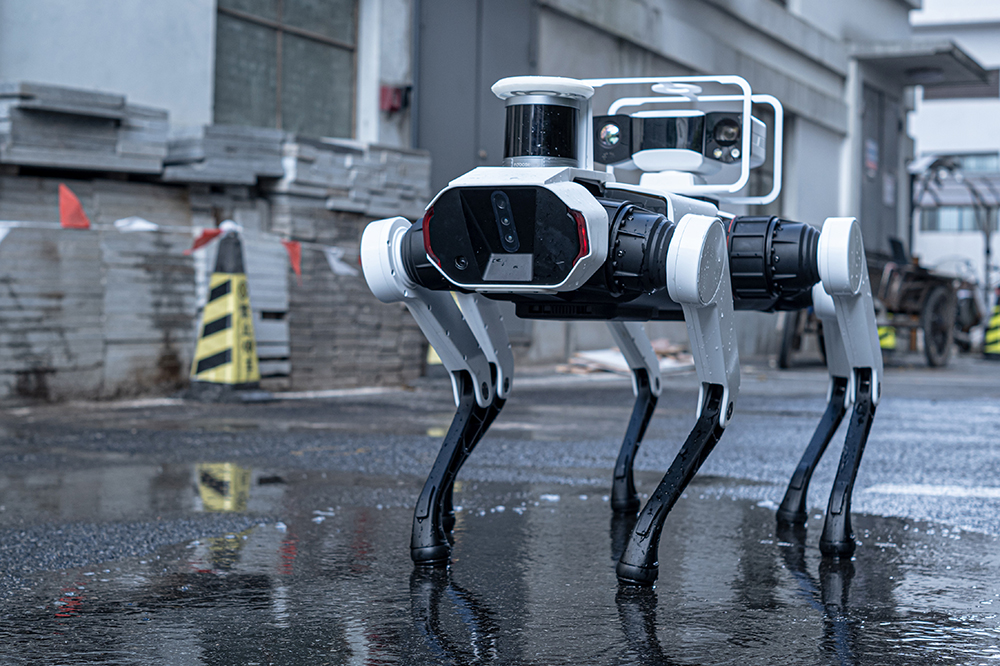
In New York City, police have taken a Boston Dynamics robot on a mission to an apartment building. Spot is a four-legged model that is advanced and looks scary to many people. The operation resulted in the arrest of an armed man. Apparently, the robot had no active role in this. This is reported by Futurism magazine in a recent article. It is also noted there that certain challenges may arise. “The robodog may not have played an active role in the arrest, but having an armed police squadron deploy a robot to an active crime scene raises red flags about civil liberties and the future of policing.” (Futurism, 15 April 2021) Even Boston Dynamics robots are not so advanced that they can play a central role in police operations. They can, however, serve to intimidate. Whether the NYPD is doing itself any favors by doing so can be questioned. The robots’ reputation will certainly not benefit from this kind of use.
The New Life of Hugvie
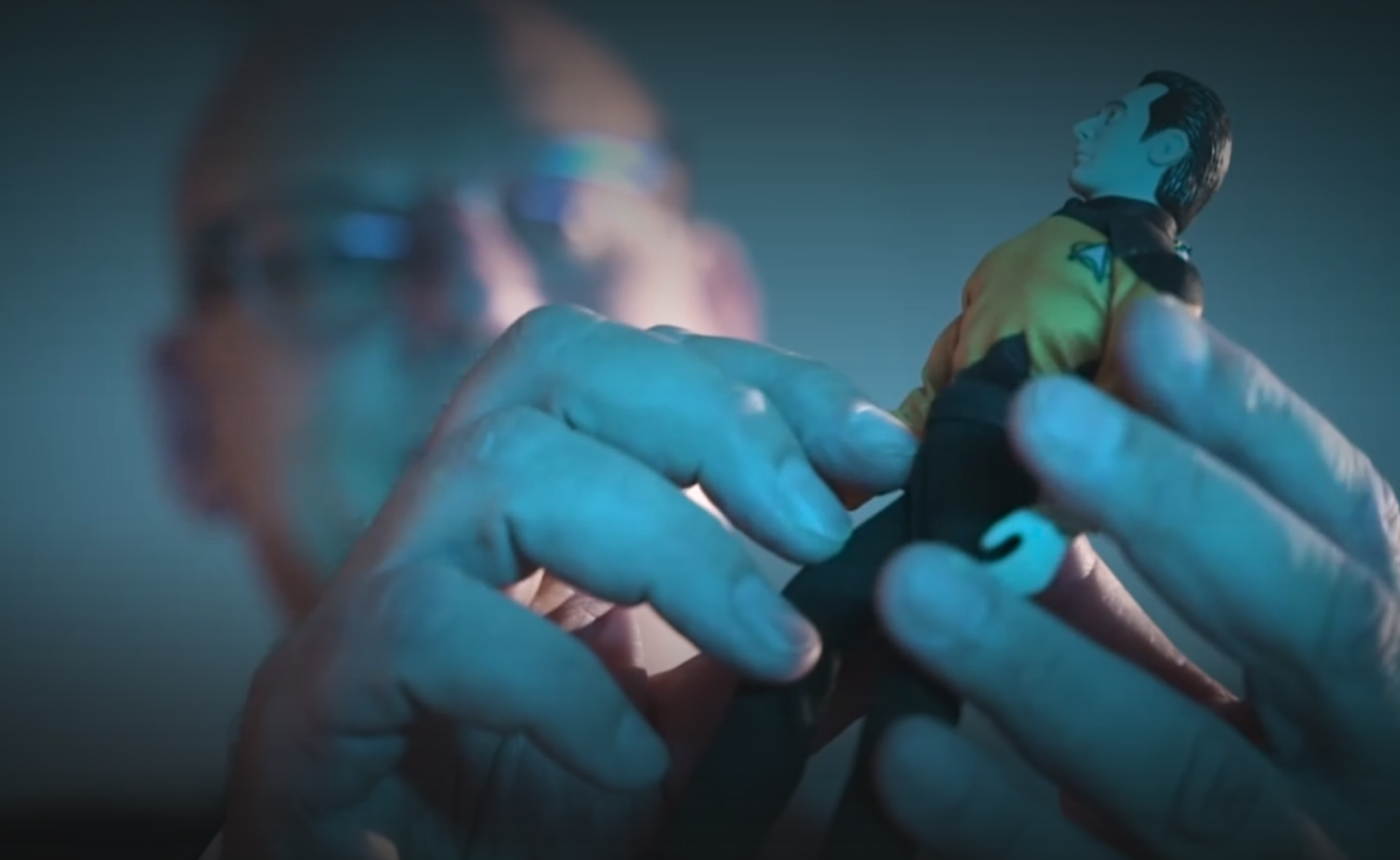
How can you make social robots out of simple, soft shapes and objects, i.e. robots for interacting with people and animals? Under the supervision of Prof. Dr. Oliver Bendel, Vietnamese students Nhi Hoang Yen Tran and Thang Vu Hoang are investigating this question in the project “Simple, Soft Social Robots” at the School of Business FHNW. They are using Hugvie from the Hiroshi Ishiguro Laboratories as a basis – these labs are particularly famous for the Geminoid and for Erica. But hugging robots like Telenoid also come from them. The latest product from this series is Hugvie. A pocket for a smartphone is attached to its head. People who are far away from each other can talk to each other and have the feeling of hugging and feeling each other. But what else can you do with Hugvie and similar forms? Can you make them conversationalists themselves, can you teach them to move their limbs and be active in other ways? And what does such robotization of simple, soft forms and objects mean for everyday life and society?