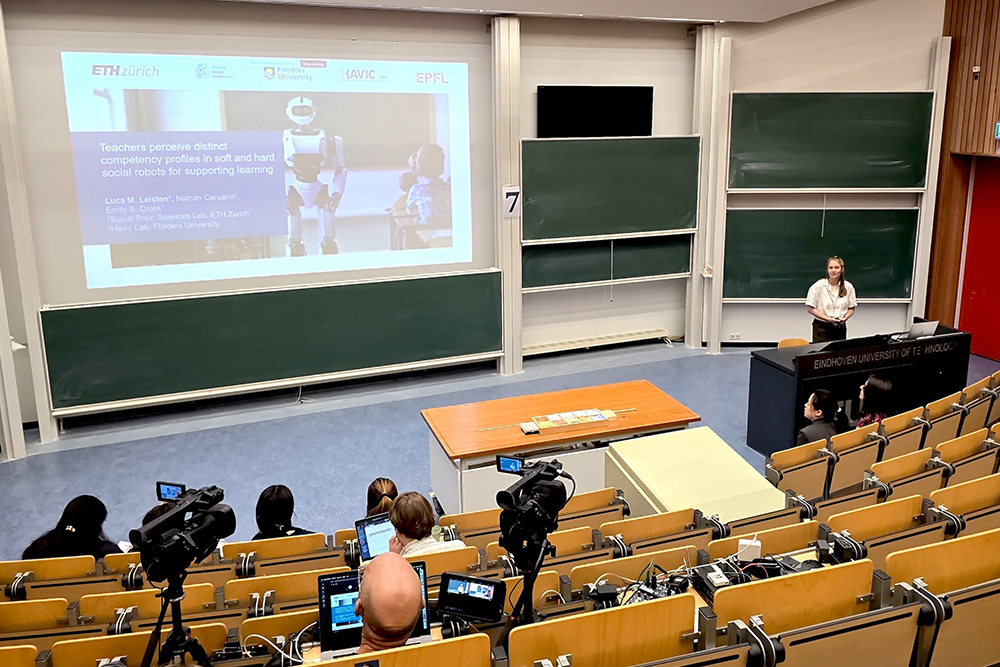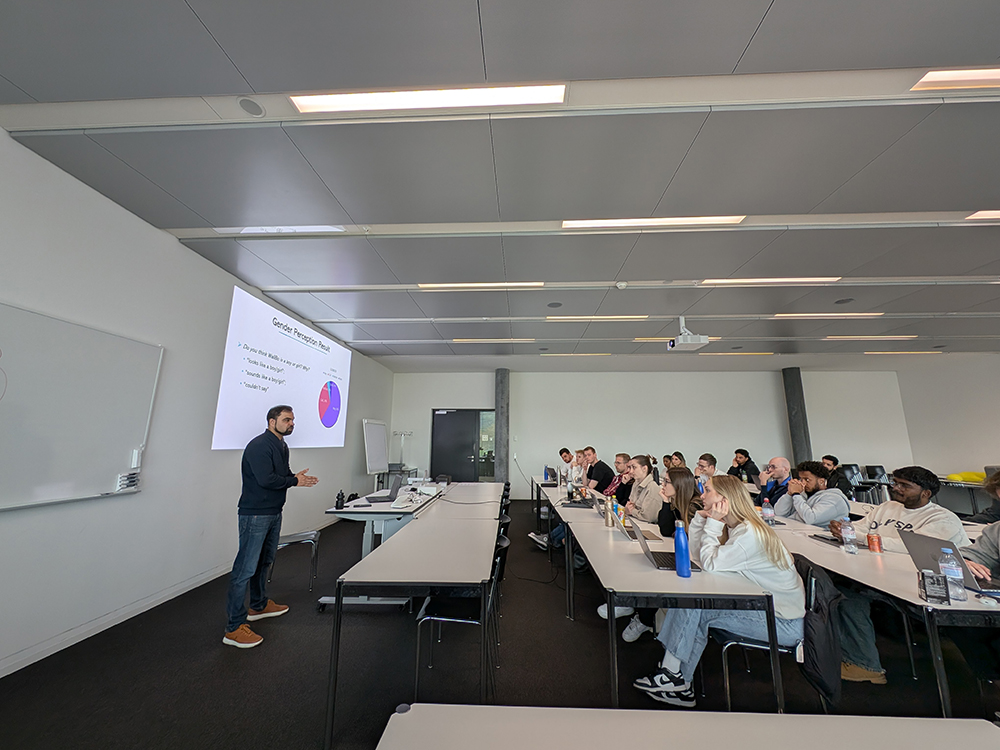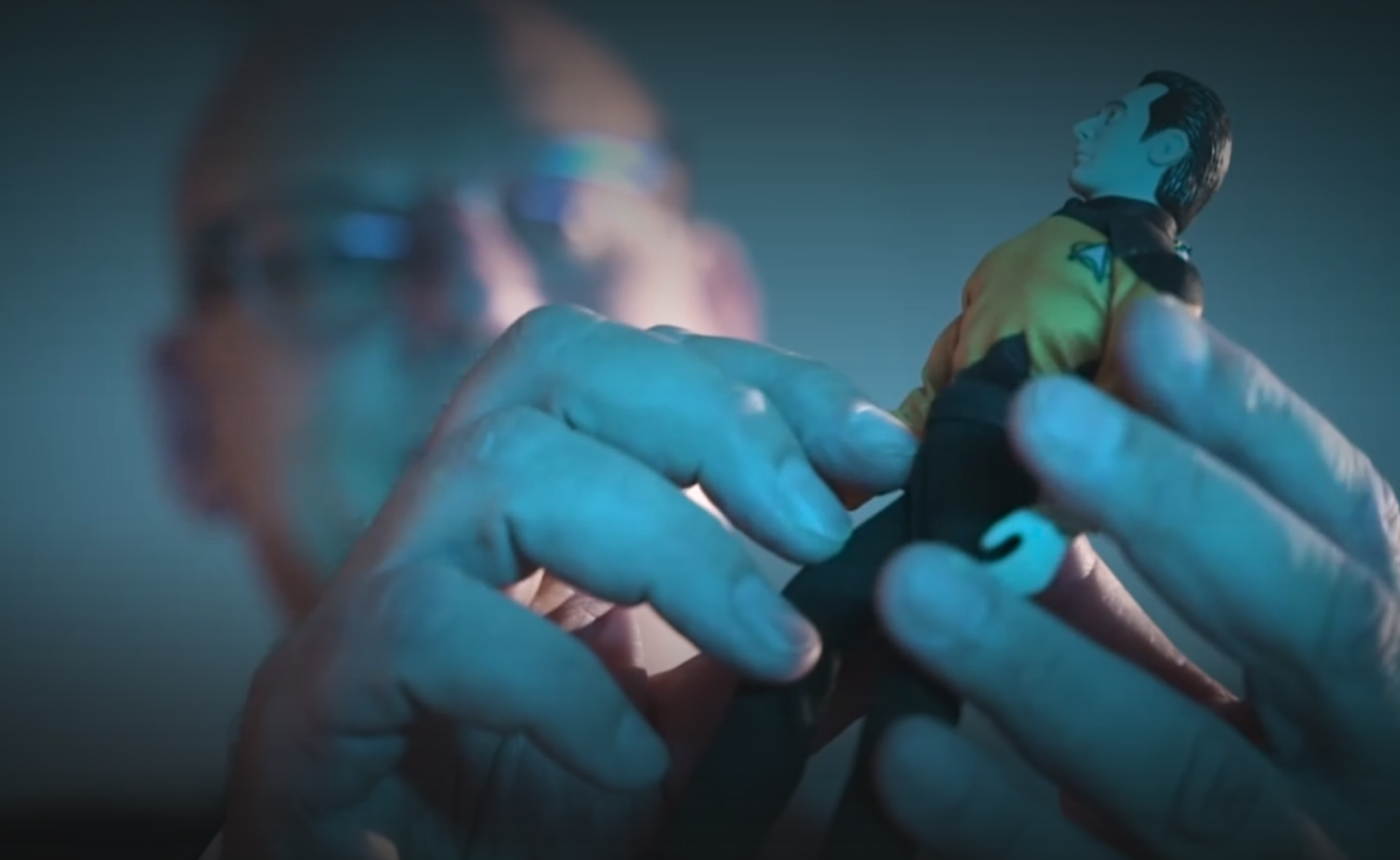
As part of the ToBIT event series at the FHNW School of Business, four students of Prof. Dr. Oliver Bendel explored four topics related to his field of research during the Fall 2025/2026 semester: “The decoding of symbolic languages of animals”, “The decoding of animal body language”, “The decoding of animal facial expressions and behavior”, and “The decoding of extraterrestrial languages”. The students presented their papers on January 9, 2026. In some cases, the state of research was not only reviewed, but an independent position was also developed. The paper “The decoding of extraterrestrial languages” by Ilija Bralic argues that Messaging Extraterrestrial Intelligence (METI), in contrast to passive SETI (Search for Extraterrestrial Intelligence), creates a dangerous imbalance between humanity’s rapidly expanding technical capacity to send interstellar messages and its limited ethical, scientific, and political ability to govern this power responsibly. The central thesis is that the moral justifications for METI are speculative and anthropocentric, relying largely on optimistic assumptions about extraterrestrial behavior, while the potential risks are severe, logically grounded, and potentially existential. These risks include fundamental misinterpretation caused by the “human lens,” strategic dangers described by the Dark Forest hypothesis, historical patterns of harm in technologically asymmetric encounters, and profound cultural, psychological, and political disruption. The paper concludes that unilateral METI decisions by individuals or private groups are ethically indefensible and that, under the Precautionary Principle, humanity should immediately halt active transmissions. As a solution, it proposes a binding international governance framework, including a temporary global moratorium, the creation of a dedicated international authority, a strict multi-stage decision-making protocol, and robust transparency and monitoring mechanisms. This approach frames responsible restraint – not transmission – as humanity’s first genuine test of cosmic maturity.
Nature, Robots, and Society
The Robophilosophy Conference 2026 will take place August 11–14 at University College Dublin in a hybrid format and centers on the theme “Connected Futures: Nature, Robots, and Society”. As robotics and AI become deeply embedded in human life, the conference invites researchers across disciplines to explore how autonomous systems shape society, ecology, law, labor, and human self-understanding. It raises questions about responsible design, accountability, environmental impact, social justice, cultural perspectives, and the ethics of coexistence with artificial agents. Workshop proposals are due January 16, session papers and posters February 6, with notifications in February and April and proceedings pre-submission on June 15. RP2026 aims to foster interdisciplinary dialogue that advances both technological insight and collective wisdom for a future in which humans and autonomous systems share social and ecological worlds. Further information is available at cas.au.dk/en/rpc2026.
Intelligens. Natural. Artificial. Collective.
At the 19th Architecture Biennale in Venice (Biennale Architettura 2025) with the title “Intelligens. Natural. Artificial. Collective.”, robots play an important role. This is reported by several media, such as The Architect’s Newspaper. “Robots Falling from the Sky” is an installation in which robots appear to fall from the sky and interact with their surroundings. Another robot demonstrates its musical abilities by playing a handpan, a brass instrument. One is reminded of Henri-Louis Jaquet-Droz’s 18th century musician, who preferred a keyboard instrument. A robotic arm from ABB assists two Bhutanese craftsmen in working on a beam. For safety reasons, according to The Architect’s Newspaper, live carving with a drill was not permitted. The problem is not the two artisans, but the visitors. The Biennale is always dedicated to technical and futuristic themes. In 2021, the Architecture Biennale focused on cyborgs and transhumanists, among other things. In 2024, the art biennial featured a quasi-hologram and a spaceship-like installation. The Biennale runs from May 10 to November 23, 2025 at various venues in and near Venice, including the Giardini della Biennale, the Arsenale di Venezia, and the Forte Marghera in Mestre. Further information and the full program can be found at www.labiennale.org/en/architecture/2025 (Photo: Biennale Arte 2024).
Interpersonal Distance Preferences in Human-Robot Interactions
The paper “Robots at arm’s length: Unveiling the dynamics of interpersonal distance preferences in human-robot interactions” by Katharina Kühne, Laura M. Zimmer, Melina Jeglinski-Mende, Oliver Bendel, Yuefang Zhou, and Martin H. Fischer was published in February 2025 in the proceedings volume “Social Robots with AI: Prospects, Risks, and Responsible Methods” … From the abstract: “In social interactions, interpersonal distance is a vital factor influencing relationships, providing protection, and regulating arousal. Despite the intuitive nature of adopting specific distances, little is known about comfortable interpersonal distances with social robots. In our online study with 66 participants using a Go/No-Go task, we investigated perceptions of individuals standing face-to-face with a robot at different distances. In line with the negativity bias hypothesis, participants exhibited a preference for greater distances , as reflected in longer reaction times. Furthermore, the human-likeness of the robots moderated the link between distance and arousal. Finally, the most human-like robot was less liked and evoked higher arousal. These findings have implications for designing social robots and optimizing interactions, particularly in educational or medical contexts.” The proceedings volume comprises the papers presented at Robophilosophy 2024 in Aarhus. Leading philosophers, computer scientists, and roboticists met there in August. Like the ICSR, the conference is one of the world’s leading conferences on social robotics.
A New Paper on Universal Robots
The paper “The Universal Robot of the 21st Century” by Oliver Bendel was published in February 2025 in the proceedings volume “Social Robots with AI: Prospects, Risks, and Responsible Methods” … From the abstract: “Developments in several areas of computer science, robotics, and social robotics make it seem likely that a universal robot will be available in the foreseeable future. Large language models for communication, perception, and control play a central role in this. This article briefly outlines the developments in the various areas and uses them to create the overall image of the universal robot. It then discusses the associated challenges from an ethical and social science perspective. It can be said that the universal robot will bring with it new possibilities and will perhaps be one of the most powerful human tools in physical space. At the same time, numerous problems are foreseeable, individual, social, and ecological.” The proceedings volume comprises the papers presented at Robophilosophy 2024 in Aarhus. Leading philosophers, computer scientists and roboticists met there in August. Like the ICSR, the conference is one of the world’s leading conferences on social robotics (Photo: Katharina Kühne).
Talk by Hiroshi Ishiguro
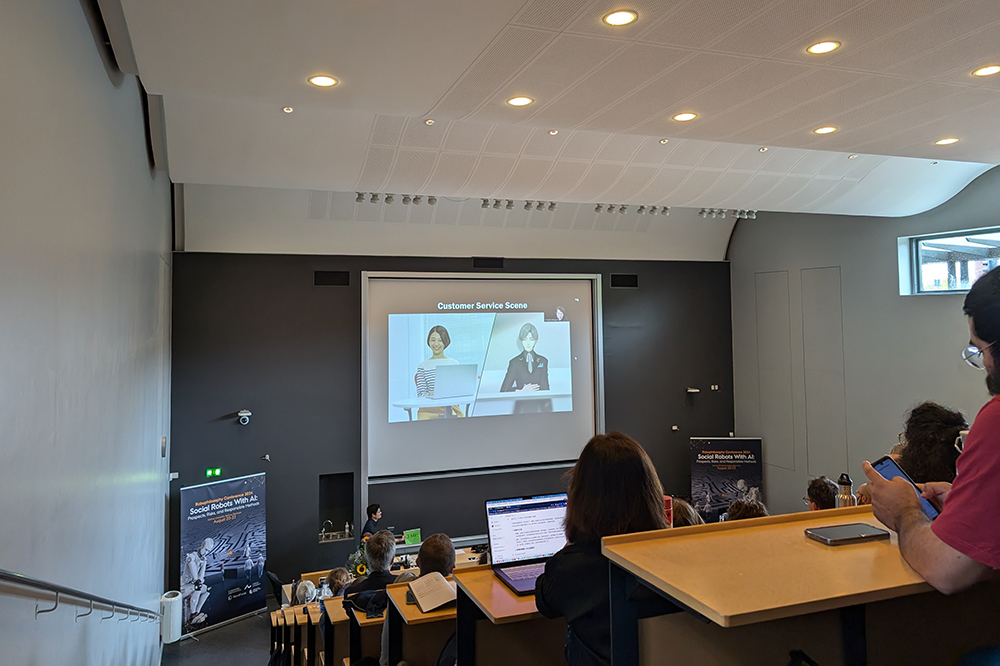
On the fourth day of Robophilosophy 2024, Hiroshi Ishiguro, Professor at the Department of Systems Innovation in the Graduate School of Engineering Science at Osaka University, gave a talk entitled “AI Avatars and the Future Society”. From the abstract: “In this lecture, the presenter will report on the research and development of remotely operated robots and CG agents, also known as avatars. Avatar technology has advanced significantly in recent years, thanks to progress in AI technology. We will discuss the various services that can be deployed using avatars and the kind of society we can realize as a result.” (Website Robophilosophy 2024) After the lecture, the roboticist was questioned by Raja Chatila, Sorbonne University (France), and Mihaela Constantinescu, Faculty of Philosophy, University of Bucharest (Romania). Hiroshi Ishiguro had been a regular guest at Robophilosophy. In 2018, he appeared on site in Vienna.
Talk on Universal Robots
On the fourth day of Robophilosophy 2024, Oliver Bendel, Professor at the FHNW School of Business, gave a talk entitled “The Universal Robot of the 21st Century”. From the abstract: “Developments in several areas of computer science, robotics, and social robotics make it seem likely that a universal robot will be available for the mass market in the foreseeable future. Large language models for communication, perception, and control play a central role in this. This article briefly outlines the developments in the various areas and uses them to create the overall image of the universal robot. It then discusses the associated challenges from an ethical and social science perspective. It can be said that the universal robot will bring with it new possibilities and will perhaps be one of the most powerful human tools in physical space. At the same time, numerous problems are foreseeable, individual, social, and ecological.” (Website Robophilosophy 2024) This was followed by an intensive plenary discussion on the design and usefulness of universal robots. In an individual discussion, Oliver Bendel suggested designing universal robots like early humans or apes. They can move on all fours, but can also stand up on two legs if the situation requires it. This would at least solve some of the safety problems posed by bipeds.
On Metamorphoses in the Factory
The Workshop “The Social Significance of Human Effort – What Are the Parameters For Positive Human-Robot Interaction In the Context of Industry 5.0?” took place on the third day of Robophilosophy 2024. Prof. Dr. Oliver Bendel gave the lecture “Metamorphoses in the Factory. From Classic Industrial Robots over Cobots and Classic Service Robots to Universal Robots”. From the abstract: “Robots play an important role in industry. In recent years, there have been interesting innovations in production and logistics. Large classic industrial robots are turning into small cobots. Cobots become service robots. Classic service robots are discovering the factory. Metamorphoses are taking place. This talk hypothesizes that recent developments will have a significant impact on workers and work. In particular, the precursors of universal robots could significantly change the factory of the future, just as they will change society as a whole. After all, with universal robots, the boundaries between industrial and service robots are becoming increasingly blurred.” (Website Robophilosophy 2024)
The Social Significance of Human Effort
The third day of Robophilosophy 2024 featured numerous presentations and several workshops. The workshop “The Social Significance of Human Effort – What Are the Parameters For Positive Human-Robot Interaction In the Context of Industry 5.0?” was organized by the renowned Sant’Anna School of Advanced Studies (Pisa, Italy). The moderators were Professors Alberto Pirni and Paolo Dario as well as Oliver Bendel from the FHNW School of Business. They also presented, as did other participants such as Nicola Vitiello, Leonardo Massantini, Danica Kragic Jensfelt, and Margherita Pugnaletto. From the workshop abstract: “This workshop aims to develop a roadmap for understanding the impact of robotics on human employment within the context of Industry 5.0. The workshop explores key factors in this transition, including the risks and benefits of digital automation, ethical considerations regarding worker skills and well-being, and protective measures for workers and consumers. Focusing on the theme of sociocultural risks: devaluation of human labor, the workshop aims to reflect on traditional notions of work, productivity, and the value of human labor in the era of advancing robotics and automation. It challenges the concept of labor devaluation, assesses its impact on worker recognition and efficiency, and questions meritocratic paradigms. To facilitate interdisciplinary dialogue, the workshop engages philosophers and engineers in addressing ethical dilemmas in technology development. It explores the social significance of human effort and movement when interacting with autonomous robots and occupational exoskeletons. By examining these technologies’ adaptability and role in human-machine interaction, especially in workplaces, the workshop intends to contribute to discussions on technological advances and their societal implications.” (Website Robophilosophy 2024)
Keynote by David Chalmers
On the second day of Robophilosophy 2024, David Chalmers, an Australian philosopher and cognitive scientist, gave a keynote speech entitled “Does Generative AI Extend the Mind?”. From the website: “Prof. Chalmers is known worldwide, also outside of philosophy, for his contributions to consciousness research in ‘The Character of Consciousness’ (2010), and in particular for identifying more clearly than anyone the tasks for a philosophical account of consciousness (‘the hard problem’ of consciousness). Since recent advances in AI bring Chalmers’ thought experiment of ‘philosophical zombies’ closer to reality, in his current research he combines philosophy and a longstanding interest in AI for the exploration of the status of virtual reality … and the likelihood of creating artificial systems that fulfil the criteria of consciousness.” (Website Robophilosophy 2024) A key statement was: “As social AI systems become increasingly agent-like, they will decreasingly extend the mind …” The final statement was: “The quest for agency and sociality in robotsmay stand in tension with considerations of both efficiency and morality.” The audience applauded the witty and humorous talk.