The AAAI Spring Symposium Series fosters an intimate environment for emerging AI communities to engage in workshop-style discussions. After several editions away from a university setting, the series appears to have found a new academic home. The AAAI 2027 Spring Symposium Series will take place from March 22 to March 24, 2027, at Santa Clara University in Santa Clara, California. For many years, Stanford University provided the setting for the Spring Symposia, while more recent editions have taken place at the Hyatt Regency and other hotels at San Francisco Airport. Santa Clara University now provides a new academic setting in Silicon Valley for this established series and its distinctive format of several small symposia running in parallel. At the same time, AAAI has issued the Call for Proposals for the 2027 Spring Symposium Series. Proposals for individual symposia are due November 17, 2026, with notifications scheduled for December 8. AAAI expects to select approximately eight symposia covering a broad range of topics within and around artificial intelligence, with a particular interest in emerging research areas and communities. The move to Santa Clara University thus marks a new chapter for the AAAI Spring Symposium Series and brings the event back to a university campus. The Call for Proposals is available on the Spring Symposium Series site (Photo: Cristiano Tomás, CC BY-SA 4.0).
Kissed by the Muse?
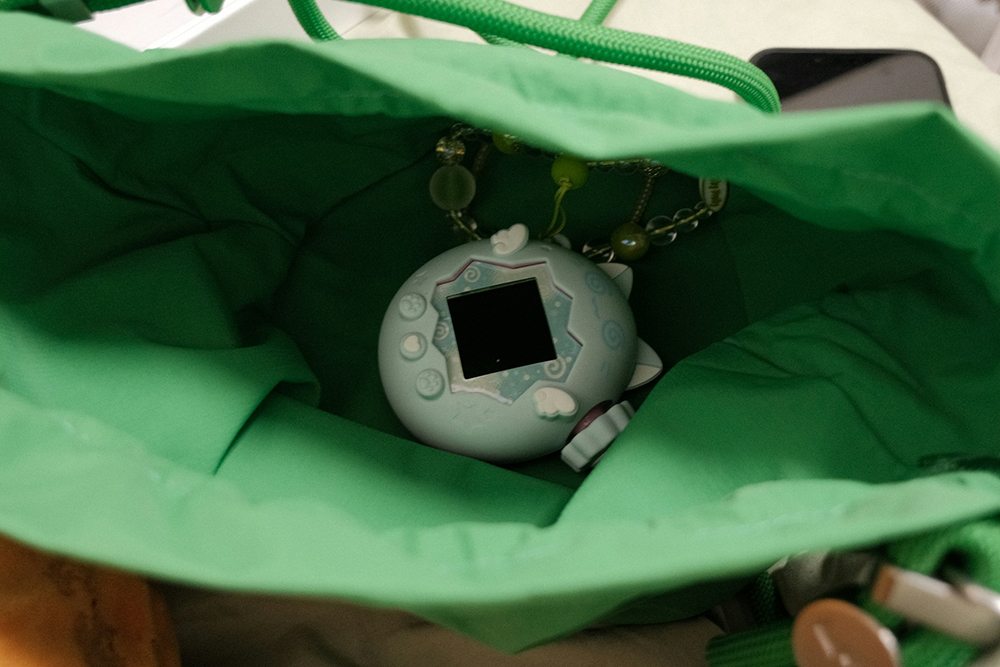
According to the article “Tamagotchi trifft KI-Agent” (“Tamagotchi Meets AI Agent”) (Heise, September 24, 2026), Meta has unveiled Muse Charm, a small wearable device designed to serve as a home for its new personal AI agent, Muse. The gadget, which is reminiscent of a Tamagotchi, can similarly be attached to a keychain or carried in a pocket. It features a screen displaying Jolly, Muse’s avatar. As Heise reports, the assistant is activated via a fingerprint sensor, while cameras are intended to allow it to perceive the user’s surroundings. The device is also expected to feature a microphone, two cameras, and 5G connectivity, although the company has yet to release full technical specifications. Mark Zuckerberg said at Meta Connect that Muse Charm is not yet fully finished and that only a small number of units have been produced so far. Nevertheless, according to Heise, Meta plans to launch the device in time for the December holiday shopping season. Pricing and regional availability have yet to be announced. With Muse Charm, Meta is entering the still-emerging field of physical AI, where products such as Humane’s AI Pin and Rabbit’s R1 have so far failed to achieve lasting success. It remains to be seen whether the company has truly been kissed by the Muse.
Why Save Humanity?
The coffee-table book “RE:VIEW – Wozu die Menschheit retten?” (“RE:VIEW – Why Save Humanity?”) was published on September 14, 2026. “While ESA’s HERA spacecraft is gathering data in space for planetary defense, this book project turns its gaze back toward Earth: What is humanity, what does it destroy, what does it create – and does it deserve a future? Planetary defense – a global challenge with little public visibility. The first part of the book provides the background and tells the story of the first talking spacecraft, which made it into space against all odds. The central question Hera is intended to answer on its mission: Can space objects that come dangerously close to Earth be deflected from a collision course with our home planet through deliberate spacecraft impacts? Collaged illustrations and photographs combine facts with emotion, bringing science to life.” (Publisher’s description) “The book then develops a multifaceted portrait of our species from HERA’s perspective, featuring contributions and conversations between its AI companion and notable figures from science, art, culture, and society.” (Publisher’s description) Contributors include Queen musician and astrophysicist Brian May, former Canadian astronaut Chris Hadfield, the first female space tourist Anousheh Ansari, “Interstellar” visionary Paul Franklin, PETA founder Ingrid Newkirk, former Guns N’ Roses guitarist Ron “Bumblefoot” Thal, science fiction author Andreas Eschbach, artist Jonathan Meese, and philosopher of technology and machine ethicist Oliver Bendel, who published the book “300 Keywords Weltraum” (“300 Keywords: Space”) in 2025. “In this way, a mission becomes a visually powerful book object exploring humanity, technology, responsibility, and hope.” (Publisher’s description) The 400-page book, featuring numerous images, is available from booksellers (Photo: We Mind Publishing).
Kumo Joins the Social Robots Lab
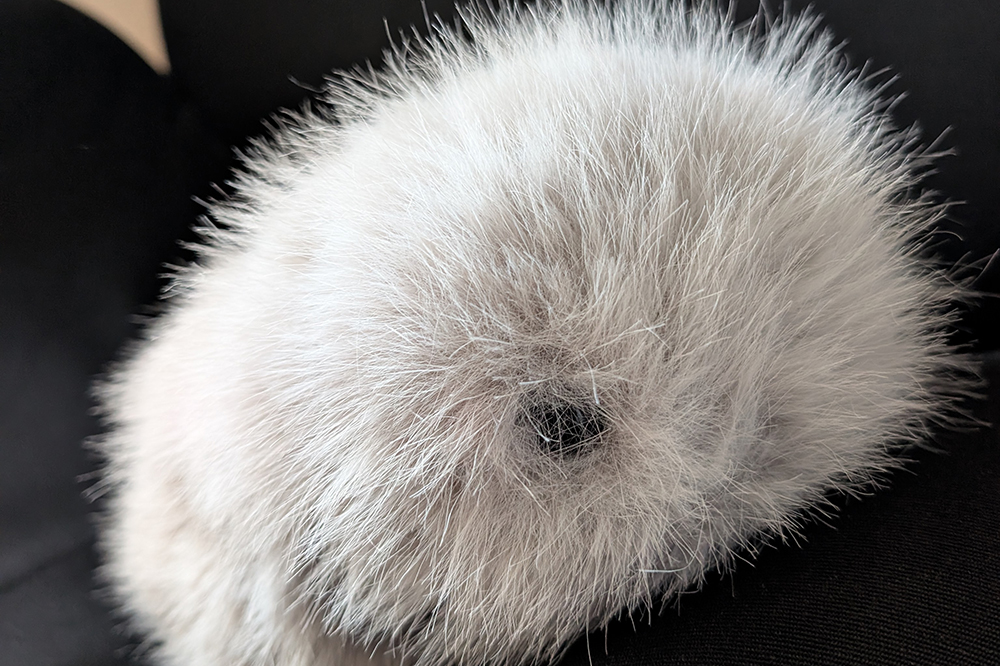
Since September 2026, a gray Booboo has been part of Prof. Dr. Oliver Bendel’s privately funded Social Robots Lab. Alternative names include Boo Boo, BooBoo, and Cupboo AI Robotic Pet. A black Booboo had already been living there since July 2024, but in July 2026 it traveled to the University of Potsdam to spend some time there. Genmoor writes on its website: “Boo Boo is not just a toy. It is also the king of the planet Lonely …” (Genmoor website). According to the manufacturer, Boo Boo’s movements are made possible by a complex control system. “Therefore please be kind to Boo Boo, it is not an ordinary robotic pet. It could give you different responds according to your interaction.” (Genmoor website) Other robots and figures at the Social Robots Lab include Unitree Go2, Alpha Mini, Cozmo, Vector, AIBI, Eiliko, Furby, Tamagotchi, Hugvie, and HUGGIE. NAO and Pepper have also visited repeatedly, as revealed in a 2023 3sat documentary. According to its own description, the Genmoor Group is an “exclusive group for daring futurists who love tech-psychology” (Genmoor website). The company was founded in Hangzhou, China, in 2020. The black Booboo is particularly popular in Oliver Bendel’s elective modules on social robotics. The gray one will introduce itself in February. Student Sushana Yogeswararasah, a former participant, has already named it Kumo – Japanese for “cloud” or “spider”, depending on the context and the characters used.
A Robot Shaped Like a Duck
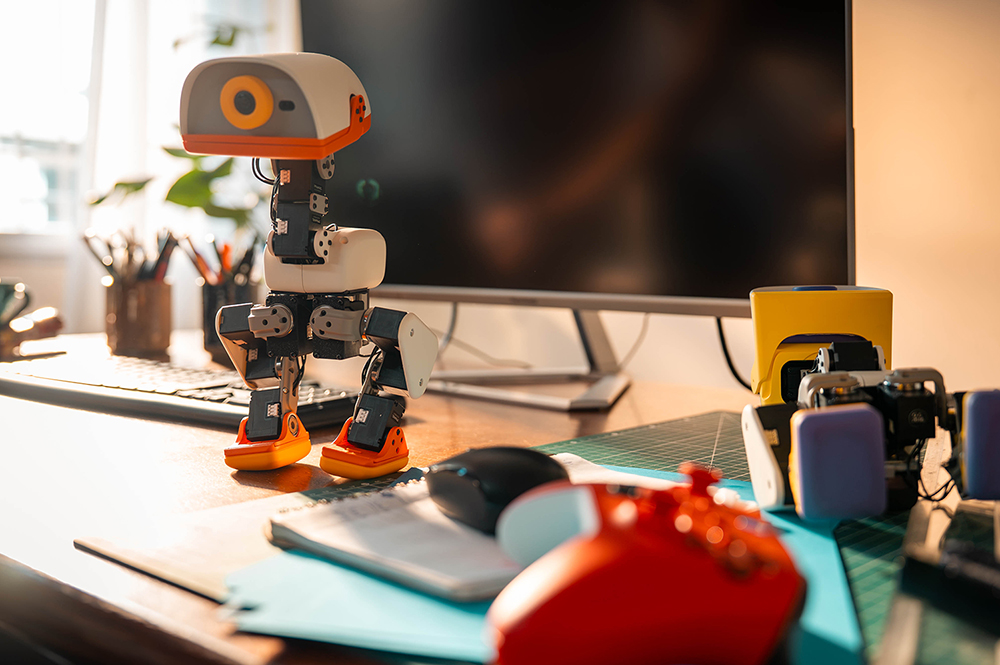
Ducks have repeatedly served as models for animal-like automata and robots, particularly in France and Japan. The European country is actually known for its cruel treatment of these animals, but it also seems to have a soft spot for them. Jacques de Vaucanson’s mechanical duck, built in 1738/1739, became famous. Born in Grenoble in 1709, the gifted engineer died in Paris in 1782. Pollen Robotics is based in Bordeaux. The company is now owned by Hugging Face, which is headquartered in Manhattan. With Microduck, it has introduced a compact robot designed as an experimental platform for physical AI and reinforcement learning. Standing around 25 centimeters tall and weighing less than 800 grams, it is comparatively small. Its hardware includes 15 motors, a camera, a LiDAR sensor, two IMUs (sensors that measure acceleration and rotational motion), microphones, and speakers. A movable beak also allows the little duck to grasp small objects. It can walk, sit down, stand up, pick up objects, and perform various movement sequences. It can even glide along on optional inline skates. After a fall, it can get back on its feet independently from a variety of positions. The main focus, however, is not so much on using Microduck as a conventional robotic toy, but rather on experimenting with a learning AI system. Movements and behaviors can first be trained in a simulation and then transferred to the physical robot. This so-called sim-to-real approach enables hands-on experimentation with reinforcement learning and robotics. Pollen Robotics provides the SDK, simulation environment, and reinforcement-learning software as open source. Microduck thus combines a comparatively accessible hardware platform with state-of-the-art methods in AI and robotics research. More information is available at pollen-robotics.com.
Three Months to Go Until ACI 2026
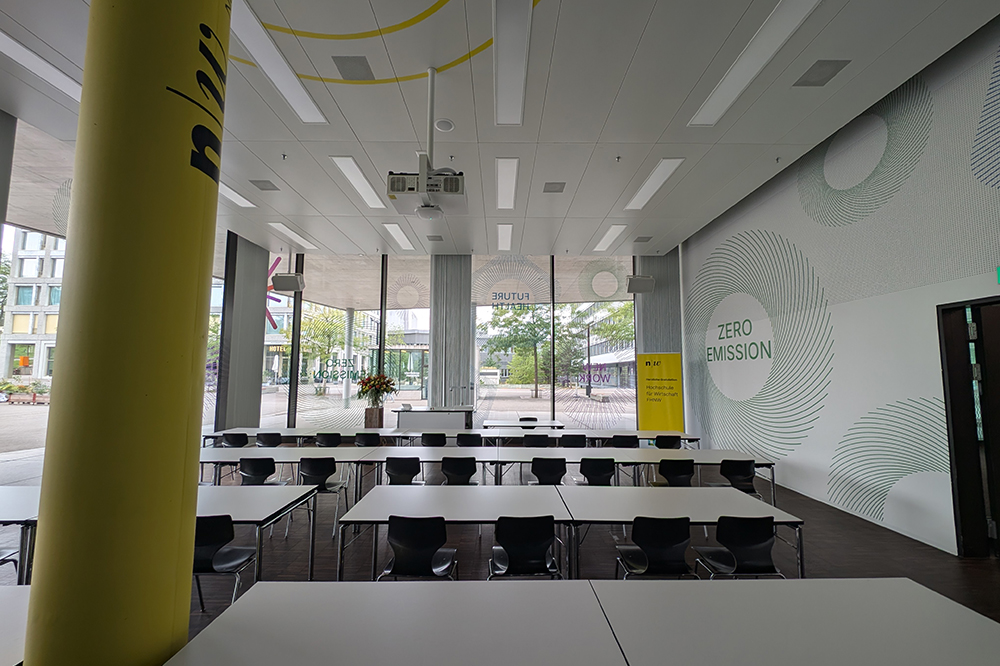
In exactly three months, the thirteenth edition of the Animal-Computer Interaction International Conference (ACI 2026) will begin. The conference will take place from December 2 to 5, 2026, at the FHNW Campus Brugg-Windisch in Switzerland. For the first time in its history, the ACI conference will be held in continental Europe. Registration has been open since the end of July, and preparations for the conference are well underway. All submitted papers have now been peer-reviewed, and acceptance and rejection notifications have been sent to the authors. General Chair Oliver Bendel is pleased to see the conference program taking shape and looks forward to welcoming the ACI community to Brugg-Windisch in December. This year’s conference will also feature three workshops, providing opportunities for focused discussion, exchange, and collaboration on topics relevant to Animal-Computer Interaction and related fields. ACI 2026 brings together perspectives from computer science, informatics, engineering, interaction design, animal behavior and welfare science, veterinary science, ecology, sociology, philosophy, and related disciplines. The conference provides a forum for theoretical, methodological, empirical, and ethical work that advances dialogue around animal-centered research and the design of computing-enabled systems. In an increasingly networked world shaped by pervasive technologies, animals – both human and nonhuman – are entangled in complex webs of interaction. ACI 2026 will explore how technology shapes human-animal relationships, how large-scale technological deployments affect animals, and how future systems can be designed responsibly and ethically. The conference also includes work in Animal-Machine Interaction (AMI), exploring interaction and communication between animals and machines, including autonomous systems such as drones and robots. All information about the conference, program, workshops, and participation is available on the ACI 2026 website: www.aciconf.org.