Punch the Robot

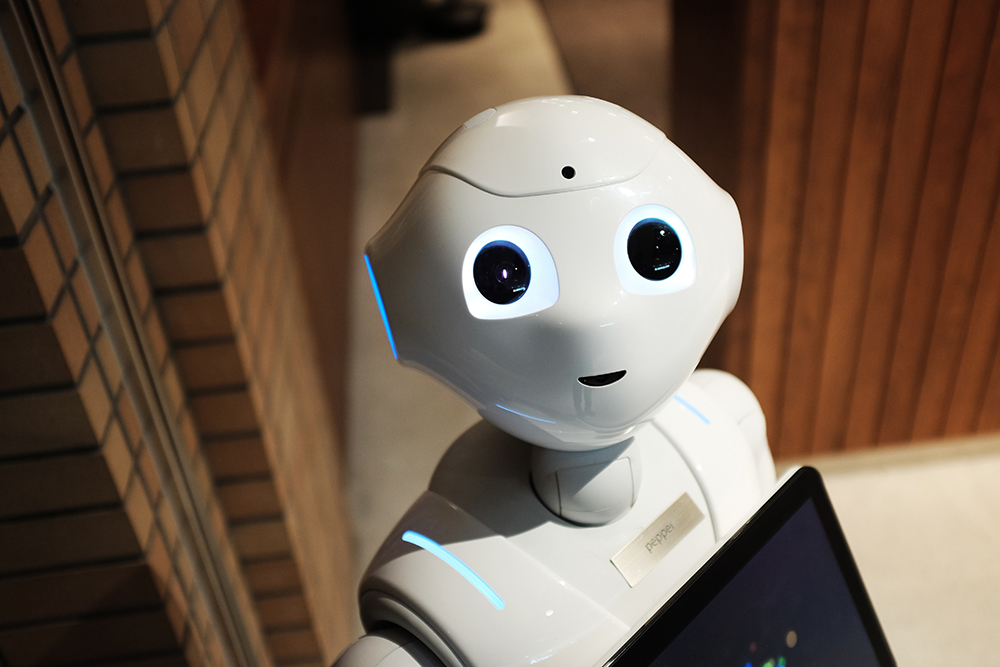
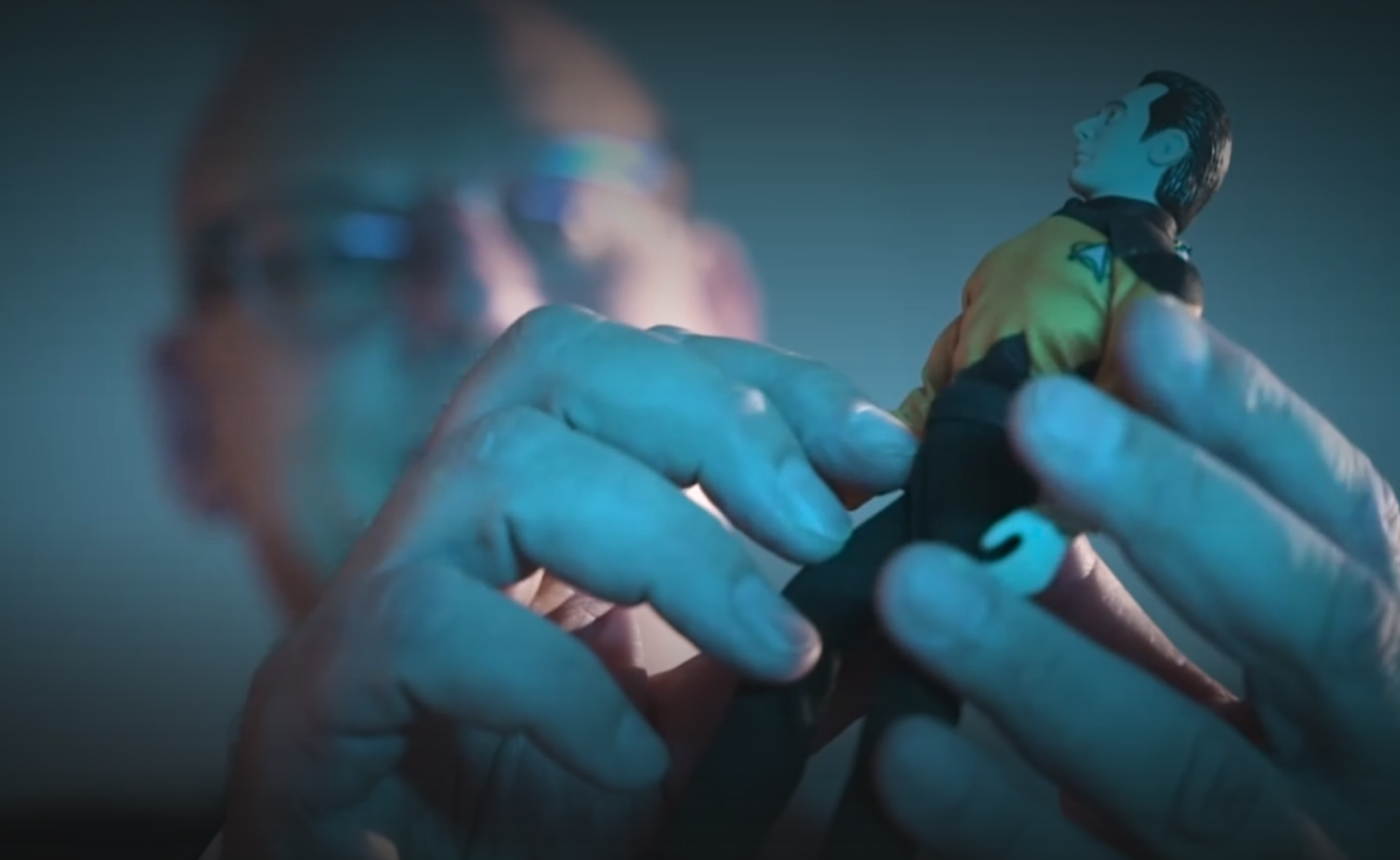
Robots are repeatedly damaged or destroyed. The hitchBOT is a well-known example.  But also the security robot K5 has become a victim of attacks several times. The latest case is described in the magazine Wired: “Every day for 10 months, Knightscope K5 patrolled the parking garage across the street from the city hall in Hayward, California. An autonomous security robot, it rolled around by itself, taking video and reading license plates. Locals had complained the garage was dangerous, but K5 seemed to be doing a good job restoring safety. Until the night of August 3, when a stranger came up to K5, knocked it down, and kicked it repeatedly, inflicting serious damage.” (Wired, 29 August 2019) The author investigates the question of whether one may attack robots. Of course you shouldn’t damage other people’s property. But what if the robot is a spy, a data collector, a profile creator? Digital self-defence (which exploits digital as well as analog possibilities) seems to be a proven tool not only in Hong Kong, but also in the US and Europe. The rights of robots that some demand cannot be a serious problem. Robots do not have rights. They feel nothing, they do not suffer, they have no consciousness. “So punch the robot, I tell you! Test the strength of your sociopolitical convictions on this lunk of inorganic matter!” (Wired, 29 August 2019)

Talk to the Shuttle

Olli 2.0 is born. Local Motors and IBM had presented an autonomous shuttle in 2016 that reminded of the Smart Shuttle operated by PostAuto AG in Sion, Valais. Unlike this one, however, Olli 1.0 could not only think but also speak, both at a high level and with the help of IBM Watson. Passengers’ wishes are accepted, for example with regard to destinations, and these are even suggested; when it is hot, the car drives to the nearest ice cream parlour. Olli could also reassure passengers or passers-by: “For citizens of Maryland, many of whom have never seen a self-driving car, Watson’s reassuring communications could be critical to making them more comfortable with the idea that there’s no human being at the wheel.” (Information IBM) Olli 2.0, launched in 2019, can not only access IBM Watson, but also Amazon’s deep learning chatbot service Lex. Something else is different from the predecessor: Olli is now 80% 3D-printed. This was reported by Techcrunch on August 31, 2019. The magazine contains more interesting information about the shuttle. By the way, it is intended for small areas, especially for trade fairs and university campuses. But like the Smart Shuttle, it has already been tested in small cities.

Simple Brain Waves in Organoids

Clusters of brain cells, so-called brain organoids, have been bred in the biologist’s lab at the University of California, San Diego. According to the New York Times, the scientists altered human skin cells into stem cells, then “coaxed them to develop as brain cells do in an embryo”. “The organoids grew into balls about the size of a pinhead, each containing hundreds of thousands of cells in a variety of types, each type producing the same chemicals and electrical signals as those cells do in our own brains.” (NYT, 29 August 2019) The progression was stimulated by various means. A few days ago, the scientists reported that they have recorded simple brain waves in these organoids. “In mature human brains, such waves are produced by widespread networks of neurons firing in synchrony. Particular wave patterns are linked to particular forms of brain activity, like retrieving memories and dreaming.” (NYT, 29 August 2019) Someday it may be possible to use brain organoids to develop inverted or reversed cyborgs. Another method could be to take an adult brain from a deceased creature. There is no doubt that many interesting philosophical questions arise in this context, such as the boundaries between humans and machines and the rights of such cyborgs.

Holograms in Teaching

Some universities strive to use holograms in their teaching. Through this technology, the lecturer’s representative would have a physical presence in space. Even interactions and conversations would be possible if the holograms or projections were connected to speech systems. Dr. David Lefevre, director of Imperial’s Edtech Lab, told the BBC one year ago: “The alternative is to use video-conferencing software but we believe these holograms have a much greater sense of presence”. American Samoa Community College (ASCC) has now switched on a digital platform that will stream 3D holograms of University of Hawaiʻi faculty members to deliver classes and engage with ASCC students in real-time. According to the website, students at the HoloCampus launch on August 20 received a lecture by UH Mānoa Water Resources Research Center researcher Chris Shuler on the subject of “sustainability and resilience” – a theme “with special significance for the people of American Samoa and Pacific Islands nations as they face challenges such as increasing plastic waste and more dramatic weather systems brought about by climate change” (Website University of Hawaiʻi). Holograms could play a role in all sorts of areas, including social and sexual relationships.

The Resurrection of Dead Authors

lyrikline.org is an interesting and touching project. The writers themselves read their works. You can listen to Ingeborg Bachmann as well as Paul Celan. Spoken literature has been booming in Europe and the USA for about 15 years. The Chinese discovered audio books some time ago. Basically it is time-consuming and expensive to produce such books professionally. Moreover, the authors are not always available. The Chinese search engine Sogou wants to solve this problem with the help of visualization technology and artificial intelligence. It creates avatars of the authors who speak with the voice of the authors. “At the China Online Literature+ conference, the company announced that the first two authors to receive this avatar treatment will be Yue Guan and Bu Xin Tian Shang Diao Xian Bing … If these first AI author avatars are well-received, others could follow – and that could just be the jumping-off point. A company could produce book readings by deceased authors, for example, as long as enough audio and video footage exists. Eventually, they could even incorporate hologram technology to really give bibliophiles the feeling of being at their favorite author’s reading.” (futurism.com, 15 August 2019) So you could have Ingeborg Bachmann or Charles Bukowski read all of their own texts and watch them, many years after their death. Whether the results really sound like the originals, whether they influence us just as emotionally, can be doubted. But there is no doubt that this is an exciting project.

Amazon’s Delivery Robots Arrive in Irvine

Transport and delivery robots convey items of all kinds, like parcels and purchases from one party (often the provider or broker) to another (often the customer) or they accompany and relieve pedestrians and cyclists of their burden. From 2016 to 2018, Swiss Post tested small transport robots by Starship Technologies in Berne. Amazon began testing autonomous robots in a suburb of Seattle at the beginning of the year. According to USA TODAY, they will deliver packages to customers in Irvine, California. Irvine is a university town with about 250,000 inhabitants. It was planned and built in the 1960s by the Irvine Company. “Amazon said the robots, which are light blue and have the Amazon smile logo stamped on its sides, are able to avoid crashing into trash cans or pedestrians. Still, a worker will accompany the robots at first.” (USA TODAY, 6 August 2019) This is, of course, an effort that cannot be operated indefinitely. Once the escort is removed, there may be a higher likelihood of accidents. Transport robots of this type are dangerous trip hazards. They also create enormous complexity in urban traffic. These problems were addressed in Oliver Bendel’s article “Service Robots in Public Spaces” in June 2017 which can be downloaded here.

The Bartender Robot

The activities in a pub or a club are demanding. You have to take orders from guests, you have to understand them and be friendly to them, and you have to prepare drinks like Porn Star Martini or White Lady behind the counter. Then you must bring the bill, take money and give change. Robots are more or less good at these things. F&P Robotics has developed Barney, a complete and simple robotic bar solution. The Swiss company is known for its ambitious robots for therapy and care. Now it obviously wants to conquer the gastronomy. Barney offers an easy-to-use interface and a simple payment system. According to the manufacturer, the system impresses with elegant movements during the preparation of the drink. As a typical cobot, it can also work hand in hand with human bartenders. At Hotel Interlaken, Switzerland, you can see Barney in action from 13 August to 15 September 2019. You can form your own opinion and either come to the conclusion that this is the future – or that you still want a human service and a human smile. More information via www.barney-bar.com.

Could Artificial Intelligence Trigger Wars?

Deep fakes are a young phenomenon. Of course there have been fake videos for a long time. But that artificial intelligence makes the production possible, even in standard applications, is new. On August 1, an article dedicated to the phenomenon was published in the German newspaper Die Welt. It begins with the following words: “It is well known that a picture says more than a thousand words. And moving images, i.e. videos, are still regarded as unmistakable proof that something has taken place exactly as it can be seen in the film. … Powerful artificial intelligence (AI) processes now make it possible to produce such perfect counterfeits that it is no longer possible to tell with the naked eye whether a video is real or manipulated. In so-called deep fake videos, people say or do things they would never say or do.” Among others, the philosopher Oliver Bendel is quoted. The article with the title “Artificial intelligence could trigger wars” can be downloaded via www.welt.de.

No Solution to the Nursing Crisis

“In Germany, around four million people will be dependent on care and nursing in 2030. Already today there is talk of a nursing crisis, which is likely to intensify further in view of demographic developments in the coming years. Fewer and fewer young people will be available to the labour market as potential carers for the elderly. Experts estimate that there will be a shortage of around half a million nursing staff in Germany by 2030. Given these dramatic forecasts, are nursing robots possibly the solution to the problem? Scientists from the disciplines of computer science, robotics, medicine, nursing science, social psychology, and philosophy explored this question at a Berlin conference of the Daimler and Benz Foundation. The machine ethicist and conference leader Professor Oliver Bendel first of all stated that many people had completely wrong ideas about care robots: ‘In the media there are often pictures or illustrations that do not correspond to reality’.” (Die Welt, 14 June 2019) With these words an article in the German newspaper Die Welt begins. Norbert Lossau provides a detailed description of the Berlin Colloquium, which took place on 22 May 2019. The article is available in both English and German. So, are robots the answer to the nursing crisis? Oliver Bendel would disagree. They can be useful for caregivers and patients. However, they do not solve the major issues.

Hologram Girl

The article “Hologram Girl” by Oliver Bendel deals first of all with the current and future technical possibilities of projecting three-dimensional human shapes into space or into vessels. Then examples for holograms from literature and film are mentioned, from the fictionality of past and present. Furthermore, the reality of the present and the future of holograms is included, i.e. what technicians and scientists all over the world are trying to achieve, in eager efforts to close the enormous gap between the imagined and the actual. A very specific aspect is of interest here, namely the idea that holograms serve us as objects of desire, that they step alongside love dolls and sex robots and support us in some way. Different aspects of fictional and real holograms are analyzed, namely pictoriality, corporeality, motion, size, beauty and speech capacity. There are indications that three-dimensional human shapes could be considered as partners, albeit in a very specific sense. The genuine advantages and disadvantages need to be investigated further, and a theory of holograms in love could be developed. The article is part of the book “AI Love You” by Yuefang Zhou and Martin H. Fischer and was published on 18 July 2019. Further information can be found via link.springer.com/book/10.1007/978-3-030-19734-6.