ICSR 2023 in Qatar

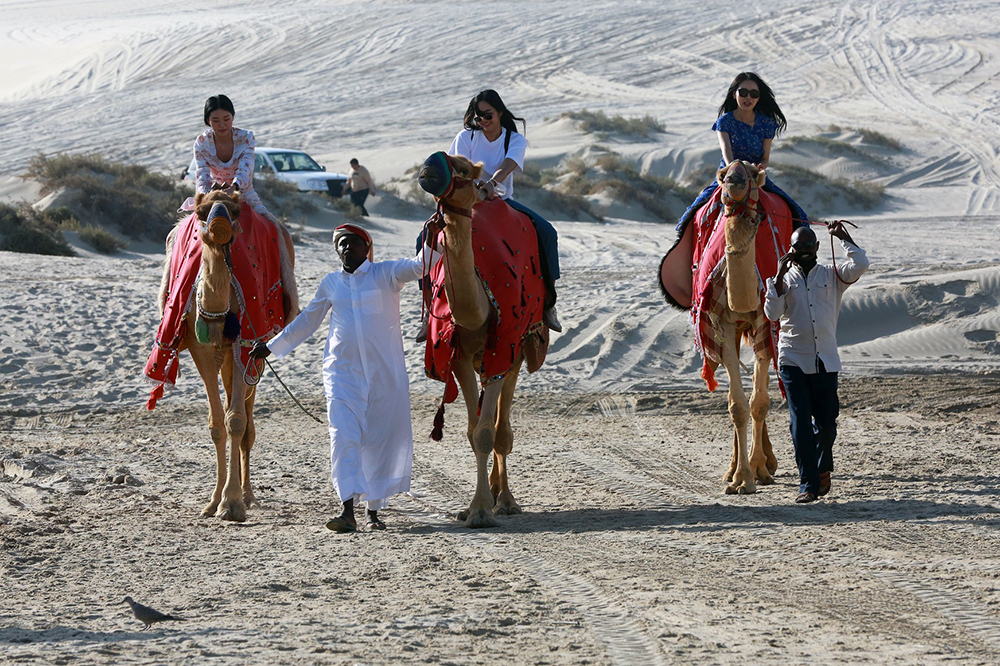
Next to Robophilosophy, ICSR may be the most important conference on social robotics. The fourteenth edition took place in Florence at the end of 2022 and was dedicated to the health sector. “The 15th International Conference on Social Robotics (ICSR 2023) will bring together researchers and practitioners working on the interaction between humans and intelligent robots and on the integration of social robots into our society.  ICSR 2023 will take place in Doha as a face-to-face conference on December 4-7, 2023. This will be the first time that the conference will be hosted in Qatar and in the Middle East and North Africa region.” (Website ICSR) The theme of this year’s ICSR is “Human-Robot Collaboration: Sea, Air, Land, Space and Cyberspace”. According to the organizers, the theme emphasizes on all physical and cyber-physical domains where humans and robots collaborate. Whether Doha is suitable as a venue for the conference needs to be discussed. Qatar is ruled as an absolute monarchy. Sharia law is considered a main source of legislation. The human rights situation in the country has been critical for decades. More information and CfP via icrs.iovision.tn.

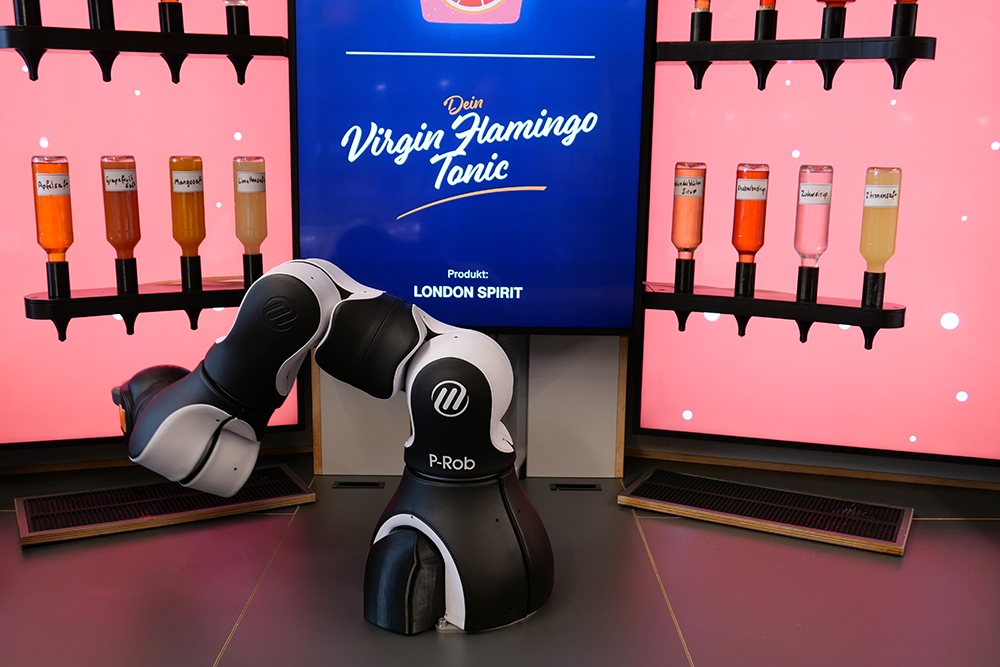
Bar Robots for Well-being of Guests

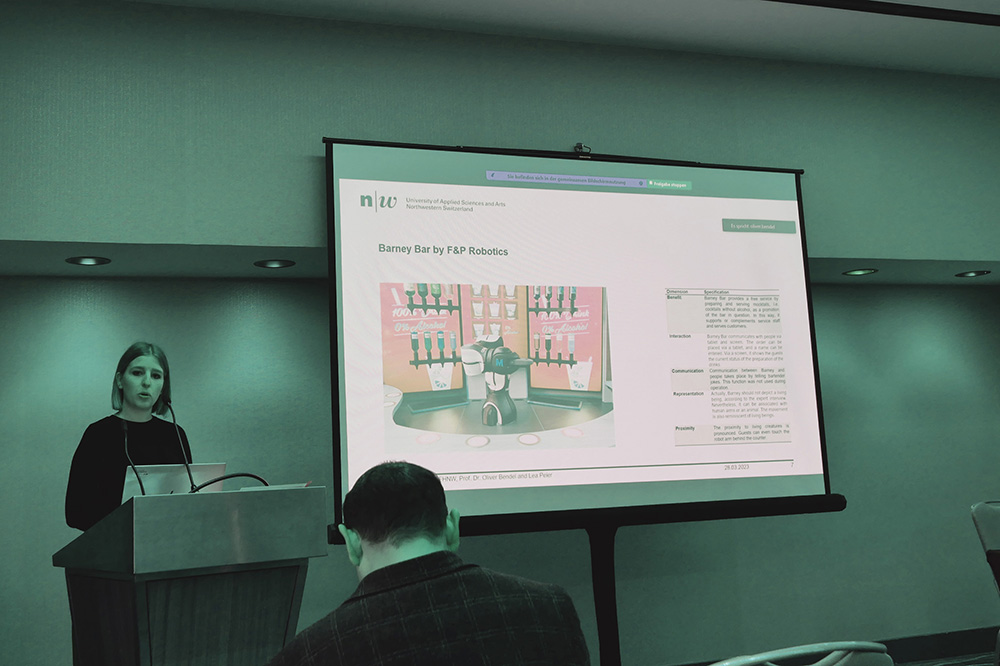
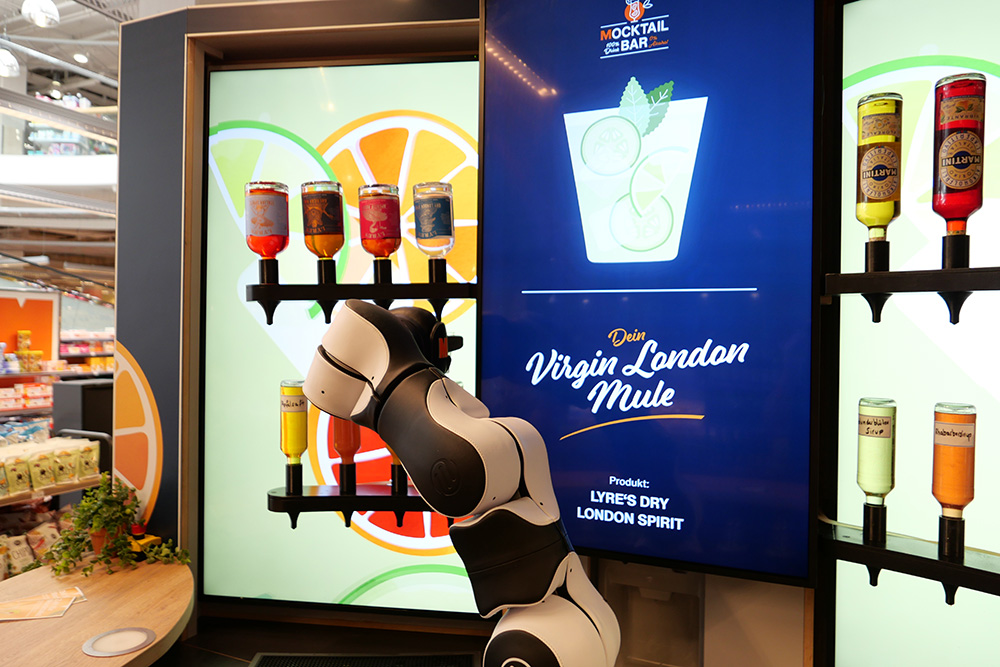
From March 27-29, 2023, the AAAI 2023 Spring Symposia will feature the symposium “Socially Responsible AI for Well-being” by Takashi Kido (Teikyo University, Japan) and Keiki Takadama (The University of Electro-Communications, Japan). The venue is usually Stanford University. For staffing reasons, this year the conference will be held at the Hyatt Regency in San Francisco. On March 28, Prof. Dr. Oliver Bendel and Lea Peier will present their paper “How Can Bar Robots Enhance the Well-being of Guests?”. From the abstract: “This paper addresses the question of how bar robots can contribute to the well-being of guests. It first develops the basics of service robots and social robots. It gives a brief overview of which gastronomy robots are on the market. It then presents examples of bar robots and describes two models used in Switzerland. A research project at the School of Business FHNW collected empirical data on them, which is used for this article. The authors then discuss how the robots could be improved to increase the well-being of customers and guests and better address their individual wishes and requirements. Artificial intelligence can play an important role in this. Finally, ethical and social problems in the use of bar robots are discussed and possible solutions are suggested to counter these.” More Information via aaai.org/conference/spring-symposia/sss23/.

Students Get Excited about Social Robots

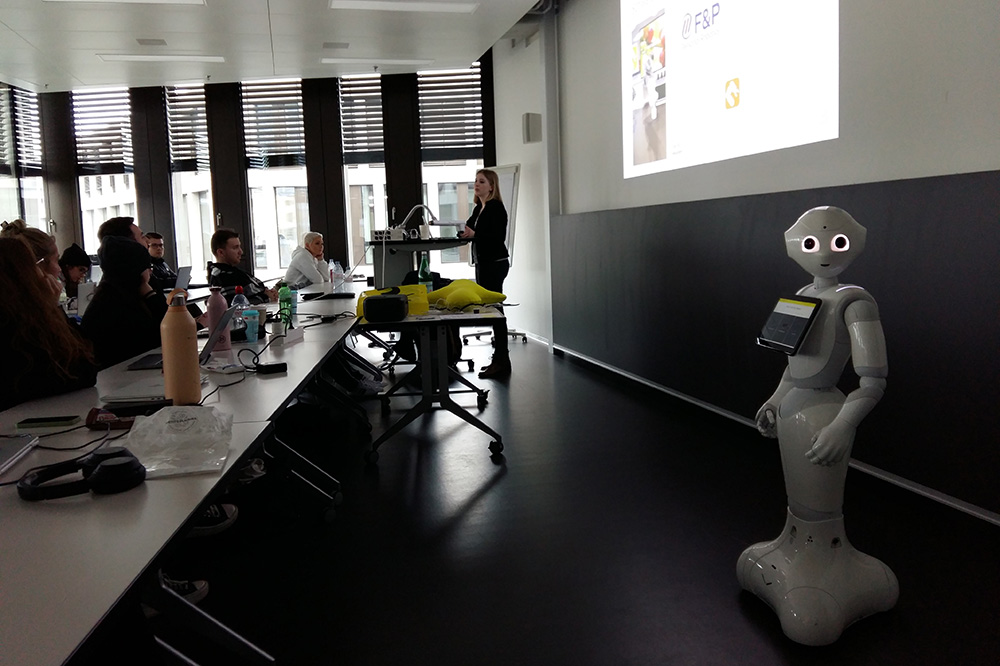
From February 16 to 18, 2023, the elective module “Soziale Roboter aus technischer, wirtschaftlicher und ethischer Sicht” (“Social Robots from a Technical, Economic and Ethical Perspective”) took place at the Brugg-Windisch campus of the School of Business FHNW. The approximately 30 students came from the Basel, Olten, and Brugg-Windisch campuses and from the International Management, Business Informatics, and Business Administration degree programs. Prof. Dr. Oliver Bendel first taught them the basics of robotics and social robotics. In addition, there were excursions into service robotics, proving the thesis that this is increasingly influenced by social robotics: Transport robots and serving robots are getting eyes and mouths, security robots natural language capabilities. In addition, ethical considerations were made, for which empirical foundations had previously been developed. Also present were Pepper, NAO, Alpha Mini, Cozmo and Hugvie, and for a short time little EMO. Guest lectures came from Marc Heimann (CARE-MOMO) and from Lea Peier (barrobots in Switzerland). The students were highly motivated and in the end designed their own social robots with different tasks in group work. This was the third implementation of the elective module and the first at the Brugg-Windisch site. In November 2023, the fourth will take place at the Olten site.

How Customers React to Bar Robots

As part of the AAAI 2023 Spring Symposia in San Francisco, the symposium “Socially Responsible AI for Well-being” is organized by Takashi Kido (Teikyo University, Japan) and Keiki Takadama (The University of Electro-Communications, Japan). The paper “How Can Bar Robots Enhance the Well-being of Guests?” by Oliver Bendel and Lea K. Peier was accepted. Among other things, they show how customers in Switzerland react to bar robots. The talk will take place between March 26 and 29, 2023 at Hyatt Regency, San Francisco Airport. The symposium website states: “For our happiness, AI is not enough to be productive in exponential growth or economic/financial supremacies but should be socially responsible from the viewpoint of fairness, transparency, accountability, reliability, safety, privacy, and security. For example, AI diagnosis system should provide responsible results (e.g., a high-accuracy of diagnostics result with an understandable explanation) but the results should be socially accepted (e.g., data for AI (machine learning) should not be biased (i.e., the amount of data for learning should be equal among races and/or locations). Like this example, a decision of AI affects our well-being, which suggests the importance of discussing ‘What is socially responsible?’ in several potential situations of well-being in the coming AI age.” (Website AAAI) According to the organizers, the first perspective is “(Individually) Responsible AI”, which aims to clarify what kinds of mechanisms or issues should be taken into consideration to design Responsible AI for well-being. The second perspective is “Socially Responsible AI”, which aims to clarify what kinds of mechanisms or issues should be taken into consideration to implement social aspects in Responsible AI for well-being. More information via www.aaai.org/Symposia/Spring/sss23.php#ss09.

Atlas Finally has Hands

“Boston Dynamics just released the latest demo of its humanoid robot, Atlas. The robot could already run and jump over complex terrain thanks to its feet. Now, the robot has hands, per se. These rudimentary grippers give the robot new life. Suddenly, instead of being an agile pack mule, the Atlas becomes something closer to a human, with the ability to pick up and drop off anything it can grab independently.” (TechCrunch, January 18, 2023) This was reported by TechCrunch on January 18, 2023. Hands are actually very important for Atlas. The humanoid robot could now pick up or move heavy objects on a construction site. But it could also take care of trapped or injured animals in a nature park, freeing them or providing them with food and water. Such visions have been described by robot ethicist and machine ethicist Oliver Bendel for some time. A video released on January 18, 2023 shows the grippers picking up construction lumber and a nylon tool bag. “Next, the Atlas picks up a 2×8 and places it between two boxes to form a bridge. The Atlas then picks up a bag of tools and dashes over the bridge and through construction scaffolding. But the tool bag needs to go to the second level of the structure – something Atlas apparently realized and quickly throws the bag a considerable distance.” (TechCrunch, January 18, 2023) At the end of the video, Atlas does a somersault and then extends its hand – its brand new hand – triumphantly.

United Robotics Group launches Plato

United Robotics Group launched the Plato serving robot in Europe and the United States in November 2022. This is according to a press release from the recently formed European alliance of companies and experts. “By combining the functions of industrial and social robotics, with its optimal HRI (Human-Robot Interface), Plato inherits not only the interactivity and expressivity from the world’s well-known humanoid robots Pepper and NAO but also comes with high-level standards of stability and reliability.” (Press Release, November 2022) The reference to industrial robotics is noteworthy, as it is more of a combination of service robotics and social robotics. It is typical that transport robots (think of Relay) and security robots (think of the latest model of K5) are given social features and capabilities such as eyes, mouth, or natural speech. The alliance also uses the unusual term “cobiot” to refer to a mobile robot that assists and collaborates with humans. “The cobiot, designed in Paris and manufactured in France to function in lively, fast-moving environments like restaurants, features an autonomous mobile platform and smart indoor navigation system, destined to support the hospitality and food industry service workers with delivery experiences and advanced safety features.” (Press Release, November 2022) Plato is a competitor of BellaBot, a serving robot with a cat face from Pudu Robotics in China. This robot is in use in Poland, Slovenia, Germany, and Switzerland, for example. It will be interesting to see which model the guests in Europe will prefer.

Plastic Waste in the Pacific Comes from the Fishing Industry

The Ocean Cleanup project has analyzed the plastic waste it has fished out of the sea. The results were published in a paper. From the abstract: “The subtropical oceanic gyre in the North Pacific Ocean is currently covered with tens of thousands of tonnes of floating plastic debris, dispersed over millions of square kilometres. A large fraction is composed of fishing nets and ropes while the rest is mostly composed of hard plastic objects and fragments, sometimes carrying evidence on their origin. In 2019, an oceanographic mission conducted in the area, retrieved over 6000 hard plastic debris items > 5 cm. The debris was later sorted, counted, weighed, and analysed for evidence of origin and age. Our results, complemented with numerical model simulations and findings from a previous oceanographic mission, revealed that a majority of the floating material stems from fishing activities. While recent assessments for plastic inputs into the ocean point to coastal developing economies and rivers as major contributors into oceanic plastic pollution, here we show that most floating plastics in the North Pacific subtropical gyre can be traced back to five industrialised fishing nations, highlighting the important role the fishing industry plays in the solution to this global issue.” (Abstract) In a final thesis at the University of Applied Sciences and Arts Northwestern Switzerland FHNW in 2019, a student described and evaluated six projects for the disposal of plastic waste in seas. An overview can be found here. The Ocean Cleanup was also discussed, beside the WasteShark that sticks out as a robot.

A CARE-MOMO for Lio

The discipline of machine ethics examines, designs, and produces moral machines. The artificial morality (aka machine morality) is usually pre-programmed by a producer or developer. However, another approach is the more flexible morality menu (MOME), an invention by Prof. Dr. Oliver Bendel. With this, owners or users replicate their own moral preferences and convictions onto a machine. A team at the School of Business FHNW implemented a MOME for MOBO (a certain chatbot) in 2019/2020. This project was continued in 2022. Marc Heimann developed a morality menu under the supervision of Oliver Bendel, which is part of a morality module (MOMO) for a care robot like Lio from F&P Robotics. The principle is the same as for the MOBO-MOME. With sliders, the patient can determine the behavior of the robot. This supports his or her personal autonomy and ensures his or her well-being. The results of the CARE-MOMO project will be presented to the company F&P Robotics, which accompanied the project, in October 2022.

A Robot Charging Station for the Disabled

According to a media release, Ford has developed a prototype robot charging station that drivers operate via their smartphone from inside their electric vehicle. The technology could enable disabled persons to stay in the Ford (or another car) while charging, or they could leave the vehicle while the robot completes the task. Disabled drivers, the company says, have already identified ease of charging as a key purchase consideration for electric vehicles. The robot charging station is tested as part of a research project to develop hands-free charging solutions for electric vehicles and fully automatic charging for autonomous vehicles. “Following initial lab testing, Ford researchers are now putting the robot charging station to the test in real-life situations. Once activated, the station cover slides open and the charging arm extends towards the inlet with the help of a tiny camera. For the trial, drivers were able to monitor the charge status via the FordPass app. After charging, the arm retracts back into place.” (Ford Media Release, July 20, 2022) More information is available via the Ford Media Center.

Robots Dancing Like Bees

Robot-robot communication and interaction usually takes place via networks. Spoken language can also be used. In certain situations, however, these methods reach their limits. For example, during a rescue operation in disaster areas, communication via radio signals might not be possible. With this in mind, Kaustubh Joshi from the University of Maryland and Abhra Roy Chowdhury from the Indian Institute of Science (IISc) have developed an alternative approach. Their paper states: “This research presents a novel bio-inspired framework for two robots interacting together for a cooperative package delivery task with a human-in the-loop. It contributes to eliminating the need for network-based robot-robot interaction in constrained environments. An individual robot is instructed to move in specific shapes with a particular orientation at a certain speed for the other robot to infer using object detection (custom YOLOv4) and depth perception. The shape is identified by calculating the area occupied by the detected polygonal route. A metric for the area’s extent is calculated and empirically used to assign regions for specific shapes and gives an overall accuracy of 93.3% in simulations and 90% in a physical setup. Additionally, gestures are analyzed for their accuracy of intended direction, distance, and the target coordinates in the map. The system gives an average positional RMSE of 0.349 in simulation and 0.461 in a physical experiment.” (Abstract) The way of interaction and communication is reminiscent of the bee dance – and indeed this served as a model. The paper can be accessed via www.frontiersin.org/articles/10.3389/frobt.2022.915884/full.