Towards Animal-machine Interaction

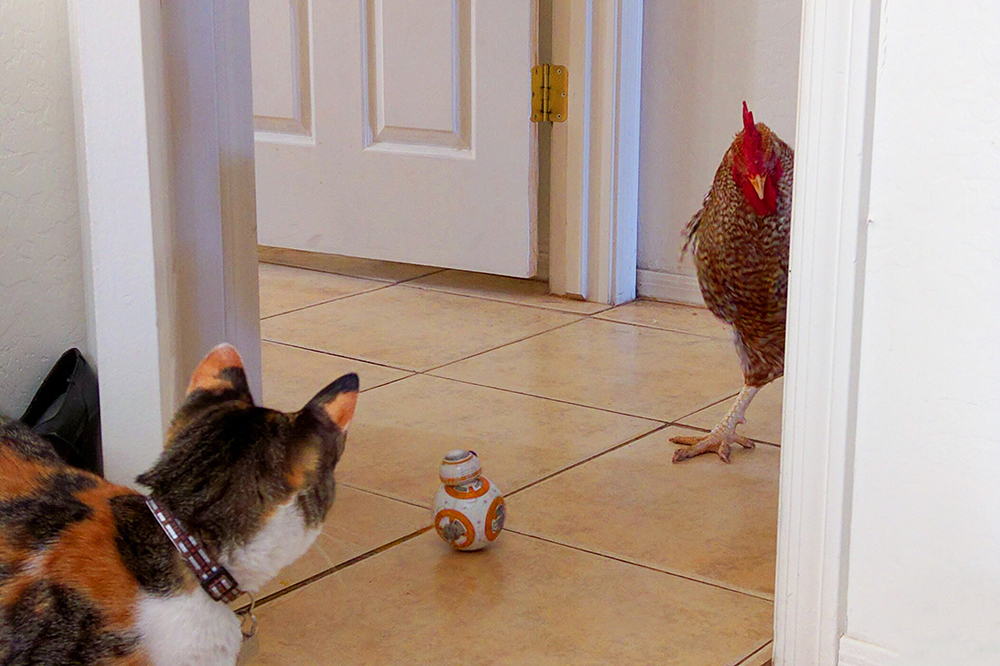
Animal-machine interaction (AMI) and animal-computer interaction (ACI) are increasingly important research areas. For years, semi-autonomous and autonomous machines have been multiplying all over the world, not only in factories, but also in outdoor areas and in households. Robots in agriculture and service robots, some with artificial intelligence, encounter wild animals, farm animals and pets. Jackie Snow, who writes for New York Times, National Geographic, and Wall Street Journal, talked to several people on the subject last year. In an article for Fast Company, she quoted the ethicists Oliver Bendel (“Handbuch Maschinenethik”) and Peter Singer (“Animal Liberation”). Clara Mancini (“Animal-computer interaction: A manifesto”) also expressed her point of view. The article with the title “AI’s next ethical challenge: how to treat animals” can be accessed here. Today, research is also devoted to social robots. One question is how animals react to them. Human-computer interaction (HCI) experts from Yale University recently looked into this topic. Another question is whether we can create social robots specifically for animals. The first beginnings were made with toys and automatic feeders for pets. Could a social robot replace a contact person for weeks on end? What features should it have? In this context, we must pay attention to animal welfare from the outset. Some animals will love the new freedom, others will hate it.

Another Animal-friendly Machine

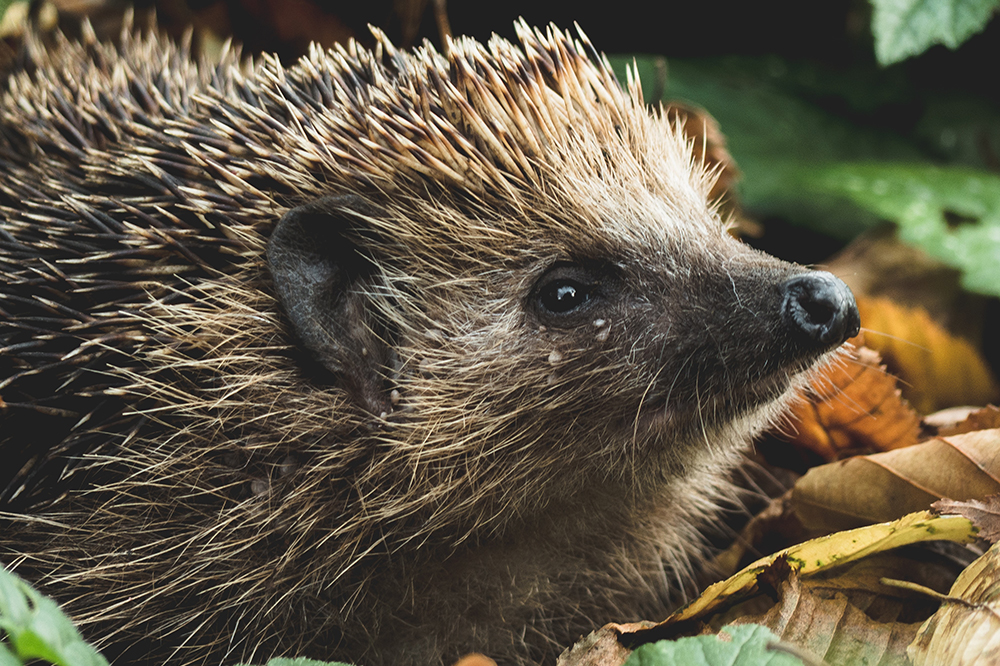
Between June 2019 and January 2020 the project HAPPY HEDGEHOG (HHH) was implemented at the School of Business FHNW. Initiator and client was Oliver Bendel. In the context of machine ethics, the students Emanuel Graf, Kevin Bollier, Michel Beugger and Vay Lien Chang developed the prototype of a lawnmower robot that stops working as soon as it discovers a hedgehog. HHH has a thermal imaging camera. If it encounters a warm object, it further examines it using image recognition. At night a lamp mounted on top helps. After training with hundreds of photos, HHH can identify a hedgehog quite accurately. Firstly, another moral machine has been created in the laboratory, and secondly, the team provides a possible solution to a problem that frequently occurs in practice: commercial lawnmower robots often kill baby hedgehogs in the dark. HAPPY HEDGEHOG could help save them. The video on youtu.be/ijIQ8lBygME shows it without casing; a photo with casing can be found here. The robot is in the tradition of LADYBIRD, another animal-friendly machine.

An Autonomous Ship at Sea

The Mayflower Autonomous Ship (MAS) could be the first vessel to cross the Atlantic that is able to navigate around obstacles and hazards by itself. It will depart from Plymouth, UK on the fourth centenary of the original Mayflower voyage, on 6 September 2020, and will reach Plymouth, USA after an ecxiting tour, dedicated to science. “The project was put together by marine research and exploration company ProMare in an effort to expand the scope of marine research. The boat will carry three research pods equipped with scientific instruments to measure various phenomena such as ocean plastics, mammal behaviour or sea level changes.” (ZDnet, 16 October 2019) According to ZDnet, IBM has now joined the initiative to supply technical support for all navigation operations. It is important that the futuristic ship is not only careful with things, but also with animals. In this context, insights of animal-machine interaction and machine ethics might be useful. Ultimately, the excursion will help the marine mammals by obtaining data on their behaviour.

Happy Hedgehog

Between June 2019 and January 2020, the sixth artifact of machine ethics will be created at the FHNW School of Business. Prof. Dr. Oliver Bendel is the initiator, the client and – together with a colleague – the supervisor of the project. Animal-machine interaction is about the design, evaluation and implementation of (usually more sophisticated or complex) machines and computer systems with which animals interact and communicate and which interact and communicate with animals. While machine ethics has largely focused on humans thus far, it can also prove beneficial for animals. It attempts to conceive moral machines and to implement them with the help of further disciplines such as computer science and AI or robotics. The aim of the project is the detailed description and prototypical implementation of an animal-friendly service robot, more precisely a mowing robot called HAPPY HEDGEHOG (HHH). With the help of sensors and moral rules, the robot should be able to recognize hedgehogs (especially young animals) and initiate appropriate measures (interruption of work, expulsion of the hedgehog, information of the owner). The project has similarities with another project carried out earlier, namely LADYBIRD. This time, however, more emphasis will be placed on existing equipment, platforms and software. The first artifact at the university was the GOODBOT – in 2013.