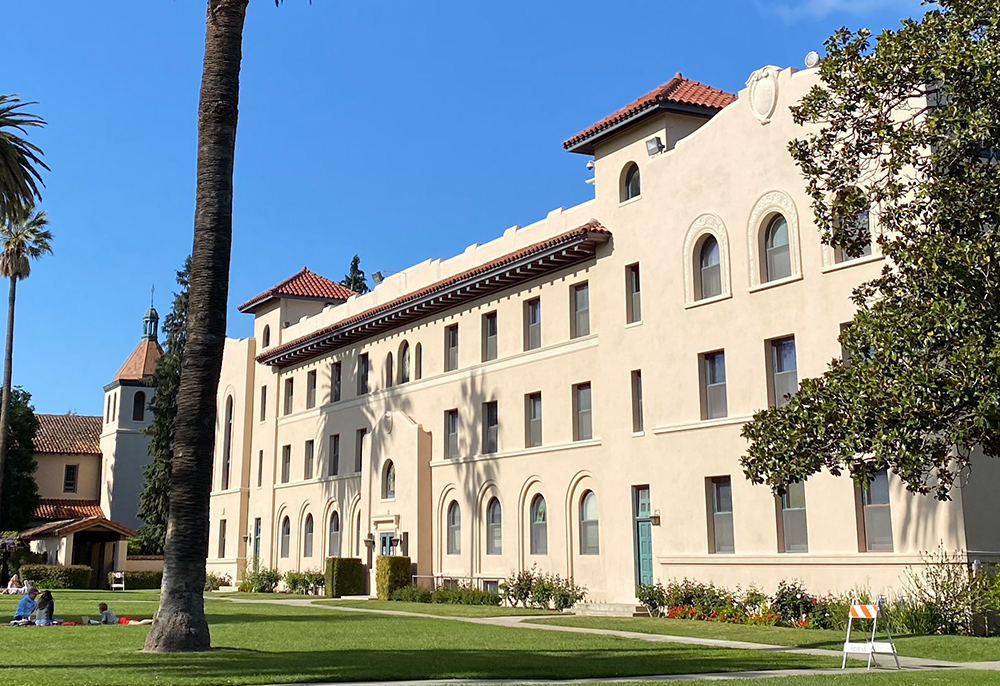
The AAAI Spring Symposium Series fosters an intimate environment for emerging AI communities to engage in workshop-style discussions. After several editions away from a university setting, the series appears to have found a new academic home. The AAAI 2027 Spring Symposium Series will take place from March 22 to March 24, 2027, at Santa Clara University in Santa Clara, California. For many years, Stanford University provided the setting for the Spring Symposia, while more recent editions have taken place at the Hyatt Regency and other hotels at San Francisco Airport. Santa Clara University now provides a new academic setting in Silicon Valley for this established series and its distinctive format of several small symposia running in parallel. At the same time, AAAI has issued the Call for Proposals for the 2027 Spring Symposium Series. Proposals for individual symposia are due November 17, 2026, with notifications scheduled for December 8. AAAI expects to select approximately eight symposia covering a broad range of topics within and around artificial intelligence, with a particular interest in emerging research areas and communities. The move to Santa Clara University thus marks a new chapter for the AAAI Spring Symposium Series and brings the event back to a university campus. The Call for Proposals is available on the Spring Symposium Series site (Photo: Cristiano Tomás, CC BY-SA 4.0).
Transport Robots on the Streets of LA
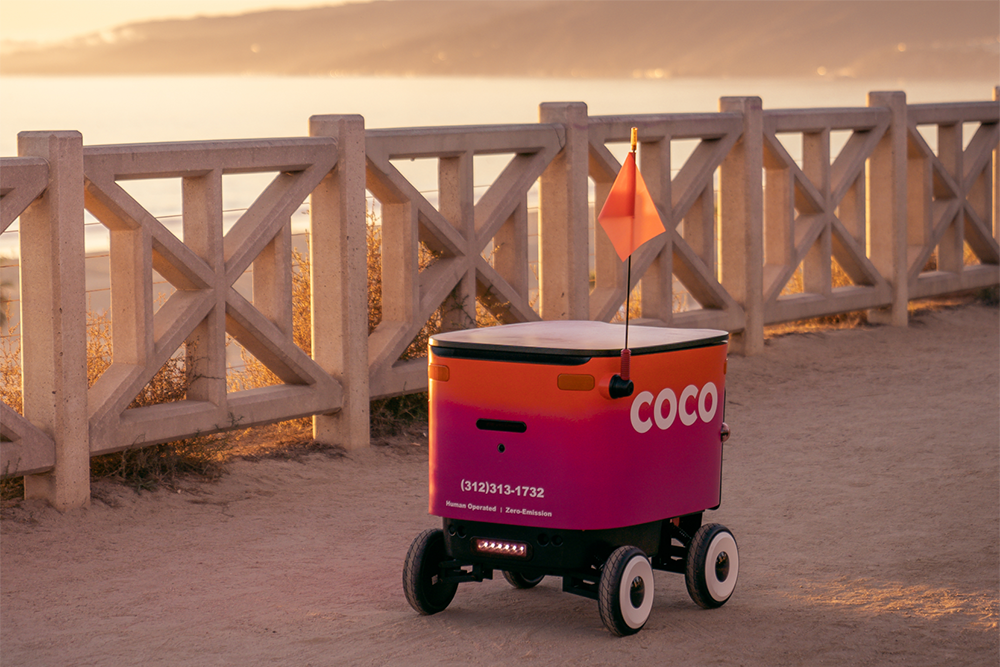
Hundreds of transport robots are on the streets of Los Angeles for Coco, an American food delivery company. According to them, they cover all major neighborhoods in the city and save considerable time and money. As Engadget reports, Coco has now expanded beyond its home base. It says the service is already available in Austin, and will also be available in Dallas, Houston, and Miami in the future. The vehicles are controlled remotely by employees, from their own homes. Other providers, however, are focusing on autonomous mobility. Oliver Bendel was able to see for himself on site in Santa Monica at the beginning of April 2022 that the transport robots manufactured by Segway drive along the sidewalks and cross the streets in compliance with the rules. Still, he considers them – like the Starship Technologies devices that Swiss Post has experimented with – to be tripping hazards. In metropolitan areas like Los Angeles, moreover, vandalism is likely to be a problem. Still, delivery seems to work on the whole (Photo: Coco).
Punch the Robot
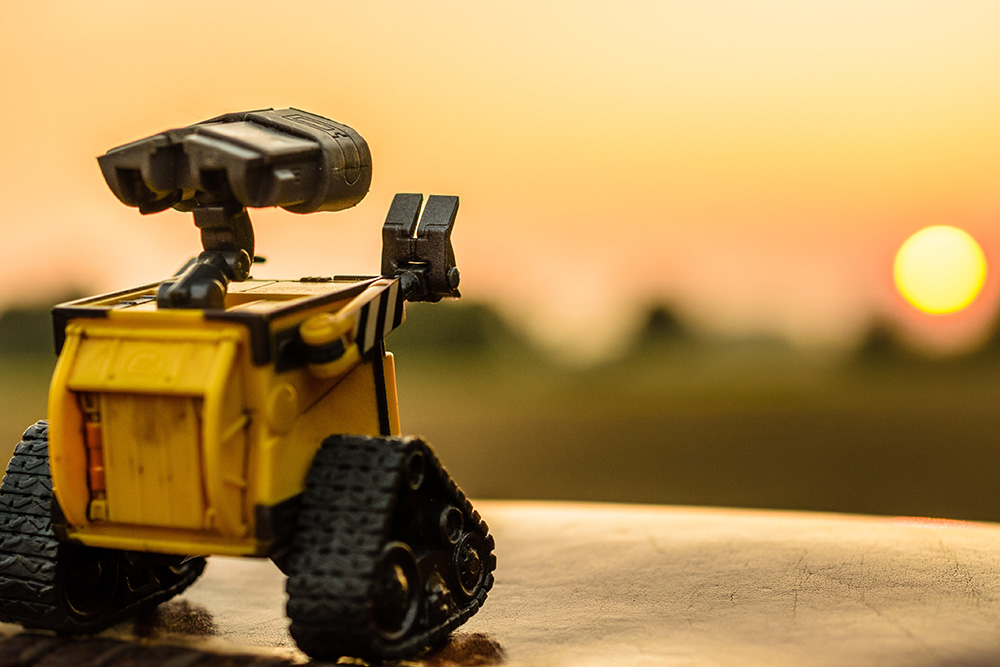
Robots are repeatedly damaged or destroyed. The hitchBOT is a well-known example. But also the security robot K5 has become a victim of attacks several times. The latest case is described in the magazine Wired: “Every day for 10 months, Knightscope K5 patrolled the parking garage across the street from the city hall in Hayward, California. An autonomous security robot, it rolled around by itself, taking video and reading license plates. Locals had complained the garage was dangerous, but K5 seemed to be doing a good job restoring safety. Until the night of August 3, when a stranger came up to K5, knocked it down, and kicked it repeatedly, inflicting serious damage.” (Wired, 29 August 2019) The author investigates the question of whether one may attack robots. Of course you shouldn’t damage other people’s property. But what if the robot is a spy, a data collector, a profile creator? Digital self-defence (which exploits digital as well as analog possibilities) seems to be a proven tool not only in Hong Kong, but also in the US and Europe. The rights of robots that some demand cannot be a serious problem. Robots do not have rights. They feel nothing, they do not suffer, they have no consciousness. “So punch the robot, I tell you! Test the strength of your sociopolitical convictions on this lunk of inorganic matter!” (Wired, 29 August 2019)