Giving Endangered Languages a Digital Future
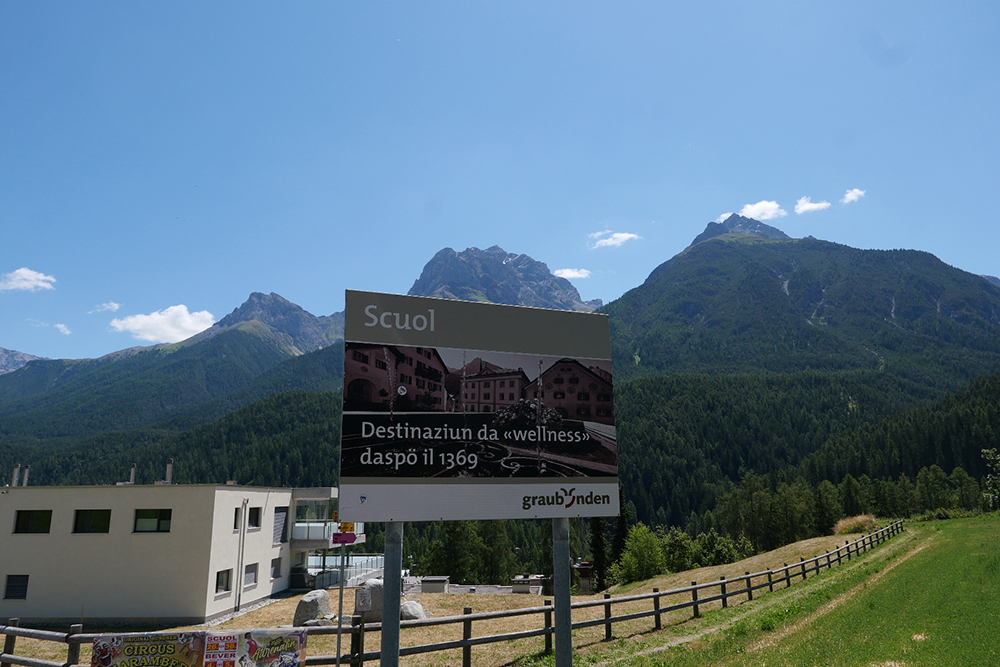
Since 2012, Prof. Dr. Oliver Bendel (FHNW School of Business) has initiated and implemented a wide variety of chatbots and voice assistants. These systems have been covered by the media and have even attracted the interest of NASA. His theoretical foundation and practical expertise stem from his doctoral dissertation on this topic, which dates back a quarter of a century. Since 2022, his focus has been on dialogue systems for dead and endangered languages. This work has resulted in @ve, a chatbot for Latin (implemented by Karim N’Diaye), @llegra, a voice-enabled chatbot for Vallader, a variety of Romansh (implemented by Dalil Jabou), and kAIxo, a voice-enabled chatbot for Basque (implemented by Nicolas Lluis Araya). In addition, Oliver Bendel is experimenting with chatbots for extinct languages such as Egyptian and Akkadian. On April 8, 2026, his article “Chatbots for Dead, Endangered, and Extinct Languages: Possibilities and Limitations of Generative AI for Continuing Education” was published in Wiley Industry News. The article focuses on the question of how chatbots based on generative AI can contribute to the preservation and promotion of dead, endangered, and extinct languages in continuing education, as well as in formal education. Oliver Bendel is also involved in the University of Applied Sciences of the Grisons’ IdiomVoice project, which will be presented on June 17, 2026, at the GRdigital Project Showcase during an evening networking reception. Visitors to the showcase will have the opportunity to explore the current prototype and interact directly in Sursilvan with the two chatbot characters, Lina and Brida. With @llegra, Lina, and Brida, Graubünden has gained several digital ambassadors for its Romansh idioms.

Chatbots for Endangered Languages

On April 8, 2026, the article “Chatbots for Dead, Endangered, and Extinct Languages: Possibilities and Limitations of Generative AI for Continuing Education” by Oliver Bendel was published in Wiley Industry News. The focus is on how chatbots based on generative AI can contribute to the preservation and promotion of dead, endangered, and extinct languages in continuing education (as well as in vocational training). Following an introduction to the technical and conceptual foundations, several projects at the FHNW School of Business are presented and discussed from technical, ethical, and didactic perspectives. These dimensions are revisited in the next section and expanded into general and overarching considerations. Finally, possible and necessary steps are outlined that go beyond the purely technological discourse. Additionally, an outlook is provided on future possibilities related to new versions of large language models. This article provides the first comprehensive overview of the projects initiated by Oliver Bendel that are dedicated to dead, endangered, and extinct languages, including @ve (for Latin), @llegra (for Vallader), and kAIxo (for Basque), as well as Cleop@tr@ (Egyptian). It can be accessed via the publisher’s website or downloaded here as a PDF.

Maori Girl Can Speak and Write Maori

Conversational agents have been the subject of Prof. Dr. Oliver Bendel’s research for a quarter of a century. He dedicated his doctoral thesis at the University of St. Gallen from the end of 1999 to the end of 2022 to them – or more precisely to pedagogical agents, which would probably be called virtual learning companions today. He has been a professor at the FHNW School of Business since 2009. From 2012, he mainly developed chatbots and voice assistants in the context of machine ethics, including GOODBOT, LIEBOT, BESTBOT, and SPACE THEA. In 2022, the information systems specialist and philosopher of technology then turned his attention to dead and endangered languages. Under his supervision, Karim N’diaye developed the chatbot @ve for Latin and Dalil Jabou the chatbot @llegra for Vallader, an idiom of Rhaeto-Romanic, enhanced with voice output. He is currently testing the range of GPTs – “customized versions of ChatGPT”, as OpenAI calls them – for endangered languages such as Irish (Irish Gaelic), Maori, and Basque. According to ChatGPT, there is a relatively large amount of training material for them. On May 9, 2024 – one week after Irish Girl – a first version of Maori Girl was created. At first glance, it seems to have a good grasp of the Polynesian language of the indigenous people of New Zealand. You can have the answers translated into English or German. Maori Girl is available in the GPT Store and will be further improved over the next few weeks

Irish Girl Can Speak and Write Irish

Conversational agents have been the subject of Prof. Dr. Oliver Bendel’s research for a quarter of a century. He dedicated his doctoral thesis at the University of St. Gallen from the end of 1999 to the end of 2022 to them – or more precisely to pedagogical agents, which would probably be called virtual learning companions today. He has been a professor at the FHNW School of Business since 2009. From 2012, he mainly developed chatbots and voice assistants in the context of machine ethics, including GOODBOT, LIEBOT, BESTBOT, and SPACE THEA. In 2022, the information systems specialist and philosopher of technology then turned his attention to dead and endangered languages. Under his supervision, Karim N’diaye developed the chatbot @ve for Latin and Dalil Jabou the chatbot @llegra for Vallader, an idiom of Rhaeto-Romanic, enhanced with voice output. He is currently testing the range of GPTs – “customized versions of ChatGPT”, as OpenAI calls them – for endangered languages such as Irish (Irish Gaelic), Maori, and Basque. According to ChatGPT, there is a relatively large amount of training material for them. A first version of Irish Girl was created on May 3, 2024. At first glance, she seems to have a good grasp of the Goidelic language from the Celtic family. You can have the answers translated into English or German. Afterwards, you may have to ask her to switch back to Irish. Irish Girl is available in the GPT Store and will be further improved in the coming weeks.