Mirumi Opens Pop-Up Store at Harrods
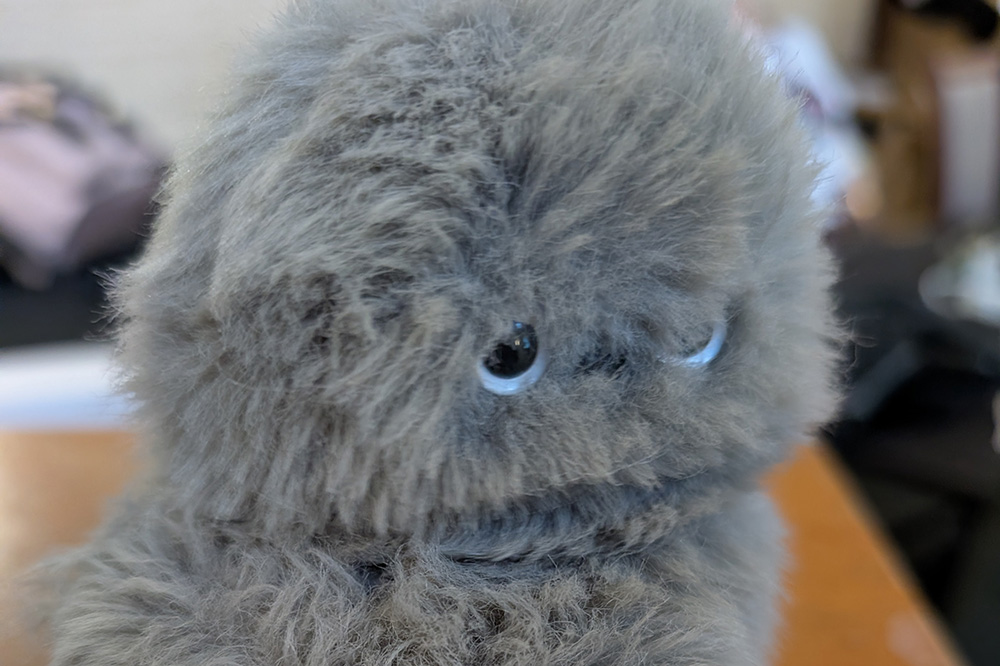
Mirumi, the wearable social robot from Japan, is coming to Harrods in London with an exclusive pop-up store running from July 20 through August 16, 2026. The furry robotic bag charm first gained international attention at CES 2025 and later became a Kickstarter success before selling out during its initial launch in Japan. Designed by Yukai Engineering, Mirumi responds to sounds, movement, touch, and nearby people by turning its head and displaying expressive, lifelike reactions, creating the feeling of carrying a curious little companion on your bag. While Harrods has not announced specific details about the pop-up, visitors can expect the opportunity to experience and purchase Mirumi in person. Exclusive editions have not been confirmed, but Harrods is well known for limited-time collaborations and exclusive retail experiences, making the pop-up especially appealing for collectors and tech enthusiasts. Following its successful debut in Japan and appearances at international events like ICSR + Art 2026, Mirumi is quickly becoming one of the most talked-about wearable social robots of 2026 and is already being compared to the next big collectible trend. An article by Oliver Bendel on wearable social robots is available via Wiley Industry News or directly here as a PDF.

Goodbye, ICSR + Art 2026

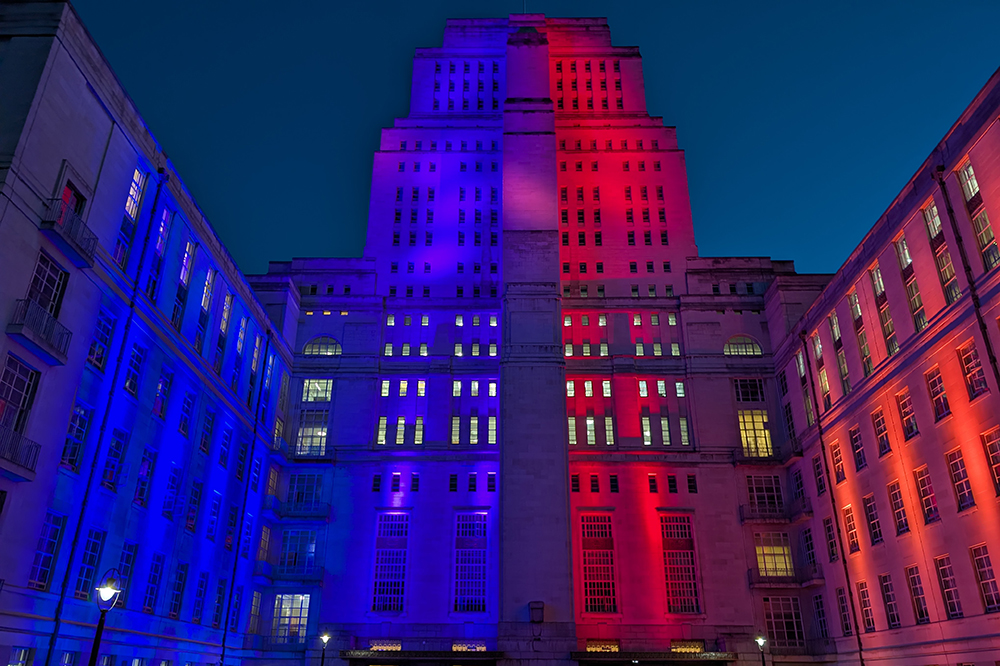
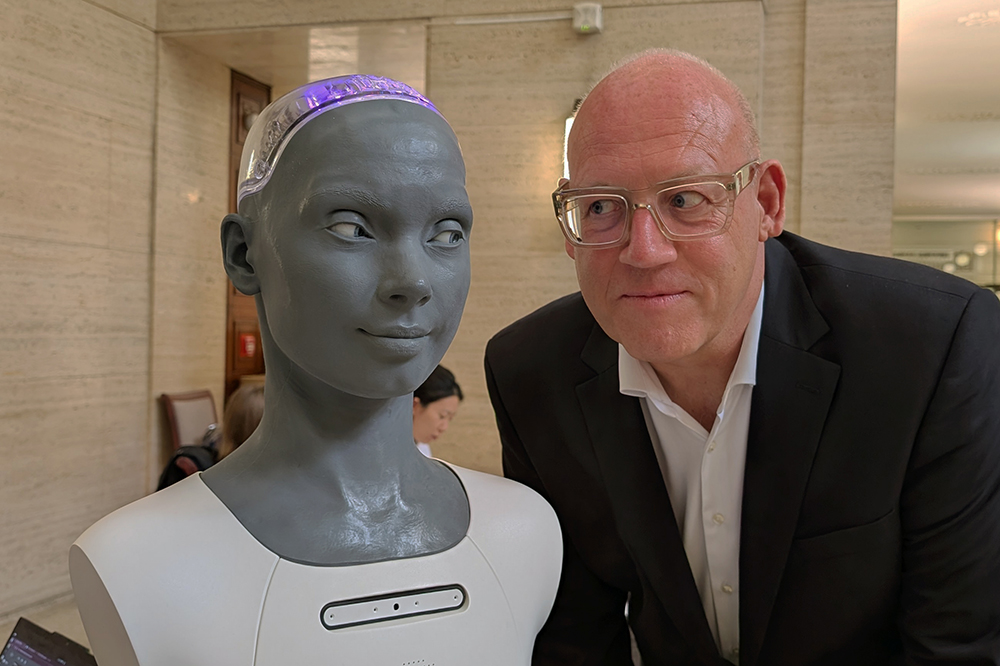
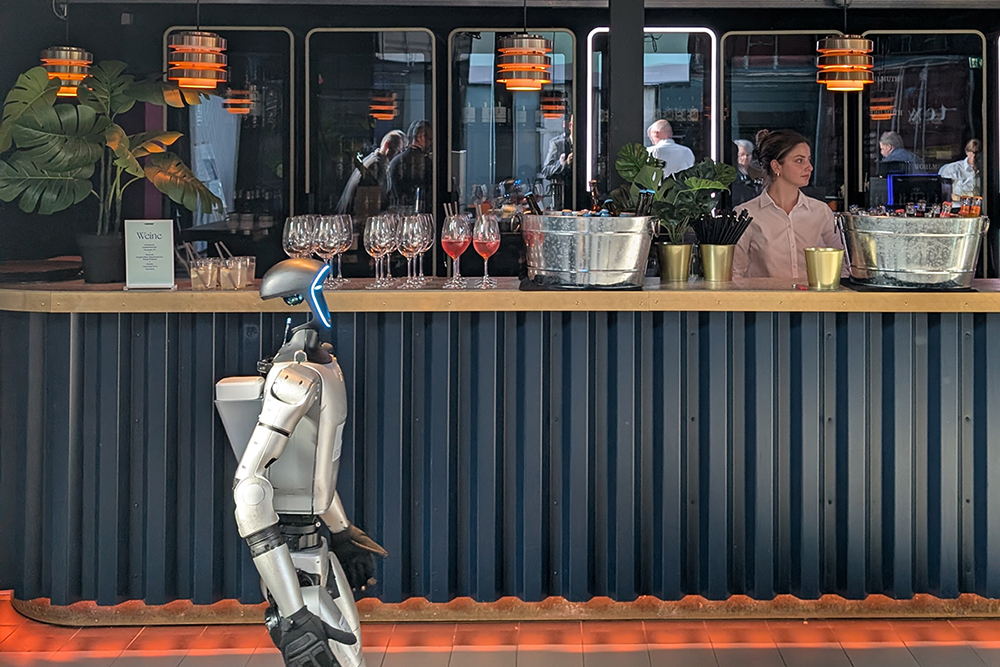
The 18th International Conference on Social Robotics (ICSR + Art 2026) took place in London from July 1–4, bringing together researchers, academics, and industry professionals from around the world to explore the latest advances in social robotics. Hosted by Hooman Samani and Saina Akhond from the University of the Arts London, the conference welcomed around 350 participants who presented their latest research in the main track and special sessions while engaging in lively discussions with both humans and robots in the Debate Room. Teams also competed in the Grand Challenge, showcasing innovative concepts and working prototypes that demonstrated the future potential of social robotics. A series of inspiring keynote presentations explored emerging technologies as well as important methodological questions shaping the field, while robot performances and a memorable robot dance featuring Silke Grabinger added an artistic dimension to the event. Throughout the conference, attendees had the opportunity to meet an impressive range of social robots, including Furhat, Ameca, Euclid, Lovot, and Mirumi. Furhat and Ameca represented highly expressive humanoid platforms capable of remarkably lifelike interactions, while Euclid attracted particular attention as an open-source humanoid robot built for only a few hundred dollars, proving that affordable hardware can compete with well-known androids such as Sophia and Erika. In contrast, Lovot and Mirumi showcased the softer side of social robotics. Mirumi, a small furry wearable companion robot, charmed visitors with its ability to cling to the handle of a handbag using its tiny arms and is expected to appear soon in pop-up stores, particularly targeting girls and women. On the third evening, after a thought-provoking panel discussion and another series of robot performances, enthusiastic participants left the illuminated Senate House inspired by several days of groundbreaking research, creative collaboration, and a shared vision of how humans and robots will shape the future together. Further information is available at icsr2026.uk.

Start of the ICSR + Art 2026 in London

On July 1, 2026, the 18th International Conference on Social Robotics (ICSR + Art 2026) officially opened in London. Participants were welcomed by the General Chairs, Hooman Samani and Saina Akhond of the University of the Arts London, as well as by several robots, including the humanoid robot Ameca and the companion robot Lovot. Following registration and breakfast, the conference immediately moved into its scientific program with several parallel sessions. The Main Track Papers were presented in Conference Hall 1 (Beveridge Hall), while Special Sessions took place in Conference Hall 2 (Chancellor’s Hall). At the same time, authors of Short Papers introduced their work during the Teaser Talks in the Debate Hall (Senate Room). Held from July 1–4, 2026, ICSR is the leading international forum for researchers, academics, and industry professionals working in the field of social robotics. This year’s edition places a special emphasis on the intersection of social robotics and the arts, highlighting artistic and creative applications of robotic technologies. In addition to the technical program, the conference features the Robot Fringe Festival, the Grand Challenge, artistic performances, industry events, and numerous opportunities for networking and collaboration with leading researchers and practitioners from around the world. Further information is available at icsr2026.uk.

ARGOS in London

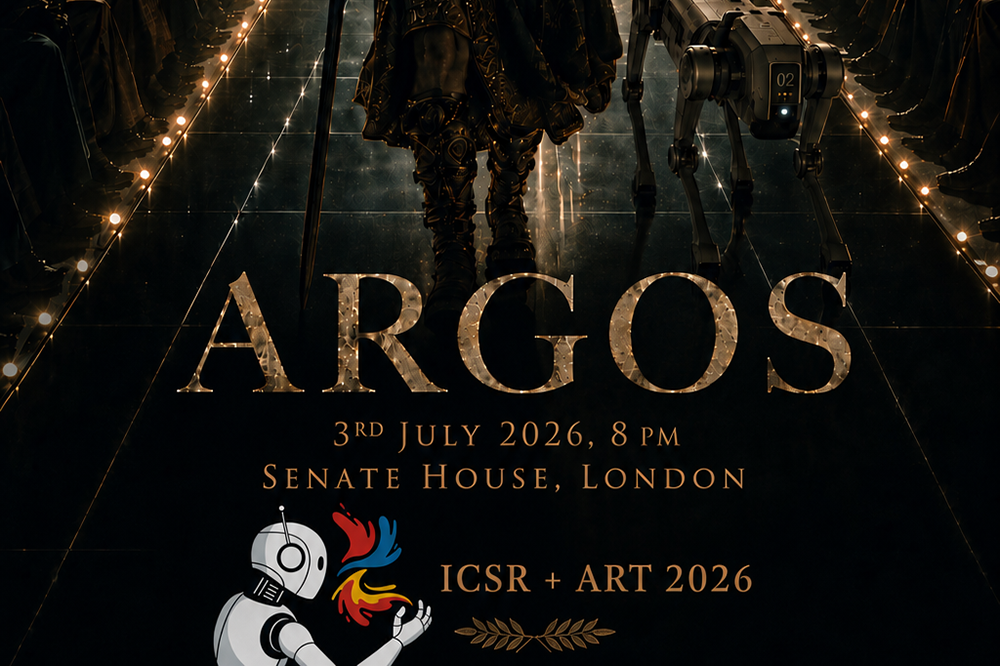
The 18th International Conference on Social Robotics (ICSR + Art 2026) will take place in London, UK, from 1–4 July 2026. ICSR is the leading international forum that brings together researchers, academics, and industry professionals from across disciplines to advance the field of social robotics. This year’s conference combines cutting-edge research in social robotics with a unique focus on artistic and creative applications of robotics. One of the highlights of the conference will be ARGOS, a performance staged on 3 July 2026 at Senate House in London. Rooted in Homer’s “Odyssey”, ARGOS reimagines the return of Odysseus after twenty years of war, recognized only by his faithful dog, here embodied by a real robot dog. The performance explores trust, intimacy, error, vulnerability, and the ethics of human-robot relationships. Developed as part of the Creative Robotics Theatre research initiative, ARGOS is a collaboration between the University of the Arts London, the University of Leeds, the Cyprus University of Technology, and CYENS. Directed by George Rodosthenous and produced by Hooman Samani, the project demonstrates how robotics and theatre can come together to inspire new reflections on technology and human connection. Further information is available at hoomansamani.com/creative-robotics/creative-robotic-theatre/argos/.

ICSR + Art 2026: Programme Highlights

The 18th International Conference on Social Robotics (ICSR + Art 2026) will take place in London, UK, from 1–4 July 2026. ICSR is the leading international forum that brings together researchers, academics, and industry professionals from across disciplines to advance the field of social robotics. The preliminary programme, now available, offers four days of scientific exchange, artistic exploration, and community building, featuring keynote lectures, paper presentations, special sessions, workshops, debates, a Grand Challenge, exhibitions, and a variety of networking opportunities. Reflecting the conference theme ICSR + Art, the programme highlights the growing intersections between social robotics and creative practice through events such as the Robot Fringe Festival, the Rising Stars in Social Robotics event, the premiere performance of Quantwin by Silke Grabinger, the 1001 Nights with Robots Show, Argos, and the Robot Fashion Show, while also covering the full breadth of contemporary social robotics research. Participants will have opportunities to engage with leading experts from academia, industry, healthcare, design, the arts, and other fields. Full details of the programme are available at icsr2026.uk/programme/.

There’s No Place Like Home

The 18th International Conference on Social Robotics (ICSR + Art 2026) will take place in London, UK, from 1–4 July 2026. ICSR is the leading international forum that brings together researchers, academics, and industry professionals from across disciplines to advance the field of social robotics. As part of the conference programme, ICSR Industry Day will offer a dynamic platform connecting research and industry through a panel debate, a UKRI-led workshop, and a pitch session showcasing emerging robotics start-ups. A key highlight will be the panel discussion “There’s No Place Like Home: Exploring the Next Frontier for Social Robots”, taking place on Friday, 3 July from 2.30-4.00 pm. Bringing together leading voices from industry, the session will examine the growing interest in domestic environments as the next major market for social robotics. While companies increasingly envision robots supporting household tasks, personalised assistance, ageing-in-place, and companionship, the home presents unique challenges as a deeply personal and unpredictable setting where trust, privacy, and reliability are essential. Drawing on firsthand experience in deploying consumer robots, the panellists will discuss both the opportunities and the obstacles of integrating robots into everyday domestic life, addressing issues such as surveillance, dependency, social acceptance, and design limitations. The panel will feature Ira Renfrew, Co-Founder and Chief People Product Officer at Familiar Machines & Magic; Shunsuke Aoki, Founder of Yukai Engineering; Craig Allen, former Chief Creative Officer at Embodied (now Moxie Robots); and Samuel Ader, VP Growth & Supply at Cera (Genie Connect). The discussion will be moderated by Elizabeth Jochum. Together, the speakers will explore how thoughtful, human-centred innovation can help social robots earn a meaningful place in people’s homes and daily lives. Further information and registration details for the Industry Day panel are available at: icsr2026.uk/industry-day/.

Keynote Speakers of ICSR + Art 2026

The 18th International Conference on Social Robotics (ICSR + Art 2026) will take place in London, UK, from 1–4 July 2026. ICSR is the leading international forum that brings together researchers, academics, and industry professionals from across disciplines to advance the field of social robotics. This year’s conference will feature three distinguished keynote speakers whose work is shaping the future of artificial intelligence, robotics, and human-robot interaction. Hatice Gunes, Professor of Affective Intelligence and Robotics at the University of Cambridge, is internationally recognised for her pioneering research on affective computing, multimodal intelligence, and socially aware AI systems, with a strong emphasis on ethics, fairness, and wellbeing in robotics. Jean Oh, Associate Research Professor at Carnegie Mellon University and Director of the roBot Intelligence Group, is known for her work on collaborative robots, social navigation, and creative physical AI, focusing on developing robots that learn, adapt, and work safely alongside humans in shared environments. Nicolas Heess, Research Scientist and Director at Google DeepMind, leads cutting-edge research on general-purpose robotics and embodied AI, exploring how advances in machine learning, perception, and motor control can bring intelligent robots into the physical world. Together, these keynote speakers represent the forefront of research and innovation driving the next generation of social robotics. Further information on the keynote programme is available at: icsr2026.uk/keynote/.

Final Call for ICSR + Art 2026

The 18th International Conference on Social Robotics (ICSR + Art 2026) will take place in London, UK, from 1–4 July 2026. ICSR is the leading international forum that brings together researchers, academics, and industry professionals from across disciplines to advance the field of social robotics. For its 18th edition, the conference will present the special theme ICSR + Art, highlighting how robots can move beyond their conventional roles to become tools, partners, and co-creators within artistic and creative practices. At the same time, the conference remains open to the full breadth of social robotics research, including human–robot interaction, medical and assistive robotics, artificial intelligence and machine learning, ethics, design, education, and cultural applications. Accepted papers will be published in Springer’s Lecture Notes in Artificial Intelligence (LNAI) series and indexed in major academic databases. Due to current extenuating circumstances worldwide and following requests from several authors, the submission deadlines have been extended by a few additional days to allow additional time for final submissions. No further extensions of the submission deadlines are planned, and all submissions must follow the updated schedule. All deadlines are based on Anywhere on Earth (AoE) time. Authors who have already submitted a paper may use the extension to update their submission; if any difficulty occurs when modifying the existing entry in the system, the previous submission may be withdrawn and replaced with a new version. Updated dates are available at icsr2026.uk/dates/ and submission instructions can be found at icsr2026.uk/submission/ (Photo: stevecadman/CC BY-SA 2.0).

Deadlines Extended for ICSR + Art 2026

The 18th International Conference on Social Robotics (ICSR + Art 2026) will take place in London, UK, from 1-4 July 2026. ICSR is the leading international forum that brings together researchers, academics, and industry professionals from across disciplines to advance the field of social robotics. For its 18th edition, the conference will present the special theme ICSR + Art, highlighting how robots can move beyond their conventional roles to become tools, partners, and co-creators within artistic and creative practices. At the same time, the conference remains open to the full breadth of social robotics research, including human-robot interaction, medical and assistive robotics, artificial intelligence and machine learning, ethics, design, education, and cultural applications. Accepted papers will be published in Springer’s Lecture Notes in Artificial Intelligence (LNAI) series and indexed in major academic databases. The conference programme will encompass regular papers, short papers, special sessions, a design and art competition, debates, the Robot Fringe live performance strand, and an Industry Day dedicated to emerging robotics and technology companies. Regular Papers for the main track must follow the submission guidelines provided on the conference website and be submitted via the Springer Meteor system by 6 March 2026. Contributions to Special Sessions should likewise follow the Regular Paper instructions and be submitted to the respective session. Short Papers must comply with the specific Short Paper guidelines and be submitted accordingly. The ICSR Design / Art Competition, proposals for debates, and submissions for the Robot Fringe live robotic performance programme are due by 15 March 2026. Early-stage robotics and technology companies wishing to showcase their work at the Industry Day may apply until 15 May 2026. Further details, submission instructions, and relevant links are available at icsr2026.uk.

Robot Fringe Open for Submissions

The 18th International Conference on Social Robotics (ICSR + Art 2026) will take place in London, UK, from 1–4 July 2026. ICSR is the leading international forum that brings together researchers, academics, and industry professionals from across disciplines to advance the field of social robotics. As part of the conference program, Robot Fringe 2026 offers a dedicated platform for experimental, daring, and imaginative ideas, presented on a performance stage within the supportive and inclusive environment of ICSR+ART 2026 (icsr2026.uk/robot-fringe/). Drawing inspiration from the Edinburgh Festival Fringe – the world’s largest performing arts festival and the origin of a global tradition of fringe and off-festivals celebrating unconventional and small-scale performances (www.edfringe.com) – Robot Fringe embraces creative risk-taking and non-traditional formats across artistic and technological practices. The variety show will take place on the evening of Thursday 2 July at Senate House in London and runs in conjunction with ICSR+ART 2026. The program is curated and hosted by researcher-comedians Heather Knight and Piotr Mirowski. Further information and submission details are available via the ICSR submission page (icsr2026.uk/submission/) and the Robot Fringe website (www.robotfringe.com).