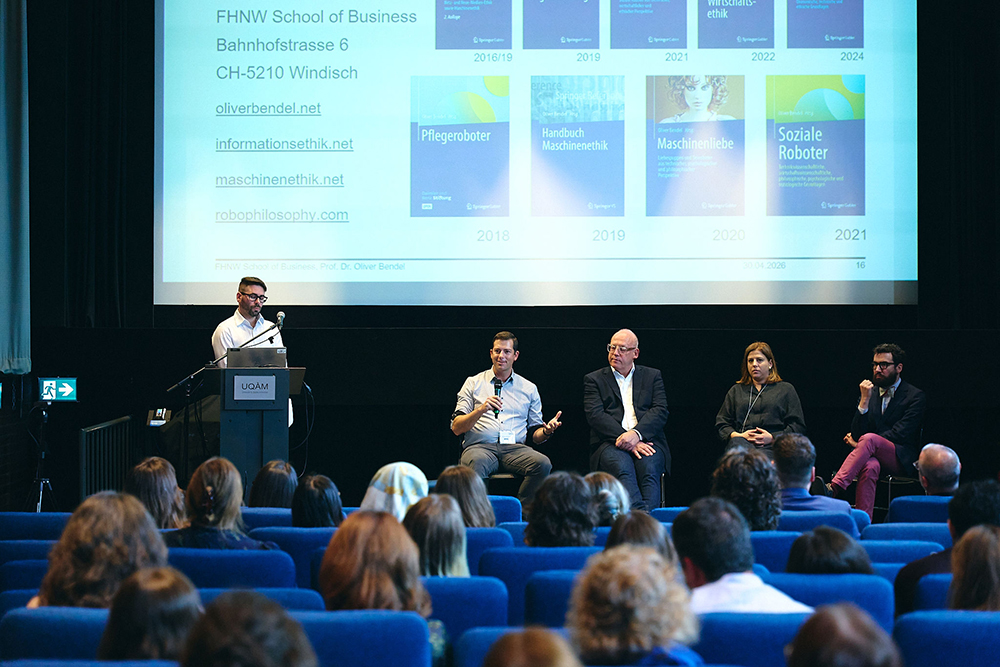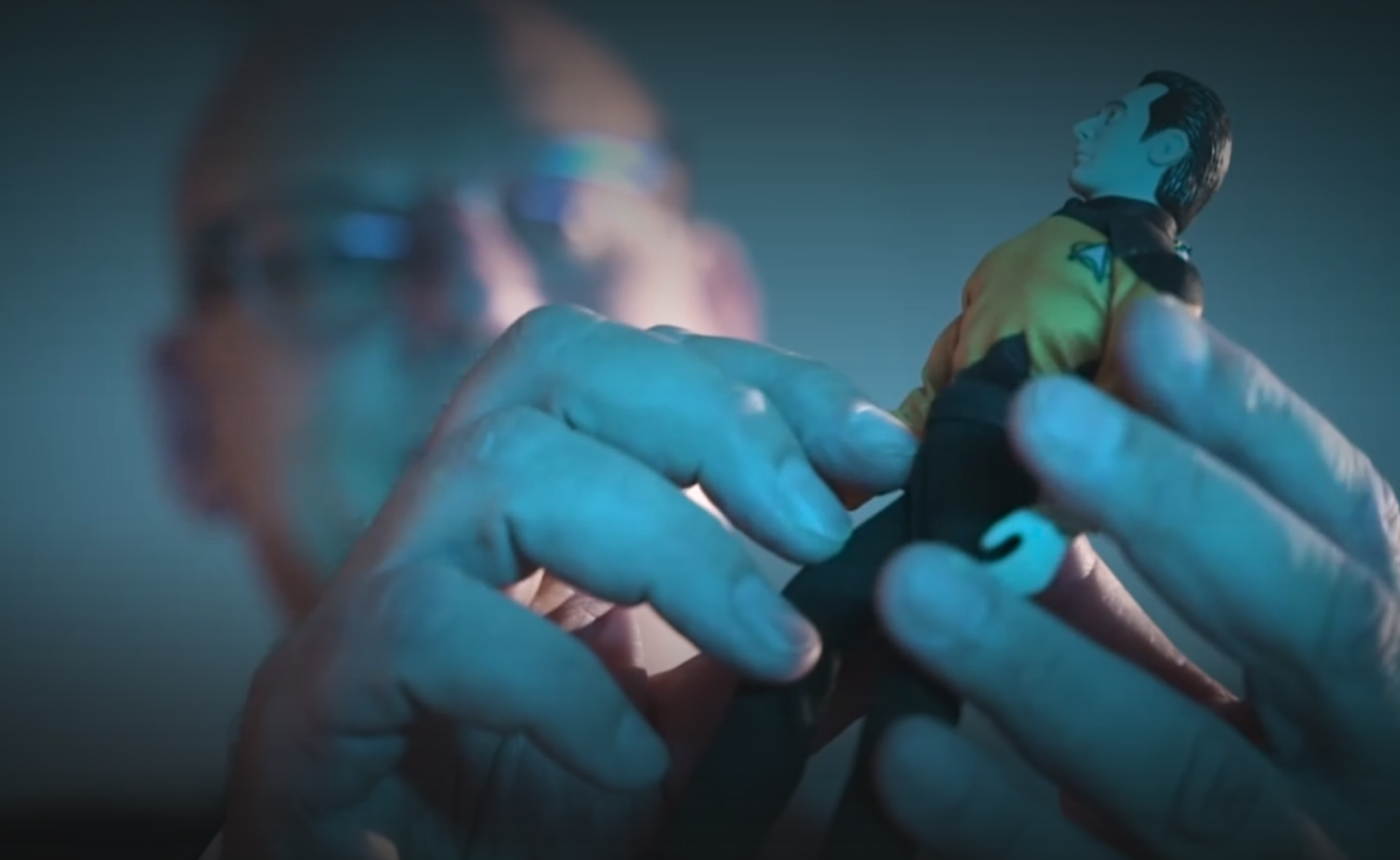
On April 30, 2026, Prof. Dr. Oliver Bendel gave a talk on “Physical AI and the Future of Intimacy” at the SAGA Conference in Montreal. From the abstract: “The presentation begins with the Tamagotchi, the iconic digital pet that demonstrated how simple interactive systems can evoke emotional attachment. It then turns to social robots, wearable social robots, and AI-enhanced sex toys, love dolls, and sex robots. Today, large language models (LLMs) and multimodal language models (MLLMs) enable dialogue, perception, and evaluation in these systems. Such capabilities may also benefit people with disabilities, including blind users, by facilitating communication and interaction. At the same time, the physical dimension remains crucial. Embodied systems create presence and proximity: they can be touched, held, and stroked, and experienced through movement, vibration, or sound. The talk argues that future intimate technologies will emerge from the convergence of generative intelligence and physical embodiment, combining conversational AI with the sensory experience of a physically present companion.” On May 19, 2026, the photos from the event, taken by Maison Toki, an independent art agency in Montreal, were made available (Photo: Maison Toki).
A Successful Conference on GenAI and Sexuality
Those who had already arrived on Sunday or Monday were welcomed to Montreal with beautiful sunshine and mild temperatures. The Clock Tower Beach had been prepared, though it was not yet open. On Thursday, April 30, 2026, the SAGA conference took place at the Judith-Jasmin Pavilion Extension in slightly cooler weather. Renowned experts such as David Lafortune and Simon Dubé were among the hosts, alongside rising stars like Valérie A. Lapointe. Through a series of outstanding presentations and panels, the conference explored the theme “Sexuality and Generative AI: Benefits, Risks, and Paths for Action”. This included both generative AI and other AI systems on computers, as well as those embedded in robots and physical systems. The talks, delivered in English and French, were translated live with the help of AI. Both on stage and in the audience were sexologists, psychologists, and philosophers, as well as practitioners from a wide range of fields. There was no hesitation – neither among participants nor in engaging with the topics discussed. This conference was made possible through the financial support of the Social Sciences and Humanities Research Council (SSHRC). The program can be viewed here.