Mirumi at ICSR + Art 2026

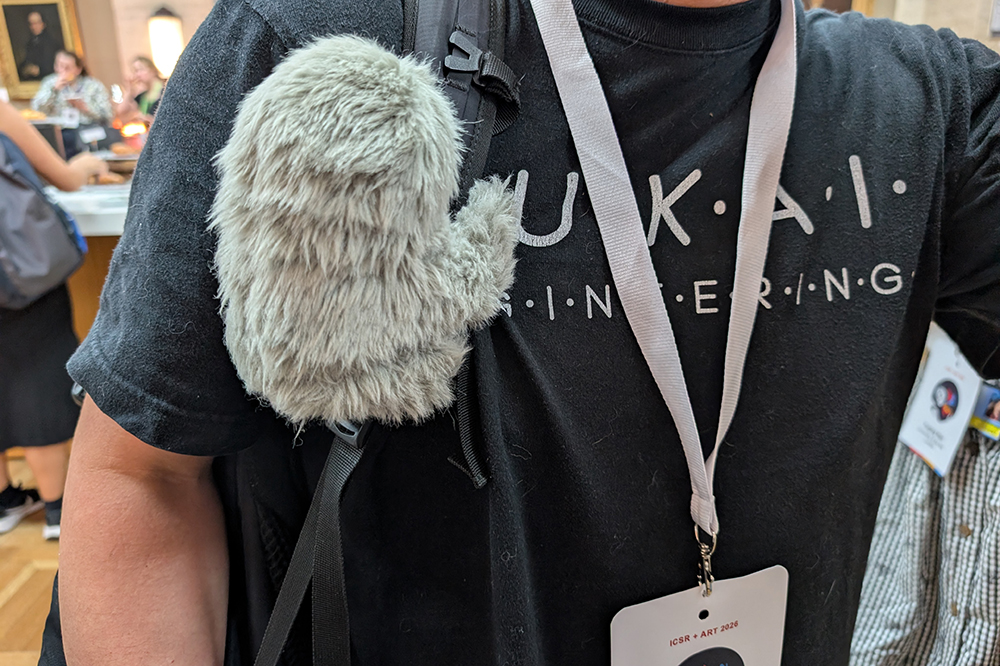
The 18th International Conference on Social Robotics (ICSR + Art 2026) is currently taking place in London from July 1–4, bringing together researchers, academics, and industry professionals from around the world to discuss the latest advances in social robotics. On the second day of the conference, the CEO of Yukai Engineering introduced Mirumi, a wearable social robot designed to create small moments of emotional connection in everyday life. Covered in soft artificial fur, Mirumi clings to a bag strap with its arms and accompanies its owner, turning its head with a shy, curious expression when it hears sounds, is touched, or sometimes simply on its own. Rather than offering practical functions, it encourages spontaneous social interactions and often brings smiles to people nearby. Unlike rigid-bodied robots, Mirumi belongs to a new generation of soft robots, similar to Cupboo AI Robotic Pet, combining plush-like materials with expressive behavior. It can respond to sounds but does not understand speech or recognize words, demonstrating how simple, nonverbal interactions can strengthen human relationships. The live demonstration attracted considerable interest and highlighted the growing role of soft robotics in social robotics research. Further information is available at icsr2026.uk.

The Revival of Pepper

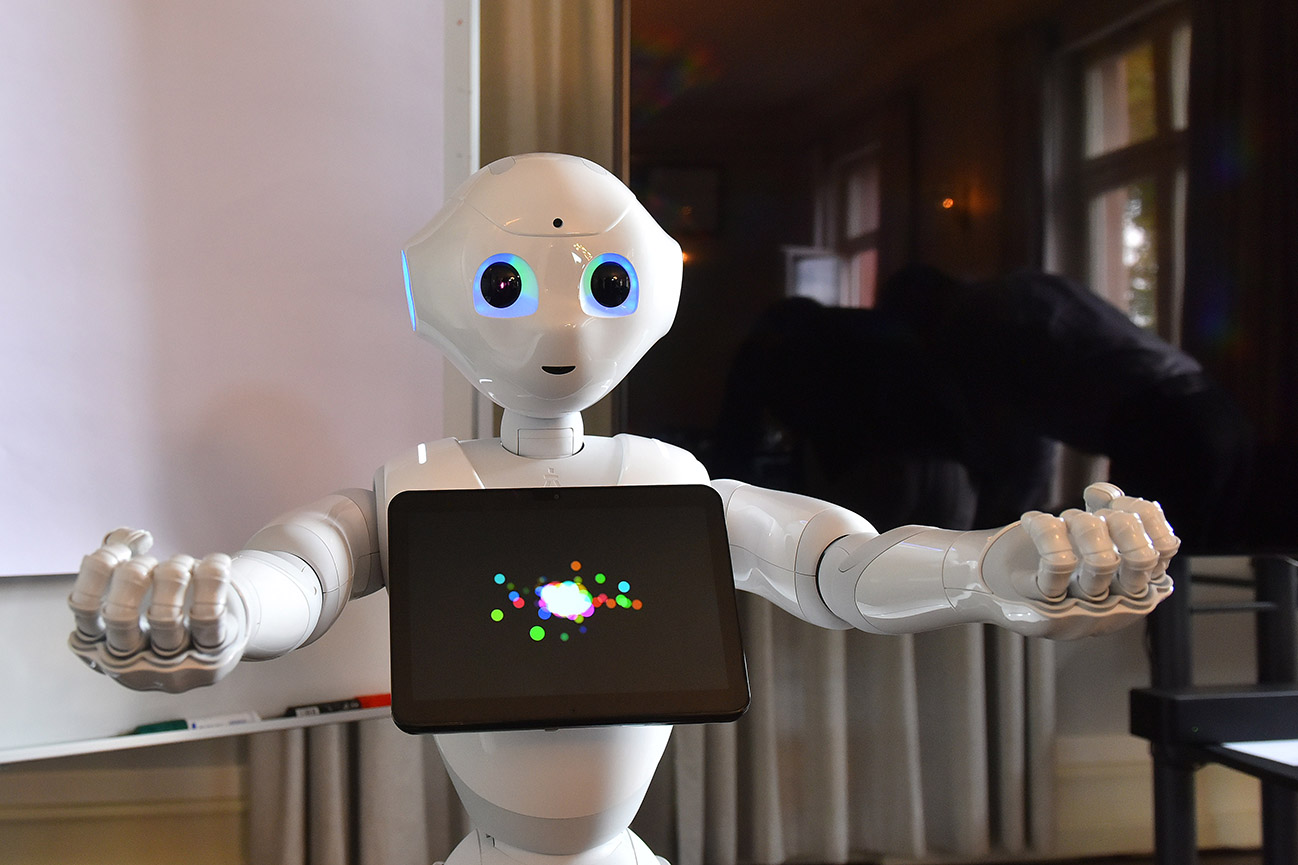
United Robotics is taking over “the European robotics branch” (Handelsblatt, April 12, 2022, own translation) of SoftBank, according to a report in the Handelsblatt, with the aim of reviving the Pepper social robot, among other things (Photo: Daimler and Benz Foundation). The Japanese company announced the year before last that it would forgo further development and production of its flagship product and focus on service robots. NAO and Pepper originally came from the French company Aldebaran, which was then acquired by SoftBank. Amazing things now seem to be happening under the umbrella of the RAG Foundation. The intention is to “form a European robotics champion” (Handelsblatt, April 12, 2022, own translation), as Thomas Hahn of the Automation and Robotics division is quoted. Formally, the acquisition of SoftBank’s European robotics business is a merger. “The Japanese will contribute their division to United Robotics Group and receive a 24.9 percent stake in return.” (Handelsblatt, April 12, 2022, own translation)

Robots with Muscles

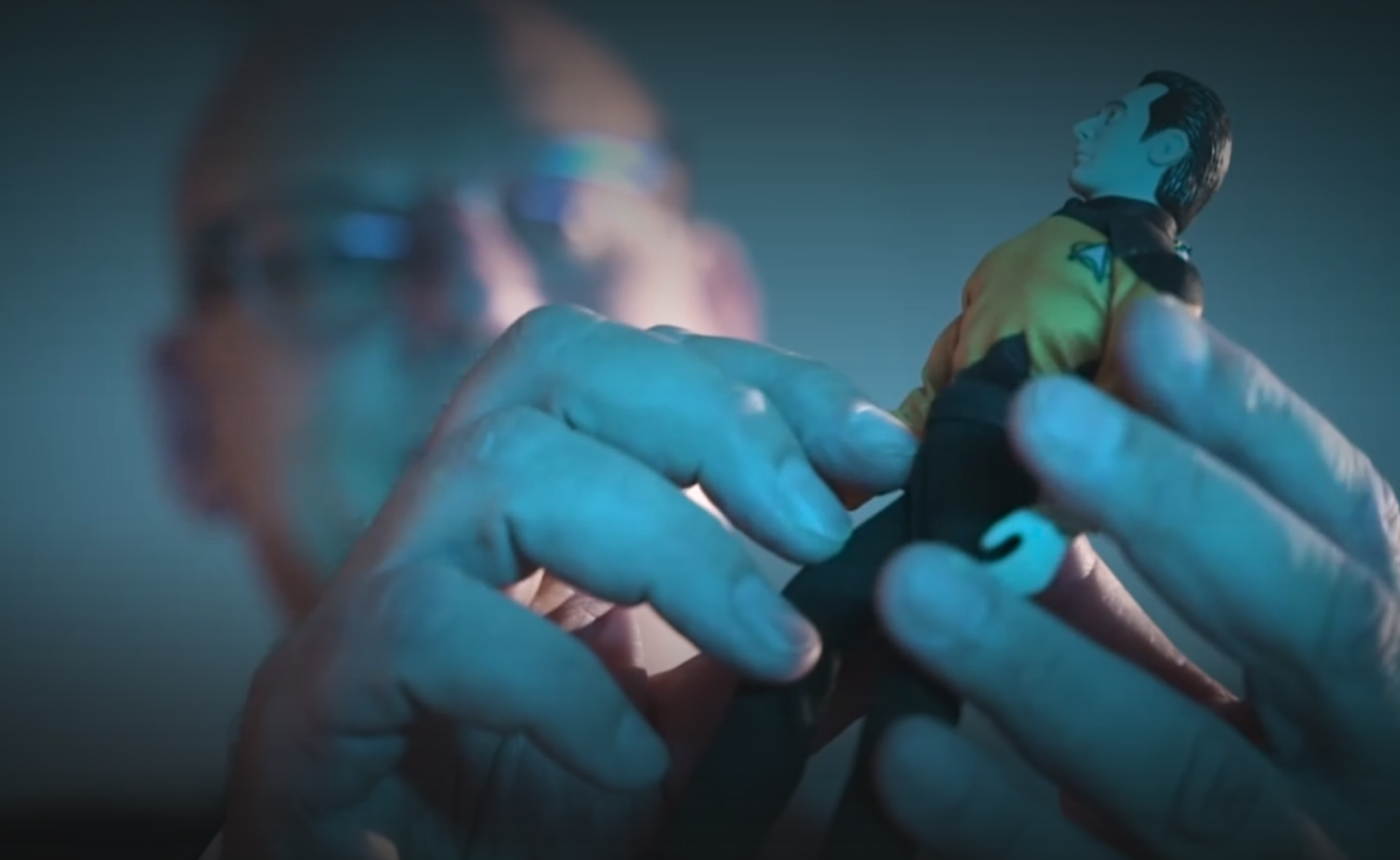
Robots may soon be equipped with muscles that develop considerable strength. The mechanical effort and weight are low because neither hydraulics nor electric motors are needed. The power comes from a new shape memory polymer developed by a team led by Zhenan Bao of Stanford University. This is reported by several media based on a press release from pressetext.com. ACS Central Science provides further information: “When stretched or deformed, shape memory polymers return to their original shapes after heat or light is applied. These materials show great promise for soft robotics, smart biomedical devices and deployable space structures, but until now they haven’t been able to store enough energy. Now, researchers reporting in ACS Central Science have developed a shape memory polymer that stores almost six times more energy than previous versions.” (ACS Central Science) Robots with muscles play an important role in the embodiment “movement”. It takes a lot of effort to build robots like Roboy. Perhaps the development of Stanford University will help in this area.

From Hugvie to Sylvie

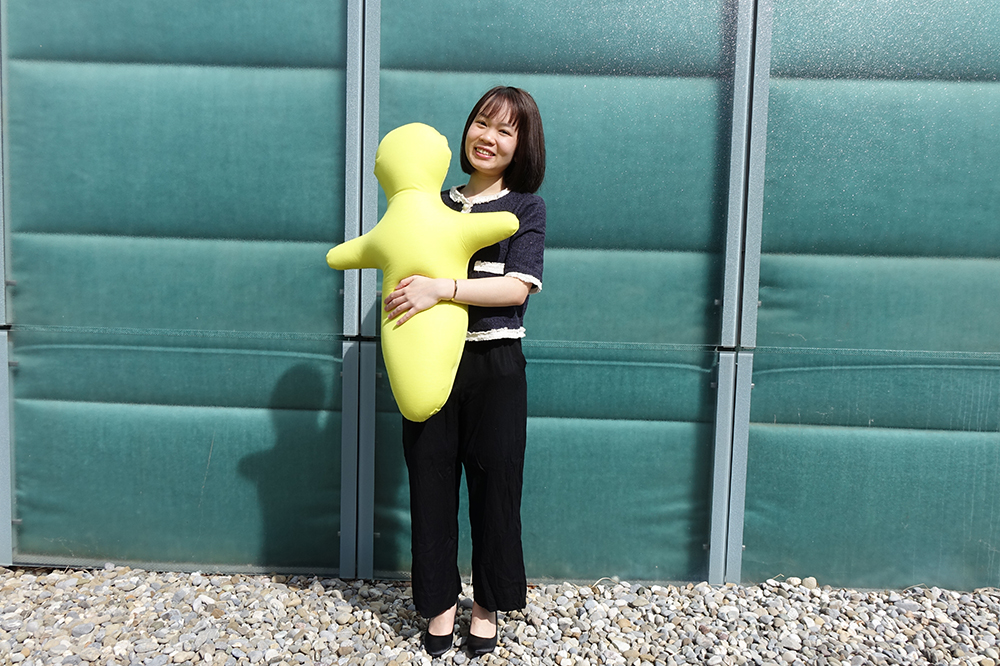
Simple, soft shapes are everywhere. In our home environment you can find pillows, blankets, balls, bottles, clothes, etc. Robots are often expensive and complex. But couldn’t they be thought of in a completely different way? How could social robots emerge from simple, soft shapes? As part of their final thesis at the School of Business FHNW, Nhi Tran Hoang Yen and Thang Hoang Vu from Ho Chi Minh City have answered this question posed by their supervisor Prof. Oliver Bendel. They have submitted eleven proposals for novel robots. All are shown on informationsethik.net. The seventh proposal is Sylvie. The normal Hugvie is a communication and hugging device, whereby the communication is not with it, but with friends, partners and family members. Sylvie is a variant of it. You talk directly to her, and when you hug her, you mean her, not a human being. And there’s another difference: while in the classic Hugvie the smartphone is invisibly housed in a pocket on the head, in Sylvie it forms part of the face. A video is available here.