The MIT Lincoln Laboratory reports a new invention on its website, namely the AI-guided ultrasound intervention device. The teaser introduces the topic as follows: “Hemorrhage causes 90% of preventable battlefield deaths. AI-GUIDE is designed to address this issue by enabling medics to catheterize a major blood vessel, through which life-saving aid can be delivered, in a pre-hospital setting.” (Website MIT) The use of the device is described as follows: “Using state-of-the-art artificial intelligence (AI) and robotics, this handheld catheterization tool guides users to perform the key step of inserting a needle and guidewire in the targeted vessel, after which they can readily complete catheterization.” (Website MIT) More information via www.ll.mit.edu/r-d/projects/artificial-intelligence-guided-ultrasound-intervention-device.
Achieving Wellbeing AI
The AAAI 2022 Spring Symposium “How Fair is Fair? Achieving Wellbeing AI” will be held March 21-23 at Stanford University. The symposium website states: “What are the ultimate outcomes of artificial intelligence? AI has the incredible potential to improve the quality of human life, but it also presents unintended risks and harms to society. The goal of this symposium is (1) to combine perspectives from the humanities and social sciences with technical approaches to AI and (2) to explore new metrics of success for wellbeing AI, in contrast to ‚productive AI‘, which prioritizes economic incentives and values.” (Website “How Fair is Fair”) After two years of pandemics, the AAAI Spring Symposia are once again being held in part locally. However, several organizers have opted to hold them online. “How fair is fair” is a hybrid event. On site speakers include Takashi Kido, Oliver Bendel, Robert Reynolds, Stelios Boulitsakis-Logothetis, and Thomas Goolsby. The complete program is available via sites.google.com/view/hfif-aaai-2022/program.
Machines and Robots for Animal Welfare
On 25 February 2022, the article “Passive, Active, and Proactive Systems and Machines for the Protection and Preservation of Animals and Animal Species” by Oliver Bendel was published in Frontiers in Animal Science. From the abstract: “Digitalization and automation are expanding into many areas, resulting in more widespread use of partially and fully autonomous machines and robots. At the same time, environmental and other crises and disasters are on the rise, the world population is growing, and animals are losing their habitat. Increasingly, machines and robots such as agricultural vehicles, autonomous cars, robotic lawnmowers, or social robots are encountering animals of all kinds. In the process, the latter are injured or killed. Some machines can be designed so that this does not happen. Relevant disciplines and research areas briefly introduced here are machine ethics, social robotics, animal-machine interaction, and animal-computer interaction. In addition, animal welfare is important. Passive and active machines—as they are called in this review—are already appearing and help to observe and protect animals. Proactive machines may play a role in the future. They could use the possibilities of full automation and autonomy to save animals from suffering in agriculture or in the wild. During crises and disasters and in extensive nature reserves, they could observe, care for, and protect animals. The review provides initial considerations on active, passive, and proactive machines and how they can be used in an animal preservation context while bearing in mind recent technical and global developments.” The article is part of the research topic “Animal-Computer Interaction and Beyond: The Benefits of Animal-Centered Research and Design” and can be accessed at www.frontiersin.org/articles/10.3389/fanim.2022.834634/full.

Extended Deadline for the Robophilosophy 2022 Conference
Robophilosophy 2022 is the fifth event in the biennial Robophilosophy Conference Series. The first call for papers (CfP) was published in November 2021, the second at the end of 2021, and the final on February 25, 2022. The extended deadline for submissions of extended abstracts and full papers is March 10, 2022. The event “will explore the societal significance of social robots for the future of social institutions with its usual broad scope, embracing both theoretical and practical angles” (CfP Robophilosophy). It “is an invitation to philosophers and other SSH researchers, as well as researchers in social robotics and HRI, to investigate from interdisciplinarily informed perspectives whether and how social robotics as an interdisciplinary endeavour can contribute to the ability of our institutions to perform their functions in society” (CfP Robophilosophy). Topics of interest are robots and social institutions in general, robots in law and policing, robots in healthcare, and robots and social justice, amongst others. The conference will be held at the University of Helsinki in Finland from August 16-19, 2022. More information via www.rp2022.org.
Dagstuhl Report on Trustworthy Autonomous Systems
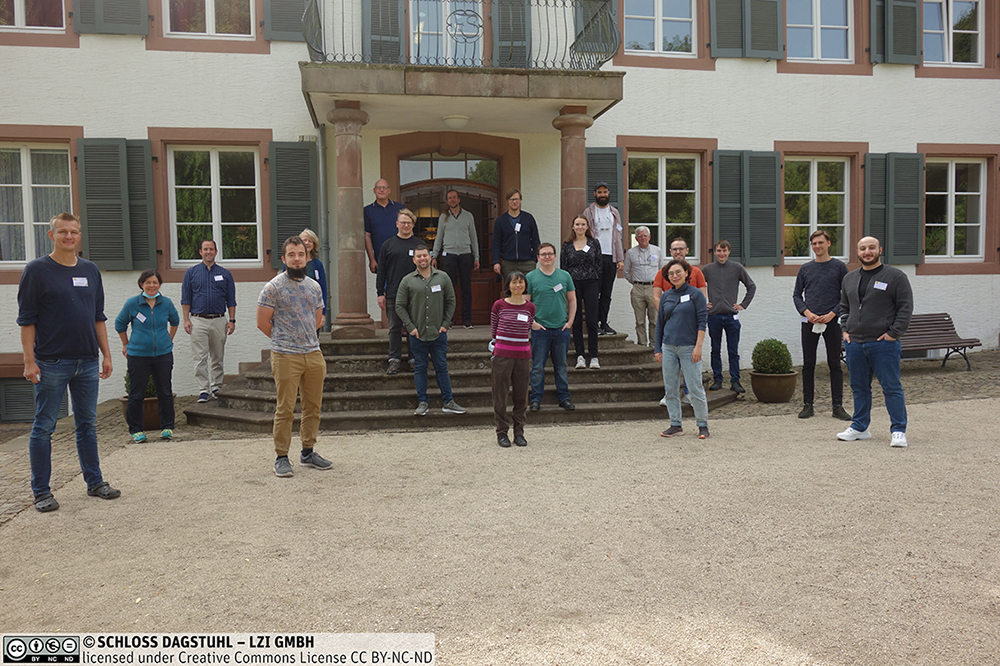
On February 18, 2022, the Dagstuhl Report “Conversational Agent as Trustworthy Autonomous System (Trust-CA)” was published. Editors are Effie Lai-Chong Law, Asbjørn Følstad, Jonathan Grudin, and Björn Schuller. From the abstract: “This report documents the program and the outcomes of Dagstuhl Seminar 21381 ‘Conversational Agent as Trustworthy Autonomous System (Trust-CA)’. First, we present the abstracts of the talks delivered by the Seminar’s attendees. Then we report on the origin and process of our six breakout (working) groups. For each group, we describe its contributors, goals and key questions, key insights, and future research. The themes of the groups were derived from a pre-Seminar survey, which also led to a list of suggested readings for the topic of trust in conversational agents. The list is included in this report for references.” (Abstract Dagstuhl Report) The seminar, attended by scientists and experts from around the world, was held at Schloss Dagstuhl from September 19-24, 2022. The report can be downloaded via drops.dagstuhl.de/opus/volltexte/2022/15770/.
Ethics of Conversational Agents
The Ethics of Conversational User Interfaces workshop at the ACM CHI 2022 conference “will consolidate ethics-related research of the past and set the agenda for future CUI research on ethics going forward”. “This builds on previous CUI workshops exploring theories and methods, grand challenges and future design perspectives, and collaborative interactions.” (CfP CUI) From the Call for Papers: “In what ways can we advance our research on conversational user interfaces (CUIs) by including considerations on ethics? As CUIs, like Amazon Alexa or chatbots, become commonplace, discussions on how they can be designed in an ethical manner or how they change our views on ethics of technology should be topics we engage with as a community.” (CfP CUI) Paper submission deadline is 24 February 2022. The workshop is scheduled to take place in New Orleans on 21 April 2022. More information is available via www.conversationaluserinterfaces.org/workshops/CHI2022/.
ANIFACE: Animal Face Recognition
Facial recognition is a problematic technology, especially when it is used to monitor people. However, it also has potential, for example with regard to the recognition of (individuals of) animals. Prof. Dr. Oliver Bendel had announced the topic “ANIFACE: Animal Face Recognition” at the University of Applied Sciences FHNW in 2021 and left the choice whether it should be about wolves or bears. Ali Yürekkirmaz accepted the assignment and, in his final thesis, designed a system that could be used to identify individual bears in the Alps – without electronic collars or implanted microchips – and initiate appropriate measures. The idea is that appropriate camera and communication systems are available in certain areas. Once a bear is identified, it is determined whether it is considered harmless or dangerous. Then, the relevant agencies or directly the people concerned will be informed. Walkers can be warned about the recordings – but it is also technically possible to protect their privacy. In an expert discussion with a representative of KORA, the student was able to gain important insights into wildlife monitoring and specifically bear monitoring, and with a survey he was able to find out the attitude of parts of the population. Building on the work of Ali Yürekkirmaz, delivered in January 2022, an algorithm for bears could be developed and an ANIFACE system implemented and evaluated in the Alps. A video about the project is available here.
ARTE about Social Robots
Since January 20, 2022, the ARTE broadcast “Werden wir Roboter lieben?” (“Will we love robots?”) has been available online. On February 19, 2022, the classic version will follow on the German-French culture channel. Tanja Küchle has masterfully presented and implemented a difficult topic. “According to estimates, there are now more than 1.7 million robots with social characteristics worldwide. They care for, educate, help, and entertain us. There have also long been highly engineered sex robots. But can these machines actually develop feelings – or even feel love?” (Website ARTE, own translation) Prof. Dr. Peter Robinson, computer scientist at the University of Cambridge, Dr. Hooman Samani, roboticist at the University of Plymouth, Prof. Dr. Martin Fischer, cognitive psychologist at the University of Potsdam, Prof. Dr. Catrin Misselhorn, philosopher at the University of Göttingen, and Prof. Dr. Oliver Bendel, information and machine ethicist at the School of Business FHNW, have their say. Oliver Bendel has been researching conversational agents and social robots for more than 20 years and has published the Springer book “Social Robots” at the end of 2021. More information on the program via www.arte.tv/de/videos/101938-004-A/42-die-antwort-auf-fast-alles/ (photo: ARTE).
Robots by the Hour
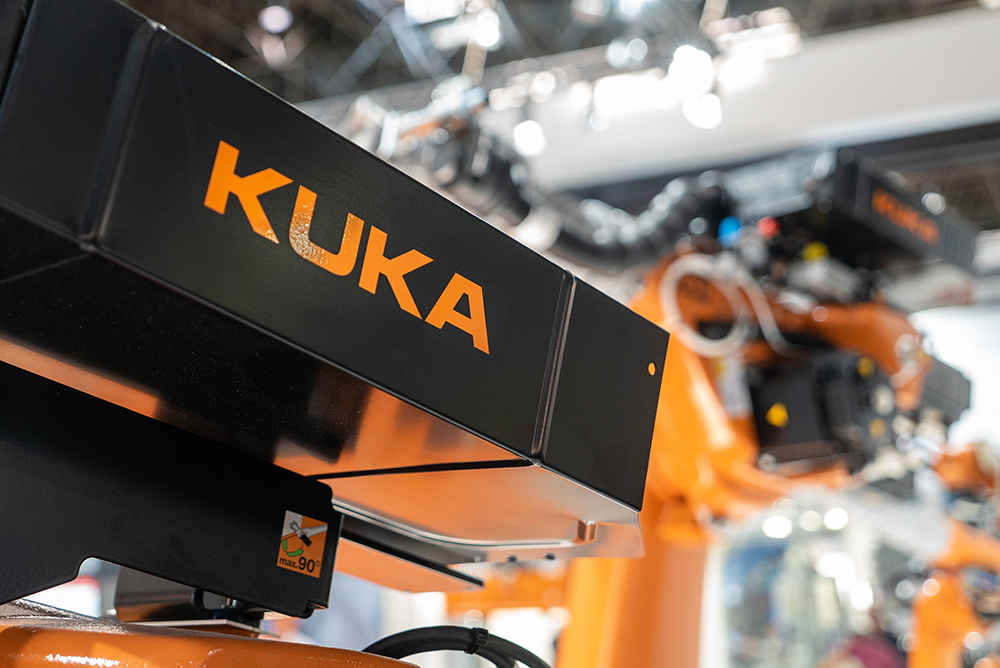
“Robots by the Hour” – this is the motto of Formic. The company, which is based in Chicago, buys standard robot arms that perform a simple, repetitive job (such as lifting a piece of metal into a press, which then bends the metal into a new shape) and leases them along with its own software. Wired magazine writes: “They’re among a small but growing number of robots finding their way into workplaces on a pay-as-you-go basis.” (Wired, 18 January 2022) Polar is one of the companies trying out the leasing offer. Jose Figueroa, who manages Polar’s production line, says the robot “costs the equivalent of $8 per hour, compared with a minimum wage of $15 per hour for a human employee. Deploying the robot allowed a human worker to do different work, increasing output …” (Wired, 18 January 2022) Formic writes on its website: “We didn’t invent automated systems, but we democratized them. Because technology doesn’t change the world until you make it accessible to those who need it most. Automation is a necessity, not a luxury. And our mission is to continue the American legacy of innovation by making it your reality.” The future will show whether there is a market for leasing robots.
CfP for Robophilosophy 2022
Robophilosophy 2022 is the fifth event in the biennial Robophilosophy Conference Series. The first call for papers (CfP) was published in November 2021, and the second at the end of 2021. The extended deadline for submissions of extended abstracts and full papers is February 28, 2022. The event “will explore the societal significance of social robots for the future of social institutions with its usual broad scope, embracing both theoretical and practical angles” (CfP Robophilosophy). It “is an invitation to philosophers and other SSH researchers, as well as researchers in social robotics and HRI, to investigate from interdisciplinarily informed perspectives whether and how social robotics as an interdisciplinary endeavour can contribute to the ability of our institutions to perform their functions in society” (CfP Robophilosophy). Topics of interest include robots and social institutions in general, robots in law and policing, robots in healthcare, and robots and social justice. The conference will be held at the University of Helsinki in Finland from August 16-19, 2022. More information via www.rp2022.org.