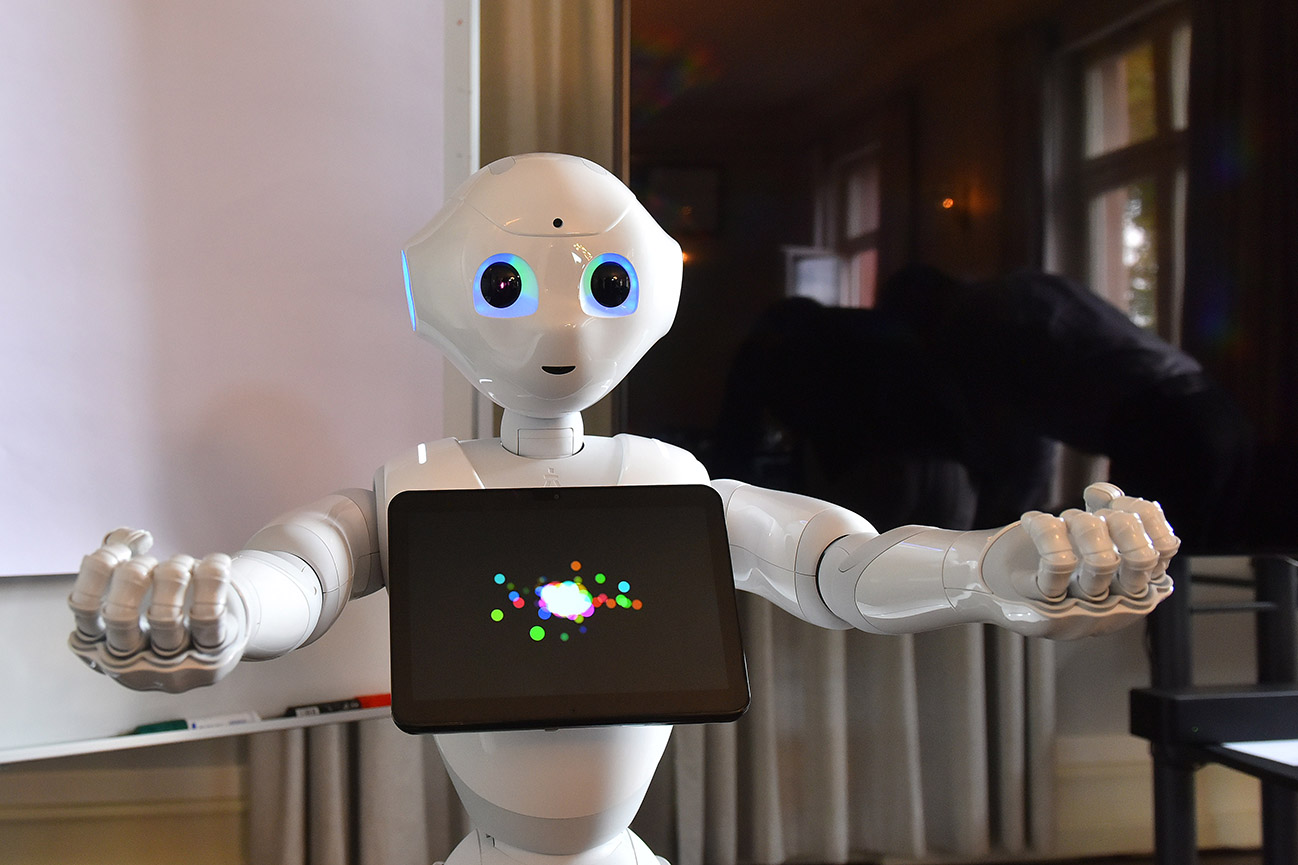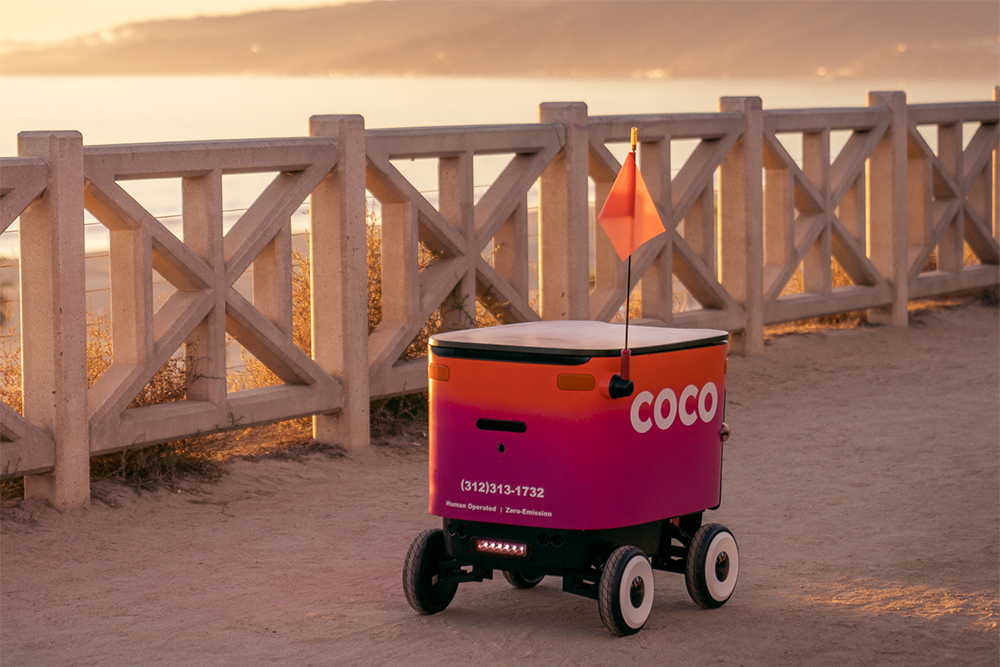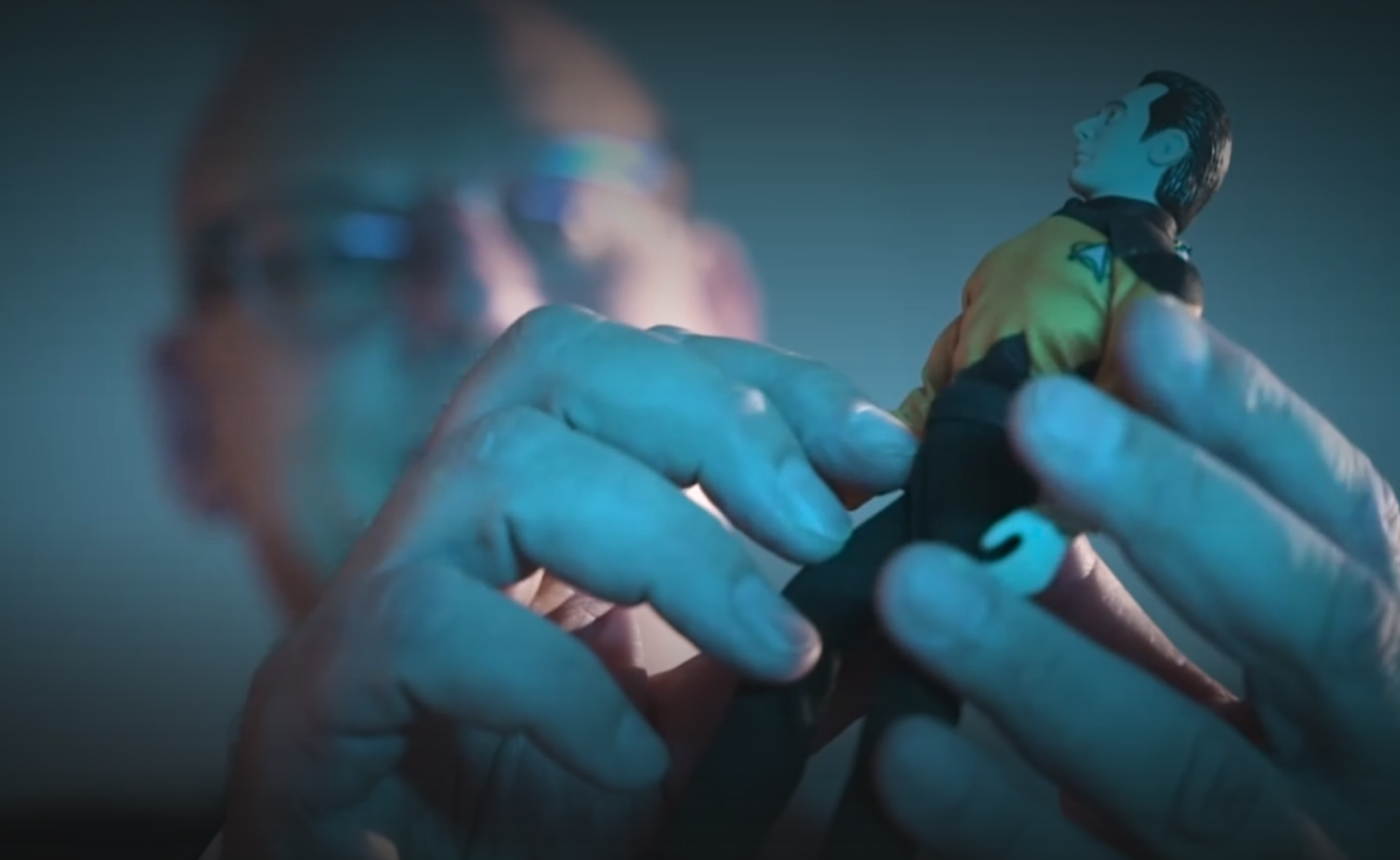
“It is estimated that there are now more than 1.7 million robots with social attributes worldwide. They care for, educate, help, and entertain us. There have also long been highly engineered sex robots. But can these machines actually develop feelings – or even feel love?” (Website ARTE, own translation) ARTE asks this question in the series “42 – Die Antwort auf fast alles” (“42 – The Answer to Almost Everything”). The program “Werden wir Roboter lieben?” (“Will we love robots?”) will be broadcast on February 19, 2022. The online version is already available from January 20. Dr. Hooman Samani, a robotics expert at the University of Plymouth, Prof. Dr. Martin Fischer, a cognitive psychologist at the University of Potsdam, and Prof. Dr. Oliver Bendel, an information and machine ethicist at the Hochschule für Wirtschaft FHNW, will have their say. Prof. Dr. Oliver Bendel has been researching conversational agents and social robots for more than 20 years and has published the Springer book “Soziale Roboter” (“Social Robots”) at the end of 2021. More information on the program via www.arte.tv/de/videos/101938-004-A/42-die-antwort-auf-fast-alles/.
Paper on the SPACE THEA Project
The paper “The SPACE THEA Project” by Martin Spathelf and Oliver Bendel was accepted at the AAAI 2022 Spring Symposia (Stanford University). The two authors will present it at the end of March 2022 at the symposium “How Fair is Fair? Achieving Wellbeing AI”. From the abstract: “In some situations, no professional human contact can be available. Accordingly, one remains alone with one’s problems and fears. A manned Mars flight is certainly such a situation. A voice assistant that shows empathy and assists the astronauts could be a solution. In the SPACE THEA project, a prototype with such capabilities was developed using Google Assistant and Dialogflow Essentials. The voice assistant has a personality based on characteristics such as functional intelligence, sincerity, creativity, and emotional intelligence. It proves itself in seven different scenarios designed to represent the daily lives of astronauts, addressing operational crises and human problems. The paper describes the seven scenarios in detail, and lists technical and conceptual foundations of the voice assistant. Finally, the most important results are stated and the chapters are summarized.” More information about the AAAI 2022 Spring Symposia is available here.
Social Robots at Stanford University
The paper “Should Social Robots in Retail Manipulate Customers?” by Oliver Bendel and Liliana Margarida Dos Santos Alves was accepted at the AAAI 2022 Spring Symposia (Stanford University). The two authors will present it at the end of March 2022 at the symposium “How Fair is Fair? Achieving Wellbeing AI”. From the abstract: “Against the backdrop of structural changes in the retail trade, social robots have found their way into retail stores and shopping malls in order to attract, welcome, and greet customers; to inform them, advise them, and persuade them to make a purchase. Salespeople often have a broad knowledge of their product and rely on offering competent and honest advice, whether it be on shoes, clothing, or kitchen appliances. However, some frequently use sales tricks to secure purchases. The question arises of how consulting and sales robots should ‘behave’. Should they behave like human advisors and salespeople, i.e., occasionally manipulate customers? Or should they be more honest and reliable than us? This article tries to answer these questions. After explaining the basics, it evaluates a study in this context and gives recommendations for companies that want to use consulting and sales robots. Ultimately, fair, honest, and trustworthy robots in retail are a win-win situation for all concerned.” More information about the AAAI 2022 Spring Symposia is available here.
Ameca’s Smile
UK-based company Engineered Arts showed off one of its creations in a YouTube video in late 2021. The humanoid robot Ameca makes a series of fascinating human-like facial expressions. The Verge magazine describes this process: “At the start of the video, Ameca appears to ‘wake up,’ as its face conveys a mix of confusion and frustration when it opens its eyes. But when Ameca starts looking at its hands and arms, the robot opens its mouth and raises its brows in what it looks like is amazement. The end of the video shows Ameca smiling and holding a welcoming hand out towards the viewer – if that’s how you want to interpret that gesture.” (The Verge, 5 December 2021) However, this smile does not turn out perfectly – a problem that affects all androids. Almost every emotional movement can now be simulated well – except for the one whose expression is the smile. Only when this problem is solved will Sophia, Erica, and Ameca be able to get out of Uncanny Valley (Photo: Engineered Arts, from the YouTube Video).
Human and Animal Enhancement in the Context of Architecture
The 17th International Architecture Exhibition – the entire series, including the art section, is known as La Biennale di Venezia – ran from 22 May to 21 November 2021, with the Salon Suisse curated by architect and publicist Evelyn Steiner. On 18 November 2021, the event “Jethro Knights, Armor Guyver, and Mutant X: How transhumanists challenge architecture” took place. Prof. Dr. Oliver Bendel gave a talk on “Human and animal enhancement in the context of architecture”, followed by a discussion with Mike Schaffner (a Swiss cyborg) and Prof. Dr. Georg Vrachliotis (an architect at TU Delft). First, the information and machine ethicist clarified key terms such as “human enhancement”, “animal enhancement”, “biohacking”, “bodyhacking”, “cyborg”, and “transhumanism”. He also brought in his own terms “robot enhancement” and “reversed cyborg” or “inverted cyborg”. He then presented examples of human enhancement and animal enhancement, including in the context of architecture: cats with chips getting into the house, humans with chips bringing the smart home to adaptations, animals and humans with chips and transmitters detected in time in traffic, and enhanced and improved organisms that can live on alien planets. He concluded by offering ethical considerations. He was open to the idea of cyborgs and critical of the transhumanism movement. The booklet on Salon Suisse is available here.
Bodyhacking as Movement, Enhancement, and Adaptation
In November 2021, “Mensch. Maschine. Kommunikation” (eds. Sarah Brommer and Christa Dürscheid) was published by Narr. The two editors introduce the topic in “Mensch-Mensch- und Mensch-Maschine-Kommunikation”. In the “Mensch-Mensch-Kommunikation via Maschine” part, the contributions come from Linda Bosshart (“WhatsApp, iMessage und E-Mail”), Roberto Tanchis and Leonie Walder (“Animojis”), Mia Jenni (“Die weinende, virtuelle Influencerin”), and Florina Zülli (“‘Neuer Partner’ in den Warenkorb hinzufügen?”). The part “Mensch-Maschine-Kommunikation I: Kommunikation mit Robotern” is represented by Ilona Straub (“Die Mensch-Roboter-Interaktion”), Jana Seebass (“Roboter als Partnerersatz”), Rahel Staubli (“Vertrauen in Lio und Co.”), and Andrea Knoepfli (“Mit welchen Strategien erzeugen Pflegeroboter Vertrauen?”). The part “Mensch-Maschine-Kommunikation II: Kommunikation mit Assistenzsystemen” is the work of Julia Degelo (“Der wütende Mann, die höfliche Frau – und die Frage nach dem Dazwischen”) and Ann Fuchs and Zora Naef (“Smart Homes im öffentlichen Diskurs”). The book (part “Exkurs: Mensch. Maschine. Menschmaschine”) is concluded by Oliver Bendel with his contribution “Chips, Devices, and Machines within Humans”. He discusses “Bodyhacking as Movement, Enhancement, and Adaptation”. The publication can be downloaded for free here.
The Hologram Girl Grew Up
Japanese company Gatebox has taken its holographic assistant to a new level in 2021 with the unveiling of Gatebox Grande. This is reported by HYPEBEAST. The hologram, which is now the size of an adult, is displayed on a 65-inch screen and can be used for applications such as a digital concierge or as an advisor and salesperson in a shopping mall. This makes the intelligent assistant a competitor to social robots like Pepper, Cruzr, and Paul. Inside the device “lives” a female anime character named Azuma Hikari, who can be “summoned” by voice or proximity activation. According to HYPEBEAST, she has a range of gestures, facial expressions, and voice tones to enable the most realistic interaction with the user. Life-size holograms will play a big role in the future. However, further research and development work is still needed.
AI at the Service of Animals and Biodiversity
“L’intelligence artificielle au service de l’animal et de la biodiversité” (“Artificial intelligence at the service of animals and biodiversity”) is the title of a webinar that will take place on 5 November 2021 from 10:30 – 12:00 via us02web.zoom.us/webinar/register/WN_SJjYGx7qQt-FezEBprGMww. There are over 600 registered participants (professionals from the animal industry, health care and animal welfare, also entrepreneurs, investors, scientists, consultants, NGOs, associations). The webinar is for anyone interested in technologies with a positive impact on animals (wildlife, livestock, pets) and biodiversity. The goal is to take advantage of the opportunities that Artificial Intelligence offers alongside the many technological building blocks (Blockchain, IoT, etc.). This first webinar will be an “introduction” to AI in this specific application area. It will present use cases and be the starting point of a series of webinars. On the same day, there will be a Zoom conference from 1:30 to 2:30 pm. The title of the talk by Prof. Dr. Oliver Bendel is “Towards Animal-friendly Machines”.
Unimals are Among Us
Agrim Gupta, Fei-Fei Li and other scientists from Stanford University use so-called unimals “to explore two questions that often get overlooked in AI research: how intelligence is tied to the way bodies are laid out, and how abilities can be developed through evolution as well as learned” (MIT Technology Review, 19 October 2021). MIT Technology Review quotes Josh Bongard from University of Vermont as saying: “This work is an important step in a decades-long attempt to better understand the body-brain relationship in robots” (MIT Technology Review, 19 October 2021). The research seems like a continuation of the embodiment movement, which the Swiss Rolf Pfeifer played a major role in shaping. And indeed, Bongard says: “Embodiment is our only hope of making machines that are both smart and safe.” (MIT Technology Review, 19 October 2021) The unimals look a bit like figures from the cycle “Bizzarie di varie figure” by Giovanni Battista Braccelli. The drawings from the year 1624 show embodiments of cubes, wires, and machine parts. However, they are static, while the unimals move and constantly change their bodies – the title of the article in the magazine reads accordingly: “These weird virtual creatures evolve their bodies to solve problems” …
Towards Human-friendly Robot Cars
According to a news story by University of Leeds, robot cars and other automated vehicles could be made more pedestrian-friendly thanks to new research which could help predict when people will cross the road. Leeds scientists say “that neuroscientific theories of how the brain makes decisions can be used in automated vehicle technology to improve safety and make them more human-friendly” (University of Leeds, 5 October 2021). “The researchers set out to determine whether a decision-making model called drift diffusion could predict when pedestrians would cross a road in front of approaching cars, and whether it could be used in scenarios where the car gives way to the pedestrian, either with or without explicit signals. This prediction capability will allow the autonomous vehicle to communicate more effectively with pedestrians, in terms of its movements in traffic and any external signals such as flashing lights, to maximise traffic flow and decrease uncertainty.” (University of Leeds, 5 October 2021) In fact, communication between automated vehicles and pedestrians or cyclists is the crucial problem to be solved in cities. Predictive models can be used, as well as communication options such as eye contact and natural language. For this to happen, however, the autonomous car would have to become a social robot.