SAGA Conference Program

The upcoming “SAGA: Sexuality and Generative AI” symposium, taking place on April 30, 2026 at the Université du Québec à Montréal, explores how generative AI is reshaping intimacy, desire, relationships, and sexual expression. The first block, titled “Societal Impacts”, brings together a set of talks that examine how emerging technologies are already influencing human connection and cultural norms. Brian Willoughby (Brigham Young University, United States) opens with “Engagement with Romantic AI: Implications for Young Adult Dating and Relationships”, addressing how AI companions may alter expectations and behaviors in modern dating. Arnaud Anciaux (Université Laval, Canada) follows with “Toward a Great Bypass? Property, Consent, and Value Creation in AI-Generated Sexual Content”, focusing on legal and ethical questions around ownership and consent. Émilie Gaudet (Université de Montréal, Canada) contributes “AI-Generated Pornography and Problematic Pornography Use”, exploring the psychological and societal risks associated with synthetic sexual media. Finally, Oliver Bendel (FHNW School of Business, Switzerland) looks ahead in “Physical AI and the Future of Intimacy”, considering how embodied AI systems could transform intimate relationships. The program also features “Panel 1 – Technological Solutions to the Challenges of AI”, with contributions from Sophie Mortimer (UK Revenge Porn Helpline, United Kingdom), Alex Georges (AetherLab, United States), and Madelaine Thomas (Image Angel, United Kingdom), who discuss practical responses to harms such as non-consensual content and digital abuse. Overall, the symposium is structured into four thematic blocks and includes two panels, offering a compact yet wide-ranging exploration of one of the most sensitive and rapidly evolving intersections of technology and human life. The SAGA conference program is now available online and can be downloaded here.

SAGA: Sexuality and Generative AI

The upcoming “SAGA: Sexuality and Generative AI” symposium, taking place on April 30, 2026 at the Université du Québec à Montréal, explores how generative AI is reshaping intimacy, desire, relationships, and sexual expression. The presentation by Prof. Dr. Oliver Bendel begins with the Tamagotchi, the iconic digital pet that demonstrated how simple interactive systems can evoke emotional attachment. It then turns to social robots, wearable social robots, and AI-enhanced sex toys, love dolls, and sex robots. Today, large language models (LLMs) and multimodal language models (MLLMs) enable dialogue, perception, and evaluation in these systems. Such capabilities may also benefit people with disabilities, including blind users, by facilitating communication and interaction. At the same time, the physical dimension remains crucial. Embodied systems create presence and proximity: they can be touched, held, and stroked, and experienced through movement, vibration, or sound. The talk argues that future intimate technologies will emerge from the convergence of generative intelligence and physical embodiment, combining conversational AI with the sensory experience of a physically present companion. Full details and submissions are available at event.fourwaves.com/sexualiteia/pages.

Final Call for ICSR + Art 2026

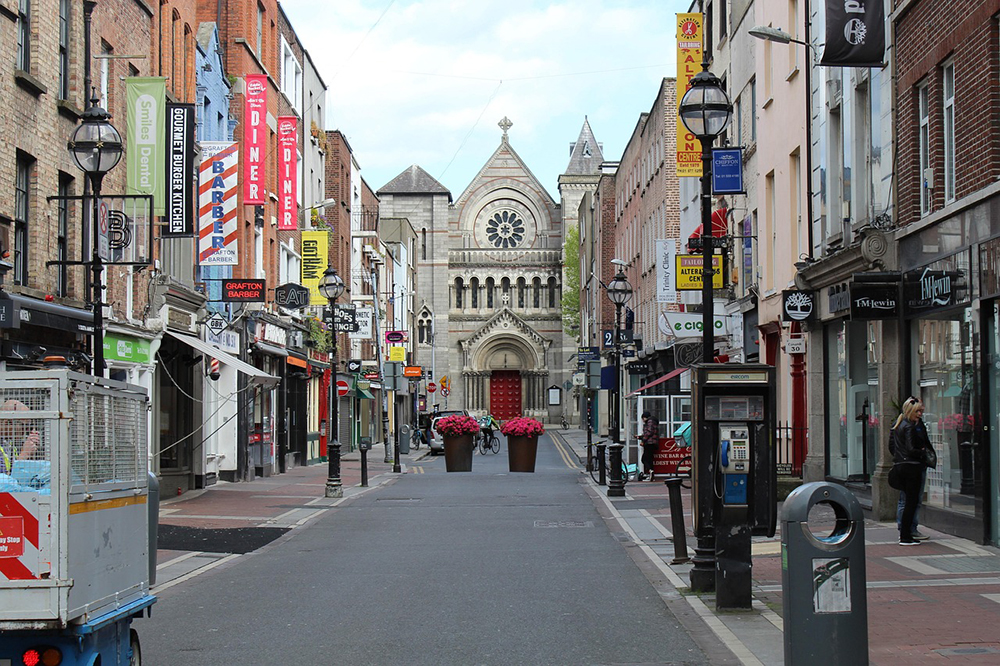
The 18th International Conference on Social Robotics (ICSR + Art 2026) will take place in London, UK, from 1–4 July 2026. ICSR is the leading international forum that brings together researchers, academics, and industry professionals from across disciplines to advance the field of social robotics. For its 18th edition, the conference will present the special theme ICSR + Art, highlighting how robots can move beyond their conventional roles to become tools, partners, and co-creators within artistic and creative practices. At the same time, the conference remains open to the full breadth of social robotics research, including human–robot interaction, medical and assistive robotics, artificial intelligence and machine learning, ethics, design, education, and cultural applications. Accepted papers will be published in Springer’s Lecture Notes in Artificial Intelligence (LNAI) series and indexed in major academic databases. Due to current extenuating circumstances worldwide and following requests from several authors, the submission deadlines have been extended by a few additional days to allow additional time for final submissions. No further extensions of the submission deadlines are planned, and all submissions must follow the updated schedule. All deadlines are based on Anywhere on Earth (AoE) time. Authors who have already submitted a paper may use the extension to update their submission; if any difficulty occurs when modifying the existing entry in the system, the previous submission may be withdrawn and replaced with a new version. Updated dates are available at icsr2026.uk/dates/ and submission instructions can be found at icsr2026.uk/submission/ (Photo: stevecadman/CC BY-SA 2.0).

Nature, Robots, and Society

The Robophilosophy Conference 2026 will take place August 11–14 at University College Dublin in a hybrid format and centers on the theme “Connected Futures: Nature, Robots, and Society”. As robotics and AI become deeply embedded in human life, the conference invites researchers across disciplines to explore how autonomous systems shape society, ecology, law, labor, and human self-understanding. It raises questions about responsible design, accountability, environmental impact, social justice, cultural perspectives, and the ethics of coexistence with artificial agents. Workshop proposals are due January 16, session papers and posters February 6, with notifications in February and April and proceedings pre-submission on June 15. RP2026 aims to foster interdisciplinary dialogue that advances both technological insight and collective wisdom for a future in which humans and autonomous systems share social and ecological worlds. Further information is available at cas.au.dk/en/rpc2026.

Special Sessions at ICSR 2025

ICSR’25 allows for special sessions on topics of particular interest to attendees. The goal is to complement the regular program with new and emerging topics of interest in social robotics. Proposals will be evaluated on a rolling basis until the deadline below, and organizers will be notified of the outcome. Once accepted, the invited session will be published on the ICRS website along with an invited session code to be used at the time of paper submission. Special session papers will go through the same review process as regular papers and will be published in the same way. Papers should be submitted as PDF documents of no more than 3-4 pages. More information is available at icsr2025.eu/ss-ws-proposal/.

Continuation of the AAAI Spring Symposia

On 27 August 2024, AAAI announced the continuation of the AAAI Spring Symposium Series, to be held March 31 – April 2, 2025, at San Francisco Airport Marriott Waterfront in Burlingame, CA. The Call for Proposals for the Spring Symposium Series is available on the Spring Symposium Series website. According to the organizers, proposals are due October 4, 2024, and early submissions are encouraged. “The Spring Symposium Series is an annual set of meetings run in parallel at a common site. It is designed to bring colleagues together in an intimate forum while at the same time providing a significant gathering point for the AI community.” (Website AAAI) The traditional conference will therefore not be held at Stanford University in 2025 – as it was in 2023. It returned there in 2024 to the delight of all participants. The Covid-19 pandemic had hit the conference hard before. The AAAI can only be advised to return to Stanford in 2026. Only there will the conference live up to its promise.

Closing Event of a Successful Conference

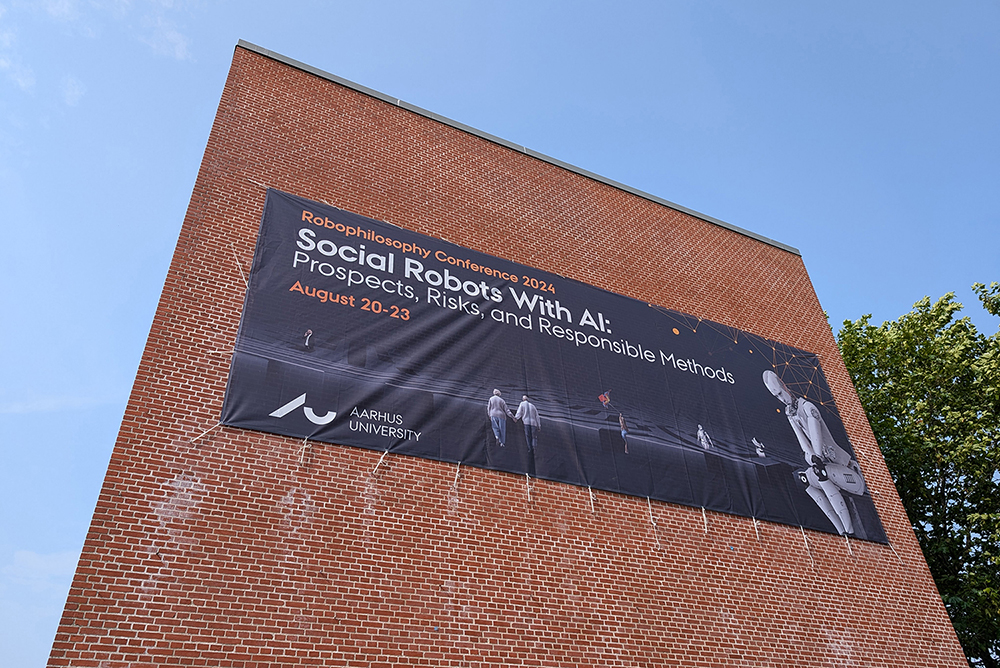
Robophilosophy 2024 took place for three and a half days in Aarhus (Denmark). It is a biennial dedicated to social robotics. Alongside the ICSR, it is the most important conference in this field. The program was again very extensive. Workshops were held and presentations given in four different tracks. There were keynotes and plenary sessions by well-known names, from Wendell Wallach to Hiroshi Ishiguro. After a sunny start, it began to rain, which made it all the easier to concentrate on the scientific exchange. In the end, the sun came out again in time for the closing event. Johanna Seibt, the brains behind Robophilosophy, received a bouquet of flowers and a standing ovation. The experts will meet again in two years’ time. Where has not yet been decided. A few potential hosts spoke up. Edinburgh would be an option, but so would California.

Talk by Hiroshi Ishiguro

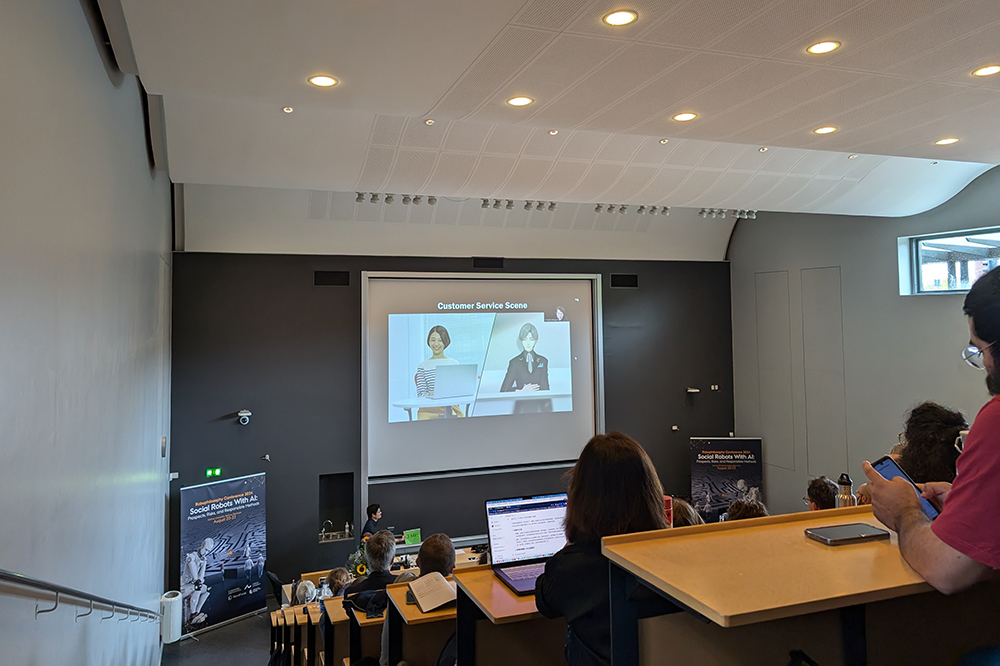
On the fourth day of Robophilosophy 2024, Hiroshi Ishiguro, Professor at the Department of Systems Innovation in the Graduate School of Engineering Science at Osaka University, gave a talk entitled “AI Avatars and the Future Society”. From the abstract: “In this lecture, the presenter will report on the research and development of remotely operated robots and CG agents, also known as avatars. Avatar technology has advanced significantly in recent years, thanks to progress in AI technology. We will discuss the various services that can be deployed using avatars and the kind of society we can realize as a result.” (Website Robophilosophy 2024) After the lecture, the roboticist was questioned by Raja Chatila, Sorbonne University (France), and Mihaela Constantinescu, Faculty of Philosophy, University of Bucharest (Romania). Hiroshi Ishiguro had been a regular guest at Robophilosophy. In 2018, he appeared on site in Vienna.

The Rainbow Above the Museum

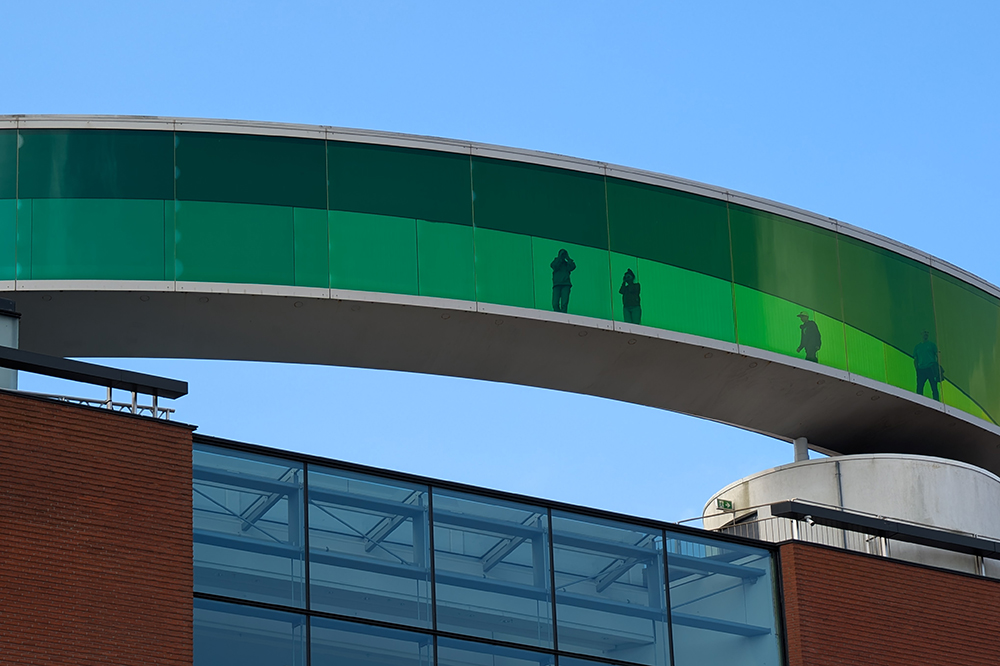
The Robophilosophy community consists of philosophers, psychologists, roboticists, and representatives of other disciplines. It is a tradition for everyone to come together for a social event to get new inspiration and chat about their work and motivation in an informal atmosphere. This time, they attended a robot performance in the theater on the second day. On the third day, the conference dinner was held together in the rooftop restaurant of the AROS Art Museum. One of the highlights was the tour of the ninth floor. The Danish-Icelandic artist Olafur Eliasson has created Your rainbow panorama which was officially opened in May 2011. You can see Aarhus with its church towers, residential buildings, streets, and people through the colorful panes. Afterwards, the tireless went out into the city’s nightlife.

The Social Significance of Human Effort

The third day of Robophilosophy 2024 featured numerous presentations and several workshops. The workshop “The Social Significance of Human Effort – What Are the Parameters For Positive Human-Robot Interaction In the Context of Industry 5.0?” was organized by the renowned Sant’Anna School of Advanced Studies (Pisa, Italy). The moderators were Professors Alberto Pirni and Paolo Dario as well as Oliver Bendel from the FHNW School of Business. They also presented, as did other participants such as Nicola Vitiello, Leonardo Massantini, Danica Kragic Jensfelt, and Margherita Pugnaletto. From the workshop abstract: “This workshop aims to develop a roadmap for understanding the impact of robotics on human employment within the context of Industry 5.0. The workshop explores key factors in this transition, including the risks and benefits of digital automation, ethical considerations regarding worker skills and well-being, and protective measures for workers and consumers. Focusing on the theme of sociocultural risks: devaluation of human labor, the workshop aims to reflect on traditional notions of work, productivity, and the value of human labor in the era of advancing robotics and automation. It challenges the concept of labor devaluation, assesses its impact on worker recognition and efficiency, and questions meritocratic paradigms. To facilitate interdisciplinary dialogue, the workshop engages philosophers and engineers in addressing ethical dilemmas in technology development. It explores the social significance of human effort and movement when interacting with autonomous robots and occupational exoskeletons. By examining these technologies’ adaptability and role in human-machine interaction, especially in workplaces, the workshop intends to contribute to discussions on technological advances and their societal implications.” (Website Robophilosophy 2024)