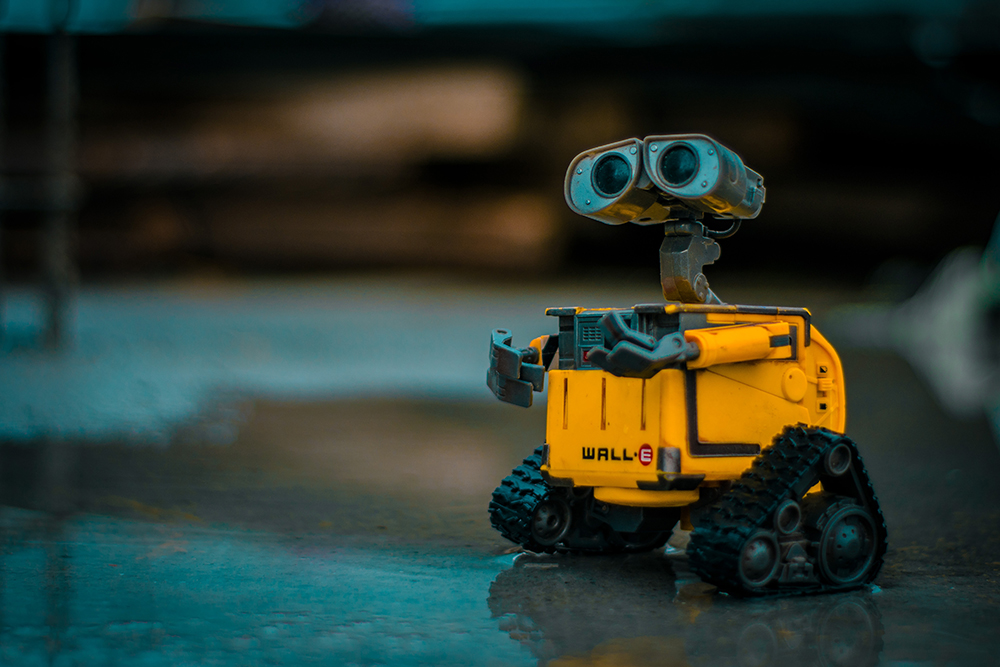
How to Use Service Robots in the Coronavirus Disease

COVID-19 demonstrates that digitization and technologization can be helpful in crises and disasters. In China, service robots deliver medicine and food in hospitals and quarantine stations, and drones track people without breathing masks. Those who has to stay at home can continue to perform their tasks and receive further training via a computer workstation and e-learning applications. Globalisation is a problem in the spread of the virus, but also a solution in combating it: research was immediately carried out worldwide on a drug against SARS-CoV-2. The use of robots and drones in China has been criticised for the loss of privacy. There was also criticism of the fact that the communist party and the media market the use of robots as a chinese success story, but that some of them originate from abroad. Well-known transport robots are, for example, from Starship Technologies and Savioke. Both companies are based in California.

The Comeback of Cozmo

According to The Robot Report, Anki’s little robots might be making a comeback. Digital Dream Labs in Pittsburgh acquired the patents, trademarks, and domain. The start-up company “is planning to revive and manufacture more units of each product in the following order: Overdrive, Cozmo, Vector” (The Robot Report, 26 December 2019). Digital Dream Labs founder H. Jacob Hanchar told The Robot Report “the goal is to have all three products available for purchase for Christmas 2020” (The Robot Report, 26 December 2019). The small robots belong to the best that the industry has produced. What is special about Cozmo is the many emotions it can show (but of course doesn’t have). It also has face recognition and a night vision device. The future of it and its siblings is not yet clear, as Digital Dream Labs has not purchased “physical assets and inventory” (The Robot Report, 26 December 2019). Fans are waiting and hoping.

Robots against Plastic Waste

WasteShark is a remotely controlled robot by Ranmarine Technologies that collects plastics from the surface of lakes and oceans. “Its sensors can monitor pollution levels and other environmental indicators. It is electrically powered, emission-free and can collect hundreds of kilos of rubbish at a time.” (Euronews, 15 December 2019) According to Euronews, Richard Hardiman, the founder of the start-up-company, said: “What we’re trying to do is create a small enough vessel that will get into tight spaces where waste collects, particularly in the harbours and the ports, and stop all that waste being taken out into the greater ocean.” (Euronews, 15 December 2019) The project received support from the European funds allocated to making plastic circular. An overview of the most important projects against plastic waste in water can be found here.

A Garbage Robot for Space

According to Tages-Anzeiger (9 December 2019), a consortium led by a Swiss start-up named Clearspace has won a ESA competition and was awarded the contract for a waste disposal mission in orbit. The so-called “chaser” of the EPFL spin-off has four robotic arms with which a remnant of the ESA launch vehicle Vega is to be captured and drawn. Chaser and the part of Vespa will then burn up together in the atmosphere. Later, the company wants to look for new targets. According to Luc Piguet, the issue of space debris is more urgent than ever. The founder and CEO of Clearspace says that there are currently almost 2,000 active and 3,000 inactive satellites. The problem is likely to worsen over the next few years. Where people roam, the mountains of rubbish grow and space fills with rubbish. This may sound literary, but above all, it’s terrible. Robots could be a solution both on Earth and in orbit.

Learning How to Behave

In October 2019 Springer VS published the “Handbuch Maschinenethik” (“Handbook Machine Ethics”) with German and English contributions. Editor is Oliver Bendel (Zurich, Switzerland). One of the articles was written by Bertram F. Malle (Brown University, Rhode Island) and Matthias Scheutz (Tufts University, Massachusetts). From the abstract: “We describe a theoretical framework and recent research on one key aspect of robot ethics: the development and implementation of a robot’s moral competence. As autonomous machines take on increasingly social roles in human communities, these machines need to have some level of moral competence to ensure safety, acceptance, and justified trust. We review the extensive and complex elements of human moral competence and ask how analogous competences could be implemented in a robot. We propose that moral competence consists of five elements, two constituents (moral norms and moral vocabulary) and three activities (moral judgment, moral action, and moral communication). A robot’s computational representations of social and moral norms is a prerequisite for all three moral activities. However, merely programming in advance the vast network of human norms is impossible, so new computational learning algorithms are needed that allow robots to acquire and update the context-specific and graded norms relevant to their domain of deployment. Moral vocabulary is needed primarily for moral communication, which expresses moral judgments of others’ violations and explains one’s own moral violations – to justify them, apologize, or declare intentions to do better. Current robots have at best rudimentary moral competence, but with improved learning and reasoning they may begin to show the kinds of capacities that humans will expect of future social robots.” (Abstract “Handbuch Maschinenethik”). The book is available via www.springer.com.

The Girl with Robot Arms

Tilly Lockey was diagnosed with Meningococcal Septicaemia Strain B when she was 15 months old. Due to that disease, the doctors had to amputate both her arms and toes to give her a chance to survive. Since then, her mom has been fighting to ensure that she can do everything that children with hands can do. In the past years, they tried various myoelectric prosthesis, which Tilly describes as “very basic” as these were only capable of opening and closing. In January 2019 Tilly was surprised with Open Bionic Hero Arms for the Alita: Battle Angel film premiere. This medically certified prosthesis is custom 3D-printed and detects muscle movement thanks to special sensors. It works fully intuitively and provides its user with feedback through vibrations, lights and sounds. Thanks to 3D printing, an arm can be made within 40 hours and is quite affordable compared to other bionic hands (launching price of £5,000). The Hero Arms allow Tilly to be a “normal” teenager. She says she feels “more like everyone else”. Which is apparent in simple things such as doing thumbs up on a selfie or playing the Wii. Intelligent prostheses like the Hero Arms have a great impact on the quality of life for people like Tilly. It is that kind of transhuman achievements that increase independence and self-confidence tremendously for individuals. Here you can find more Hero Arm success stories (image source: Open Bionics Press Images).

Atlas Does a Handstand

In a new video, Boston Dynamics shows its humanoid Atlas performing various gymnastics exercises. This was reported by Heise on 26 September 2019 with reference to various sources. The well-known robot is 1.50 meters high and weighs 80 kilograms. It has two legs and two arms and the impression of a head. Among other things, it does a handstand and several somersaults, and it jumps with rotation around its own axis. Obviously, it can do complex physical movements typically only possible for humans. According to Heise, a new optimization algorithm, which translates certain maneuvers into executable reference movements, enables this progress in movements. Boston Dynamics is part of SoftBank. The Japanese company also manufactures Pepper and Nao, the well-known robots of the formerly independent French company Aldebaran Robotics.

An Exosuit for Walking and Running

“Walking and running require different gaits, with each type of motion putting a greater bias on different muscles and joints.” (Science 2019) Exoskeletons can support people in many ways. However, it is not easy for them to adjust to different types of motion. Jinsoo Kim and his co-authors discuss a possible solution in their article “Reducing the metabolic rate of walking and running with a versatile, portable exosuit”, published in the current issue of Science (16 August 2019). “They developed a soft, fully portable, lightweight exosuit that is able to reduce the metabolic rate for both running and walking by assisting each motion via the hip extension … A waist belt holds most of the mass, thus reducing the cost of carrying the suit. By tracking the motion of the user, the suit is able to switch modes between the two types of motion automatically.“ (Science 2019) There are many possible applications for the exosuit, both civil and military. The article can be downloaded here.

The Bartender Robot

The activities in a pub or a club are demanding. You have to take orders from guests, you have to understand them and be friendly to them, and you have to prepare drinks like Porn Star Martini or White Lady behind the counter. Then you must bring the bill, take money and give change. Robots are more or less good at these things. F&P Robotics has developed Barney, a complete and simple robotic bar solution. The Swiss company is known for its ambitious robots for therapy and care. Now it obviously wants to conquer the gastronomy. Barney offers an easy-to-use interface and a simple payment system. According to the manufacturer, the system impresses with elegant movements during the preparation of the drink. As a typical cobot, it can also work hand in hand with human bartenders. At Hotel Interlaken, Switzerland, you can see Barney in action from 13 August to 15 September 2019. You can form your own opinion and either come to the conclusion that this is the future – or that you still want a human service and a human smile. More information via www.barney-bar.com.

Knightscope’s Fourth Generation K5

Knightscope’s security robots have been on the road in Silicon Valley for years. They can see, hear and smell – and report anything suspicious to a central office. A new generation has emerged from a partnership with Samsung. The monolithic cone has become a piecemeal object. The company writes in its blog: “With its all new, fully suspended drivetrain, the K5v4 is uniquely suited to manage the more aggressive terrain outside Samsung’s Silicon Valley workplace. Since deploying, we have been able to reduce the amount of time it takes to complete a robot guard tour in areas inhibited by speed bumps, while continuing to sweep both of their multi-story parking garages for abandoned vehicles and provide their command center with the additional eyes and ears to provide more security intelligence and improve overall security.” (Knightscope, 16 June 2019) Security robots can certainly be an option in closed areas. When used in public spaces, many ethical questions are raised. However, security robots can do more than security cameras. And it is hard to escape the fourth generation.