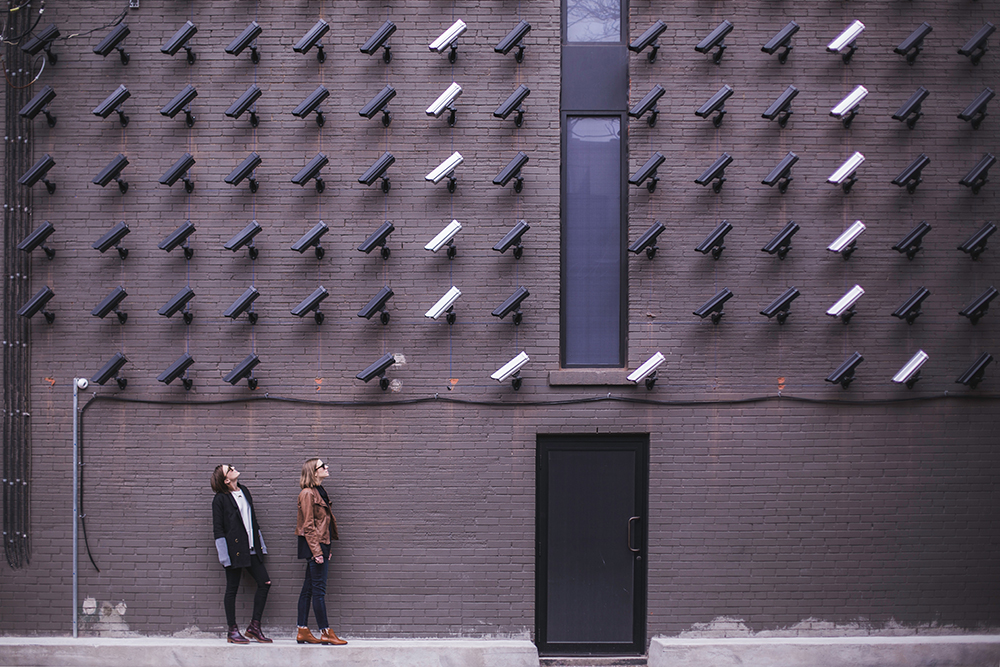
Knightscope’s security robots have been on the road in Silicon Valley for years. They can see, hear and smell – and report anything suspicious to a central office. A new generation has emerged from a partnership with Samsung. The monolithic cone has become a piecemeal object. The company writes in its blog: “With its all new, fully suspended drivetrain, the K5v4 is uniquely suited to manage the more aggressive terrain outside Samsung’s Silicon Valley workplace. Since deploying, we have been able to reduce the amount of time it takes to complete a robot guard tour in areas inhibited by speed bumps, while continuing to sweep both of their multi-story parking garages for abandoned vehicles and provide their command center with the additional eyes and ears to provide more security intelligence and improve overall security.” (Knightscope, 16 June 2019) Security robots can certainly be an option in closed areas. When used in public spaces, many ethical questions are raised. However, security robots can do more than security cameras. And it is hard to escape the fourth generation.
About Basic Property
The title of one of the AAAI 2019 Spring Symposia was “Interpretable AI for Well-Being: Understanding Cognitive Bias and Social Embeddedness”. An important keyword here is “social embeddedness”. Social embeddedness of AI includes issues like “AI and future economics (such as basic income, impact of AI on GDP)” or “well-being society (such as happiness of citizen, life quality)”. In his paper “Are Robot Tax, Basic Income or Basic Property Solutions to the Social Problems of Automation?”, Oliver Bendel discusses and criticizes these approaches in the context of automation and digitization. Moreover, he develops a relatively unknown proposal, unconditional basic property, and presents its potentials as well as its risks. The lecture by Oliver Bendel took place on 26 March 2019 at Stanford University and led to lively discussions. It was nominated for the “best presentation”. The paper has now been published as a preprint and can be downloaded here.
No Solution to the Nursing Crisis
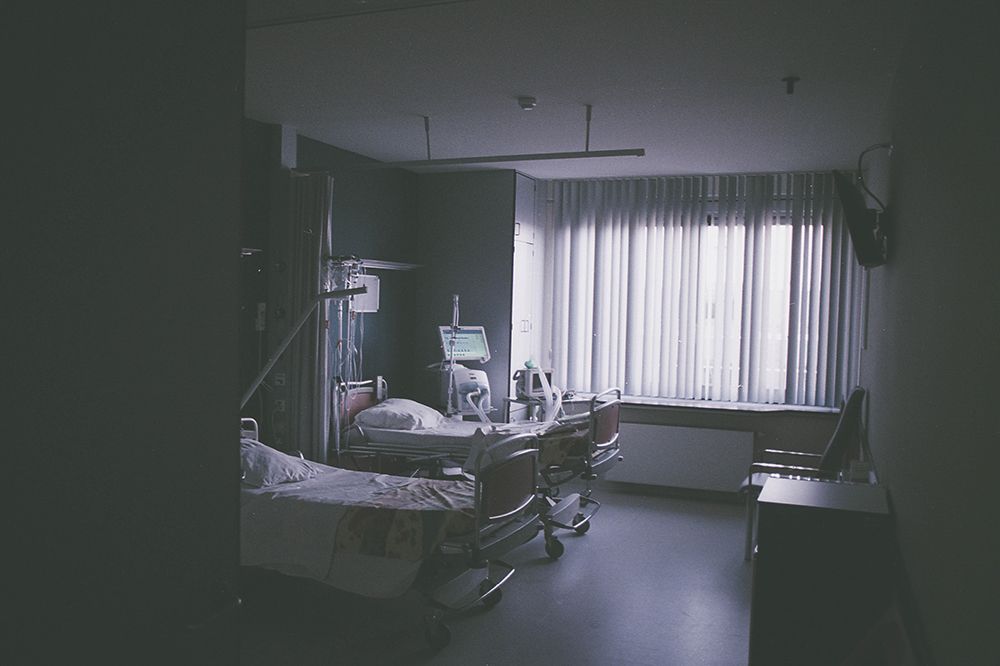
“In Germany, around four million people will be dependent on care and nursing in 2030. Already today there is talk of a nursing crisis, which is likely to intensify further in view of demographic developments in the coming years. Fewer and fewer young people will be available to the labour market as potential carers for the elderly. Experts estimate that there will be a shortage of around half a million nursing staff in Germany by 2030. Given these dramatic forecasts, are nursing robots possibly the solution to the problem? Scientists from the disciplines of computer science, robotics, medicine, nursing science, social psychology, and philosophy explored this question at a Berlin conference of the Daimler and Benz Foundation. The machine ethicist and conference leader Professor Oliver Bendel first of all stated that many people had completely wrong ideas about care robots: ‘In the media there are often pictures or illustrations that do not correspond to reality’.” (Die Welt, 14 June 2019) With these words an article in the German newspaper Die Welt begins. Norbert Lossau provides a detailed description of the Berlin Colloquium, which took place on 22 May 2019. The article is available in both English and German. So, are robots the answer to the nursing crisis? Oliver Bendel would disagree. They can be useful for caregivers and patients. However, they do not solve the major issues.
About Robophilosophy
Robophilosophy or robot philosophy is a field of philosophy that deals with robots (hardware and software robots) as well as with enhancement options such as artificial intelligence. It is not only about the reality and history of development, but also the history of ideas, starting with the works of Homer and Ovid up to science fiction books and movies. Disciplines such as epistemology, ontology, aesthetics and ethics, including information and machine ethics, are involved. The website robophilosophy.com or robophilosophy.net is operated by Oliver Bendel, a robot philosopher who lives and works in Switzerland. Guest contributions are welcome. They should be exclusively scientific and should not advertise for companies.