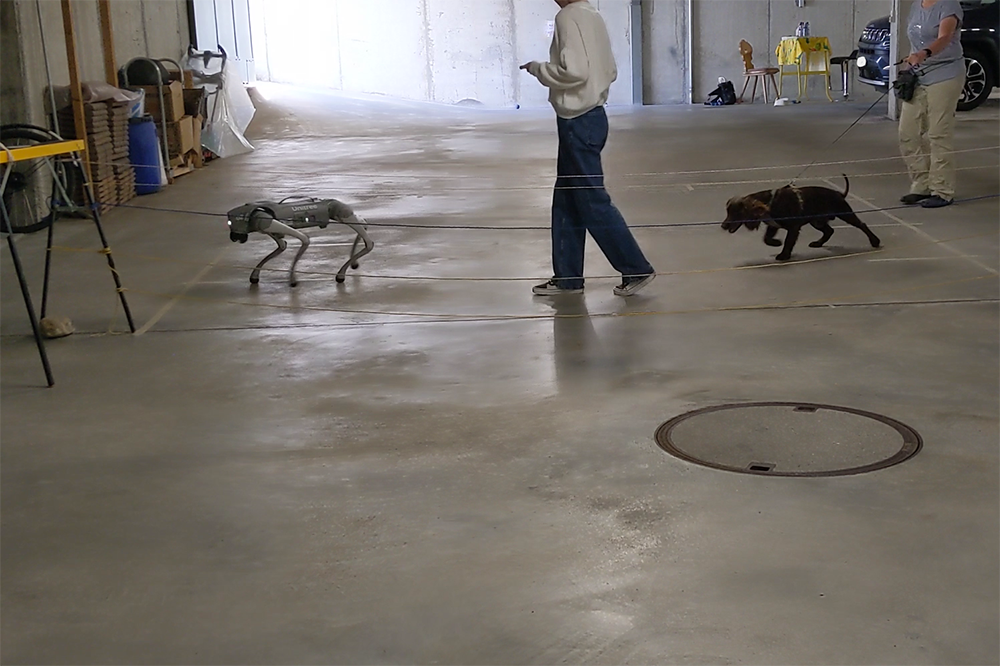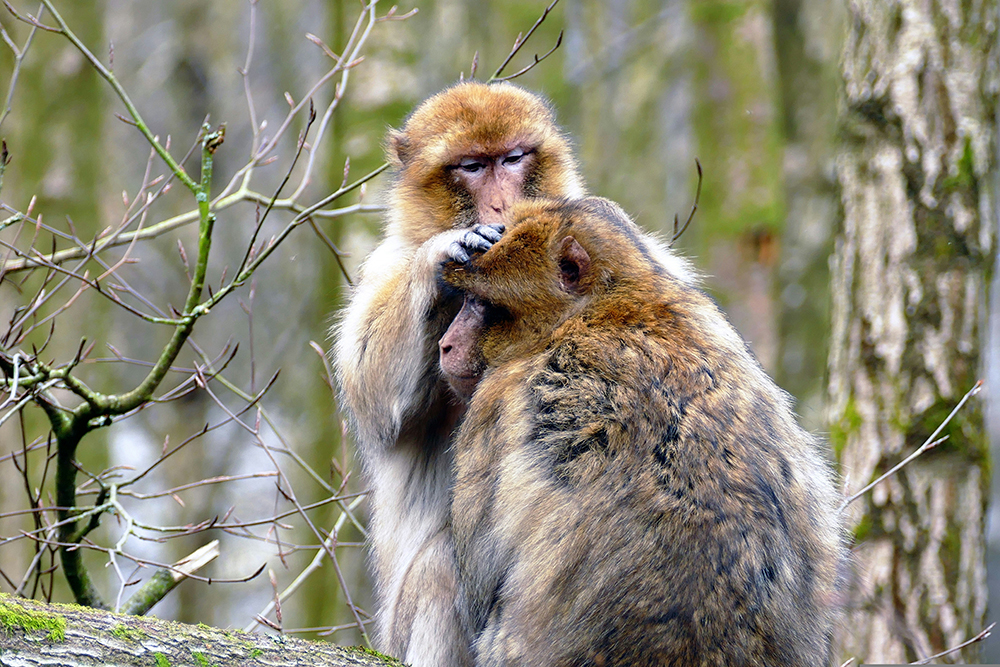
On November 20, 2026, from 1:00 to 4:30 p.m., the online workshop “Tech for Tails: Animals, Technology and Ethics” will bring together leading scholars to explore the intersections of animal ethics, artificial intelligence, biotechnology, and human-animal relationships. The program features four presentations addressing key philosophical and ethical questions surrounding animals and emerging technologies. Bernice Bovenkerk (Wageningen University) will discuss “The Synergy between Biotechnology and AI for Conservation: An Epistemic Justice Problem”, examining questions of epistemic justice arising from the convergence of biotechnology and artificial intelligence in conservation. Mickey Gjerris (University of Copenhagen) will explore the ethical implications of bringing extinct species back to life in his talk “Love in the Age of De-Extinction”. Oscar Horta (University of Santiago de Compostela) will present “Sentience-Inclusive Alignment While There Is Still Time”, addressing the importance of considering sentient beings in the development and alignment of AI systems. Finally, Oliver Bendel (FHNW University of Applied Sciences and Arts Northwestern Switzerland) will provide an “Introduction to Animal-Machine Interaction”, examining the relationships between animals and machines and the ethical challenges associated with these interactions. The workshop will conclude with a general discussion, offering an opportunity to exchange perspectives on the future of animals and technology. Participation is free and online, with registration required to receive the Zoom link. Interested participants can register by emailing hribek@flu.cas.cz. Further information, including the full program, is available at cetep.eu/tech-for-tails-animals-technology-and-ethics/ (Photo: Selina Rohr).
Embodiment of Social Robotics Girl
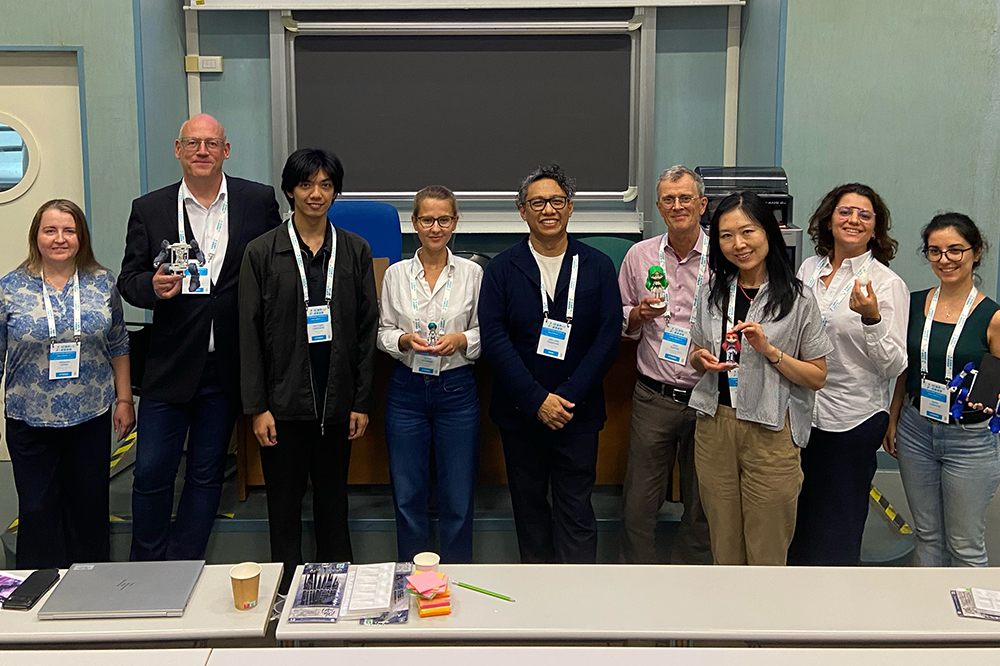
On September 10, 2025, the workshop “Social Robotics Girl Becomes a Social Robot” took place at ICSR 2025. The ICSR is one of the leading conferences for social robotics worldwide. The 17th edition takes place from 10 to 12 September 2025 in Naples, Italy. The workshop was led by Prof. Dr. Oliver Bendel (FHNW School of Business) and Prof. Dr. John-John Cabibihan (Qatar University), with support from Tamara Siegmann (FHNW School of Business) and Leo Angelo Cabibihan (Roboticscool, Qatar). For the GPT, which was created by Oliver Bendel at the end of 2023, a suitable body and head were sought, with embodiment in the broadest sense being the goal. Leo Angelo Cabibihan and John-John Cabibihan had already created several models with Meshy and printed them out using a 3D printer. At the request of the participants, three groups with different goals were formed. The first group wanted to create an avatar and a figure with a human-like appearance, the second with a thing-like appearance, and the third with a gender-neutral appearance. First, Oliver Bendel gave an introduction to the creation of GPTs. Tamara Siegmann reported on her experiences with Social Robotics Girl. John-John Cabibihan introduced the use of the tools. The individual groups considered their embodiment. Avatars were created and animated with Meshy. Then the first models went into print. A final presentation summarized the possibilities and challenges.
Decoding Animal Language with AI
Recent advancements in artificial intelligence (AI) and bioacoustics have opened a unique opportunity to explore and decode animal communication. With the growing availability of bioacoustic data and sophisticated machine learning models, researchers are now in a position to make significant strides in understanding non-human animal languages. However, realizing this potential requires a deliberate integration of AI and ethology. The AI for Non-Human Animal Communication workshop at NeurIPS 2025 will focus on the challenges of processing complex bioacoustic data and interpreting animal signals. The workshop will feature keynote talks, a poster session, and a panel discussion, all aimed at advancing the use of AI to uncover the mysteries of animal communication and its implications for biodiversity and ecological conservation. The workshop is inviting submissions for short papers and proposals related to the use of AI in animal communication. Topics of interest include bioacoustics, multimodal learning, ecological monitoring, species-specific studies, and the ethical considerations of applying AI in animal research. Papers should present novel research, methodologies, or technologies in these areas, and will undergo a double-blind review process. The paper submission deadline is September 5, 2025, with notifications of acceptance by September 22, 2025. More information is available at aiforanimalcomms.org.
ICSR 2025 Workshops
The ICSR is one of the leading conferences for social robotics worldwide. The 17th edition will take place from 10 to 12 September 2025 in Naples, Italy. As part of the program, the conference welcomes proposals for workshops that provide a platform for in-depth discussion, exchange of knowledge, and community engagement around current topics in social robotics. The organizers are especially interested in workshops that promote dialogue between established researchers and early-career scientists, supporting a dynamic and inclusive research environment. The deadline for submitting workshop proposals is June 4, 2025. Notifications of acceptance will be sent by July 1, 2025. All details and the submission portal can be found at the following link: icsr2025.eu/ss-ws-proposal … ICSR 2025 offers an opportunity to help shape the future of social robotics through collaborative and forward-looking workshop initiatives.
The Social Significance of Human Effort
The third day of Robophilosophy 2024 featured numerous presentations and several workshops. The workshop “The Social Significance of Human Effort – What Are the Parameters For Positive Human-Robot Interaction In the Context of Industry 5.0?” was organized by the renowned Sant’Anna School of Advanced Studies (Pisa, Italy). The moderators were Professors Alberto Pirni and Paolo Dario as well as Oliver Bendel from the FHNW School of Business. They also presented, as did other participants such as Nicola Vitiello, Leonardo Massantini, Danica Kragic Jensfelt, and Margherita Pugnaletto. From the workshop abstract: “This workshop aims to develop a roadmap for understanding the impact of robotics on human employment within the context of Industry 5.0. The workshop explores key factors in this transition, including the risks and benefits of digital automation, ethical considerations regarding worker skills and well-being, and protective measures for workers and consumers. Focusing on the theme of sociocultural risks: devaluation of human labor, the workshop aims to reflect on traditional notions of work, productivity, and the value of human labor in the era of advancing robotics and automation. It challenges the concept of labor devaluation, assesses its impact on worker recognition and efficiency, and questions meritocratic paradigms. To facilitate interdisciplinary dialogue, the workshop engages philosophers and engineers in addressing ethical dilemmas in technology development. It explores the social significance of human effort and movement when interacting with autonomous robots and occupational exoskeletons. By examining these technologies’ adaptability and role in human-machine interaction, especially in workplaces, the workshop intends to contribute to discussions on technological advances and their societal implications.” (Website Robophilosophy 2024)