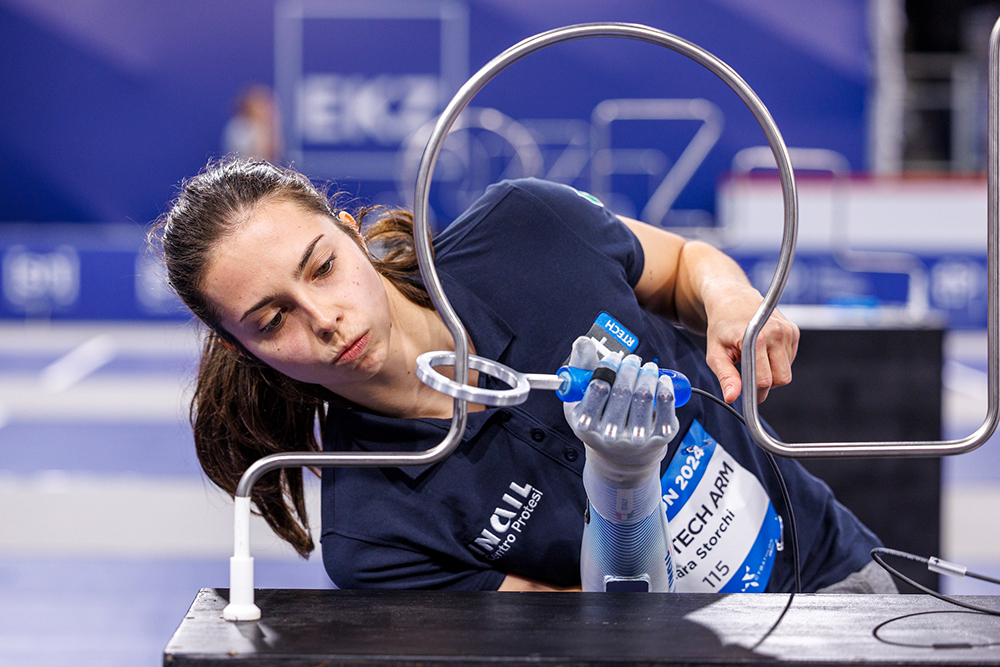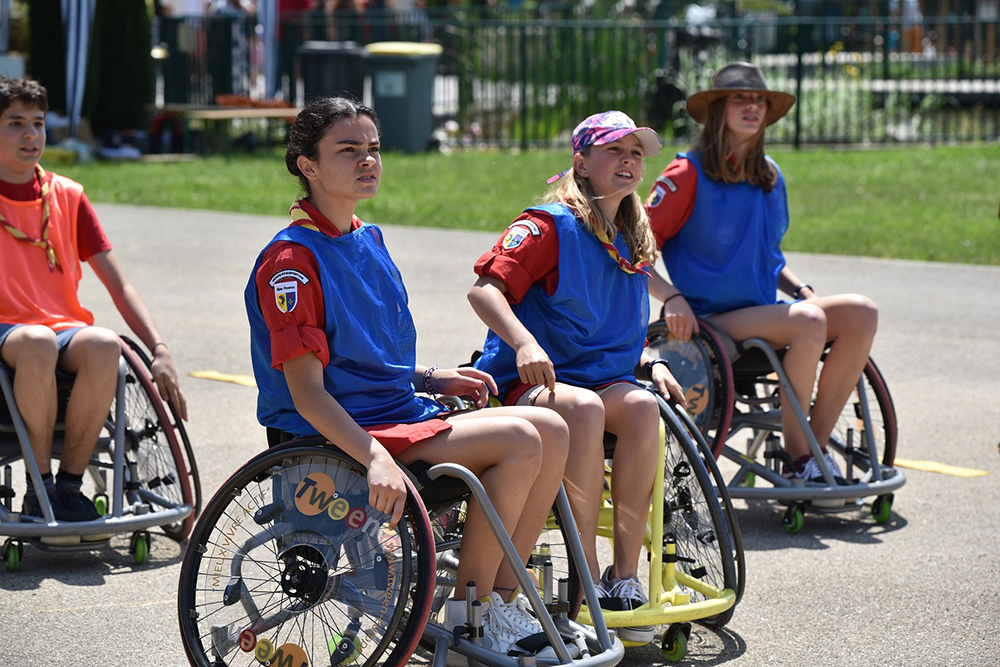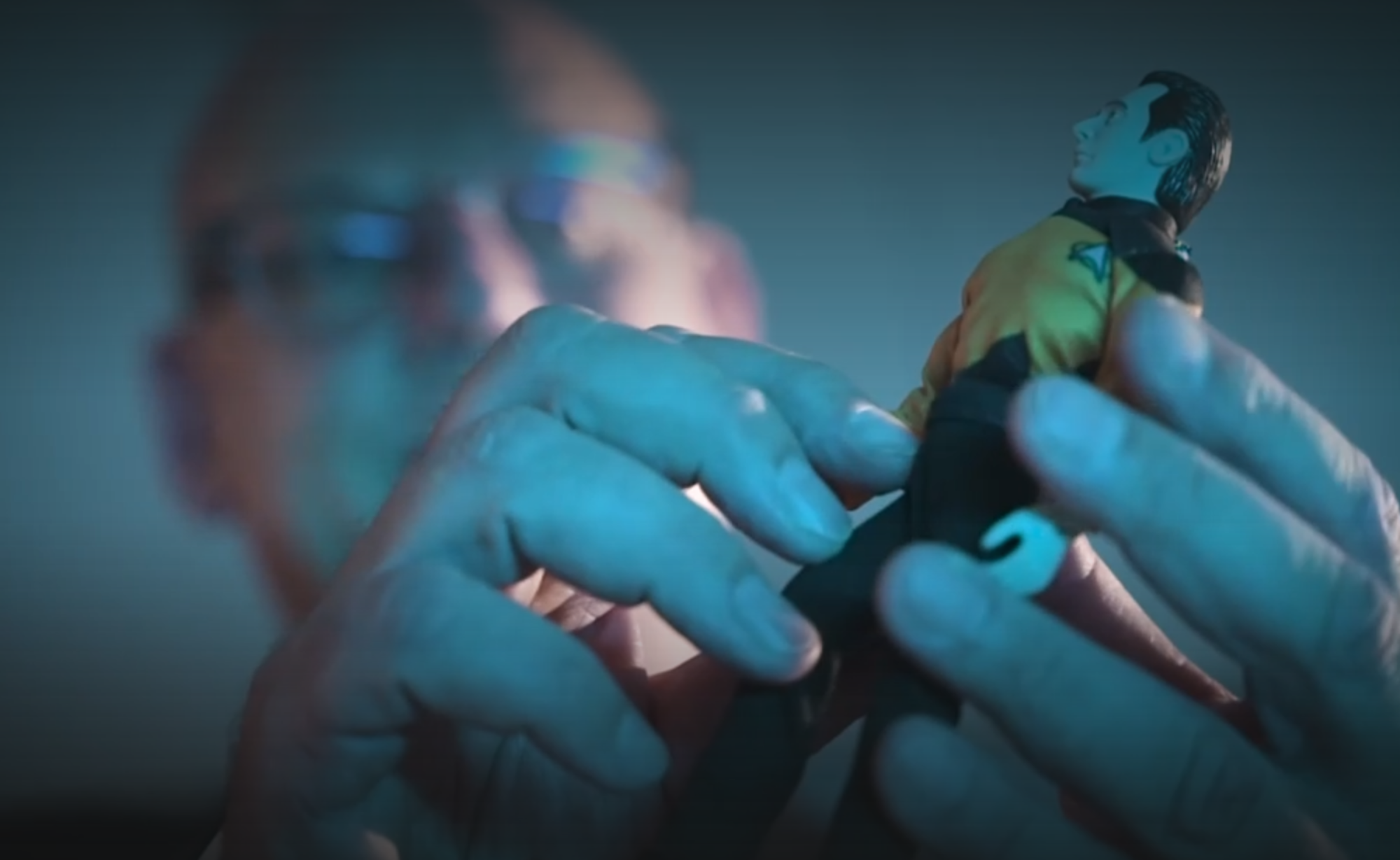
The Gabler Wirtschaftslexikon is the largest economics encyclopedia in the German-speaking world. In March 2025, Oliver Bendel published an article on inclusive robotics in this reference work. The first part reads as follows: “Inclusive robotics designs, develops, controls, manufactures, and operates robotic solutions for individuals with disabilities or impairments. The goal is to enable them to fully participate in social life and to engage in education, culture, and sports. This can involve the replacement or enhancement of a body part, as well as the use of a robot that provides assistance (an assistive robot or companion robot) or is worn on or with the body (a wearable robot). Robotic quadrupeds and bipedal general-purpose robots are becoming increasingly relevant. In the future, these will function as universal robots – true generalists. Inclusive Robotics addresses not only physical aspects but also psychological ones. It is closely related to inclusive AI.” The full article is available at: wirtschaftslexikon.gabler.de/definition/inclusive-robotics-172663 (Photo; ETH Zurich, Cybathlon/Alessandro Della Bella).
Start of the VISUAL Project
The kick-off meeting for the VISUAL project took place on March 20, 2025. It was initiated by Prof. Dr. Oliver Bendel from the FHNW School of Business. “VISUAL” stands for “Virtual Inclusive Safaris for Unique Adventures and Learning”. There are webcams all over the world that show wild animals. Sighted people can use them to go on a photo safari from the comfort of their sofa. Blind and visually impaired people are at a disadvantage. As part of Inclusive AI – an approach and a movement that also includes apps such as Be My Eyes with the Be My AI function – a solution is to be found for them. The aim of the project is to develop a prototype by August 2025 that enables blind and visually impaired people to have webcam images or videos of wild animals described to them. The system analyzes and evaluates them with the help of a multimodal LLM. It presents the results in spoken language via an integrated text-to-speech engine. As a by-product, poaching, bush and forest fires and other events can be detected. The project is likely to be one of the first to combine inclusive AI with new approaches to animal-computer interaction (ACI). Doris Jovic, who is completing her degree in BIT, has been recruited to work on the project.
Apollo Comes to Berlin-Marienfelde
According to a press release from March 18, 2025, Mercedes-Benz is bringing one of “the most advanced commercial humanoid robots in the world” (Mercedes-Benz press release, own translation) to Berlin-Marienfelde. This site has established itself as a global competence center for production digitization since the launch of the Mercedes-Benz Digital Factory Campus (MBDFC) in 2022. The manufacturer, Apptronik, is based in Austin and was founded in 2016 as a spin-off from the Human Centered Robotics Lab at the University of Texas. According to its website, Apollo is “the first commercial humanoid robot that was designed for friendly interaction, mass manufacturability, high payloads and safety” (Apptronik website). The robot stands approximately 172 cm tall and weighs about 72 kg. Unlike comparable bipedal robots, it does not have a display in the facial area, but only two eyes. Its head resembles that of social robots such as ARI or P-Care. Apollo is a modular system that can be used either in a stationary or mobile setup. Regarding its implementation, Mercedes-Benz states in the press release: “The Apollo robots have collected data in a production environment in order to train for specific use cases” (Mercedes-Benz press release, own translation). Employees with hands-on production experience at Mercedes-Benz “transferred their knowledge to Apollo using teleoperation processes and augmented reality” (Mercedes-Benz press release, own translation). “Now, Mercedes-Benz is taking the next crucial development step at the MBDFC in Berlin: The Apollo robots are learning to operate autonomously – a technological milestone on the path to a flexible, intelligent assistance system for production” (Mercedes-Benz press release, own translation).
Sponsorship for the ICSR 2025
Join us as a sponsor for the 17th International Conference on Social Robotics & AI, taking place on 10-12 September 2025 at Naples, Italy. This prestigious event brings together researchers, leading experts, innovators, and thought leaders in the fields of robotics, AI, and human-robot interaction. Don’t miss the opportunity to align your brand with cutting-edge advancements. We offer different sponsorship/exhibition packages, all information is available at the page: icsr2025.eu/sponsor2/. If you are interested or have any questions, don’t hesitate to contact us at info@icsr2025.eu with the subject line tag [Sponsorship]. The ICSR is one of the leading conferences for social robotics worldwide. Participants will meet for two days at the Parthenope University of Naples and for the third day at the Città della Scienza conference center. More information on icsr2025.eu.
About Inclusive AI
The Gabler Wirtschaftslexikon is the largest economics encyclopedia in the German-speaking world. In March 2025, Oliver Bendel published an article on inclusive AI in this reference work. The first part reads as follows: “Inclusive AI aims, on the one hand, to combat phenomena in artificial intelligence (AI) that have an exclusionary character – such as bias, hallucination, hate speech, and deepfakes – and, on the other hand, to strengthen applications with an inclusionary character in order to support those affected. One meaning is associated with terms like “responsible AI”, “explainable AI”, and “trustworthy AI”, while the other aligns with concepts such as “AI for good” or “AI for wellbeing”. Overall, this falls under the umbrella of “ethical AI”, though this term is also used in marketing contexts. In 2025, the World Economic Forum (WEF) pointed to the digital divide, asking: “How do we ensure that the growth of AI doesn’t leave people behind and is truly inclusive?” Inclusive AI can be associated with generative AI as well as with other forms of artificial intelligence.” The full article is available at:
wirtschaftslexikon.gabler.de/definition/inclusive-ai-171870.
The Robodog Project Starts
Robotic four-legged friends – often referred to as robot dogs – are becoming more and more widespread. As a result, they will also encounter more and more real dogs. The question is how to design, control, and program the robot in such a way that the animals do not overreact and cause no harm to robots, animals, or bystanders. As part of “The Robodog Project”, smaller dogs are to be confronted with a walking, running, and jumping Unitree Go2. The plan is to visit controllable environments such as dog training grounds and arrange meetings with dog owners. The findings will lead to suggestions for design and control. Robot enhancement can also play a role here. For example, hobbyists have produced heads for Unitree Go2 using a 3D printer, giving the robot a completely different look. Suggestions for programming will also be made. The project is due to start at the FHNW School of Business in March 2024. It is part of Prof. Dr. Oliver Bendel’s research in the field of animal-machine interaction.
The VISUAL Project
The VISUAL project will be launched in March 2025 at the FHNW School of Business. It was initiated by Prof. Dr. Oliver Bendel. VISUAL stands for “Virtual Inclusive Safaris for Unique Adventures and Learning”. There are webcams all over the world showing wild animals. Sighted people can use them to go on photo safaris from the comfort of their sofa. Blind and visually impaired people are at a disadvantage. As part of inclusive AI – a movement that includes apps like Be My Eyes with the Be My AI feature – a solution is to be found for them. The project aims to develop a prototype by August 2025 that will allow blind and visually impaired people to have webcam images of wildlife described to them. The system takes regular snapshots of the videos and analyzes and evaluates them using a multimodal LLM. It presents the results ini spoken language via an integrated text-to-speech engine. As a byproduct, poaching, bush and forest fires, and other events can be detected. The project is likely to be one of the first to combine inclusive AI with new approaches of animal-computer interaction (ACI).
Biases and Stereotypes in LLMs
The paper “Revisiting the Trolley Problem for AI: Biases and Stereotypes in Large Language Models and their Impact on Ethical Decision-Making” by Sahan Hatemo, Christof Weickhardt, Luca Gisler (FHNW School of Computer Science), and Oliver Bendel (FHNW School of Business) was accepted at the AAAI 2025 Spring Symposium “Human-Compatible AI for Well-being: Harnessing Potential of GenAI for AI-Powered Science”. A year ago, Sahan Hatemo had already dedicated himself to the topic of “ETHICAL DECISION MAKING OF AI: An Investigation Using a Stereotyped Persona Approach in the Trolley Problem” in a so-called mini-challenge in the Data Science degree program. His supervisor, Oliver Bendel, had told the other scientists about the idea at the AAAI 2025 Spring Symposium “Impact of GenAI on Social and Individual Well-being” at Stanford University. This led to a lively discussion. The student recruited two colleagues, Christof Weickhardt and Luca Gisler, and worked on the topic in a much more complex form in a so-called Challenge X. This time, three different open-source language models were applied to the trolley problem. In each case, personalities were created with nationality, gender, and age. In addition, the data was compared with that of the MIT Moral Machine project. Sahan Hatemo, Christof Weickhardt, and Luca Gisler will present their results at the end of March or beginning of April 2025 in San Francisco, the venue of this year’s event.
Taming the Lion of the LLM
The paper “Miss Tammy as a Use Case for Moral Prompt Engineering” by Myriam Rellstab and Oliver Bendel from the FHNW School of Business was accepted at the AAAI 2025 Spring Symposium “Human-Compatible AI for Well-being: Harnessing Potential of GenAI for AI-Powered Science”. It describes the development of a chatbot that can be available to pupils and de-escalate their conflicts or promote constructive dialogues among them. Prompt engineering – called moral prompt engineering in the project – and retrieval-augmented generation (RAG) were used. The centerpiece is a collection of netiquettes. On the one hand, these control the behavior of the chatbot – on the other hand, they allow it to evaluate the behavior of the students and make suggestions to them. Miss Tammy was compared with a non-adapted standard model (GPT-4o) and performed better than it in tests with 14- to 16-year-old pupils. The project applied the discipline of machine ethics, in which Oliver Bendel has been researching for many years, to large language models, using the netiquettes as a simple and practical approach. The eight AAAI Spring Symposia will not be held at Stanford University this time, but at the San Francisco Airport Marriott Waterfront, Burlingame, from March 31 to April 2, 2025. It is a conference rich in tradition, where innovative and experimental approaches are particularly in demand.
Special Sessions at ICSR 2025
ICSR’25 allows for special sessions on topics of particular interest to attendees. The goal is to complement the regular program with new and emerging topics of interest in social robotics. Proposals will be evaluated on a rolling basis until the deadline below, and organizers will be notified of the outcome. Once accepted, the invited session will be published on the ICRS website along with an invited session code to be used at the time of paper submission. Special session papers will go through the same review process as regular papers and will be published in the same way. Papers should be submitted as PDF documents of no more than 3-4 pages. More information is available at icsr2025.eu/ss-ws-proposal/.