Tinder’s AI Photo Selector

Tinder has officially launched its “Photo Selector” feature, which uses AI to help users choose the best photos for their dating profiles. This was reported by TechCrunch in the article “Tinder’s AI Photo Selector automatically picks the best photos for your dating profile” by Lauren Forristal. The feature, now available to all users in the U.S. and set to roll out internationally later this summer, leverages facial detection technology. Users upload a selfie, and the AI creates a unique facial geometry to identify their face and select photos from their camera roll. The feature curates a collection of 10 selfies it believes will perform well based on Tinder’s insights on good profile images, focusing on aspects like lighting and composition. Tinder’s AI is trained on a diverse dataset to ensure inclusivity and accuracy, aligning with the company’s Diversity, Equity, and Inclusion (DEI) standards. It also filters out photos that violate guidelines, such as nudes. The goal is to save users time and reduce uncertainty when choosing profile pictures. A recent Tinder survey revealed that 68% of participants found an AI photo selection feature helpful, and 52% had trouble selecting profile images. The TechCrunch article was published on 17 July 2024 and is available at techcrunch.com/2024/07/17/tinder-ai-photo-selection-feature-launches/.

Deadline for ICSR 2024 Extended Again

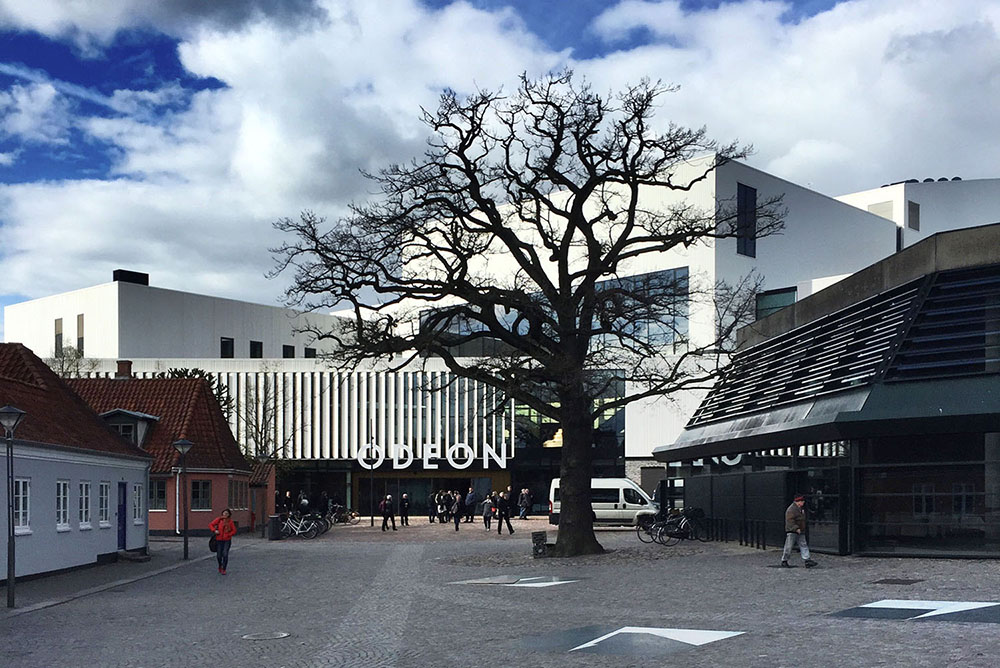
The deadline for the International Conference on Social Robotics 2024 (ICSR 2024) has been extended again. Experts in social robotics and related fields have until July 19 to submit their full papers. The prestigious event was last held in Florence (2022) and Qatar (2023). Now it enters its next round. The 16th edition will bring together researchers and practitioners working on human-robot interaction and the integration of social robots into our society. The title of the conference includes the addition “AI”. This is a clarification and demarcation that has to do with the fact that there will be two further formats with the name ICSR in 2024. ICSR’24 (ICSR + AI) will take place as a face-to-face conference in Odense, Denmark, from 23 to 26 October 2024. The theme of this year’s conference is “Empowering Humanity: The role of social and collaborative robotics in shaping our future”. The topics of the Call for Papers include “collaborative robots in service applications (in construction, agriculture, etc.)”, “Human-robot interaction and collaboration”, “Affective and cognitive sciences for socially interactive robots”, and “Context awareness, expectation, and intention understanding”. The general chairs are Oskar Palinko, University of Southern Denmark, and Leon Bodenhagen, University of Southern Denmark. More information is available at icsr2024.dk (Photo: Jacob Christensen).

Miss AI 2024

According to the organizers, the World AI Creator Awards (WAICA) is a first-of-its-kind global awards program dedicated to recognizing the achievements of AI creators around the world. The first installment of the WAICAs was Miss AI – where traditional beauty pageants intersected with the world of AI creators. Contestants were judged on their beauty, technical implementation, and social impact. The winners of Miss AI 2024 are Kenza Layli (Morocco), Lalina (France), and Olivia C (Portugal). They are already successful on Instagram, showing themselves in different poses and clothes. The beauty pageant attracts worldwide attention, but is also criticized. One statement is that women are being turned into objects, no different from the classical variants. Another observation is that the first place could strengthen religious conservatism – because Kenza Layli is an artificial woman who covers her virtual hair with a digital hijab (Image: Ideogram).

Extended Deadline for ICSR 2024

The deadline for the International Conference on Social Robotics 2024 (ICSR 2024) has been extended. Experts in social robotics and related fields have until July 12 to submit their papers. The prestigious event was last held in Florence (2022) and Qatar (2023). Now it enters its next round. The 16th edition will bring together researchers and practitioners working on human-robot interaction and the integration of social robots into our society. The title of the conference includes the addition “AI”. This is a clarification and demarcation that has to do with the fact that there will be two further formats with the name ICSR in 2024. ICSR’24 (ICSR + AI) will take place as a face-to-face conference in Odense, Denmark, from 23 to 26 October 2024. The theme of this year’s conference is “Empowering Humanity: The role of social and collaborative robotics in shaping our future”. The topics of the Call for Papers include “collaborative robots in service applications (in construction, agriculture, etc.)”, “Human-robot interaction and collaboration”, “Affective and cognitive sciences for socially interactive robots”, and “Context awareness, expectation, and intention understanding”. The general chairs are Oskar Palinko, University of Southern Denmark, and Leon Bodenhagen, University of Southern Denmark. More information is available at icsr2024.dk.

Please be Kind to Boo Boo

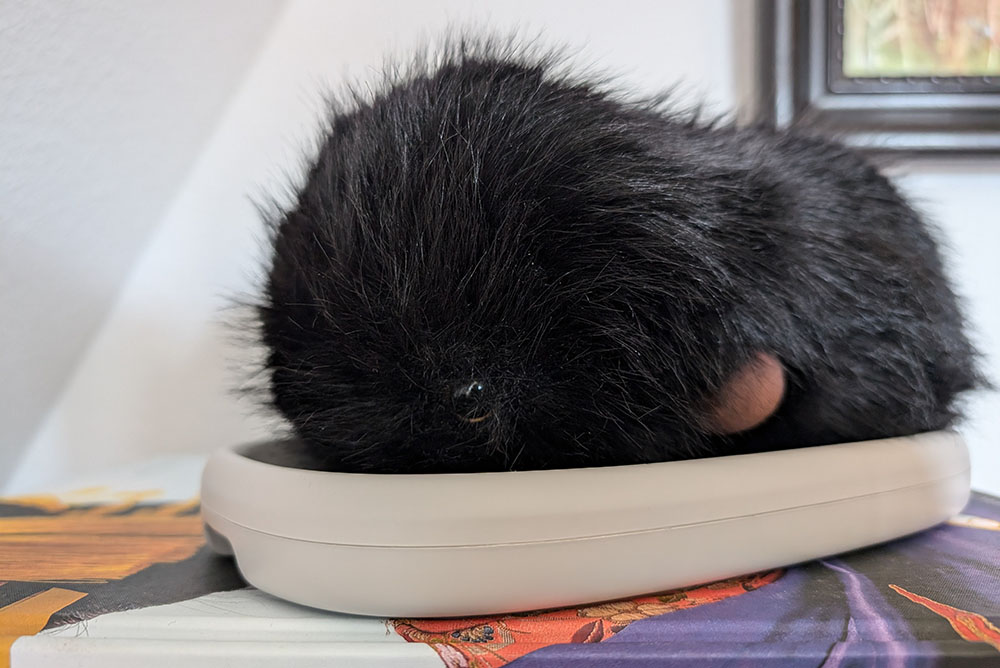
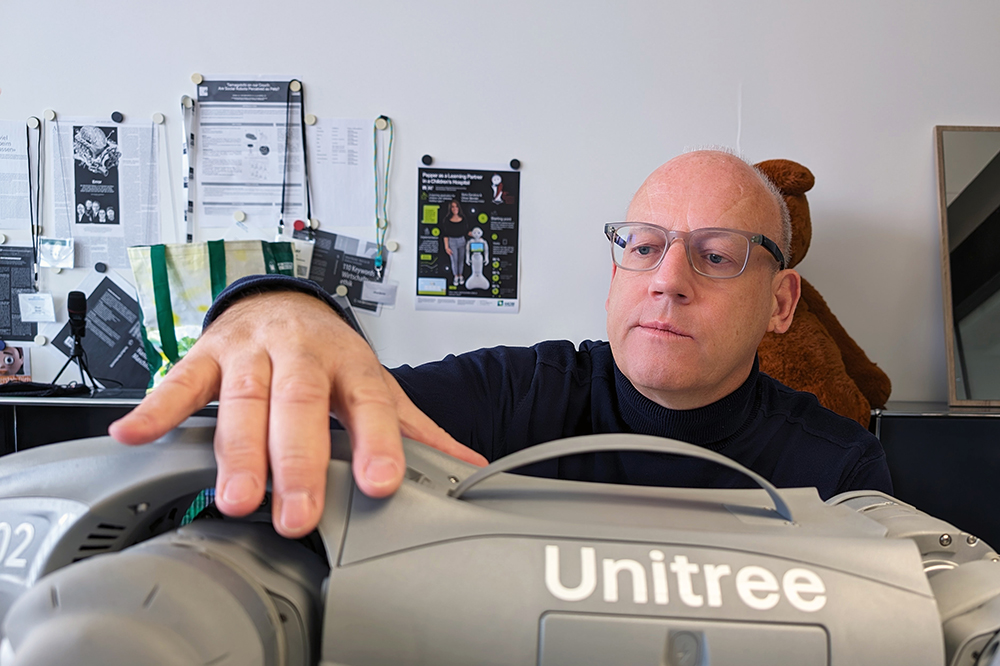
Prof. Dr. Oliver Bendel’s privately funded Social Robots Lab has been home to the “Cupboo AI Robotic Pet” since July 2024. It goes by the name Boo Boo (also BooBoo). It was brought to the lab by power user and Cupboo ambassador Julia Rehling. Genmoor writes on its website: “Boo Boo is not just a toy. It is also the king of the planet Lonely …” (Genmoor website). According to the manufacturer, Boo Boo’s movements are made possible by a complex control system. “Therefore please be kind to Boo Boo, it is not an ordinary robotic pet. It could give you different responds according to your interaction.” (Genmoor website) Other robots and figures in the Social Robots Lab are Unitree Go2, Alpha Mini, Cozmo, Vector, Furby, Tamagotchi, Hugvie, and HUGGIE. NAO and Pepper visit from time to time. The Genmoor Group claims to be an “exclusive group for daring futurists who love tech-psychology” (Genmoor website). The company was founded in Hangzhou (China) in 2020.

GXO Signs Agreement with Agility Robotics

“GXO Logistics, Inc. (NYSE: GXO), the world’s largest pure-play contract logistics provider, and Agility Robotics, creator of the leading bipedal Mobile Manipulation Robot (MMR) DigitⓇ, announced today that they have signed a multi-year agreement to begin deploying Digit in GXO’s logistics operations. This agreement, which follows a proof-of-concept pilot in late 2023, is both the industry’s first formal commercial deployment of humanoid robots and first Robots-as-a-Service (RaaS) deployment of humanoid robots.” (Press Release, 27 June 2024) This was announced by Agility Robotics in a press release dated June 27, 2024. “Digit is a multi-purpose, human-centric robot made for logistics work, and designed to work safely in human spaces and help with a variety of repetitive tasks. Agility Arc is designed to simplify the deployment lifecycle, from facility mapping and workflow definition to operational management and troubleshooting.” (Press Release, 27 June 2024) According to Oliver Bendel, Digit, Atlas, Figure 01, H1, G1, and other models can be seen as preliminary stages of universal robots. It is important to test them in closed or semi-open worlds such as factories before releasing them into open worlds (Photo: Agility Robotics).

Living Skin on an Artificial Face

Scientists from The University of Tokyo have succeeded in applying living skin to a robot face. In their article “Perforation-type anchors inspired by skin ligament for robotic face covered with living skin” they write: “Skin equivalent, a living skin model composed of cells and extracellular matrix, possesses the potential to be an ideal covering material for robots due to its biological functionalities. To employ skin equivalents as covering materials for robots, a secure method for attaching them to the underlying structure is required. In this study, we develop and characterize perforation-type anchors inspired by the structure of skin ligaments as a technique to effectively adhere skin equivalents to robotic surfaces. To showcase the versatility of perforation-type anchors in three-dimensional (3D) coverage applications, we cover a 3D facial mold with intricate surface structure with skin equivalent using perforation-type anchors. Furthermore, we construct a robotic face covered with dermis equivalent, capable of expressing smiles, with actuation through perforation-type anchors. With the above results, this research introduces an approach to adhere and actuate skin equivalents with perforation-type anchors, potentially contributing to advancements in biohybrid robotics.” (Abstract) The result is an inverted or reversed cyborg. Oliver Bendel uses this term for technical structures that are supplemented with biological structures. It is also – another term used by Oliver Bendel – robot enhancement. There is no doubt that there will be more and more developments like this. Humans will become cyborgs, and robots will become reversed cyborgs (Image: Ideogram).

H@mmur@pi was Born

Since 2012, Prof. Dr. Oliver Bendel has been building chatbots and voice assistants – partly with his students and partly on his own. These have been discussed by the media and found interesting by NASA. He gained his theoretical knowledge and practical illustrative material from his doctorate on this topic a quarter of a century ago. Since 2022, the focus has been on dialog systems for dead and endangered languages. Under his supervision, Karim N’diaye developed the chatbot @ve for Latin and Dalil Jabou the chatbot @llegra for Vallader, an idiom of Rhaeto-Romanic, enhanced with voice output. Since May 2024, he has been testing the scope of GPTs – “custom versions of ChatGPT”, as OpenAI calls them – for endangered languages such as Irish (Irish Gaelic), Maori, and Basque. Prototypes have already been created for all three, namely Irish Girl, Maori Girl, and Adelina (for Basque). He is also investigating the potential for extinct languages such as Egyptian and Akkadian. The GPTs do not readily communicate in hieroglyphics or cuneiform, but they can certainly represent and explain signs of visual languages. It is even possible to enter entire sentences and ask how they can be improved. The result is then – to stay with Akkadian – complex structures made up of cuneiform characters. H@mmur@pi specializes in this language. He is also familiar with the culture and history of the region.

Cleop@tr@ was Born

Since 2012, Prof. Dr. Oliver Bendel has been building chatbots and voice assistants – partly with his students and partly on his own. These have been discussed by the media and found interesting by NASA. He gained his theoretical knowledge and practical illustrative material from his doctorate on this topic a quarter of a century ago. Since 2022, the focus has been on dialog systems for dead and endangered languages. Under his supervision, Karim N’diaye developed the chatbot @ve for Latin and Dalil Jabou the chatbot @llegra for Vallader, an idiom of Rhaeto-Romanic, enhanced with voice output. Since May 2024, he has been testing the scope of GPTs – “custom versions of ChatGPT”, as OpenAI calls them – for endangered languages such as Irish (Irish Gaelic), Maori, and Basque. Prototypes have already been created for all three, namely Irish Girl, Maori Girl, and Adelina (for Basque). He is also investigating the potential for extinct languages such as Egyptian and Akkadian. The GPTs do not readily communicate in hieroglyphics or cuneiform, but they can certainly represent and explain signs of visual languages. It is even possible to enter entire sentences and ask how they can be improved. The result is then – to stay with Egyptian – complex structures of hieroglyphs. Cleop@tr@, which was created on 12 May 2024, specializes in this language. She is also familiar with the culture and history of ancient Egypt.

Robots at Arm’s Length

The paper “Robots at arm’s length: Unveiling the dynamics of interpersonal distance preferences in human-robot interactions” by Katharina Kühne, Laura M. Zimmer, Melina Jeglinski-Mende, Oliver Bendel, Yuefang Zhou, and Martin Fischer was accepted at Robophilosophy 2024. The study focuses on the spatial distance between social robots and humans. According to the authors, the results have implications for the design of social robots and the optimization of interactions, especially in educational or medical contexts. Katharina Kühne is a PhD student in the Potsdam Embodied Cognition Group (PECoG) at the University of Potsdam. She has a diploma in language teaching, a master’s degree in linguistics, and a master’s degree in cognitive psychology. She is supervised by Prof. Dr. Martin Fischer (University of Potsdam, head of the PECoG) and Prof. Dr. Oliver Bendel (FHNW School of Business, associated researcher of the PECoG). The results of the study will be presented at Robophilosophy, which will take place in Aarhus from August 20 to 23, 2024.