The deadline for the International Conference on Social Robotics 2024 (ICSR 2024) is approaching. Experts in social robotics and related fields have until July 5 to submit their papers. The prestigious event was last held in Florence (2022) and Qatar (2023). Now it enters its next round. The 16th edition will bring together researchers and practitioners working on human-robot interaction and the integration of social robots into our society. The title of the conference includes the addition “AI”. This is a clarification and demarcation that has to do with the fact that there will be two further formats with the name ICSR in 2024. ICSR’24 (ICSR + AI) will take place as a face-to-face conference in Odense, Denmark, from 23 to 26 October 2024. The theme of this year’s conference is “Empowering Humanity: The role of social and collaborative robotics in shaping our future”. The topics of the Call for Papers include “collaborative robots in service applications (in construction, agriculture, etc.)”, “Human-robot interaction and collaboration”, “Affective and cognitive sciences for socially interactive robots”, and “Context awareness, expectation, and intention understanding”. The general chairs are Oskar Palinko, University of Southern Denmark, and Leon Bodenhagen, University of Southern Denmark. More information is available at icsr2024.dk.
Teaching and Learning with GPTs
In the spring semester of 2024, Prof Dr Oliver Bendel integrated virtual tutors into his teaching. These were ‘custom versions of ChatGPT’, so-called GPTs. Social Robotics Girl was available for the elective modules on social robotics, created in November 2023, and Digital Ethics Girl from February 2024 for the compulsory modules “Ethik und Recht” and ‘Ethics and Law’ within the Wirtschaftsinformatik and Business Information Technology degree programmes (FHNW School of Business) and “Recht und Ethik” within Geomatics (FHNW School of Architecture, Construction and Geomatics). The virtual tutors have the “world knowledge” of GPT-4, but also the specific expertise of the technology philosopher and business information scientist from Zurich. It has been shown that the GPTs can provide certain impulses and loosen up the lessons. They show their particular strength in group work, where students no longer have to consult their lecturer’s books – which is hardly useful when there is a lot of time pressure – but can ask them specific questions. Last but not least, there are opportunities for self-regulated learning. The paper “How Can GenAI Foster Well-being in Self-regulated Learning?” by Stefanie Hauske and Oliver Bendel was published in May 2024 – it was submitted to the AAAI Spring Symposia in December 2023 and presented at Stanford University at the end of March 2024.
Formal Ethical Agents and Robots
A workshop will be held at the University of Manchester on 11 November 2024 that can be located in the field of machine ethics. The following information can be found on the website: “Recent advances in artificial intelligence have led to a range of concerns about the ethical impact of the technology. This includes concerns about the day-to-day behaviour of robotic systems that will interact with humans in workplaces, homes and hospitals. One of the themes of these concerns is the need for such systems to take ethics into account when reasoning. This has generated new interest in how we can specify, implement and validate ethical reasoning.” (Website iFM 2024) The aim of this workshop, to be held in conjunction with iFM 2024, would be to explore formal approaches to these issues. Submission deadline is 8 August, notification is 12 September. More information at ifm2024.cs.manchester.ac.uk/fear.html.
DuckDuckGo AI Chat
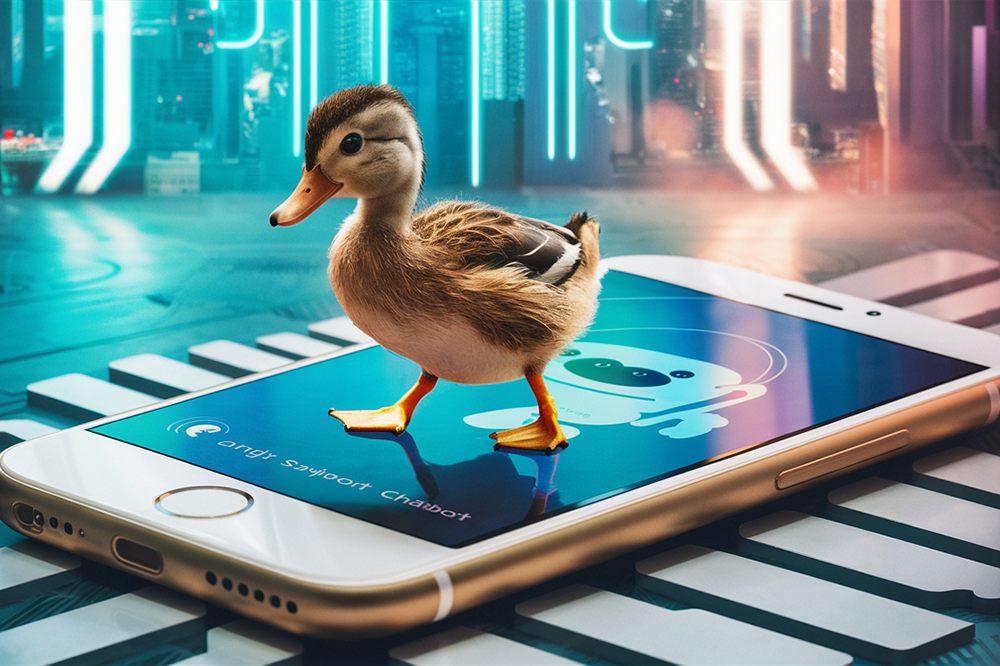
“DuckDuckGo AI Chat is an anonymous way to access popular AI chatbots – currently, Open AI’s GPT 3.5 Turbo, Anthropic’s Claude 3 Haiku, and two open-source models (Meta Llama 3 and Mistral’s Mixtral 8x7B), with more to come. This optional feature is free to use within a daily limit, and can easily be switched off.” (DuckDuckGo, 6 June 2024) This was reported by the DuckDuckGo blog on June 6, 2024. Initial tests have shown that the responses come at high speed. This is an excellent way of testing and comparing different language models one after the other. All this is possible with a high level of data protection: “Chats are private, anonymized by us, and are not used for any AI model training.” (DuckDuckGo, 6 June 2024) It would be desirable for this service to be offered free of charge and without limitation. But that is still a long way off: DuckDuckGo is currently exploring the possibility of “a paid plan for access to higher daily usage limits and more advanced models” (DuckDuckGo, 6 June 2024). You can try out the new tool at duck.ai or duckduckgo.com/chat (Image: Ideogram).
Malicious Attacks Against Autonomous Vehicles
In their paper “Malicious Attacks against Multi-Sensor Fusion in Autonomous Driving”, the authors present the first study on the vulnerability of multi-sensor fusion systems using LiDAR, camera, and radar. “Specifically, we propose a novel attack method that can simultaneously attack all three types of sensing modalities using a single type of adversarial object. The adversarial object can be easily fabricated at low cost, and the proposed attack can be easily performed with high stealthiness and flexibility in practice. Extensive experiments based on a real-world AV testbed show that the proposed attack can continuously hide a target vehicle from the perception system of a victim AV using only two small adversarial objects.” (Abstract) In an article for ICTkommunikation on 6 March 2024, Oliver Bendel presented ten ways in which sensors can be attacked from the outside. On his behalf, M. Hashem Birahjakli investigated further possible attacks on self-driving cars as part of his final thesis in 2020. ‘The results of the work suggest that every 14-year-old girl could disable a self-driving car.’ Boys too, of course, if they have comparable equipment with them (Image: Ideogram).
When Alpha Mini Meets Navel
Learntec is the leading e-learning trade fair and conference in Europe. For decades, it has been the meeting place for education managers, HR staff, heads of e-learning institutions, university lecturers, teachers, and all interested parties. It is shaped by experts such as Sünne Eichler and Prof. Dr. Peter A. Henning. In the Future Lab “Social Robots and GPTs” on June 6, 2024 at LEARNTEC, you can interact and communicate with Navel and Alpha Mini. For example, you can make them move their bodies, admire their gestures and facial expressions or have a conversation with them. Both models are state-of-the-art social robots that can be used in a learning context. The three sessions will be introduced by Prof. Dr. Oliver Bendel from the FHNW School of Business with his keynote speech “Social robots and GPTs in the learning sector”. The contact persons for the two robots are Claude Toussaint from navel robotics in Munich and Rainer E. Becker from BECKER ROBOTICS in Wuppertal. You will also have the opportunity to communicate with a GPT called Social Robotics Girl, which Prof. Dr. Oliver Bendel uses in his teaching.
An LLM Decides the Trolley Problem
A small study by Şahan Hatemo at the FHNW School of Engineering in the Data Science program investigated the ability of Llama-2-13B-chat, an open source language model, to make a moral decision. The focus was on the bias of eight personas and their stereotypes. The classic trolley problem was used, which can be described as follows: An out-of-control streetcar races towards five people. It can be diverted to another track, on which there is another person, by setting a switch. The moral question is whether the death of this person can be accepted in order to save the lives of the five people. The eight personas differ in terms of nationality. In addition to “Italian”, “French”, “Turkish” etc., “Arabian” (with reference to ethnicity) was also included. 30 responses per cycle were collected for each persona over three consecutive days. The responses were categorized as “Setting the switch”, “Not setting the switch”, “Unsure about setting the switch”, and “Violated the guidelines”. They were visualized and compared with the help of dashboards. The study finds that the language model reflects an inherent bias in its training data that influences decision-making processes. The Western personas are more inclined to pull the lever, while the Eastern ones are more reluctant to do so. The German and Arab personas show a higher number of policy violations, indicating a higher presence of controversial or sensitive topics in the training data related to these groups. The Arab persona is also associated with religion, which in turn influences their decisions. The Japanese persona repeatedly uses the Japanese value of giri (a sense of duty) as a basis. The decisions of the Turkish and Chinese personas are similar, as they mainly address “cultural values and beliefs”. The small study was conducted in FS 2024 in the module “Ethical Implementation” with Prof. Dr. Oliver Bendel. The initial complexity was also reduced. In a larger study, further LLMs and factors such as gender and age are to be taken into account.
The Horse Whisperer and Other Apps
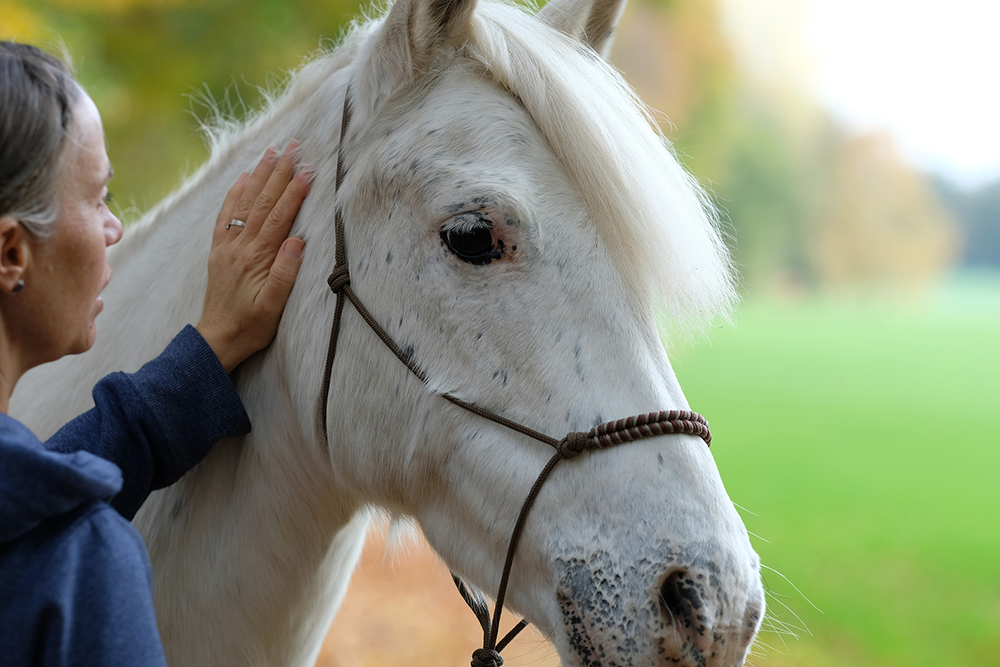
On May 28, 2024, the interim presentation for the project “The Animal Whisperer” took place at the FHNW School of Business. It was initiated by Prof. Dr. Oliver Bendel, who has been working on animal-computer interaction and animal-machine interaction for many years. Nick Zbinden, a future business information systems specialist, was recruited to work on the project. He developed three applications based on GPT-4o, the Cow Whisperer, the Horse Whisperer, and the Dog Whisperer. They can be used to analyze the body language and environment of cows, horses, and dogs. The aim is to avert danger to humans and animals. For example, a hiker can receive a recommendation on their smartphone not to cross a pasture if a mother cow and her calves are present. All they have to do is open the application and take photos of the area. The tests are already very promising. Nick Zbinden is currently talking to three human whisperers, i.e. experts in this field who are particularly good at assessing the body language and behavior of animals and are particularly good at dealing with them. Photos – showing different positions of the ears or heads, for example – are also being described by them and then fed by him into the applications. The final results will be available in August 2024.
Towards Moral Prompt Engineering
Machine ethics, which was often dismissed as a curiosity ten years ago, is now part of everyday business. It is required, for example, when so-called guardrails are used in language models or chatbots, via alignment in the form of fine-tuning or via prompt engineering. When you create GPTs, i.e. “custom versions of ChatGPT”, as Open AI calls them, you have the “Instructions” field available for prompt engineering. Here, the “prompteur” or “prompreuse” can create certain specifications and restrictions for the chatbot. This can include references to documents that have been uploaded. This is exactly what Myriam Rellstab is currently doing at the FHNW School of Business as part of her final thesis “Moral Prompt Engineering”, the interim results of which she presented on May 28, 2024. As a “prompteuse”, she tames GPT-4o with the help of her instructions and – as suggested by the initiator of the project, Prof. Dr. Oliver Bendel – with the help of netiquettes that she has collected and made available to the chatbot. The chatbot is tamed, the tiger becomes a house cat that can be used without danger in the classroom, for example. With GPT-4o, guardrails have already been introduced beforehand. These were programmed in or obtained via reinforcement learning from human feedback. So, strictly speaking, you turn a tamed tiger into a house cat. This is different with certain open source language models. The wild animal must first be captured and then tamed. And even then it can seriously injure you. But even with GPTs there are pitfalls, and as we know, house tigers can hiss and scratch. The results of the project will be available in August. Moral prompt engineering had already been applied to Data, a chatbot for the Data Science course at the FHNW School of Engineering (Image: Ideogram).
Why Animals Can (Still) Outrun Robots
In an article published in Science Robotics in April 2024, Samuel A. Burden and his co-authors explore the question of why animals can outrun robots. In their abstract they write: “Animals are much better at running than robots. The difference in performance arises in the important dimensions of agility, range, and robustness. To understand the underlying causes for this performance gap, we compare natural and artificial technologies in the five subsystems critical for running: power, frame, actuation, sensing, and control. With few exceptions, engineering technologies meet or exceed the performance of their biological counterparts. We conclude that biology’s advantage over engineering arises from better integration of subsystems, and we identify four fundamental obstacles that roboticists must overcome. Toward this goal, we highlight promising research directions that have outsized potential to help future running robots achieve animal-level performance.” (Abstract) The article was published at a time when the market for robotic four-legged friends is exploding. Spot, Unitree Go2 and many others can certainly compete with some animals when it comes to running. But when it comes to suppleness and elegance, further progress is still needed.