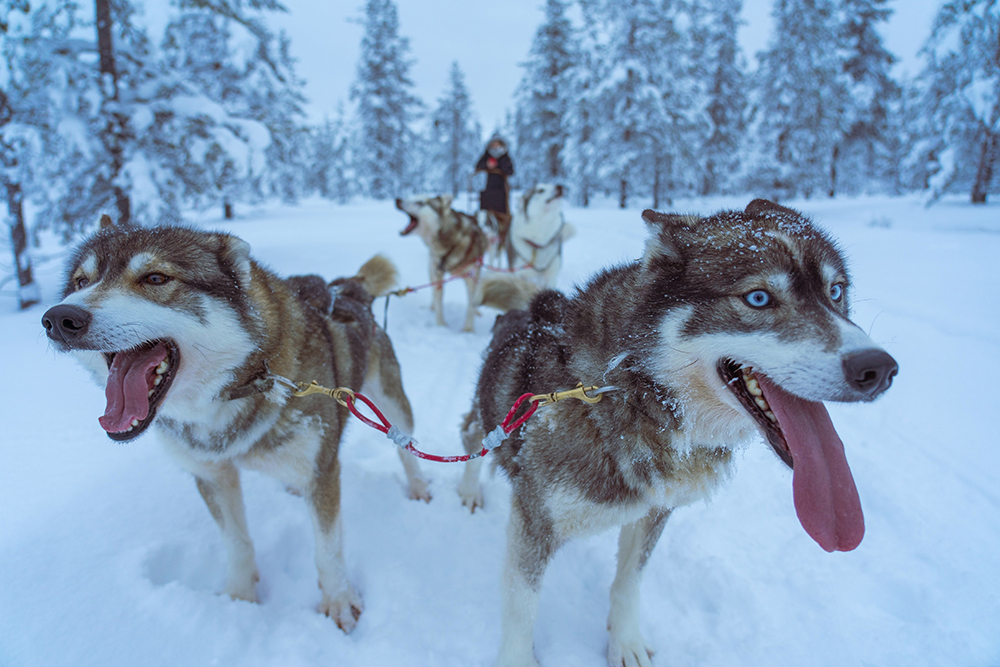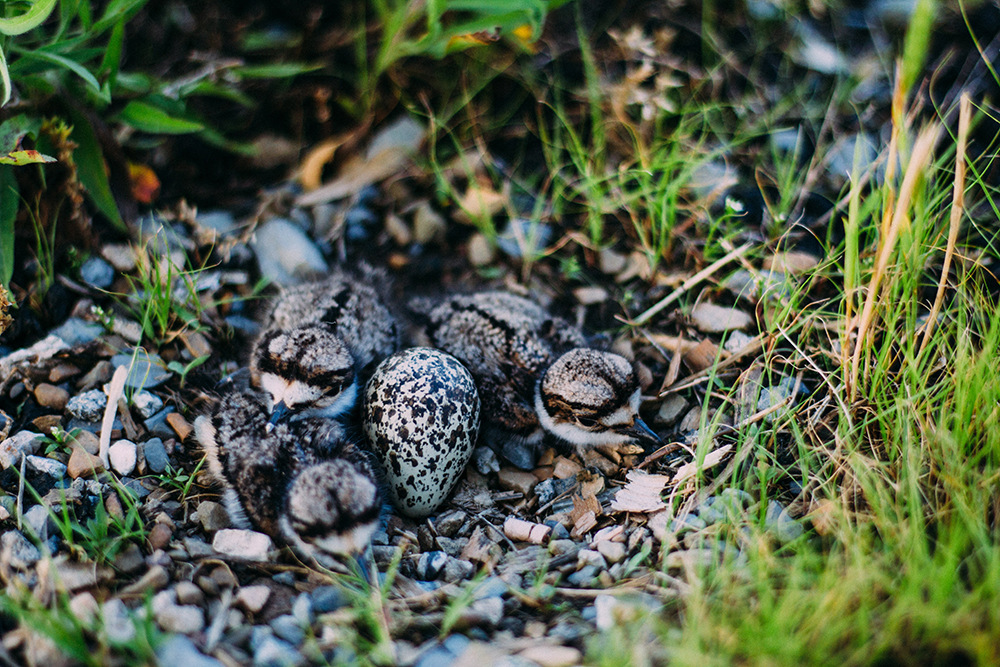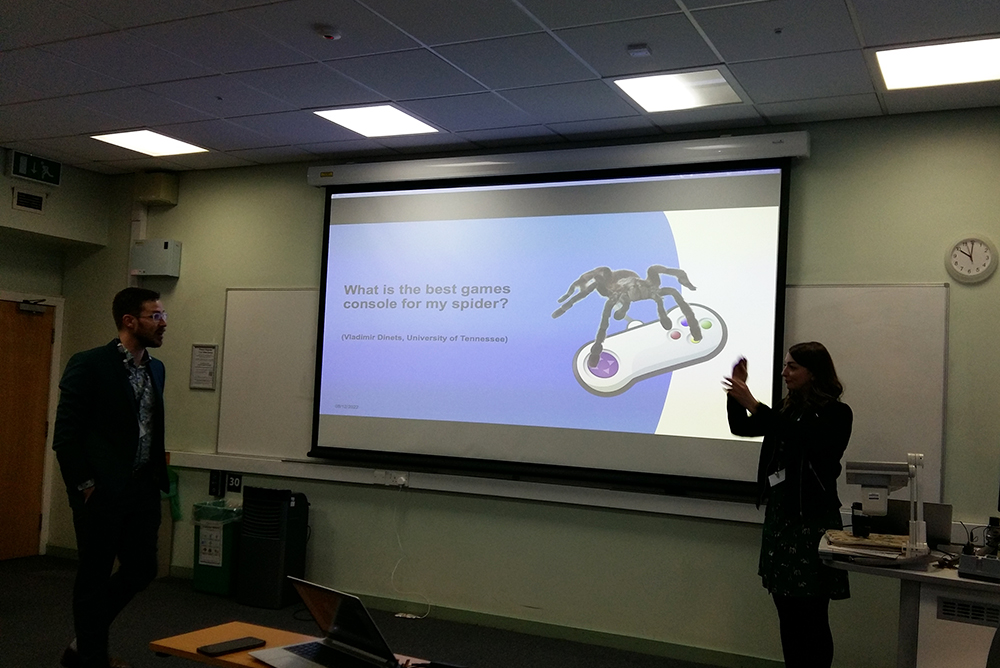
The conference program for ACI’22 will be available in the course of November. In the meantime, the website lists the accepted papers in alphabetical order. Among them are the papers “A Face Recognition System for Bears: Protection for Animals and Humans in the Alps” (Oliver Bendel and Ali Yürekkirmaz), “A Framework for Training Animals to Use Touchscreen Devices for Discrimination Tasks” (Jennifer Cunha and Corinne Renguette), “Politicising Animal-Computer Interaction: an Approach to Political Engagement with Animal-Centred Design” (Clara Mancini, Orit Hirsch-Matsioulas, and Daniel Metcalfe), and “TamagoPhone: A framework for augmenting artificial incubators to enable vocal interaction between bird parents and eggs” (Rebecca Kleinberger, Megha Vemuri, Janelle Sands, Harpreet Sareen, Janet M. Baker). ACI2022 will take place 5-8 December 2022, hosted by Northumbria University, Newcastle upon Tyne, UK.
The CARE-MOMO Project
Two of the most important conferences for social robotics are Robophilosophy and ICSR. After Robophilosophy, a biennial, was last held in Helsinki in August 2022, ICSR is now coming up in Florence (13 – 16 December 2022). “The 14th International Conference on Social Robotics (ICSR 2022) brings together researchers and practitioners working on the interaction between humans and intelligent robots and on the integration of social robots into our society. … The theme of this year’s conference is Social Robots for Assisted Living and Healthcare, emphasising on the increasing importance of social robotics in human daily living and society.” (Website ICSR) The committee sent out notifications by October 15, 2022. The paper “The CARE-MOMO Project” by Oliver Bendel and Marc Heimann was accepted. This is a project that combines machine ethics and social robotics. The invention of the morality menu was transferred to a care robot for the first time. The care recipient can use sliders on the display to determine how he or she wants to be treated. This allows them to transfer their moral and social beliefs and ideas to the machine. The morality module (MOMO) is intended for the Lio assistance robot from F&P Robotics. The result will be presented at the end of October 2022 at the company headquarters in Glattbrugg near Zurich. More information on the conference via www.icsr2022.it.
Progress with the Starline Project
Google has given an update on its Starline project in a blog post dated October 11, 2022. With this system, two people can hold a video conference in which the respective conversation partner is displayed as a 3D projection – a quasi-hologram. A display based on light field technology is used for this purpose. Several high-resolution cameras film the participants in real time. The company describes this process in a very non-technical or poetic way: “The technology works like a magic window, where users can talk, gesture and make eye contact with another person, life-size and in three dimensions. It is made possible through major research advances across machine learning, computer vision, spatial audio and light field display systems.” (Company News, 11 October 2022) The company hopes to improve hybrid working with Starline. Indeed, quasi-holograms would be interesting not only for concerts, but also for companies that allow and encourage homeworking or that are highly networked and distributed.
Bruce Willis has a Digital Twin
According to the Telegraph, Bruce Willis “has become the first Hollywood star to sell his rights to allow a ‘digital twin’ of himself to be created for use on screen” (Telegraph, 28 September 2022). Instead of a digital twin, we can also speak of a new kind of avatar here. “Using deepfake technology, the actor appeared in a phone advert without ever being on set, after his face was digitally transplanted onto another performer.” (Telegraph, 28 September 2022) In a statement on the website of the responsible US firm Deepcake, Willis said: “I liked the precision of my character. It’s a great opportunity for me to go back in time. The neural network was trained on content of ‘Die Hard’ and ‘Fifth Element’, so my character is similar to the images of that time. With the advent of the modern technology, I could communicate, work and participate in filming, even being on another continent. It’s a brand new and interesting experience for me, and I grateful to our team.” (Website Deepcake) The actor will certainly find many imitators. The new avatars will soon be a natural part of advertising. Whether they will also be part of films has not yet been clarified. For most actors, including Bruce Willis, such a licensing would probably go too far.
Programming Machine Ethics
The book “Programming Machine Ethics” (2016) by Luís Moniz Pereira and Ari Saptawijaya is available for free download from Z-Library. Luís Moniz Pereira is among the best-known machine ethicists. “This book addresses the fundamentals of machine ethics. It discusses abilities required for ethical machine reasoning and the programming features that enable them. It connects ethics, psychological ethical processes, and machine implemented procedures. From a technical point of view, the book uses logic programming and evolutionary game theory to model and link the individual and collective moral realms. It also reports on the results of experiments performed using several model implementations. Opening specific and promising inroads into the terra incognita of machine ethics, the authors define here new tools and describe a variety of program-tested moral applications and implemented systems. In addition, they provide alternative readings paths, allowing readers to best focus on their specific interests and to explore the concepts at different levels of detail.” (Information by Springer) The download link is eu1lib.vip/book/2677910/9fd009.
Defining Tomorrow
Animal-computer interaction (ACI) “is a rapidly growing field, which focuses on the interaction between animals and computing-enabled technology and for which the International Conference on Animal-Computer Interaction is the main convention venue” (Website ACI2022). ACI2022 will take place 5-8 December 2022, hosted by Northumbria University, Newcastle upon Tyne, UK. The “Emerging Work” track reflects early stage efforts that either: “1) will be of interest to the ACI community and likely to generate insightful, instructional, and/or spirited discussion, and/or 2) is early enough that it could benefit greatly from community feedback on direction, design, methods, etc.” (Website ACI2022) In this track, the paper “A Face Recognition System for Bears: Protection for Animals and Humans in the Alps” by Oliver Bendel and Ali Yürekkirmaz was accepted. It fits very well with this year’s conference theme, “Defining Tomorrow”. “The theme acknowledges the rapid growth in technology for animals with new products coming onto the market, normalising the use of technology in many human-animal relationships, and asks: where should we go next?” (Website ACI2022)
Plastic Waste in the Pacific Comes from the Fishing Industry
The Ocean Cleanup project has analyzed the plastic waste it has fished out of the sea. The results were published in a paper. From the abstract: “The subtropical oceanic gyre in the North Pacific Ocean is currently covered with tens of thousands of tonnes of floating plastic debris, dispersed over millions of square kilometres. A large fraction is composed of fishing nets and ropes while the rest is mostly composed of hard plastic objects and fragments, sometimes carrying evidence on their origin. In 2019, an oceanographic mission conducted in the area, retrieved over 6000 hard plastic debris items > 5 cm. The debris was later sorted, counted, weighed, and analysed for evidence of origin and age. Our results, complemented with numerical model simulations and findings from a previous oceanographic mission, revealed that a majority of the floating material stems from fishing activities. While recent assessments for plastic inputs into the ocean point to coastal developing economies and rivers as major contributors into oceanic plastic pollution, here we show that most floating plastics in the North Pacific subtropical gyre can be traced back to five industrialised fishing nations, highlighting the important role the fishing industry plays in the solution to this global issue.” (Abstract) In a final thesis at the University of Applied Sciences and Arts Northwestern Switzerland FHNW in 2019, a student described and evaluated six projects for the disposal of plastic waste in seas. An overview can be found here. The Ocean Cleanup was also discussed, beside the WasteShark that sticks out as a robot.
A CARE-MOMO for Lio
The discipline of machine ethics examines, designs, and produces moral machines. The artificial morality (aka machine morality) is usually pre-programmed by a producer or developer. However, another approach is the more flexible morality menu (MOME), an invention by Prof. Dr. Oliver Bendel. With this, owners or users replicate their own moral preferences and convictions onto a machine. A team at the School of Business FHNW implemented a MOME for MOBO (a certain chatbot) in 2019/2020. This project was continued in 2022. Marc Heimann developed a morality menu under the supervision of Oliver Bendel, which is part of a morality module (MOMO) for a care robot like Lio from F&P Robotics. The principle is the same as for the MOBO-MOME. With sliders, the patient can determine the behavior of the robot. This supports his or her personal autonomy and ensures his or her well-being. The results of the CARE-MOMO project will be presented to the company F&P Robotics, which accompanied the project, in October 2022.
Talk about Robots in Policing in Helsinki
On the first day of Robophilosophy 2022, Oliver Bendel presented his paper “Robots in Policing“. From the abstract: “This article is devoted to the question of how robots are used in policing and what opportunities and risks arise in social terms. It begins by briefly explaining the characteristics of modern police work. It puts service robots and social robots in relation to each other and outlines relevant disciplines. The article also lists types of robots that are and could be relevant in the present context. It then gives examples from different countries of the use of robots in police work and security services. From these, it derives the central tasks of robots in this area and their most important technical features. A discussion from social, ethical, and technical perspectives seeks to provide clarity on how robots are changing the police as a social institution and with social actions and relationships, and what challenges need to be addressed.” Robots in policing are a topic that has yet to receive much attention. However, it is likely to become considerably more topical in the next few years. More information about the conference on cas.au.dk/en/robophilosophy/conferences/rpc2022.
Tamagotchi on Our Couch
On the first day (August 16, 2022) of the Robophilosophy conference, Katharina Kühne (University of Potsdam) presented a poster on a project she had carried out together with Melinda A. Jeglinski-Mende from the same university. Oliver Bendel (School of Business FHNW) was also involved in the margins. The paper is titled “Tamagotchi on our couch: Are social robots perceived as pets?”. The abstract states: “Although social robots increasingly enter our lives, it is not clear how they are perceived. Previous research indicates that there is a tendency to anthropomorphize social robots, at least in the Western culture. One of the most promising roles of robots in our society is companionship. Pets also fulfill this role, which gives their owners health and wellbeing benefits. In our study, we investigated if social robots can implicitly and explicitly be perceived as pets. In an online experiment, we measured implicit associations between pets and robots using pictures of robots and devices, as well as attributes denoting pet and non-pet features, in a Go/No-Go Association Task (GNAT). Further, we asked our participants to explicitly evaluate to what extent they perceive robots as pets and if robots could replace a real pet. Our findings show that implicitly, but not explicitly, social robots are perceived as pets.” (Abstract) The poster is available here.