Time Savers or Toys?

The fourth day of the ACI2022 conference – December 8, 2022 – began with a keynote by Carys L. Williams (DogsTrust), titled “Time Savers or Toys? Realities of Animal Technology in Industry”. “Carys is a mixed-methods Research Officer at the UK’s largest dog welfare charity, Dogs Trust. Carys’ work has focused on practical and applicable dog behaviour and welfare research to improve the lives of dogs, especially those in Dogs Trust’s 22 rehoming centres (around 12,000 dogs a year!). For the last 2 years Carys has been project lead for the Dogs Trust Post Adoption Support longitudinal research project. She has additionally supported the charity’s move to collect more and better dog data, helping build exciting bespoke digital systems. Carys has also spent over a decade in the zoo industry and is currently a volunteer invertebrate keeper at ZSL London Zoo.” (Website ACI2022) Carys L. Williams started her keynote with a quote from Vladimir Dinets (University of Tennessee): “What is the best games console for my spider?” … She then turned to real-world issues, such as supporting the welfare of dogs through technological means. More information on the conference via www.aciconf.org/aci2022.

About Parrots and Dogs

The ACI2022 conference continued on the afternoon of December 7, 2022 after the coffee break (“Paper Session 3: Learning From and With Each Other”). Cristóbal Sepulveda Álvarez (Universidad de Chile) gave a talk on the topic “Measuring Digitally Comparative Abilities Between Discreet and Continuous Quantities through a Digital Enrichment Application”. He showed a parrot that had to choose different quantities on a touch screen. Dirk van der Linden (Northumbria University) was present on behalf of Jasmine Forester-Owen (Northumbria University). He spoke about “Noisy technology, anxious dogs: can technology support caregiving in the home?”. In their prototype, they combine noise detection and body language identification in dogs. Jérémy Barbay (Universidad de Chile) gave the last three presentations of the day: “Comparing Symbolic and Numerical Counting Times between Humans and Non-Humans Through a Digital Life Enrichment Application”, “Popping Up Balloons for Science: a Research Proposal”, and “A Loggable Aid to Speech (for Human and Non-Human Animals): A Research Proposal”. More information on the conference via www.aciconf.org.

Towards Exploring Perceptions of Dogs

The ACI2022 conference continued on the afternoon of December 7, 2022. “Paper Session 2: Recognising Animals & Animal Behaviour” began with a presentation by Anna Zamansky (University of Haifa). The title was “How Can Technology Support Dog Shelters in Behavioral Assessment: an Exploratory Study”. Her next talk was also about dogs: “Do AI Models ‘Like’ Black Dogs? Towards Exploring Perceptions of Dogs with Vision-Language Models”. She went into detail about OpenAI’s CLIP model, among other things. CLIP is a neural network which learns visual concepts from natural language supervision. She raised the question: “How can we use CLIP to investigate adoptability?” Hugo Jair Escalante (INAOE) then gave a presentation on the topic “Dog emotion recognition from images in the wild: DEBIw dataset and first results”. Emotion recognition using face recognition is still in its infancy with respect to animals, but impressive progress is already being made. The last presentation in the afternoon before the coffee break was “Detecting Canine Mastication: A Wearable Approach” by Charles Ramey (Georgia Institute of Technology). He raised the question: “Can automatic chewing detection measure how detection canines are coping with stress?”. More information on the conference via www.aciconf.org.

About Animal-centered Design

ACI2022 continued on December 7 with Paper Sessions. Number 1 was “Designing for Human-Animal Relations”. Clara Mancini from The Open University gave a talk on the topic “Politicising Animal-Computer Interaction: an Approach to Political Engagement with Animal-Centred Design”. She is one of the pioneers in the discipline of animal-computer interaction. This was followed by Dirk van der Linden’s presentation “Animal-centered design needs dignity: a critical essay on ACI’s core concept”. The scientist from the Northumbria University referred to the Swiss law, which assumes the dignity of living beings – animals as well as plants, it should be added. Minori Tsuji from Future University Hakodate spoke about the “Investigation on Enhancement of the Sense of Life in Safari Park Online Tours with Animal Breathing Reproduction System”. Visitors can touch artifacts with different breathing frequencies. The final contribution in the morning came from Jennifer Cunha (Parrot Kindergarten) and Corinne Renguette (Indiana University-Purdue University). It was about “A Framework for Training Animals to Use Touchscreen Devices for Discrimination Tasks”. The scientists taught various animals, such as a parrot, a rat and a dog, how to use tablets. More information on the conference via www.aciconf.org.

Exploring other Sensibilities

ACI2022 – the leading conference on animal-computer interaction – kicked off on December 5, 2022 at Northumbria University in Newcastle upon Tyne. After the workshop “Animal Centered Research beyond ACI: Exploring the Applicability of Animal Centered Principles to All Animal Research” was held on the first day, the workshop “Exploring other sensibilities – beyond human senses and aesthetics” was held on the second day. “This workshop aims to facilitate human participants to become more aware of other animals’ sensory and aesthetic sensibilities, raising points for discussion and future research within ACI. For all animals, being able to make sense of the environment is crucial in order to gain control and make informed choices, as well as to achieve competence in daily activities. Although human perception is limited by evolution, technology can enable us to perceive signals that may be meaningful for other species, thereby gaining insight and possibly empathy. Moreover, pursuing a multi-species perspective may foster inclusive approaches to design that aim to achieve a lighter environmental impact by taking into account the sensory experiences of other species.” (Website ACI2022) The workshop used innovative methods to achieve the goal. “We will offer participants a range of activities to challenge human senses and sense-making abilities, and then invite them to collaboratively design and test a system that incorporates some animal-centred sensory stimulation inspired by the activities previously undertaken.” (Website ACI2022) The participants mastered the tasks with great commitment and great pleasure. The entire conference program is available at www.aciconf.org/conference-program.

Licence to Kill?

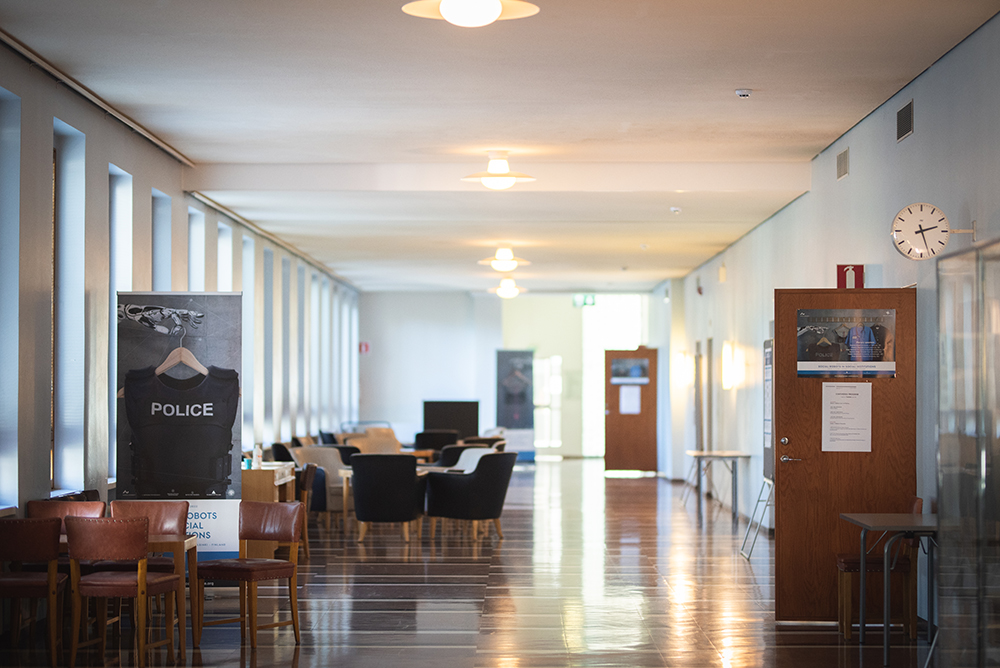
According to Mission Local, a policy proposal heading for Board of Supervisors approval next week would explicitly authorize San Francisco police to kill suspects using robots. It is the following wording that is causing discussion: “Robots will only be used as a deadly force option when risk of loss of life to members of the public or officers are imminent and outweigh any other force option available to SFPD.” According to the local newspaper, this could mark a legal crossing of the Rubicon: “Robot use-of-force has never before been approved, nor has it ever been prohibited, in San Francisco.” (Mission Local, 22 November 2022) Of what kind of arsenal are we talking, anyway? “The SFPD has 17 robots in its arsenal, 12 of which it describes as fully functional. According to police spokesperson Officer Robert Rueca, they have never been used to attack anyone. The robots are remote-controlled, and are typically used to investigate and defuse potential bombs or to surveil areas too awkward or dangerous for officers to access.” (Mission Local, 22 November 2022) In August 2022, Oliver Bendel gave a talk about police robots at the Robophilosophy 2022 conference. The paper will be published in a few weeks.

Hugged by a Robot

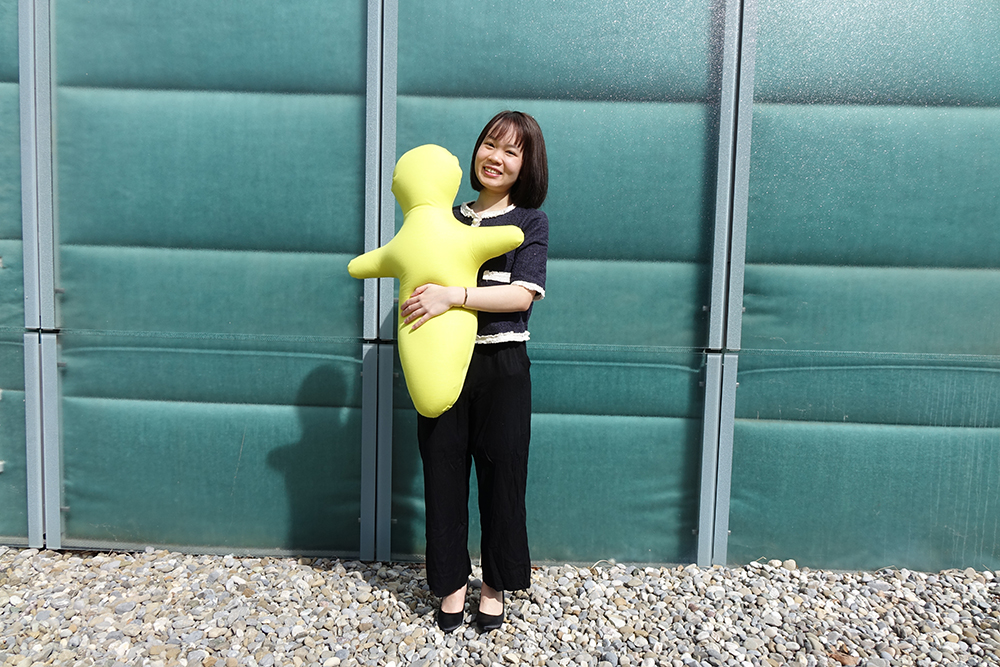
The HUGGIE project at the School of Business FHNW is moving forward. Under the supervision of Prof. Dr. Oliver Bendel, the team of four (Andrea Puljic, Robin Heiz, Ivan De Paola, Furkan Tömen) will test a hug doll on users until January 2023. It is already known that warmth and softness of the arms and body are desired. Now the team is investigating whether, for example, voice, vibration and smell also increase acceptance. The key question of the practical project is: Can a social robot help increase physical and mental well-being through hugs and touches, and what factors should be taken into account? The basis of HUGGIE is a dressmaker’s dummy. Added to this are clothing, a warming element, a vibration element, and an audio system. In addition, a scent is applied. The arms are moved by invisible strings so that active hugs are possible. Overall, the impression of a hugging robot is created. A trial run with 65 test persons took place in a Swiss company in November 2022. They were hugged by HUGGIE and a giant teddy bear. Based on the results and impressions, the questionnaire and the test setup will be improved. From the end of November 2022, the project will enter its final phase, with implementation and evaluation of the tests.

Proceedings of “How Fair is Fair? Achieving Wellbeing AI”

On November 17, 2022, the proceedings of “How Fair is Fair? Achieving Wellbeing AI” (organizers: Takashi Kido and Keiki Takadama) were published on CEUR-WS. The AAAI 2022 Spring Symposium was held at Stanford University from March 21-23, 2022. There are seven full papers of 6 – 8 pages in the electronic volume: “Should Social Robots in Retail Manipulate Customers?” by Oliver Bendel and Liliana Margarida Dos Santos Alves (3rd place of the Best Presentation Awards), “The SPACE THEA Project” by Martin Spathelf and Oliver Bendel (2nd place of the Best Presentation Awards), “Monitoring and Maintaining Student Online Classroom Participation Using Cobots, Edge Intelligence, Virtual Reality, and Artificial Ethnographies” by Ana Djuric, Meina Zhu, Weisong Shi, Thomas Palazzolo, and Robert G. Reynolds, “AI Agents for Facilitating Social Interactions and Wellbeing” by Hiro Taiyo Hamada and Ryota Kanai (1st place of the Best Presentation Awards) , “Sense and Sensitivity: Knowledge Graphs as Training Data for Processing Cognitive Bias, Context and Information Not Uttered in Spoken Interaction” by Christina Alexandris, “Fairness-aware Naive Bayes Classifier for Data with Multiple Sensitive Features” by Stelios Boulitsakis-Logothetis, and “A Thermal Environment that Promotes Efficient Napping” by Miki Nakai, Tomoyoshi Ashikaga, Takahiro Ohga, and Keiki Takadama. In addition, there are several short papers and extended abstracts. The proceedings can be accessed via ceur-ws.org/Vol-3276/.

United Robotics Group launches Plato

United Robotics Group launched the Plato serving robot in Europe and the United States in November 2022. This is according to a press release from the recently formed European alliance of companies and experts. “By combining the functions of industrial and social robotics, with its optimal HRI (Human-Robot Interface), Plato inherits not only the interactivity and expressivity from the world’s well-known humanoid robots Pepper and NAO but also comes with high-level standards of stability and reliability.” (Press Release, November 2022) The reference to industrial robotics is noteworthy, as it is more of a combination of service robotics and social robotics. It is typical that transport robots (think of Relay) and security robots (think of the latest model of K5) are given social features and capabilities such as eyes, mouth, or natural speech. The alliance also uses the unusual term “cobiot” to refer to a mobile robot that assists and collaborates with humans. “The cobiot, designed in Paris and manufactured in France to function in lively, fast-moving environments like restaurants, features an autonomous mobile platform and smart indoor navigation system, destined to support the hospitality and food industry service workers with delivery experiences and advanced safety features.” (Press Release, November 2022) Plato is a competitor of BellaBot, a serving robot with a cat face from Pudu Robotics in China. This robot is in use in Poland, Slovenia, Germany, and Switzerland, for example. It will be interesting to see which model the guests in Europe will prefer.

Metaverse Exhibition at Biennale Arte 2022

The 59th International Art Exhibition (Biennale Arte 2022) runs from 23 April to 27 November 2022. The main venues of the Biennale are Giardini and Arsenale. In the northern part of Arsenale, visitors will find many rooms with screens showing art projects around and from the Metaverse. The “1st Annual METAVERSE Art @VENICE”, an exhibition conceived by Victoria Lu, a famous art critic and curator of the Chinese artistic world, opened with gEnki, an interactive exhibition that exploits the potential of the Internet and virtual reality. “The exhibition offers a new model of ‘decentralized autonomous curatorship’, exploring various innovative and always different exhibition methods using all the main features of the ‘DAO’ (short for Distributed Autonomous Organization), therefore crowdfunding, co-construction, interconnection of platforms, high level of decentralization, all adapted to the curational concept.” (Flyer gEnki) The exhibition is very inspiring and shows how the Metaverse could become if it would not only follow commercial considerations. More information via annualmetaverseart.com.